
Major Airlines Transform Phu Quoc Into Asia's Next Premier Hub — China, Korea, India Travel Soars
Phu Quoc International Airport is undergoing a major transformation with five major carriers expanding direct routes from China, South Korea, and India. The expansion positions the island as Southeast Asia's fastest-growing aviation hub.

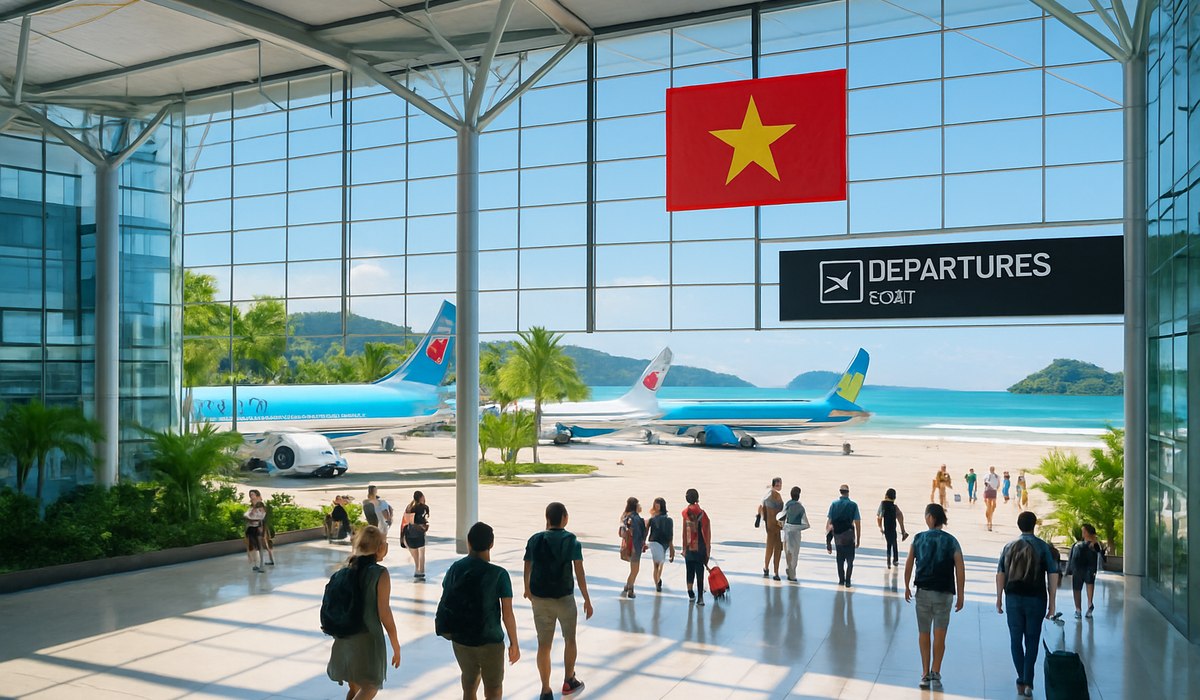
Image generated by AI
Asia's Tourism Boom: Five Major Airlines Converge on Phu Quoc
Vietnam's island paradise is experiencing unprecedented growth as five international carriers simultaneously expand service to Phu Quoc International Airport. Vietnam Airlines, Korean Air, China Eastern, Qatar Airways, and Sun PhuQuoc Airways are orchestrating what travel industry analysts describe as a transformational shift in Southeast Asian airport connectivity. Passenger arrivals from China, South Korea, and India have skyrocketed, positioning Phu Quoc as the region's fastest-expanding aviation destination ahead of the APEC 2027 Summit.
The expansion reflects a strategic partnership between Sun Group and Singapore's Changi Airports International, designed to position the island as a premier global tourism hub capable of handling up to 50 million annual passengers—a dramatic increase from its current 6 million capacity.
Quick Summary
- Five major airlines now serve Phu Quoc with expanded direct routes
- Passenger capacity set to increase from 6 million to 50 million annually
- China, South Korea, and India emerge as top source markets
- 8.3 million visitors arrived in 2025, with international arrivals surging
- APEC 2027 summit positioning Phu Quoc as essential Southeast Asian gateway
The Airline Expansion: Direct Routes Transform Market Access
Vietnam Airlines has established the most frequent connections, operating daily services from major Chinese gateways including Beijing, Shanghai, and Guangzhou. These direct links eliminate the need for Bangkok or Hanoi connections, reducing travel time and friction for Beijing-based international travelers.
Korean Air has similarly ramped operations from Seoul, establishing three weekly departures that tap directly into South Korea's substantial outbound leisure market. The carrier's presence reflects Seoul's emergence as one of Asia's most affluent source markets for premium resort experiences.
China Eastern has deployed multiple daily frequencies from Shanghai, Beijing, and Hong Kong—connecting the airline's strongest operational hubs to Phu Quoc's expanding resort infrastructure. Qatar Airways' entrance via Doha service represents the first middle-east gateway, opening access to the Gulf's high-net-worth traveler base.
Sun PhuQuoc Airways, a regional carrier, is executing a growth strategy focused on underserved city pairs. New routes from Taipei, Tokyo, and New Delhi directly connect Phu Quoc to populations with strong travel appetite and purchasing power.
Key Route Expansion:
- Vietnam Airlines: Beijing, Shanghai, Guangzhou (daily service)
- Korean Air: Seoul (3 times weekly)
- China Eastern: Shanghai, Beijing, Hong Kong (4 times weekly)
- Qatar Airways: Doha (2 times weekly)
- Sun PhuQuoc Airways: Taipei, Tokyo, New Delhi (4 times weekly)
Airport Infrastructure: Sun Group's $2+ Billion Modernization
The visible transformation at the airport reflects one of Southeast Asia's most ambitious infrastructure projects. The Sun Group-Changi Airports International partnership is constructing Terminal 2, adding runway capacity, and implementing modern passenger processing systems designed for rapid growth.
Current 6 million passenger capacity will expand to 50 million—a fundamental structural change enabling the airport to compete with established regional hubs like Bangkok and Singapore. This capacity upgrade requires more than terminal construction; it involves expanded ground transportation, hospitality facilities, and retail offerings integrated into the airport experience itself.
The multi-phase development treats the airport as a tourism product, not merely an entry point. Retail concepts, dining experiences, and luxury amenities mirror airports like Singapore Changi, positioning Phu Quoc as operating at international standards.
Tourism Surge: From Regional Destination to Global Icon
Phu Quoc welcomed 8.3 million visitors during 2025—a landmark year reflecting the early stages of this expansion. International arrivals dominated, with Chinese tourists comprising the largest share, followed by South Korean and Indian visitors. This volume represents core market validation: travelers from Asia's three largest economies are choosing Phu Quoc for extended holiday experiences.
The island's appeal spans multiple traveler segments. Luxury resort offerings from properties like JW Marriott Phu Quoc Emerald Bay and Sun Premier Village attract affluent travelers seeking sophisticated beachfront experiences. Eco-tourism ventures including Vinpearl Safari, diverse water sports, fishing village experiences, and natural attractions including Suoi Tranh Waterfall appeal to adventure-oriented demographics.
This market diversity—simultaneously serving luxury leisure travelers and adventure tourists—creates resilient demand across economic cycles and seasonal variations.
APEC 2027: Geopolitical Spotlight on Island Growth
The 2027 APEC Economic Leaders' Meeting represents a watershed moment for Phu Quoc's international profile. Hosting this summit guarantees sustained global media attention, positioning the island in travel journalists' coverage and high-net-worth individual awareness.
The timing aligns perfectly with airport expansion completion. Mature infrastructure will be in place to accommodate expected increased flows of APEC delegates, accompanying delegations, and the subsequent tourism demand following the summit's publicity boost.
This convergence of infrastructure readiness and international attention creates what tourism economists term a "multiplier effect"—investment catalyzes capacity, which enables higher volumes, which justifies additional service frequency, creating a virtuous cycle of growth.
What This Means for Travelers Planning Phu Quoc Visits
Accessibility Improvements Direct service from your home city has likely become available. Travelers from Beijing, Shanghai, Seoul, Bangkok, and now New Delhi can reach Phu Quoc without connections, reducing journey complexity and travel time.
Booking Strategy With expanded capacity but high demand, booking 3-6 months in advance remains advisable to secure preferred cabin classes and competitive fares. Early booking also ensures accommodation choices at desired properties.
Weather Optimization Plan travel between November and April when weather supports beach and outdoor activities. May through October brings humidity and rainfall that may limit certain experiences, though resort-based leisure remains unaffected.
Visa Considerations Chinese and Indian visitors should verify current visa requirements—options include visa on arrival, e-visa services, or visa exemptions depending on recent policy changes. South Korean citizens enjoy 30 days visa-free access.
Frequently Asked Questions
Which airlines offer direct flights from China to Phu Quoc? Vietnam Airlines and China Eastern both operate multiple daily connections from Shanghai, Beijing, and Guangzhou. Flight duration is approximately 3 hours from these cities.
How long is the flight from Seoul to Phu Quoc? Korean Air's Seoul-Phu Quoc service takes approximately 3.5 hours. Service operates three times weekly with plans to increase frequency based on demand indicators.
What is the best time to visit Phu Quoc for weather? November through April offers optimal conditions with lower humidity and minimal rainfall. This aligns with peak season when most international flights operate at full capacity.
Can I get a visa on arrival at Phu Quoc International Airport? Yes, both visa on arrival and e-visa options are available for most nationalities, including Chinese, Indian, and other Asian travelers. Processing typically requires 1-2 hours at airport immigration.
What luxury resorts are recommended for first-time visitors? JW Marriott Phu Quoc Emerald Bay and Sun Premier Village Phu Quoc represent premium options. Budget-conscious travelers find excellent mid-range accommodations throughout the island at substantially lower rates than comparable Southeast Asian properties.
Will APEC 2027 affect hotel availability and pricing? Yes. Book accommodations well in advance if planning travel during or immediately after the summit. Pre- and post-summit periods (6-8 weeks before and after) may experience elevated rates and reduced availability.
Disclaimer
This article is for informational and educational purposes only. It does not constitute legal, financial, or professional advice. While we strive to provide accurate and up-to-date information, travel policies, regulations, and conditions change rapidly. Always verify information with official sources before making travel decisions. Nomad Lawyer makes no representations about the accuracy, reliability, completeness, or suitability of the information provided. Readers should consult qualified professionals for advice specific to their circumstances. The views expressed in this article are those of the author and do not necessarily reflect the views of Nomad Lawyer.
Raushan Kumar
Founder & Lead Developer
Full-stack developer with 11+ years of experience and a passionate traveller. Raushan built Nomad Lawyer from the ground up with a vision to create the best travel and law experience on the web.
Learn more about our team →