
Phoenix Sky Harbor Devastated by 243 Delays and 14 Flight Cancellations as Severe Travel Chaos Strands American Airlines and Southwest Passengers: Airline News
Massive airport disruptions hit Phoenix Sky Harbor as FAA ground delays and staffing constraints trigger 243 delayed flights, devastating domestic and international routes to London and Mexico City.

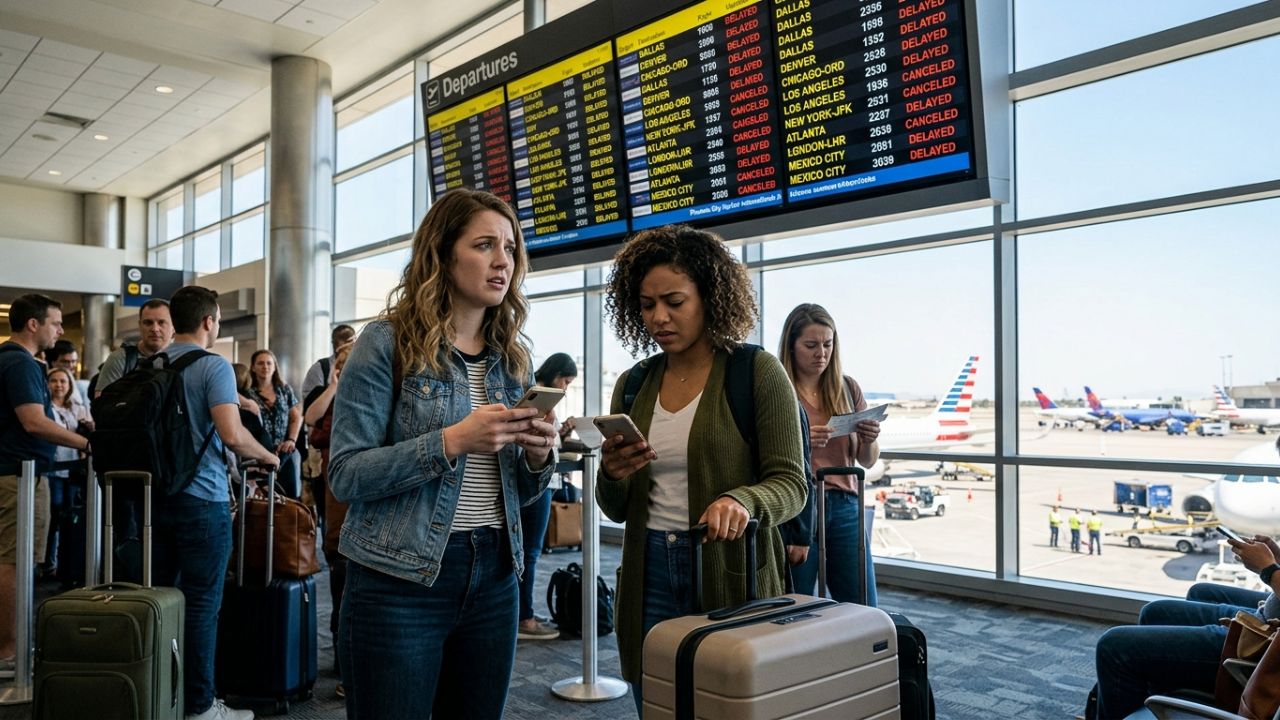
Image generated by AI
In a devastating breakdown of Southwest aviation mobility, massive travel chaos has completely paralyzed operations at Phoenix Sky Harbor International Airport. Reported on June 20, 2026, as stranded passengers desperately monitor the latest airline news for any sign of relief, a compounding failure of weather systems, staffing constraints, and extreme Federal Aviation Administration (FAA) interventions has triggered a catastrophic wave of airport disruptions. Airport officials officially recorded 243 heavily delayed flights and 14 outright flight cancellations, effectively trapping thousands of vacationers and corporate travelers inside congested terminals in Arizona. This massive operational collapse has inflicted severe logistical damage across major carriers, heavily disrupting domestic and international routes operated by American Airlines, Southwest, Delta, United, and Alaska. As gridlock chokes routes bound for London, Mexico City, and New York, this meltdown in Phoenix represents today's most crucial headline in breaking aviation updates and passenger survival logistics.
By introducing direct passenger coordination and dynamic scheduling backups, the regional aviation hubs target growing passenger demand across vital commerce sectors. The choice to coordinate flight departures in phases helps to manage gate capacity, supporting the country's broader regional transportation network.
Context: The Collapse of the Southwest Gateway
For the US aviation network, the massive disruption at Phoenix Sky Harbor exposes the severe fragility of critical regional transit hubs when confronted by compounding operational failures.
Phoenix serves as an absolutely vital transportation gateway for the American Southwest, connecting Arizona to hundreds of domestic and international destinations. Crucially, the airport operates as a massive strategic hub for both American Airlines and Southwest Airlines. When localized weather systems combine with severe air traffic control workload management and acute airline staffing constraints, the FAA is forced to execute extreme traffic management initiatives. Because Phoenix operates as a critical transfer point for transcontinental flights, a localized disruption instantly triggers a cascading operational failure. Ground delay programs are issued, aircraft rotation schedules are destroyed, and localized runway congestion paralyzes the tarmac. When American Airlines and Southwest suffer 243 delays at a primary hub, the operational damage violently ripples outward, destroying connecting itineraries bound for Dallas, Denver, Chicago, Los Angeles, and Atlanta.
To view live flight schedules, verify the active departure status of your specific Phoenix itinerary, or to track potential route restorations prior to heading to the airport, travelers must consult official aviation directories. For direct updates regarding how these massive operational failures might impact your current flight cancellations out of Arizona, travelers should aggressively utilize the official digital portals of their respective airlines. To explore live flight tracking and monitor the exact severity of the cascading bottlenecks paralyzing the broader Southwest airspace, passengers can consult the official FlightAware tracking service.
Section-Wise Breakdown: The Anatomy of the Disruption
The FAA's Extreme Mitigation Tactics
Government aviation authorities explicitly cite a toxic combination of weather, runway maintenance, and airspace congestion as the primary catalysts for the operational collapse at Phoenix. To manage aircraft movement through the National Airspace System safely, the FAA executed a barrage of restrictive protocols. Air traffic controllers implemented aggressive ground delay programs and temporary traffic restrictions, preventing flights from departing for Phoenix from other cities. Locally, departing aircraft were subjected to brutal routing adjustments, trapping passengers inside aircraft on the searing tarmac for hours.
The Cascading International Failure
Unlike isolated regional disruptions, the collapse of Phoenix Sky Harbor quickly infected the entire international network. Industry experts define this as a "cascading effect." Aircraft scheduled to depart Phoenix for high-value international routes, specifically London and Mexico City, were held hostage by the domestic gridlock. Crew members operating multiple flight segments legally "timed out" due to the extended delays, leaving fully functional aircraft sitting empty without pilots or attendants.
The Impacted Carrier Roster
While American Airlines and Southwest suffered the heaviest operational damage due to their massive hub presence, the travel chaos was absolute and indiscriminate. Delta Air Lines, United Airlines, and Alaska Airlines all absorbed severe delays and cancellations. This cross-carrier disruption proves that no airline was immune to the FAA's overarching traffic management restrictions and runway congestion.
Technical Roster: Phoenix Disruption Matrix
To ensure absolute factual accuracy regarding the exact volume of grounded flights, the specific airlines suffering operational damage, and the disrupted routes defining this travel chaos, the following matrix details the verified disruption data:
Phoenix Airport Disruption Matrix
| Operational Parameter | Verified Disruption Data |
|---|---|
| Primary Hub Impacted | Phoenix Sky Harbor International Airport (Arizona) |
| Total Flight Delays | 243 Flights |
| Total Flight Cancellations | 14 Flights |
| Severely Impacted Airlines | American Airlines, Southwest, Delta, United, Alaska |
| Disrupted Global Routes | Dallas, Denver, Chicago, LA, NY, Atlanta, London, Mexico City |
| Primary Disruption Catalysts | Weather, Staffing Constraints, Runway Congestion, ATC Workload |
| FAA Mitigation Interventions | Ground Delay Programs, Routing Adjustments, Traffic Restrictions |
Data strictly reflects the verified operational collapse reported on June 20, 2026. Figures are subject to increase as the cascading network failures continue.
Passenger Impact: Stranded in Arizona
For the thousands of passengers physically trapped inside the terminals of Phoenix Sky Harbor, the immediate impact is severe logistical exhaustion and the massive financial threat of missed international connections.
Families attempting to begin summer vacations and business travelers racing to Chicago or London found themselves frantically refreshing departure boards as schedules shifted wildly throughout the day. Because the delays reached a staggering 243 flights, the terminals became dangerously overcrowded, completely overwhelming dining facilities and customer service desks. Passengers subjected to the 14 outright flight cancellations were forced into massive, agonizing lines, desperately attempting to secure rebookings on an airline network that was already operating at maximum capacity. For travelers trapped on delayed connecting flights, the cascading failure practically guarantees they will miss their outbound international legs, forcing them to absorb the exorbitant costs of sudden overnight hotel accommodations.
Industry Analysis: The Legal Rights of the Stranded Passenger
Aviation analysts monitoring the massive collapse at Phoenix note that passengers must urgently educate themselves on DOT regulations to survive this specific travel chaos.
Analysts emphasize that compensation policies vary violently depending on the exact cause of the disruption. Because this massive wave of delays and cancellations was triggered by a blend of weather, ATC constraints, and airline staffing shortages, determining liability is complex. If a flight was canceled strictly due to an airline staffing adjustment or mechanical failure, passengers are legally entitled to hotel accommodations and meal vouchers. However, if the airline attributes the delay to FAA ground programs or weather, they are generally not federally required to provide massive financial compensation. To mitigate passenger fury, major carriers including Southwest and American often issue emergency travel waivers during these massive disruptions, allowing customers to instantly adjust their itineraries or claim travel credits without paying predatory change fees.
Actionable Advice for Surviving the Phoenix Meltdown
If you are currently trapped inside Phoenix Sky Harbor, or attempting to fly into Arizona during this severe operational breakdown, you must execute this strategic survival checklist immediately:
- Exploit the Emergency Travel Waivers: Do not wait in a massive physical line at the Southwest or American Airlines customer service desk. Immediately open your airline's mobile app and check for an active travel waiver. If a waiver is active, utilize the app to instantly rebook your flight for the following day or reroute yourself to completely bypass the Arizona gridlock.
- Audit Your Refund Eligibility: If your flight is part of the 14 officially canceled operations and you choose not to travel, the DOT strictly dictates that you are legally entitled to a prompt, full cash refund to your original form of payment. Do not let the airline pressure you into accepting a rapidly expiring digital travel voucher; demand the cash refund.
- Never Surrender Your Checked Baggage Early: Because 243 flights are suffering rolling, unpredictable delays, gate changes will happen rapidly. Pack all critical medications, electronic chargers, and essential documents in your carry-on. If you check your bag and your flight is delayed for eight hours, you will not be able to retrieve your luggage from the belly of the aircraft.
FAQ: Phoenix Sky Harbor Flight Cancellations
How many flights were delayed or canceled at Phoenix Sky Harbor?
Airport officials recorded a massive operational failure, confirming 243 heavily delayed flights and 14 outright flight cancellations.
Which major airlines were affected by the travel chaos in Arizona?
The disruption was indiscriminate, heavily paralyzing operations for American Airlines and Southwest (which operate massive hubs at Phoenix), as well as Delta, United, and Alaska Airlines.
Which major routes were disrupted by the Phoenix flight cancellations?
The cascading delays severely impacted massive domestic and international routes bound for Dallas, Denver, Chicago, Los Angeles, New York, Atlanta, London, and Mexico City.
The Reality of Southwest Aviation
The catastrophic breakdown at Phoenix Sky Harbor proves definitively that the Southwest aviation corridor remains incredibly fragile when confronted by compounding operational stressors. By effectively trapping thousands of passengers through a massive combination of 243 delays and 14 flight cancellations, the systemic failure has highlighted the devastating, cascading nature of modern airline operations. Yet, as exhausted travelers frantically attempt to rebook their flights to London or Chicago, they must accept a critical new reality: the FAA will always prioritize airspace safety over passenger schedules. Surviving this level of regional travel chaos now demands extreme patience, a complete refusal to rely on physical customer service desks, and the tactical discipline to instantly exploit digital travel waivers the exact second they are issued.
Key Takeaways
- Massive Operational Collapse: Phoenix Sky Harbor suffered catastrophic travel chaos, recording a staggering 243 flight delays and 14 cancellations.
- Widespread Carrier Impact: The disruptions heavily paralyzed operations for American Airlines, Southwest, Delta, United, and Alaska Airlines.
- Disrupted Global Routes: The delays severely infected high-value routes bound for London, Mexico City, New York, Chicago, and Los Angeles.
- The Root Cause: A compounding failure of weather, FAA ground programs, airline staffing constraints, and runway congestion triggered the meltdown.
- The Cascading Threat: Operational delays at Phoenix quickly spread across the national network, causing crews to time out and international flights to be grounded.
Related Travel Guides
Massive Travel Chaos Paralyzes Chicago O'Hare with 1,425 Disruptions
Disclaimer
This article is for informational and educational purposes only. It does not constitute legal, financial, or professional advice. While we strive to provide accurate and up-to-date information, travel policies, regulations, and conditions change rapidly. Always verify information with official sources before making travel decisions. Nomad Lawyer makes no representations about the accuracy, reliability, completeness, or suitability of the information provided. Readers should consult qualified professionals for advice specific to their circumstances. The views expressed in this article are those of the author and do not necessarily reflect the views of Nomad Lawyer.
Kunal K Choudhary
Co-Founder & Contributor
A passionate traveller and tech enthusiast. Kunal contributes to the vision and growth of Nomad Lawyer, bringing fresh perspectives and driving the community forward.
Learn more about our team →