
Philippines Oman Travel Hit by Outdated Screening Rules in 2026
Filipino travelers face surprise boarding denials on Philippines Oman travel routes as airlines enforce outdated screening checklists that contradict current Oman entry policies, stranding passengers at Manila and provincial airports.

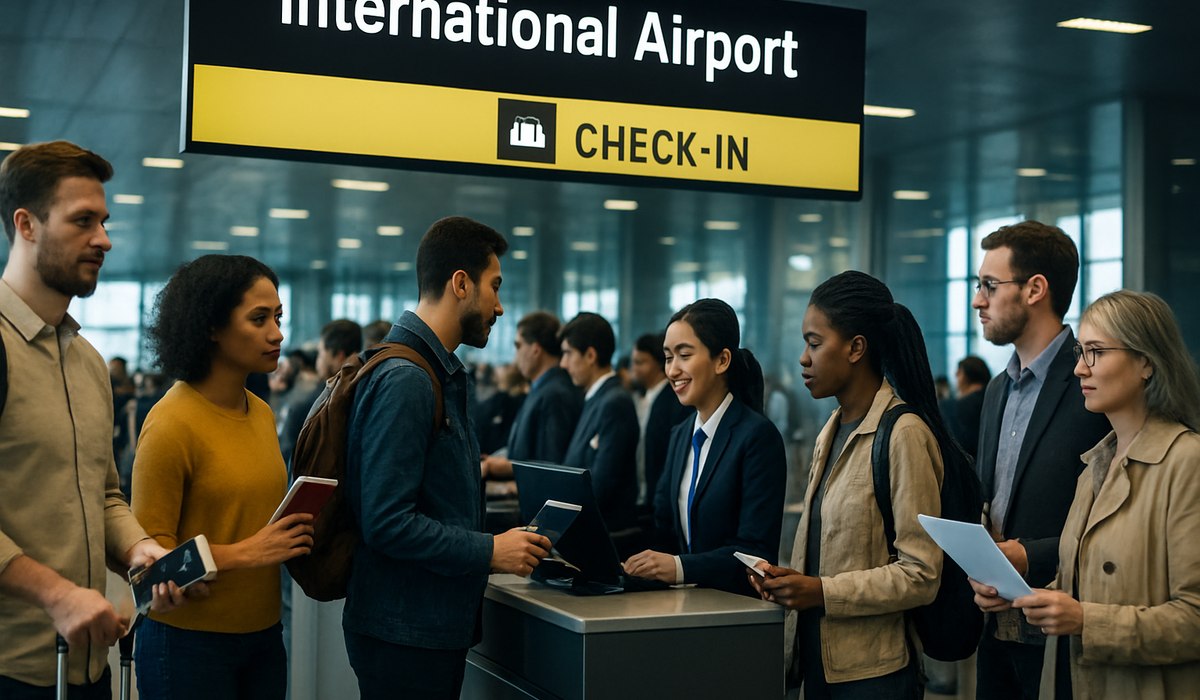
Image generated by AI
Filipino Travelers Stranded by Conflicting Airport Screening Standards
Philippine-based passengers are reporting unexpected boarding denials on Philippines Oman travel routes as airlines and ground handlers continue enforcing outdated health documentation requirements that contradict current Oman entry policies. Since early April 2026, travelers departing from Manila's Ninoy Aquino International Airport and provincial hubs have encountered last-minute screening surprises at airline check-in counters, forcing some to miss flights entirely. The disconnect between simplified official entry rules and conservative airline interpretations is creating a fragmented boarding experience that leaves passengers uncertain about required documentation until they reach the airport—sometimes only minutes before departure windows close.
Fragmented Screening Rules Create Last-Minute Surprises at Check-In
The primary challenge facing Philippines Oman travel passengers stems from the gap between what official sources communicate and what airline staff actually demand during boarding procedures. Oman's official entry guidance, updated through late 2025 and early 2026, eliminated broad COVID-19 vaccination mandates and pre-departure testing requirements for most arrivals. However, multiple airlines operating this route still circulate internal checklists referencing PCR certificates, health app downloads, and on-arrival medical screening protocols that are no longer standard requirements.
Travelers describe arriving at Manila airports with documentation they believed was sufficient, only to be informed at check-in that additional health declarations, travel insurance certificates, or portal registration proofs are required. In documented cases, passengers missed flights after being told their paperwork failed to meet these evolving standards—despite having reviewed both airline websites and official embassy guidance weeks prior. This unpredictability particularly affects leisure and business travelers connecting through Gulf hubs, where tight transfer windows leave no margin for administrative delays.
The Bureau of Immigration in the Philippines has simultaneously introduced updated departure stamps, expanded e-gate rollouts, and enhanced anti-trafficking screening measures. When combined with carrier-specific documentation policies, these layered checks create decision-making uncertainty for both travelers and airport staff. A passenger cleared by Philippine immigration can still face obstacles at the airline counter if staff apply stricter interpretations of destination requirements than the traveler anticipated.
The Gap Between Official Policy and Airport Practice
Oman's border authority has fundamentally restructured its entry framework from pandemic-era restrictions to conventional visa and insurance verification processes. Current official summaries emphasize advance visa acquisition (or visa-on-arrival eligibility depending on nationality) and travel insurance coverage for medical treatment during the stay. Vaccination proof and PCR test results are no longer blanket requirements for the majority of travelers.
Despite this policy evolution, third-party intermediaries—including some airline ground handlers—continue distributing older screening protocols to departure gate staff. This creates a visible friction between what government sources publish and what airport employees enforce. The fragmentation is compounded by the fact that different carriers operating Philippines Oman travel routes may maintain independent documentation standards, meaning two passengers on different flights could face entirely different screening requirements for identical travel.
Industry guidance for Oman's airports still emphasizes early terminal arrival, physical distancing capability, and readiness for health checks should public health circumstances trigger reintroduction of screening. This defensive language—"should they be reintroduced"—reflects administrative caution rather than active requirements, yet it filters into airline procedures as mandatory checklist items.
What Documentation Are Airlines Currently Demanding?
Current reports indicate airlines are requesting some or all of the following items from passengers on Philippines Oman travel routes:
- Valid passport (minimum 6 months validity)
- Visa or visa-on-arrival confirmation
- Travel insurance documentation with medical coverage
- Health declaration forms (despite no longer being mandatory)
- Proof of prior online registration in destination portals
- PCR test certificates (inconsistently required)
- Return or onward flight confirmation
- Proof of accommodation bookings
- Employment or financial capacity documentation
The inconsistency is striking: two airlines departing the same terminal may enforce different subsets of these requirements. Some carriers contact passengers 48 hours before departure with updated checklists; others do not communicate changes until the check-in desk. This asymmetry reflects the absence of unified, publicly accessible screening standards that both airlines and passengers can rely upon.
For travelers connecting through Oman to third destinations, additional layers of screening may apply. An otherwise-cleared passenger can encounter problems if the airline interprets requirements for the final destination more conservatively than stated in official guidance.
How Travelers Can Navigate Conflicting Requirements
Traveler Action Checklist
-
Contact your airline 72 hours before departure – Request a complete, current document checklist specific to your flight and destination, in writing if possible.
-
Verify Oman entry requirements directly – Visit the official Oman Ministry of Home Affairs or your country's Oman embassy website to confirm current mandatory documentation, not airline-published lists.
-
Prepare redundant documentation – Carry original or certified copies of passport, visa confirmation, insurance policy, and health declarations even if they seem outdated, as different staff may request different items.
-
Arrive 4 hours early for international flights – This provides buffer time to resolve unexpected screening issues without missing departure.
-
Document airline staff instructions – If told you need an unusual requirement, request the staff member's name, ID number, and a written explanation, which can support complaints later.
-
Register in advance for any optional online portals – Even if Oman doesn't mandate pre-registration, some airlines incorrectly treat it as mandatory; completing it eliminates one source of confusion.
-
Join traveler communities monitoring this route – Online forums and social media groups tracking Philippines Oman travel often share real-time updates about what airlines are actually enforcing.
-
Consider hiring a travel documentation service – For complex itineraries or work-related travel, services specializing in Philippines-Gulf routes can help navigate conflicting requirements.
What This Means for Travelers
The Philippines Oman travel confusion reflects a broader challenge in air transport: the lag between policy updates and operational implementation. While Oman's government has simplified entry rules, the institutional inertia of airlines, ground handlers, and legacy systems means passengers cannot assume that official guidance translates to airport practice. This creates financial and logistical risk—missed flights cost money, disrupt employment arrangements, and compound stress for already-traveling populations.
For business travelers heading to Gulf employment, outdated screening rules introduce uncertainty into tight scheduling. For leisure passengers connecting through Oman to other regions, unclear documentation standards threaten entire trip itineraries. The absence of unified communication from airlines amplifies confusion: two carriers using the same airport impose different document requirements without coordinating messaging to customers.
Key takeaways for travelers: Treat airline staff instructions as provisional rather than definitive. Seek written confirmation of requirements directly from your carrier. Prepare for the most conservative scenario documented in recent traveler reports, even if official sources suggest simpler requirements. Build extra time into airport arrival to resolve last-minute screening issues.
| Aspect | Current Status | Risk Level | Recommended Action |
|---|---|---|---|
| Oman COVID vaccination requirement | Eliminated as of 2026 | Low | Do not assume proof required |
| Pre-departure PCR testing | No longer mandatory | Medium | Carry test results anyway; airlines may request |
| Travel insurance | Now required (not pandemic-specific) | High | Purchase policy with medical coverage |
| Visa requirements | Standard protocols apply | High | Verify nationality-specific rules; confirm in advance |
| Online portal registration | Optional but increasingly checked | Medium | Complete registration despite optional status |
| Health declaration forms | Outdated but sometimes requested | Medium | Carry completed forms; may be demanded at check-in |
| Employment/financial documentation | Required by Philippine immigration | High | Prepare proof for all international travel |
| Airline communication of requirements | Inconsistent and delayed | High | Do not rely on published checklists; contact 72 hours prior |
Disclaimer
This article is for informational and educational purposes only. It does not constitute legal, financial, or professional advice. While we strive to provide accurate and up-to-date information, travel policies, regulations, and conditions change rapidly. Always verify information with official sources before making travel decisions. Nomad Lawyer makes no representations about the accuracy, reliability, completeness, or suitability of the information provided. Readers should consult qualified professionals for advice specific to their circumstances. The views expressed in this article are those of the author and do not necessarily reflect the views of Nomad Lawyer.
Raushan Kumar
Founder & Lead Developer
Full-stack developer with 11+ years of experience and a passionate traveller. Raushan built Nomad Lawyer from the ground up with a vision to create the best travel and law experience on the web.
Learn more about our team →