
Europe Airport Chaos 2026: Frankfurt and London Lead Disruption Rankings
Europe airport chaos intensifies in 2026 as Frankfurt and London Heathrow dominate delay and cancellation rankings. New data reveals major hubs struggle despite post-pandemic traffic recovery affecting thousands of passengers daily.

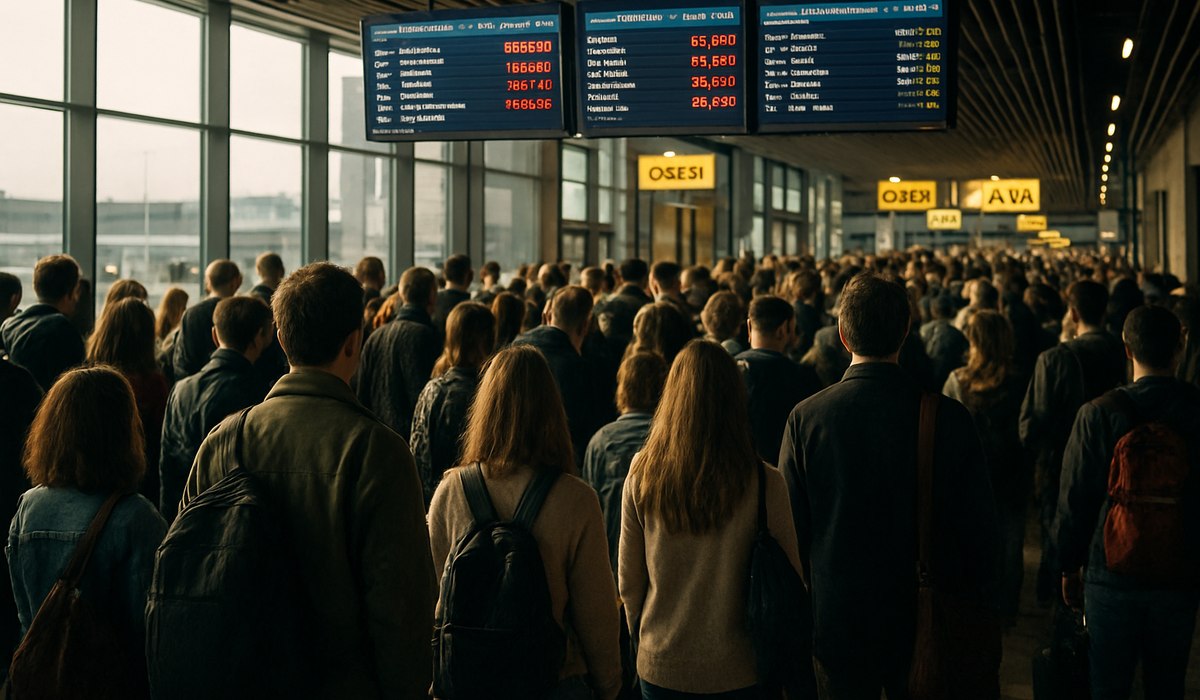
Image generated by AI
Europe's Major Hubs Face Stubborn Disruption Despite Traffic Recovery
Frankfurt, London Heathrow, and Amsterdam are generating disproportionate delays and cancellations throughout 2026, according to latest Eurocontrol network operations data. Europe's largest airport hubs continue to struggle with capacity constraints even as passenger volumes have largely normalized post-pandemic. The situation reflects a structural mismatch: recovery in travel demand has outpaced infrastructure investment and staffing levels at Continental Europe's busiest gateways. Thousands of passengers daily experience delays exceeding 60 minutes, missed connections, and flight cancellations concentrated at these pressure points.
Major Hubs Bear the Brunt of Europe's Airport Disruption
Ground and air traffic flow management delays remain heavily concentrated at high-volume hubs where small capacity shortfalls quickly cascade across the network. Frankfurt International, serving as both Europe's leading passenger hub and the continent's busiest cargo airport, recorded tens of thousands of delayed flights in 2025 with over 1,000 cancellations during peak summer months. Schedule problems at Frankfurt ripple across feeder and onward services spanning Europe and intercontinental routes.
London's dual-airport system amplifies disruption. Both London Heathrow and London Gatwick rank among Europe's airports with the highest cancellation numbers and significant late departures in early 2026 data. Gatwick, constrained by tight runway capacity and sensitivity to staffing disruptions, appears repeatedly in passenger-rights firm analyses as one of the continent's least reliable airports. Amsterdam Schiphol, Paris Charles de Gaulle, and Munich also occupy upper-tier disruption rankings, their sheer scale ensuring continent-wide visibility.
Frankfurt and London Lead Delay and Cancellation Rankings
Current performance metrics reveal Frankfurt and London airports dominating unfavorable statistics. Frankfurt's role as a connecting hub amplifies individual disruption events into network-wide problems. Airlines operating massive hub operations there face cascading knock-on effects across their European networks and beyond.
London Heathrow's position as a premium long-haul gateway means delays affect both connecting passengers and international arrivals. The airport's constrained single-runway operations during heavy weather create bottlenecks affecting hundreds of flights. Gatwick, conversely, struggles with balance between leisure traffic surges and infrastructure capacity, creating vulnerability during holiday peaks and seasonal changeovers.
Recent analysis from passenger-compensation platforms documents that Barcelona El Prat, Palma de Mallorca, and Manchester also rank among Europe's most delay-prone airports in 2026, with average disruption lengths exceeding those at major hubs despite lower overall delay frequencies. This suggests passengers to popular leisure destinations face heightened risk during peak changeover days.
Cascading Effects Ripple Across Continental Networks
When disruption strikes major hubs, consequences extend far beyond individual airports. A single weather event at Frankfurt can trigger queue management protocols affecting flights throughout the Central European corridor. French air traffic controller actions similarly ripple across Western European operations, demonstrating how localized disruptions become continent-wide problems.
Summer 2025 data from Eurocontrol showed convective storms and heat-related constraints accounting for nearly half of network delays June-August. Thunderstorms around Frankfurt force runway throughput reductions, creating hour-long queues. Industrial action compounds these structural strains—a July 2025 French controller strike triggered mass cancellations affecting Paris operations and overflying services across multiple countries.
Technology failures represent an emerging vulnerability layer. September 2025 cyber incidents targeting major software providers' check-in and boarding systems disrupted Brussels, Berlin, and London airports simultaneously, creating improvised manual procedures and cascading passenger processing delays. Southern European airports dependent on summer tourism—including Athens, where on-time departures within 15 minutes dropped below 50 percent during July 2025—struggle when staffing shortages compound traffic surges.
| Airport | Region | Primary Issue | 2025 Delay Rate | Peak Season Risk | Passenger Impact |
|---|---|---|---|---|---|
| Frankfurt (FRA) | Germany | Hub congestion, cargo volume | High | Extreme | Network-wide cascades |
| London Heathrow (LHR) | UK | Runway capacity, weather | High | Severe | Int'l connection delays |
| London Gatwick (LGW) | UK | Single runway, leisure demand | Very High | Critical | Extended disruptions |
| Amsterdam Schiphol (AMS) | Netherlands | Peak season demand | Moderate-High | Severe | European feeder impact |
| Paris CDG (CDG) | France | Staffing, infrastructure | Moderate-High | Severe | Western Europe ripple |
| Barcelona El Prat (BCN) | Spain | Summer tourism surge | Very High | Critical | Leisure destination delays |
What Passengers Need to Know About 2026 Airport Performance
Travelers face meaningful disruption risk at Europe's major hubs throughout 2026, particularly during summer months, holiday peaks, and school break periods. Understanding which airports generate highest delay concentrations helps with booking and contingency planning. Check real-time operations dashboards like FlightAware before traveling to monitor current conditions at your departure and arrival airports.
Build extra buffer time—minimum 2.5 hours for European connections, 3+ hours for intercontinental transfers via Frankfurt or London. Arrive three hours early for Frankfurt and London Heathrow departures, where security and check-in queues intensify during peak hours. Consider flying early morning or late evening to avoid peak congestion windows. Monitor weather forecasts during summer travel, as thunderstorms near major hubs trigger system-wide disruptions within minutes.
Travel insurance covering airline disruptions has become essential. Document all disruptions and delays exceeding 60 minutes for compensation claims under EU261 regulations. Sign up for airline alerts on your booking and download airport apps providing real-time gate, queue, and delay information. Consider alternative airports where practical—flying into secondary hubs rather than major ones reduces disruption exposure.
Traveler Action Checklist
- Check FlightAware current delay statistics for your departure airport 48 hours before travel
- Build minimum 2.5-hour buffer for European connections, 3+ hours for intercontinental transfers
- Arrive 3 hours early at Frankfurt, London Heathrow, or Amsterdam for departure
- Download your airline's mobile app for real-time alerts, gate changes, and delay notifications
- Review EU261 compensation eligibility requirements at US DOT resources
- Purchase travel insurance covering flight disruptions and airline-caused delays
- Monitor weather forecasts for storm systems near your departure hub during summer months
- Document all delays exceeding 60 minutes with boarding passes and receipts for compensation claims
- Consider flying early morning (6-9 AM) or late evening (9 PM+) to avoid peak congestion
- Contact your airline immediately upon significant delay notification to discuss rebooking options
Frequently Asked Questions
What causes Europe airport chaos in 2026? Structural capacity mismatches at major hubs, weather events, industrial action, staffing shortages, and cyber incidents create compounding disruptions. Frankfurt and London airports operate near maximum capacity during peak periods, making even minor events trigger cascading delays affecting hundreds of flights across European networks.
Which European airports have the worst delays? Frankfurt, London Heathrow, London Gatwick, Barcelona El Prat, and Palma de Mallorca lead 2026 disruption rankings. Frankfurt creates network-wide cascades due to its hub role. London airports struggle with runway constraints. Leisure airports face summer surge challenges exceeding their infrastructure capacity.
How long are typical Europe airport delays in 2026? Delays at
Disclaimer
This article is for informational and educational purposes only. It does not constitute legal, financial, or professional advice. While we strive to provide accurate and up-to-date information, travel policies, regulations, and conditions change rapidly. Always verify information with official sources before making travel decisions. Nomad Lawyer makes no representations about the accuracy, reliability, completeness, or suitability of the information provided. Readers should consult qualified professionals for advice specific to their circumstances. The views expressed in this article are those of the author and do not necessarily reflect the views of Nomad Lawyer.
Kunal K Choudhary
Co-Founder & Contributor
A passionate traveller and tech enthusiast. Kunal contributes to the vision and growth of Nomad Lawyer, bringing fresh perspectives and driving the community forward.
Learn more about our team →