
Peru and Ecuador Seamless Border Corridor: Andean Travel Guide 2026
A unified single-window border clearance at Aguas Verdes and Huaquillas cuts Peru-Ecuador transit times from five hours to under seven minutes for 2026 travelers.

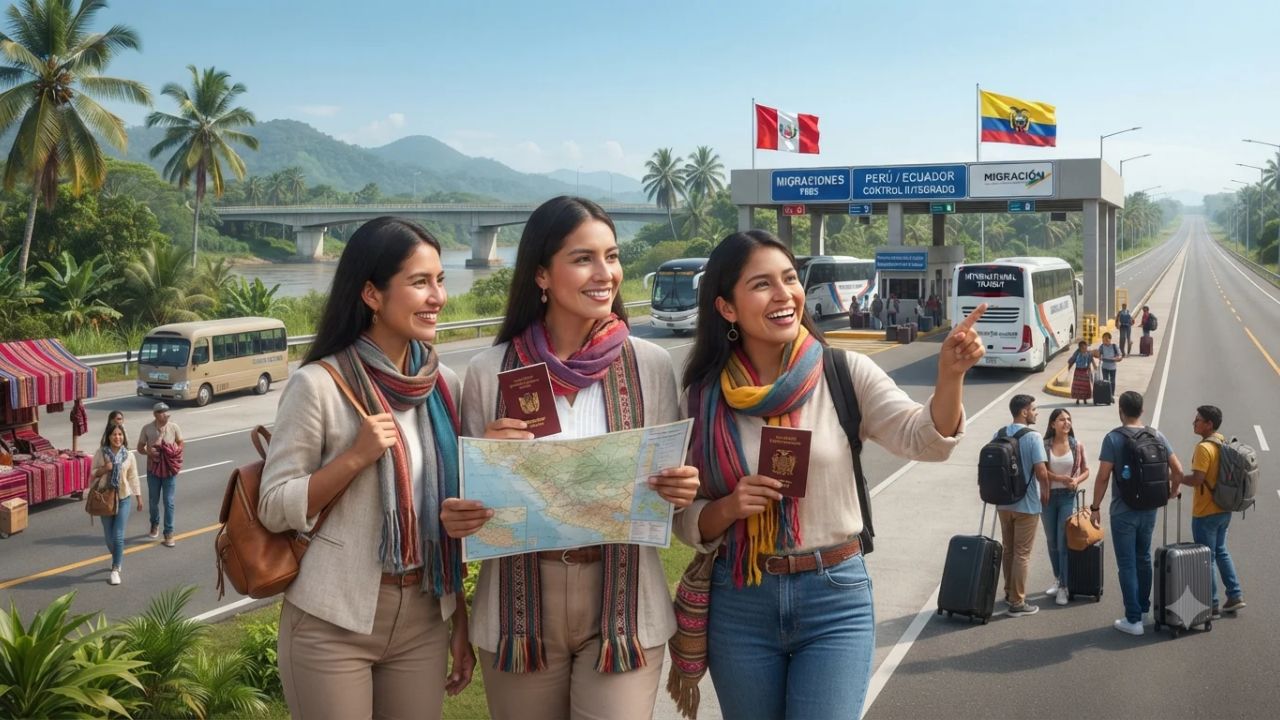
Overland transit between Peru and Ecuador at the primary Aguas Verdes and Huaquillas crossing now takes under seven minutes, down from the historic three-to-five-hour queues that previously choked Pacific-Andean travel circuits. By integrating Peruvian Migraciones and Ecuadorian migration authorities under unified Integrated Border Control Centres (CEBAF), both governments have eliminated duplicate exit-entry checkpoints. Combined with aligned 183-day non-visa tourist stays and direct long-distance coach licensing, travelers can now journey continuously from the equatorial wildlife sanctuaries of the Galápagos and Guayaquil directly down through northern Peru's coastal breaks toward Cusco and Machu Picchu.
The Binational Single-Window Revolution Across the Zarumilla
For decades, crossing the international frontier between Tumbes in northern Peru and El Oro province in southern Ecuador was an exhausting administrative ordeal. Travelers endured duplicate lines: exiting one country on foot, hauling baggage across the Zarumilla River bridge, and queuing again for inward entry stamping. The 1998 Brasilia Peace Accords first resolved historical border disputes, while Decision 503 under the Andean Community of Nations (CAN) laid the framework for mutual identity document recognition. However, only with the full rollout of single-window digital infrastructure have soft-border policies matched physical highway capacity.
At the modernized CEBAF facility, biometric automated gates and shared security databases connect Peru's Migraciones directly with Ecuador's National Police and INTERPOL records. When you present your passport at the counter, a single officer validates both your departure from one state and your legal entry into the other simultaneously.
This administrative efficiency extends across the transport network. Long-distance coach operators now hold reciprocal transit licenses, allowing continuous bus itineraries between Quito, Cuenca, Guayaquil, Machala, Máncora, Piura, Trujillo, and Lima without requiring passengers to change coaches at the border. In the skies, civil aviation authorities have liberalized regional routes linking Piura (PIU) and Tumbes (TBP) with Guayaquil (GYE) and Cuenca (CUE), compressing six-hour multi-hop layovers into direct 50-minute flights operating at load factors exceeding 84 percent.
| Border & Transit Indicator | Historical Legacy Standard | 2026 Synchronized Framework | Traveler Impact |
|---|---|---|---|
| Average Immigration Processing | 3 to 5 hours (peak queues) | Under 7 minutes per group | Eliminates border bottlenecks entirely |
| Checkpoint Architecture | Dual independent checkpoints | Single-window unified CEBAF hall | One-stop exit and entry validation |
| Maximum Tourist Stay Limit | Asymmetrical national stamps | Aligned up to 183 days | Enables extended regional journeys |
| Regional Cross-Border Flights | 6+ hours via Lima or Quito hubs | <50 minutes direct regional links | Fast transit between coast and Andes |
| Overland Freight Logistics Cost | High delays & duplicate inspections | 35% reduction along Pan-American trunk | Lowers consumer costs across border towns |
| Coastal Hospitality Land Deals | Stagnant frontier investment | 40% increase in Tumbes & Piura | Surging boutique lodge and eco-resort builds |
What Makes the Pacific-Andean Corridor Different
The overland route connecting southern Ecuador with northern Peru passes through some of the most ecologically diverse transitions on earth. Within a single day's journey, the scenery shifts from the cloud forests and colonial cobblestones of Cuenca to the equatorial dry forests of Arenillas and Cerros de Amotape, before opening onto the Pacific surf coastline of Máncora and the mangrove estuaries of Puerto Pizarro.
This geographic corridor allows travelers to experience distinct culinary and maritime traditions side-by-side. On the Ecuadorian side of the frontier, coastal kitchens celebrate green plantain dumplings (bolones de verde) and encocado stews simmered in fresh coconut milk. Crossing into Peru, menus immediately highlight fresh ceviche cured in tart Chulucanas limes, served with toasted cancha corn, tender sweet potato, and fresh yellow chili peppers.
The cultural fabric along the border remains deeply intertwined. Artisans in highland villages like Chordeleg in Ecuador and Catacaos in Peru produce intricate filigree silver jewelry using metalworking techniques passed down through pre-Columbian and colonial generations. By preserving access to these artisan corridors, the open border allows travelers to support indigenous craft communities that predate modern national boundaries.
Visitor Insider Tips
Navigating the unified Peru-Ecuador corridor requires attention to transport logistics, currency shifts, and regional routing:
- Currency Preparation: Ecuador uses the United States Dollar (USD), while Peru operates on the Peruvian Sol (PEN). While contactless cards and digital payment apps work at primary hotels and transport terminals, carry small denominations of cash ($1, $5, and $10 bills, or 10 and 20 Sol banknotes) for rural market stalls, tuk-tuks (mototaxis), and roadside fruit stands.
- Opt for Direct International Coaches: Book continuous long-haul buses with established operators like Cruz del Sur, Civa, or Superciva. These coaches process passengers through CEBAF customs bays while your heavy luggage remains secured in the cargo hold under joint agricultural inspection.
- Best Time for Surf and Coastal Wildlife: Visit between December and April for warm Pacific waters, consistent northern swells at Máncora and Los Órganos, and optimal birdwatching conditions in the Manglares de Tumbes National Sanctuary.
- Crossing During Daylight Hours: While the CEBAF facility operates 24/7, traversing the Pan-American Highway during daylight allows you to enjoy coastal views and ensures regular onward public transit connections into Tumbes or Machala.
- Sun and Insect Protection in Dry Forests: The dry forest reserves of Tumbes and Arenillas host unique endemic bird species but experience intense equatorial sun. Pack broad-spectrum mineral sunscreen, a wide-brimmed hat, and plant-based insect repellent for mangrove boat excursions.
Cultural and Environmental Context
The northern Pacific border region contains fragile ecosystems vulnerable to unregulated development. The mangrove estuaries of the Gulf of Guayaquil and Puerto Pizarro provide critical spawning grounds for black clams (conchas negras) and red crabs. To prevent overharvesting, binational environmental ministries have partnered with local artisanal fishing associations to establish seasonal harvesting bans and convert former mangrove loggers into certified eco-tourist boat guides.
Inland, the Binational Mangrove Conservation Program and joint forestry initiatives protect the shared equatorial dry forests of Cerros de Amotape National Park in Peru and the Arenillas Ecological Reserve in Ecuador. These reserves protect endangered populations of the mantled howler monkey, the white-tailed deer, and over 80 endemic bird species cataloged by the UNESCO World Heritage Centre.
Community-managed eco-lodges operated by Awajún and Shuar indigenous groups in the eastern headwaters of the Amazon basin provide models for low-impact cultural tourism. Official initiatives led jointly by PROMPERÚ and Ecuador's Ministry of Tourism ensure that international travel revenue directly funds local clean water infrastructure, community healthcare stations, and rainforest conservation reserves.
FAQ: Crossing the Peru-Ecuador Border 2026
Do I need to get off the bus at the Aguas Verdes-Huaquillas border?
Yes, all passengers disembark briefly inside the air-conditioned CEBAF terminal for a single biometric passport scan and facial check, taking under seven minutes.
How long can tourists stay in Peru and Ecuador without a visa?
Eligible international passport holders receive up to 183 days of authorized tourist stay per country upon arrival at the unified border crossing.
Can I book a single tour connecting the Galápagos and Machu Picchu?
Yes, major tour operators now provide coordinated multi-nation packages connecting Quito, the Galápagos, Cuenca, northern Peru beaches, and Cusco using seamless overland and air corridors.
Is the overland border crossing safe for international travelers?
The modern CEBAF facility features joint police patrols, smart surveillance, and direct transit coaches, making official border crossings secure when avoiding informal crossings (pasos informales).
From equatorial mangrove channels to high Andean trails, the open frontier between Peru and Ecuador unites South America's most legendary wonders into one extraordinary journey.
Related Travel Guides
Disclaimer
This article is for informational and educational purposes only. It does not constitute legal, financial, or professional advice. While we strive to provide accurate and up-to-date information, travel policies, regulations, and conditions change rapidly. Always verify information with official sources before making travel decisions. Nomad Lawyer makes no representations about the accuracy, reliability, completeness, or suitability of the information provided. Readers should consult qualified professionals for advice specific to their circumstances. The views expressed in this article are those of the author and do not necessarily reflect the views of Nomad Lawyer.
Kunal K Choudhary
Co-Founder & Contributor
A passionate traveller and tech enthusiast. Kunal contributes to the vision and growth of Nomad Lawyer, bringing fresh perspectives and driving the community forward.
Learn more about our team →