
Kenya Maasai Mara Great Migration: Luxury Safari and Conservancy Guide 2026
Over two million wildebeest and zebras converge on the Mara River as private community conservancies pioneer low-density luxury safaris in Kenya this 2026.

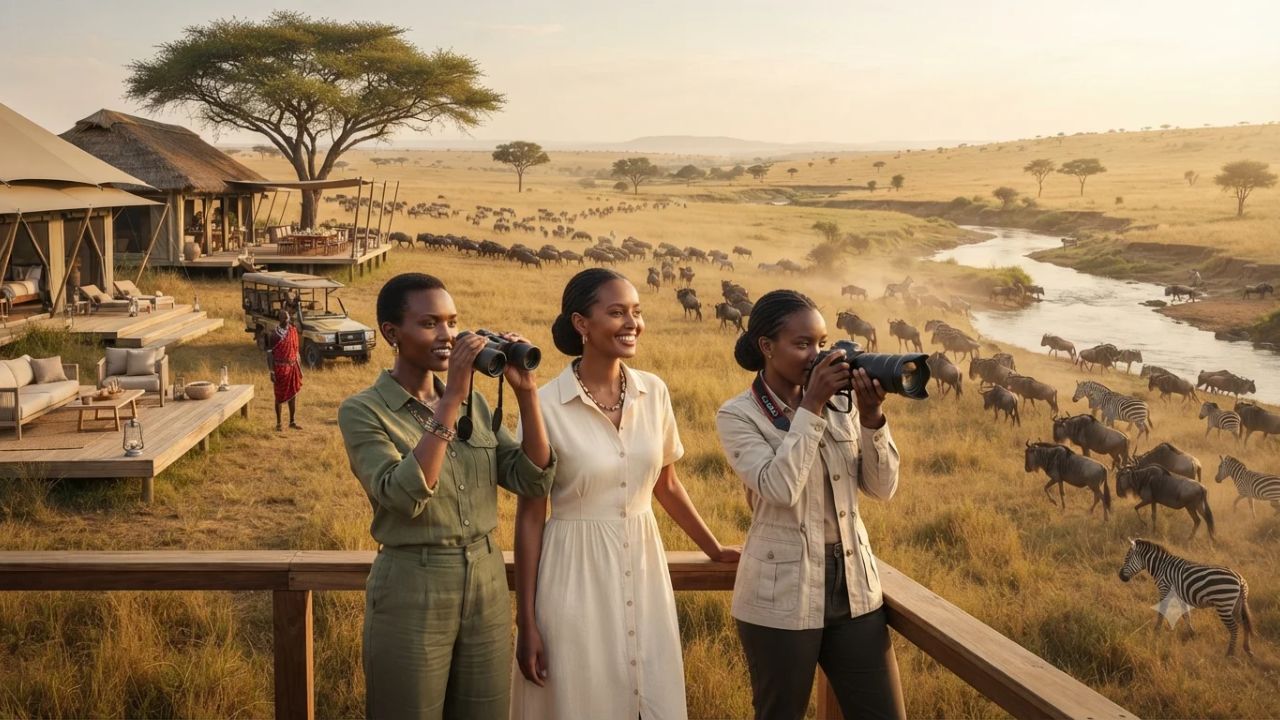
More than two million wildebeest, zebras, and gazelles navigate the transboundary Serengeti-Mara ecosystem each year, yet river crossings cannot be scheduled by calendar dates because herd movements are triggered entirely by localized thunderstorms and fresh grass shoots. As the peak migration season reaches its climax between late September and October across the Mara River, discerning safari travelers are pivoting away from congested reserve vehicle clusters toward exclusive community conservancies. By pairing private game viewing concessions with authentic Maasai land partnerships and low-impact luxury tented camps, Kenya’s premier wildlife haven is redefining ethical safari exploration.
Seasonal River Crossings and the Greater Mara Wildlife Dynamic
The annual cycle of the Great Migration represents the largest overland mammal movement on Earth. After spending the dry season grazing across the northern Serengeti, massive herds enter the Maasai Mara National Reserve and its adjoining private concessions in search of perennial water and nutrient-rich red oat grass.
The focal point of this journey centers on the steep, silted banks of the Mara and Talek rivers. Thousands of animals gather along the escarpment for hours—and sometimes days—hesitating before a single brave wildebeest leaps into the brown, churning current. What follows is a surge of thundering hooves, swimming herds braving Nile crocodiles, and apex predators including lions, leopards, and spotted hyenas waiting along the riverine acacia woodlands.
According to conservation guidelines monitored by the Kenya Wildlife Service, high-density tourist vehicle crowding at crossing points poses severe risks to animal migration corridors. In response, private concessions surrounding the reserve—including Mara North, Olare Motorogi, and Naboisho—enforce strict limits on vehicle numbers per wildlife sighting and maintain lower guest-to-land ratios.
| Safari Sanctuary Tier | Land Management Model | Vehicle Density Limits | Distinct Safari Activities |
|---|---|---|---|
| Maasai Mara National Reserve | County government administered | Standard public access rules | Daylight game drives, river crossing points |
| Private Community Conservancies | Maasai landowner leases & eco-camps | Max 5 vehicles per predator sighting | Night drives, walking safaris, off-road tracking |
| Air Transit from Nairobi | Scheduled bush flights from Wilson (WIL) | 45-minute flight to bush airstrips | Bypasses 5- to 6-hour overland highway drive |
| Peak Migration Window | July to October annually | Climax activity late Sept / early Oct | Herd movements dictated by rainfall patterns |
| Apex Predator Concentrations | Greater Mara ecosystem | High density of lion prides & cheetahs | Protected riverine forest and open savanna plains |
What Makes the Greater Mara Ecosystem Different
The Greater Maasai Mara ecosystem encompasses 1,510 square kilometers of protected national reserve bordered by over 1,400 square kilometers of community-owned conservancies. Unlike fenced reserves found in southern Africa, the Mara ecosystem remains entirely open, allowing wildlife to migrate across ancient corridors stretching into Tanzania’s Serengeti.
The savannah is characterized by broad grasslands punctuated by solitary desert date palms, rocky granite outcrops (kopjes), and meandering rivers lined with dense riverine fig trees. This varied topography supports extraordinary biodiversity year-round: endangered black rhinos browse in dense thickets, large lion coalitions patrol open plains, and tree-climbing leopards hunt along seasonal luggas (dry riverbeds).
Staying in private community conservancies transforms the safari rhythm. Because conservancy lands are leased directly from local Maasai pastoralist families, guests enjoy privileges prohibited within the national reserve, such as guided bush walks with Maasai warriors, spot-lit night game drives to track nocturnal servals and aardvarks, and private bush dinners set beneath starry equatorial skies.
Visitor Insider Tips
To plan an exceptional safari in the Maasai Mara while minimizing environmental impact, consider these practical field tips:
- Patience at the Riverbank: A single river crossing can take four to six hours of quiet waiting. Never pressure your safari guide to position the vehicle close to the water's edge; premature vehicle movements will spook the herd leader and cause the entire herd to retreat.
- Split Your Stay Across Zones: Book two nights in the National Reserve near the Mara River for crossing opportunities, followed by three nights in a private conservancy (such as Mara North or Olare Motorogi) for intimate big-cat tracking and uncrowded photographic encounters.
- Fly from Wilson Airport (WIL): Avoid the bumpy 5- to 6-hour drive from Nairobi by booking scheduled bush flights on Safarilink or Airkenya from Nairobi’s Wilson Airport. Note that light aircraft strictly enforce a soft-bag luggage limit of 15 kilograms (33 lbs) per passenger.
- Photographic Gear Selection: Bring two camera bodies—one fitted with a versatile 100-400mm or 150-600mm telephoto lens for distant wildlife and crossing action, and a second with a 24-70mm lens for wide-angle landscape and dust-lit sunset compositions.
- Support Local Guild Guides: Request a certified Kenya Professional Safari Guides Association (KPSGA) Silver or Gold-level guide, ensuring exceptional tracking skills, wildlife behavioral knowledge, and strict adherence to conservation ethics.
Cultural and Environmental Context
The long-term survival of the Maasai Mara ecosystem depends on the symbiotic relationship between wildlife conservation and the indigenous Maasai people. For centuries, semi-nomadic Maasai pastoralists have coexisted with wild herbivores, grazing their cattle alongside wildebeest and zebras.
The creation of the Maasai Mara Wildlife Conservancies Association has established an innovative land-lease model. Tourism operators pay guaranteed monthly lease fees and bed-night levies directly to thousands of individual Maasai landowners. This financial model ensures that local communities directly benefit from keeping their ancestral lands open for wildlife rather than converting savannahs into fenced agricultural plots.
Official sustainable tourism initiatives supported by Magical Kenya mandate that luxury tented camps operate on 100 percent solar energy, utilize organic composting, and eliminate single-use plastics. Many properties also sponsor local primary schools, clean water boreholes, and mobile health clinics, creating a virtuous circle where travel spend directly empowers rural communities.
FAQ: Planning a Maasai Mara Safari 2026
When is the best time to see the Great Migration river crossings?
Late July through mid-October offers the highest probability of witnessing large herds crossing the Mara and Talek rivers.
How do I get to the Maasai Mara from Nairobi?
Take a 45-minute scheduled safari flight from Nairobi Wilson Airport (WIL) to local bush airstrips (such as Ol Kiombo, Musiara, or Mara North), or hire a 4x4 safari cruiser for a 5- to 6-hour road journey.
Do I need park permits for private conservancies?
Conservancy daily conservation fees are typically bundled directly into your all-inclusive luxury safari camp rate, granting full access to game drives across the concession.
Is malaria medication required for traveling to Kenya?
Yes, the Maasai Mara is a malaria-risk area; consult your travel physician for recommended antimalarial prophylaxis and use insect repellent during dawn and dusk game drives.
As dust rises above the winding Mara River and golden sunlight sweeps across the savannah, Kenya’s wild heart reveals nature’s greatest drama in its purest, untamed form.
Related Travel Guides
- Margaret River Spring Wildflowers and Cabernet: Western Australia Guide 2026
- Bali Padel Tourism: TUI Blue Berawa and Canggu Active Travel Guide 2026
- Atlantic City Luxury Evolution: Ocean Casino Resort and Boardwalk Guide 2026
- Pennsylvania Tourism Drives $87B Economy: Philadelphia and Heritage Guide 2026
Disclaimer
This article is for informational and educational purposes only. It does not constitute legal, financial, or professional advice. While we strive to provide accurate and up-to-date information, travel policies, regulations, and conditions change rapidly. Always verify information with official sources before making travel decisions. Nomad Lawyer makes no representations about the accuracy, reliability, completeness, or suitability of the information provided. Readers should consult qualified professionals for advice specific to their circumstances. The views expressed in this article are those of the author and do not necessarily reflect the views of Nomad Lawyer.
Preeti Gunjan
Contributor & Community Manager
A passionate traveller and community builder. Preeti helps grow the Nomad Lawyer community, fostering engagement and bringing the reader experience to life.
Learn more about our team →