Penang Eyes Direct Flights to Northern China: Malaysia's Cultural Island Expands Air Corridors in 2026

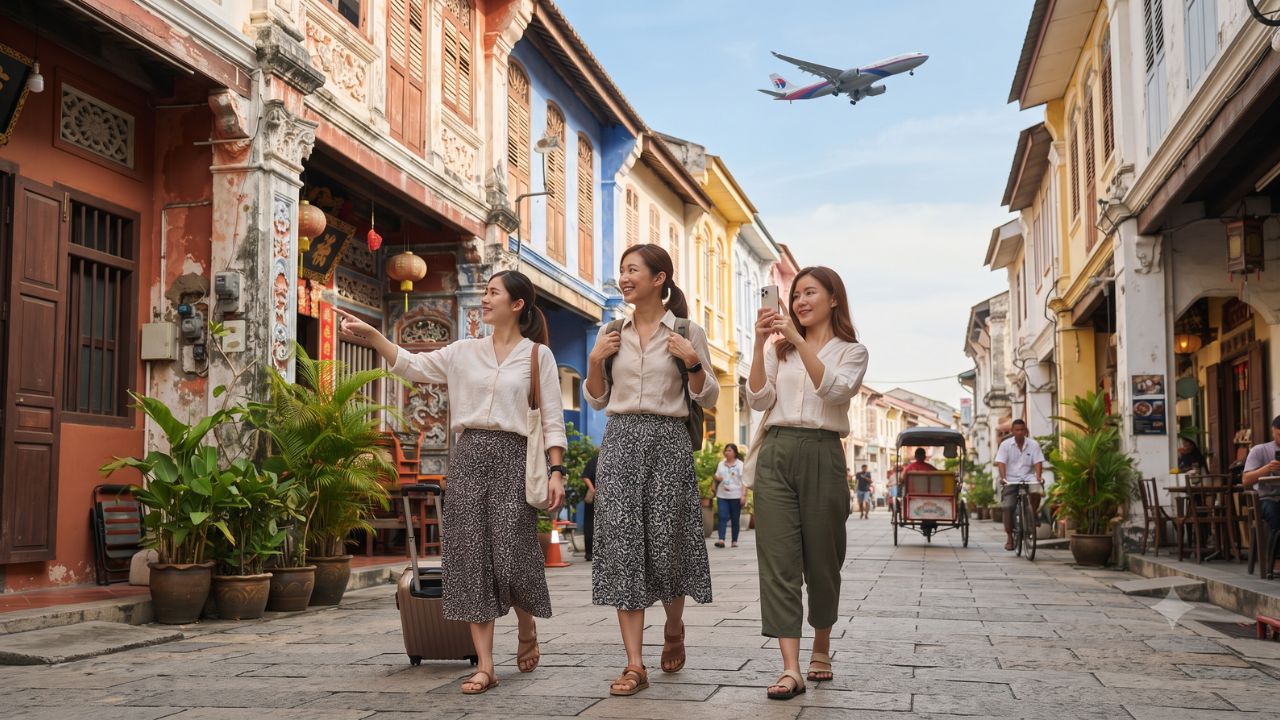
While most international food travelers flock to Kimberley Street for late-night duck noodle soup, Penang’s oldest morning markets in Chowrasta have served handmade nutmeg juice and steamed apom pancakes to clan elders for over a century. Malaysia's premier culinary and cultural island is preparing for a new era of international accessibility as state tourism authorities and airport operators actively explore direct flight connections into major population centers across northern China. Building on an established aviation foundation, state delegations held specialized industry engagement sessions with Chinese carriers in late September 2026 to evaluate passenger demand, aircraft slot availability, and long-term route viability.
Currently, the coastal port city of Qingdao stands as the sole northern Chinese gateway offering nonstop flights into Penang International Airport. By diversifying its route network into additional northern metropolitan hubs, Penang aims to eliminate multi-stop transfers through Kuala Lumpur or Singapore, opening direct access for cultural explorers, heritage lovers, and business travelers from across East Asia.
The Northern Aviation Horizon: Broadening Beyond the Qingdao Corridor
Penang's strategic outreach into northern China represents a deliberate move to balance its international visitor arrivals. The island already enjoys established direct air links with major southern and central Chinese cities, including Guangzhou, Xiamen, Shanghai, Shenzhen, Chengdu, and Qingdao, alongside strong regional frequencies connecting through Hong Kong.
Expanding direct air corridors northward targets high-yield urban travelers seeking tropical escapes, culinary immersion, and historical connections.
| Chinese Source Market | Current Flight Connectivity Status | Strategic Value for Penang Travelers |
|---|---|---|
| Qingdao | Active Direct Nonstop Flights | Sole operating northern China aviation gateway |
| Guangzhou & Shenzhen | High-Frequency Daily Direct Flights | Primary southern China commercial & trading link |
| Shanghai | Daily Scheduled Direct Flights | Eastern economic hub & outbound leisure source |
| Chengdu | Regular Direct Services | Southwestern culinary & cultural exchange corridor |
| Xiamen | Direct Nonstop Operations | Deep historical ancestral ties with Hokkien diaspora |
| Hong Kong | Multi-Carrier Daily Operations | Transpacific & international connecting hub |
| Emerging Northern Hubs | Under Carrier & Regulatory Evaluation | Direct access from Beijing, Tianjin, and Hebei |
According to data monitored by Tourism Malaysia, Chinese travelers prioritize destinations offering authentic culinary heritage, English- and Mandarin-friendly hospitality, and compact urban centers that can be easily explored on foot or via light transit. Direct air links significantly shorten travel times, making Penang an appealing standalone tropical getaway rather than merely a brief stop on a multi-country package tour.
What Makes Penang Unique: Living Heritage and Street Food Capital
Penang's unique identity centers on its state capital, George Town, inscribed as a prestigious UNESCO World Heritage Site. Unlike sanitized outdoor museum villages, George Town is a bustling living settlement where fifth-generation tinsmiths, joss-stick makers, and rattan weavers operate out of pastel-hued Peranakan shophouses beneath intricate Chinese clan guild temples.
The island’s cultural life is deeply intertwined with its legendary street-food heritage, promoted worldwide by Penang Global Tourism. Hawkers cook over roaring wok burners in open-air hawker centers, tossing wok-charred char kway teow with duck eggs and blood cockles, simmering tamarind-infused asam laksa broth with flaked mackerel, and baking crispy roti canai on iron griddles. Along the historic waterfront, six wooden stilt villages known as the Clan Jetties—including Chew Jetty and Tan Jetty—stand as living reminders of 19th-century Chinese maritime settlement.
Visitor Insider Tips: Experiencing Penang Like a Local
- Utilize the Free CAT Bus to Navigate the UNESCO Zone: Skip expensive tourist taxis inside historic George Town. The Rapid Penang Central Area Transit (CAT) is a complimentary air-conditioned shuttle bus that loops continuously between Weld Quay Ferry Terminal and Komtar, stopping at key heritage landmarks like Fort Cornwallis, Little India, and Cheong Fatt Tze Blue Mansion.
- Order Like a Local at Traditional Kopitiams: When dining at heritage coffee shops like Toh Soon Cafe or Kedai Kopi Seng Thor, order drinks using local Hokkien coffee terminology: kopi-o (black coffee with sugar), kopi-c (coffee with evaporated milk), or cham (a harmonious blend of local black coffee and milk tea). Always order a plate of charcoal-toasted Hainanese bread with homemade pandan kaya spread and soft-boiled eggs.
- Visit Kek Lok Si Temple in Early Morning: Southeast Asia’s largest Buddhist temple in Air Itam becomes crowded and hot by midday. Arrive at 8:30 am to ride the inclined lift up to the towering 30-meter bronze statue of the Goddess of Mercy (Kuan Yin) without lines, then walk down to the Air Itam market below for legendary sister curry mee served with cuttlefish and pig blood curd.
- Respect Etiquette Along the Wooden Clan Jetties: The Clan Jetties are residential family homes built on wooden stilts over tidal mudflats. When visiting Chew Jetty or Lee Jetty, maintain low noise levels, avoid photographing through private open front doors, and do not use motorized scooters on the narrow timber walkways.
- Escape the Midday Heat in Teluk Bahang and Penang Hill: When tropical humidity peaks in the afternoon, take the fast funicular railway up to Penang Hill (Bukit Bendera) to enjoy 21-degree Celsius mountain breezes and walk along The Habitat rainforest canopy walkways, or visit the Tropical Spice Garden in Teluk Bahang to sample wild nutmeg teas.
Cultural and Environmental Context of Penang's Tourism Expansion
As international aviation links multiply, Penang faces the delicate challenge of balancing visitor growth with historic preservation. Surging traveler numbers create economic opportunities for local boutique hotels, trishaw operators, and artisan bakeries, but can also accelerate gentrification within the UNESCO heritage zone.
State heritage agencies enforce strict architectural conservation guidelines to prevent historic shophouses from being converted into generic chain stores. Sustainable tourism initiatives encourage visitors to explore community ecotourism projects in Balik Pulau on the island’s quiet western coast, where organic durian orchards, traditional Malay fishing villages, and mangrove conservation zones offer authentic rural experiences away from urban core congestion.
FAQ: Visiting Penang and Northern China Flight Links 2026
Which northern Chinese city currently has direct flights to Penang?
Qingdao is currently the only city in northern China operating nonstop direct commercial flights into Penang International Airport.
What is the best neighborhood to stay in for first-time visitors to Penang?
Staying within the George Town UNESCO core zone near Muntri Street, Armenian Street, or Chulia Street allows travelers to explore temples, street art, and hawker stalls easily on foot.
What is the primary language spoken in Penang?
English, Malay, Mandarin, and Penang Hokkien are widely spoken across Penang, making communication effortless for international travelers.
Related Travel Guides
This article is for informational purposes. Flight routes, passenger regulations, visa rules, and transit advisories are subject to change by airlines and aviation authorities. Readers are advised to verify schedules and travel documentation with relevant carriers and border agencies before departure.
Related Stories

Greece Tourism Crisis 2026: Skiathos and Peripheral Islands Face 30% Drop in Border Travel

Spain Tourism 2030 Strategy: New Logistics and Regulations for Barcelona, Madrid, and the Islands