
Paraguay and South America's Passport Revolution: How Mercosur Mobility Is Transforming Global Travel in 2026
With visa-free access to around 145 global destinations and frictionless ID-card travel across Mercosur, Paraguay emerges as an agile player in South American travel.

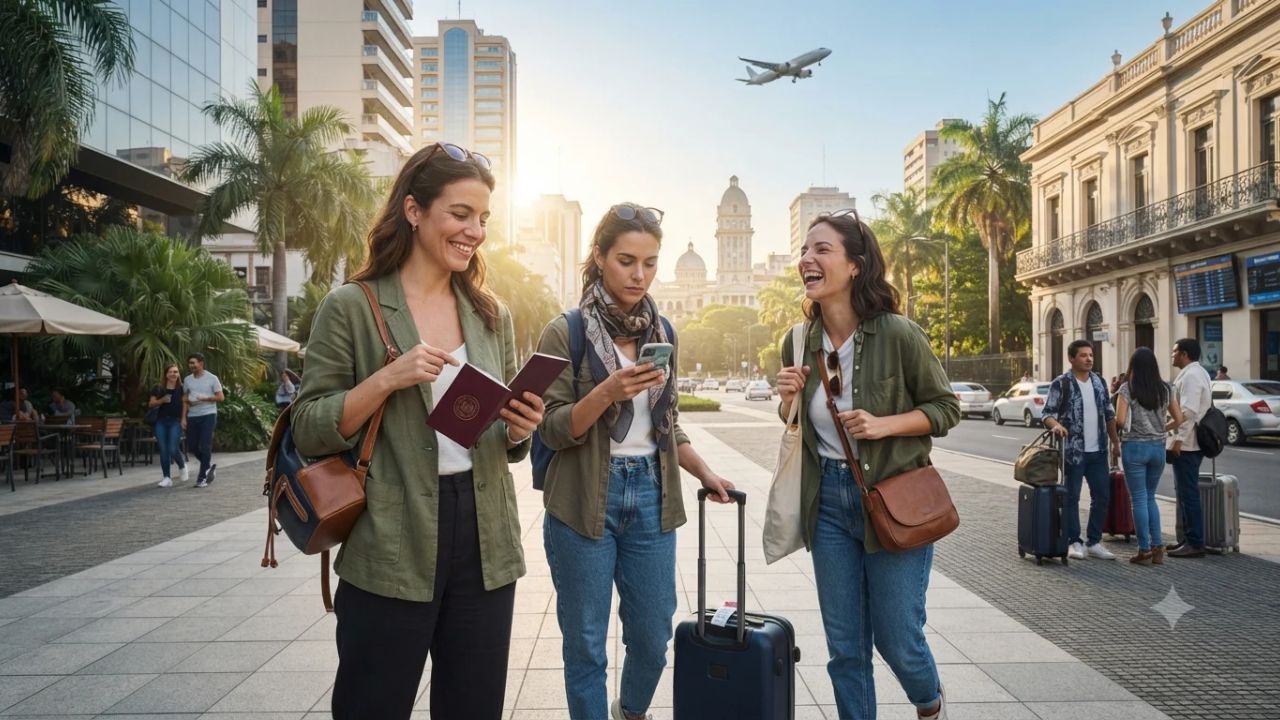
Image generated by AI
Without waiting in consular lines or stamping a single passport page, a traveler carrying a Paraguayan national identity document can freely navigate across nine South American nations, from the Atlantic beaches of Uruguay to the Andean valleys of Colombia. On the global stage, this freedom extends across oceans: a Paraguayan passport now unlocks simplified or visa-free entry to around 145 destinations worldwide. In 2026, South America is demonstrating how regional integration frameworks, diplomatic reciprocity, and digital immigration systems are dismantling historical borders, placing the continent at the forefront of international mobility.
As Paraguay prepares to host the South American Bird Fair for the first time, this landlocked nation is shedding its historic reputation as a transit backwater. Positioned at the geographic heart of the Southern Cone, Paraguay exemplifies how continental accords like the Mercosur Official Portal framework have turned shared geography into seamless mobility, linking local community life with global tourism flows.
The Continental Rise of South American Passport Power
The dramatic expansion of South American travel freedom in 2026 is grounded in two interlocking diplomatic mechanisms: internal regional freedom of movement and aggressive bilateral outreach with Europe and Asia. Within the continent, founding Mercosur members Argentina, Brazil, Paraguay, and Uruguay—joined by associated partners Chile, Bolivia, Colombia, Ecuador, and Peru—have established a border framework that rivals the European Union's Schengen Area. Eligible citizens cross contiguous frontiers simply by showing their plastic national identity cards, eliminating the bureaucratic friction that historically stifled intercontinental trade and cultural exchange.
Globally, South American passports represent some of the most versatile travel credentials in the world. Chile leads the continent with approximately 170-plus destinations accessible without a traditional visa, benefiting from broad diplomatic agreements spanning Europe, the Americas, and the Asia-Pacific basin. Argentina and Brazil follow closely with around 168 visa-free or simplified destinations each, reflecting their expansive diplomatic footprint. Uruguay maintains access to around 150-plus destinations, while Paraguay commands entry to around 145 destinations, ahead of regional peers like Peru with around 140-plus, Colombia with around 100-plus, and Ecuador with around 90-plus accessible destinations.
For Paraguayan citizens, this international mobility provides direct, short-stay visa-free access throughout the European Schengen Area, including Spain, France, Germany, Italy, Portugal, the Netherlands, and Switzerland. In Asia, visa-free access extends to world commerce and culture capitals such as Japan, Singapore, Malaysia, Hong Kong, and the Philippines, alongside simplified entry arrangements into South Korea. Within the Americas, Mexico and Caribbean destinations including the Bahamas, Barbados, Jamaica, and the Dominican Republic welcome Paraguayan tourists without consular visas, even as traditional visa mandates remain in place for travel to the United States and Canada.
What Sets Paraguay's Travel Culture Apart
While neighboring giants Brazil and Argentina command global headlines, Paraguay preserves an authentic bilingual society that remains deeply anchored in its indigenous roots. It is the only nation in the Americas where an indigenous tongue—Guaraní—is spoken by the overwhelming majority of the population alongside Spanish. This linguistic pride shapes daily life, from the street markets of Asunción to quiet riverbank settlements along the Río Paraguay.
Nowhere is this cultural identity more visible than in the ritual of tereré, an infusion of yerba mate steeped in ice-cold water flavored with freshly pounded medicinal herbs known as yuyos. Carrying an insulated thermos and a cow-horn guampa is not a tourist novelty; it is a universal social anchor that unites politicians, bus drivers, and students. Sharing tereré forms the foundation of hospitality, signaling trust and community belonging across all social boundaries.
Historically, the country is home to the stunning Jesuit Missions of La Santísima Trinidad de Paraná and Jesús de Tavarangue, protected by the UNESCO World Heritage Centre. These magnificent red sandstone ruins stand as enduring monuments to seventeenth-century communal societies, where European baroque architecture merged with indigenous artisan craftsmanship in complete seclusion from coastal colonial centers.
Visitor Insider Tips
Navigating Paraguay and its interconnected borders requires an appreciation for local rhythms, currency practicalities, and border protocols.
- Master the Triple Frontier Crossing: When traveling between Ciudad del Este in Paraguay, Foz do Iguaçu in Brazil, and Puerto Iguazú in Argentina, remember that local commuter shuttles often breeze through border posts without stopping. If you are continuing beyond the border zone, you must actively request the driver to wait while you step into immigration offices to secure formal entry and exit passport stamps.
- Carry Guaraníes for Local Markets: While credit cards work reliably in Asunción's upscale shopping centers in Villa Morra, street vendors at Mercado 4, rural artisans, and local colectivos operate strictly on cash in Paraguayan guaraníes. Always inspect bills, as banks and currency exchanges will reject even slightly torn foreign banknotes.
- Embrace Tereré Etiquette: When offered a guampa of tereré by a local host, accept it with your right hand, drink the entire infusion until the straw makes a bubbling sound, and hand it straight back. Only say gracias when you do not wish to be served another round.
- Time Your Chaco Expeditions: If you plan to journey along the Trans-Chaco Highway toward the Mennonite settlements of Filadelfia or the wild wildlife corridors of the Dry Chaco, travel between May and September. Summer temperatures in the Chaco routinely exceed 42 degrees Celsius, turning dirt tracks into impassable dust or treacherous mud after sudden tropical cloudbursts.
- Explore Asunción's Historic Downtown on Sunday Mornings: The historic center around the Palacio de los López, the Panteón Nacional de los Héroes, and the leafy Plaza Uruguaya is delightfully tranquil on Sunday mornings, perfect for quiet photography and admiring fading neoclassic facades without commercial traffic.
Cultural and Environmental Context
The expansion of cross-border mobility coincides with an important turning point for Paraguayan environmental stewardship. Hosting the South American Bird Fair for the first time highlights the country's extraordinary avian biodiversity, bringing global conservationists to protect critical habitats in the Atlantic Forest and the vast wetlands of the Pantanal.
Tourism initiatives developed alongside the Secretaría Nacional de Turismo de Paraguay increasingly focus on community-based rural tourism, where indigenous Guaraní communities and family-run estancias share sustainable agriculture, traditional weaving, and birding routes with international visitors. However, rapid agricultural expansion and deforestation in the fragile Chaco present real ecological challenges. Responsible travelers play a direct role in preservation by selecting verified community guides, supporting indigenous craft cooperatives, and contributing to regional reforestation trusts dedicated to safeguarding Paraguay's unique natural heritage.
FAQ: Visiting Paraguay and South American Travel 2026
Can international tourists travel across South America using just an ID card? No. ID-card travel across Mercosur applies specifically to citizens of member and associated South American states. International travelers must carry a valid passport with at least six months of validity.
Do visitors need a visa to enter Paraguay? Passport holders from the European Union, the United Kingdom, the United States, Canada, and Australia can enter Paraguay visa-free for tourism stays of up to 90 days.
What is the best time of year to visit Paraguay? The southern hemisphere winter and shoulder months from May through September offer pleasant, warm daytime temperatures and cool evenings, avoiding the intense heat of subtropical summer.
What is the national currency of Paraguay? The official currency is the Paraguayan guaraní (PYG). ATMs are widespread in major cities, but carrying cash is advisable when traveling into rural areas and the Chaco.
Across the sunlit plazas of Asunción and the quiet trails of the Chaco, South America's spirit of open borders reminds travelers that true discovery begins when barriers fall.
Related Travel Guides
Travel California & New York 2026: Rising Costs Reshape US Destination Appeal
California best affordable suburbs near major cities 2026
10 Best Underrated Destinations in South America, According To Reddit
Disclaimer
This article is for informational and educational purposes only. It does not constitute legal, financial, or professional advice. While we strive to provide accurate and up-to-date information, travel policies, regulations, and conditions change rapidly. Always verify information with official sources before making travel decisions. Nomad Lawyer makes no representations about the accuracy, reliability, completeness, or suitability of the information provided. Readers should consult qualified professionals for advice specific to their circumstances. The views expressed in this article are those of the author and do not necessarily reflect the views of Nomad Lawyer.
Preeti Gunjan
Contributor & Community Manager
A passionate traveller and community builder. Preeti helps grow the Nomad Lawyer community, fostering engagement and bringing the reader experience to life.
Learn more about our team →