
Paraguay Hosts the South American Bird Fair, Where Argentina and Other Nations Are Predicted to Participate
Paraguay Hosts the South American Bird Fair, Where Argentina and Other Nations Are Predicted to Participate

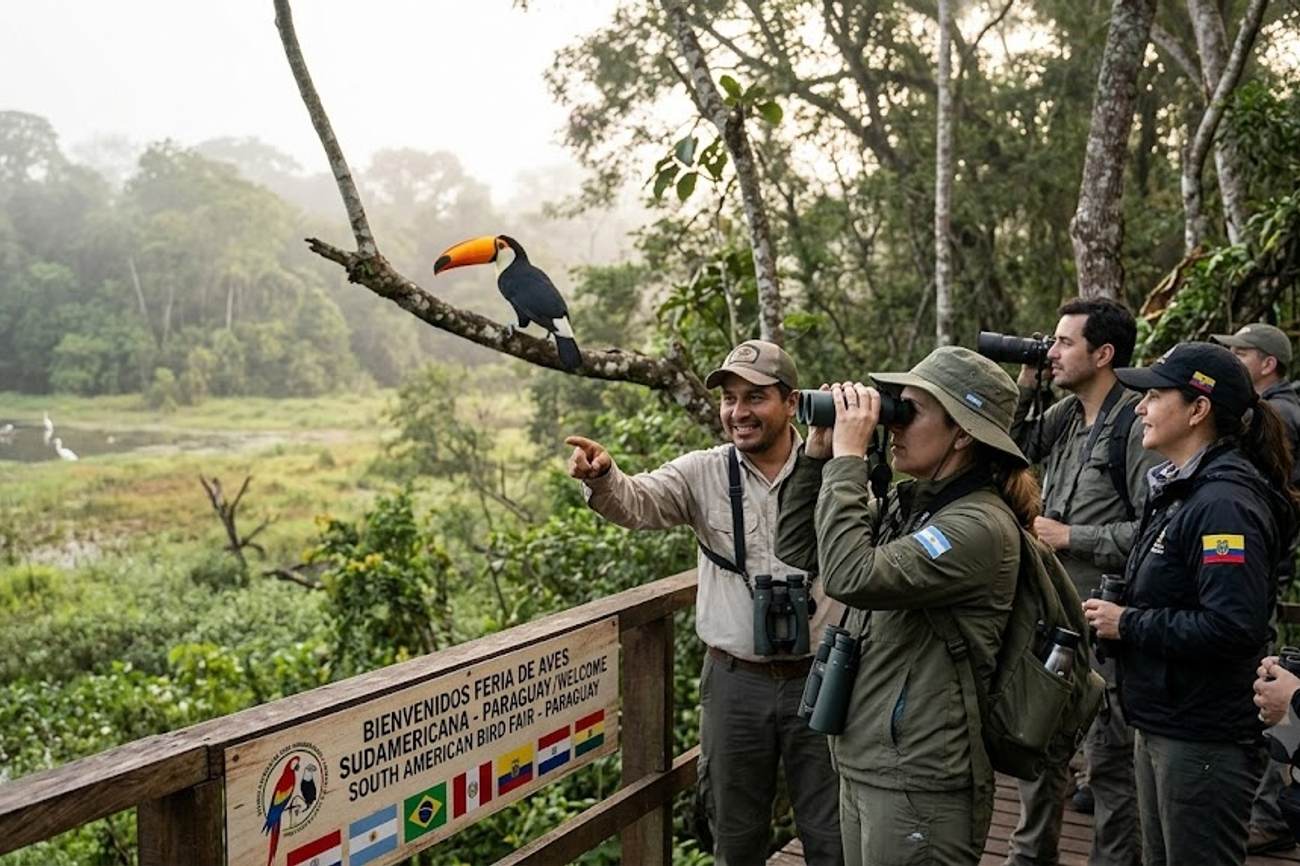
Image generated by AI
700 recorded bird species make Paraguay the focal point for the XV South American Bird Fair 2026, marking the first time the nation will host this prestigious regional gathering. Scheduled for September 17 to 20, 2026, in Asunción, the event signals a strategic pivot in South American ecotourism, moving the spotlight from established biodiversity giants toward a nation historically overshadowed by its larger neighbors. By integrating Paraguay into the rotational hosting cycle, the fair aims to institutionalize nature-based tourism as a primary economic driver for the country.
The Geopolitics of Biodiversity Tourism
The South American Bird Fair operates on a rotational model designed to distribute the economic and promotional benefits of avian tourism across the continent. Until now, the event has been hosted by eight other nations: Argentina, Brazil, Chile, Colombia, Uruguay, Peru, Ecuador, and Bolivia. Paraguay’s selection as the ninth host is not merely a ceremonial gesture but a calculated effort to diversify the regional birding circuit.
For decades, the "big three" of South American birding—Colombia, Brazil, and Peru—have dominated the market due to their massive rainforest tracts and high endemicity. However, the 2026 fair in Asunción seeks to reposition Paraguay as a critical node in the International Union for Conservation of Nature (IUCN) framework of protected areas. By hosting the event, Paraguay is attempting to transition from a transit country to a primary destination, leveraging its unique position at the intersection of three distinct ecological zones.
Ecological Inventory and Regional Participation
The 2026 fair will serve as a diplomatic and scientific summit, bringing together representatives from ten South American nations. The participation of these countries is structured around their specific ecological contributions and their historical roles in the fair's organization.
| Country | Role/Status | Primary Ecological Draw | Key Species/Regions |
|---|---|---|---|
| Paraguay | 2026 Host | Pantanal, Gran Chaco, Atlantic Forest | Bare-throated Bellbird; 700+ species |
| Argentina | Founding Organizer | Iberá Wetlands, Patagonia | Southern Screamer, Waterbirds |
| Brazil | Biodiversity Leader | Amazon, Pantanal, Atlantic Forest | Macaws, Toucans |
| Colombia | Global Diversity Leader | Andes, Sierra Nevada de Santa Marta | Endemic Hummingbirds |
| Peru | Rainforest Specialist | Amazon Basin, Manu National Park | Andean and Tropical species |
| Ecuador | High-Density Hotspot | Mindo Cloud Forests, Andes | Tanagers, Hummingbirds |
| Chile | Ecosystem Diverse | Atacama Desert, Patagonia | Southern and Andean birds |
| Bolivia | Conservation Partner | Madidi National Park, Amazon | Rare Mountain birds |
| Uruguay | Coastal Specialist | Rocha Wetlands, Grasslands | Migratory Shorebirds |
| Venezuela | Biodiversity Contributor | Tepuis, Amazon forests | Specialized Mountain birds |
The logistical focus of the 2026 event will center on three primary Paraguayan ecosystems. The Pantanal wetlands provide a critical habitat for aquatic species; the Gran Chaco offers a stark contrast with its dry-land specialists; and the remnants of the Atlantic Forest serve as a sanctuary for forest-dwelling endemics.
Expert Analysis: The "Shadow Destination" Effect
For travelers and tour operators, Paraguay’s first-time hosting of the South American Bird Fair creates a specific market phenomenon known as the "Shadow Destination" effect. For years, birders have passed through Paraguay to reach the Brazilian Pantanal or the Argentine Iberá Wetlands. By centering a continental summit in Asunción, Paraguay is forcing a recalibration of the South American itinerary.
The direct consequence for travelers booking routes for 2026 and beyond will be a shift in pricing and availability. As Paraguay promotes its "lesser-known" locations, we can expect an influx of boutique eco-lodges and specialized guiding services to emerge in the Gran Chaco and Atlantic Forest regions. This creates a window of opportunity for "early adopter" travelers to visit these sites before they reach the saturation levels seen in Colombian cloud forests or Ecuadorian highlands.
From a regulatory perspective, this move suggests an alignment with World Tourism Organization (UNWTO) goals regarding sustainable community-based tourism. By showcasing the Bare-throated Bellbird and other endemic species, Paraguay is effectively assigning a financial value to its standing forests. When a species becomes a "target" for international birders, the economic incentive to preserve the habitat outweighs the incentive for deforestation. This is a classic application of the "conservation through tourism" model, where the birdwatcher's binoculars become a tool for land protection.
The pricing pressure created by this event will likely ripple across the region. As Paraguay establishes its own birding routes, it may reduce the absolute monopoly that Brazil and Argentina hold over the Pantanal experience, potentially leading to more competitive pricing for multi-country "Southern Cone" expeditions.
Key Takeaways
- Event Timeline: The XV South American Bird Fair will take place from September 17 to 20, 2026, in Asunción, Paraguay.
- Biodiversity Scale: Paraguay is leveraging a catalog of over 700 recorded bird species to attract international nature tourists.
- Ecological Focus: The event will highlight three primary zones: the Pantanal wetlands, the Gran Chaco, and the Atlantic Forest remnants.
- Regional Integration: Ten South American countries will participate, utilizing the fair to coordinate cross-border conservation and sustainable travel.
- Market Shift: Paraguay is transitioning from a transit point to a primary destination, challenging the dominance of traditional birding hubs like Colombia and Peru.
FAQ: South American Bird Fair 2026
When and where is the South American Bird Fair 2026 happening? The event is scheduled for September 17 through September 20, 2026. It will be hosted in Asunción, the capital city of Paraguay.
What makes Paraguay a unique destination for birdwatching? Paraguay features a rare convergence of three distinct ecosystems—the Pantanal wetlands, the Gran Chaco, and the Atlantic Forest—supporting more than 700 different bird species, including the endemic Bare-throated Bellbird.
Which other countries are involved in the fair? Ten nations are expected to participate: Paraguay, Argentina, Brazil, Chile, Colombia, Ecuador, Peru, Bolivia, Uruguay, and Venezuela, each contributing data on their specific biodiversity and conservation efforts.
How does this event affect travel planning for nature tourists? Travelers should expect new, specialized birding itineraries focusing on Paraguay's interior. It provides an opportunity to visit high-biodiversity areas that are less crowded than the traditional hotspots in the Andes or the Amazon.
The migration of the South American Bird Fair to Asunción is more than a calendar update; it is a strategic rebranding of Paraguay's natural capital.
Tags: South American Bird Fair 2026, Asunción Tourism, Paraguay Biodiversity, Gran Chaco Conservation, South American Ecotourism, Avian Tourism 2026
Related Travel Guides
Disclaimer
This article is for informational and educational purposes only. It does not constitute legal, financial, or professional advice. While we strive to provide accurate and up-to-date information, travel policies, regulations, and conditions change rapidly. Always verify information with official sources before making travel decisions. Nomad Lawyer makes no representations about the accuracy, reliability, completeness, or suitability of the information provided. Readers should consult qualified professionals for advice specific to their circumstances. The views expressed in this article are those of the author and do not necessarily reflect the views of Nomad Lawyer.
Raushan Kumar
Founder & Lead Developer
Full-stack developer with 11+ years of experience and a passionate traveller. Raushan built Nomad Lawyer from the ground up with a vision to create the best travel and law experience on the web.
Learn more about our team →