
ECO Conference in Shusha: Pakistan Unveils $40B Tourism Roadmap and Unified Visa Plan for 2026
At the ECO Conference in Shusha, Pakistan outlined a massive $40 billion tourism investment roadmap, highlighted a proposed unified Schengen-style visa for member states, and prepared to host major events in Lahore and Islamabad in 2027.

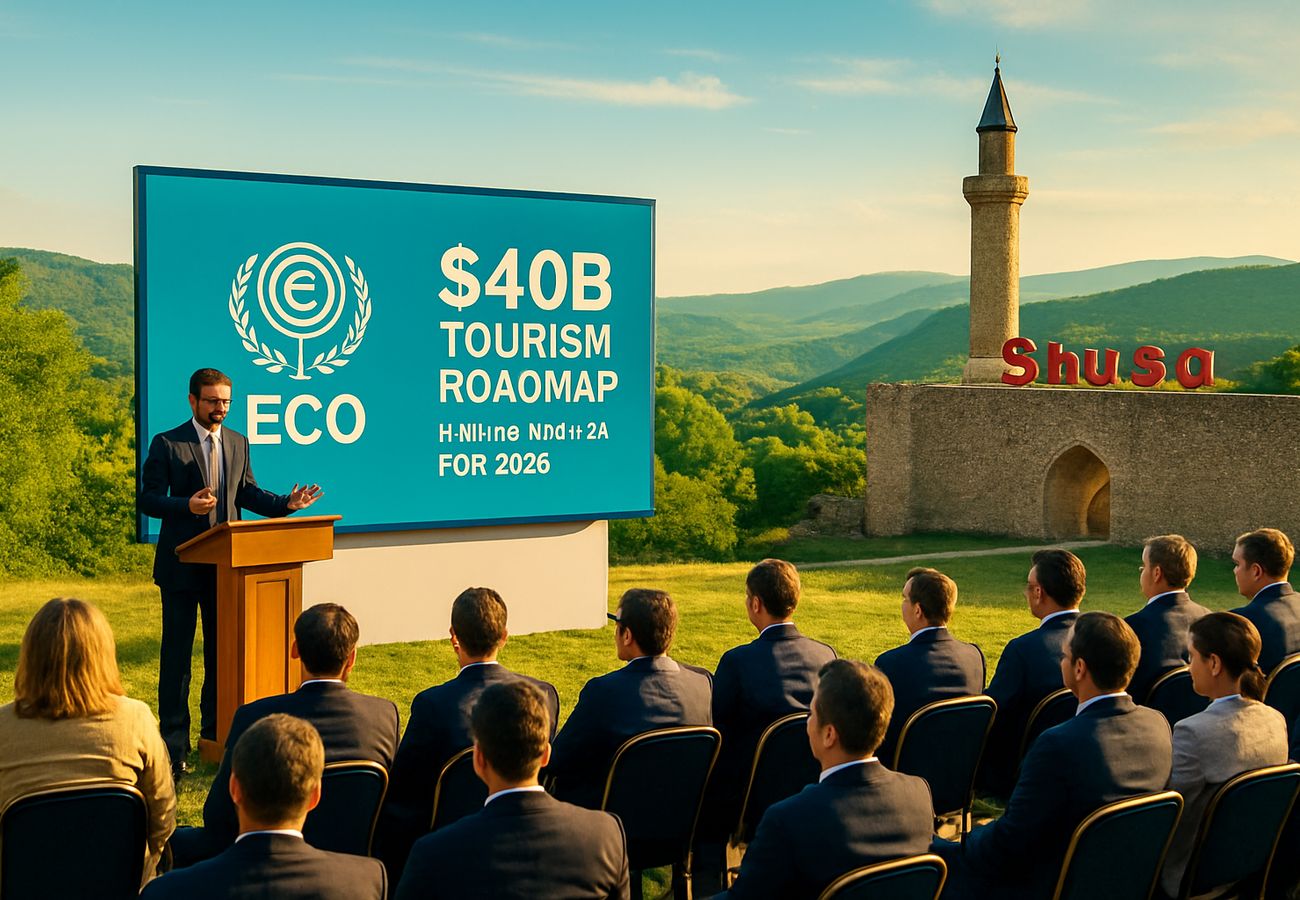
Image generated by AI
Shusha Declared 2026 ECO Tourism Capital as Pakistan Pitches $40 Billion Investment Roadmap and Unified Regional Visa
At the recent Economic Cooperation Organisation (ECO) conference held in the historic city of Shusha, high-level delegations laid the groundwork for a borderless South and Central Asian travel zone, with Pakistan emerging as a central player in regional tourism integration.
Quick Summary
- Shusha was officially declared the ECO Tourism Capital for 2026 during a major regional conference.
- Pakistan unveiled a decade-long economic roadmap aiming to expand its tourism workforce from 4.7 million to 8 million jobs and contribute $40 billion to the national GDP.
- A transformative unified regional visa framework (similar to the Schengen model) was proposed to enable borderless travel across ECO member states, including Turkey, Iran, Kazakhstan, and Uzbekistan.
- Pakistan will host major ECO-related tourism and diplomatic events in Lahore and Islamabad in 2027.
A significant geopolitical and economic shift in South and Central Asian travel was declared recently during the high-level conference of the Economic Cooperation Organisation (ECO). Gathered in the historic city of Shusha — which was officially crowned the ECO Tourism Capital for 2026 — regional leaders pivoted away from traditional trade metrics to position tourism as a vital tool for economic resilience and soft diplomacy.
During the summit, Pakistan was portrayed as a central architectural force in the drive for regional integration, presenting ambitious roadmaps designed to bridge the geographical and bureaucratic chasms between member states such as Turkey, Iran, Kazakhstan, and Uzbekistan.
PROJECTING A DECADE OF ECONOMIC TRANSFORMATION
During the summit's keynote sessions, Pakistani delegates outlined the future of the nation's tourism economy with unprecedented clarity. The sector, which currently supports approximately 4.7 million livelihoods, is embarking on a comprehensive decade-long roadmap. The ambitious targets include:
- Workforce Expansion: Expanding the tourism and hospitality workforce to 8 million jobs over the coming decade.
- GDP Contribution: Achieving a massive $40 billion contribution to the national GDP.
- Sustained Growth: Maintaining a consistent 10% annual growth rate, demonstrating the sector's current upward momentum.
By framing these statistics within a long-term plan, the Pakistani delegation successfully shifted the narrative from post-pandemic recovery to aggressive industrial scaling. Private investors and ECO member states were heavily encouraged to view Pakistan not merely as a collection of scenic destinations, but as a fertile landscape for high-yield hospitality, infrastructure, and institutional investments.
THE UNIFIED VISA: A CATALYST FOR BORDERLESS TRAVEL
Perhaps the most transformative policy proposed during the Shusha summit was the conceptualization of a unified regional visa framework. Drawing direct inspiration from the European Schengen model, this proposal was presented as a practical, logistical solution to the border hurdles that currently stifle intra-regional travel.
A single-entry permit for the entire ECO zone would drastically increase the flow of international visitors, allowing global travelers to seamlessly book multi-destination itineraries spanning from the steppes of Central Asia all the way to the Arabian Sea. By streamlining the entry process and removing the friction of multiple visa applications, the ECO region aims to effectively compete with established global tourism blocs and encourage the exploration of the shared cultural heritage of the Silk Road nations.
EXPANDING THE PHYSICAL AND DIGITAL BACKBONE
Pakistan’s emergence as a global and regional hub was grounded in its rapidly evolving infrastructure. Delegates highlighted the country’s logistical readiness to handle increased ECO traffic, anchored by:
- Aviation: 5 international and 15 domestic airports.
- Ground Transport: An extensive motorway network exceeding 12,000 kilometers and a rapidly modernizing railway system.
- Digital Ecosystem: The aggressive rollout of 5G technology and the expansion of digital payment systems, both positioned as essential components for a modern, investor-friendly destination that supports real-time navigation and seamless booking.
CULTURAL DIPLOMACY AND BILATERAL SYNERGIES
The summit also served as a stage for powerful cultural diplomacy. Pakistani delegates showcased the nation’s rich culinary traditions — serving iconic dishes like biryani, nihari, and seekh kebabs — to reinforce the country's reputation for hospitality and diversity. Furthermore, international partners were invited to invest in highly specialized niche markets, including religious heritage sites, medical tourism facilities, and adventure-based excursions in the northern mountain ranges.
On the margins of the summit, intense bilateral diplomacy took place. Pakistan established formal frameworks for cooperation with tourism authorities from Türkiye, Uzbekistan, and Kazakhstan. These initiatives include joint tourism roadshows, hospitality exchange programs to elevate service standards, and the forging of stronger links between regional academia and the tourism industry.
THE PATH TO 2027
The diplomatic and economic momentum generated in Shusha is expected to accelerate over the next twelve months. Capitalizing on its central role at the conference, Pakistan is officially preparing to host major ECO-related events and summits in Lahore and Islamabad in 2027.
By inviting all member states to these upcoming events, Pakistan signaled a clear intent to establish these cities as permanent venues for regional dialogue, seamlessly linking domestic economic reform with the broader ambition of leading global tourism diplomacy in South and Central Asia.
KEY TAKEAWAYS
- Shusha was officially named the ECO Tourism Capital for 2026.
- Pakistan aims to grow its tourism workforce to 8 million jobs and reach a $40 billion GDP contribution over the next decade.
- A unified ECO regional visa was proposed to allow Schengen-style borderless travel across member states like Turkey, Iran, and Uzbekistan.
- Pakistan highlighted its massive infrastructure growth, including 12,000 kilometers of motorways, 5G rollouts, and 20 operational airports.
- Bilateral agreements were signed with Türkiye, Uzbekistan, and Kazakhstan for joint roadshows and hospitality exchange programs.
- Pakistan will host major ECO-related tourism events in Lahore and Islamabad in 2027.
Disclaimer
This article is for informational and educational purposes only. It does not constitute legal, financial, or professional advice. While we strive to provide accurate and up-to-date information, travel policies, regulations, and conditions change rapidly. Always verify information with official sources before making travel decisions. Nomad Lawyer makes no representations about the accuracy, reliability, completeness, or suitability of the information provided. Readers should consult qualified professionals for advice specific to their circumstances. The views expressed in this article are those of the author and do not necessarily reflect the views of Nomad Lawyer.
Kunal K Choudhary
Co-Founder & Contributor
A passionate traveller and tech enthusiast. Kunal contributes to the vision and growth of Nomad Lawyer, bringing fresh perspectives and driving the community forward.
Learn more about our team →