
Belgium Hosts IMCA Global Summit 2026 in Antwerp: Uniting Maritime Leaders on Offshore Safety, Wind Energy, and Subsea Innovation
Antwerp hosts the IMCA Global Summit 2026 on 28-29 October, gathering offshore marine leaders to launch the 2030 Strategy and advance maritime safety.

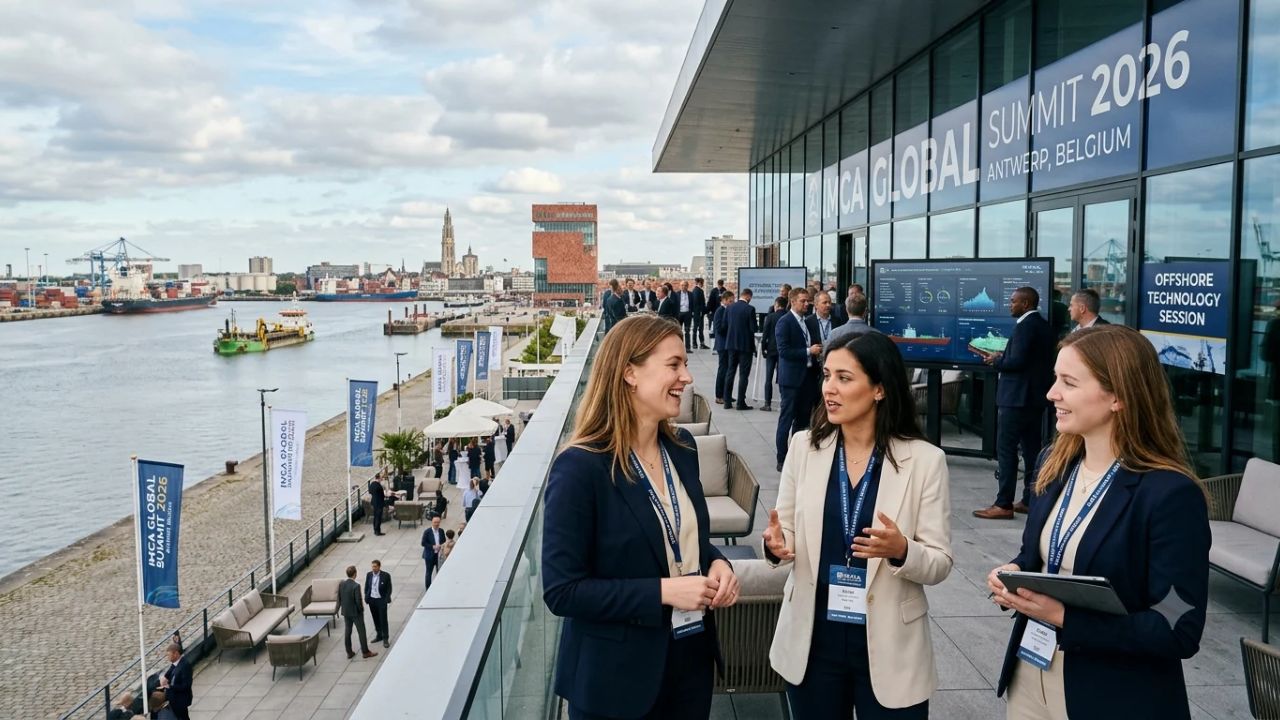
Image generated by AI
Antwerp has convened hundreds of international offshore contractors, marine engineers, and energy delegates for the IMCA Global Summit 2026, launching a decisive two-day maritime assembly focused on subsea innovation, operational safety standards, and the formal unveiling of the association's 2030 Strategy.
ANTWERP, Belgium — Taking place on 28–29 October 2026, the global summit positions Belgium's leading port city at the epicenter of international maritime policy and technological advancement. Convened by the International Marine Contractors Association (IMCA), the gathering addresses critical operational shifts across the global marine contracting sector, including rapid artificial intelligence deployment, deepwater subsea robotics, expanding North Sea offshore wind infrastructure, and urgent maritime decarbonisation targets.
Delegates from major marine contracting conglomerates, energy operators, and classification societies have assembled to assess emerging operational risks and align engineering standards across global marine operations. Supported by the Port of Antwerp-Bruges and the Antwerp Convention Bureau, the two-day summit combines high-level technical symposiums at historic meeting venues with cultural delegate programs, showcasing Belgium's expanding footprint in global meetings, incentives, conferences, and exhibitions (MICE) tourism.
                  IMCA GLOBAL SUMMIT 2026: OPERATIONAL ARCHITECTURE
                  ===================================================

    [ STRATEGIC LAUNCH: IMCA 2030 STRATEGY ]
    • Global Offshore Safety Harmonisation
    • Workforce Technical Upskilling & Competence Frameworks
    • Scope 1 & Scope 2 Maritime Decarbonisation Pathways
                        │
                        ▼
    [ CORE TECHNICAL & TECHNOLOGICAL TRACKS ]
    • Artificial Intelligence (AI) in Offshore Navigation & Risk Prevention
    • Remote Operations & Autonomous Underwater Vehicles (AUVs / ROVs)
    • Offshore Wind Marine Logistics, Foundation Installation & Grid Linking
    • High-Pressure Subsea Diving & Deepwater Asset Integrity
                        │
                        ▼
    [ KEYNOTE ADDRESS: EXTREME LEADERSHIP UNDER PRESSURE ]
    • Chris Jewell (2018 Tham Luang Cave Rescue Specialist)
    • Crisis Decision-Making, Mental Resilience & High-Consequence Teamwork
                        │
                        ▼
    [ ANTWERP MICE & CULTURAL INTEGRATION ]
    • Main Assembly: "A Room with a ZOO" (Flanders Meeting & Convention Center)
    • Evening Gala: Grand Café Horta (Art Nouveau Architectural Legacy)
    • Delegate Networking: Morning Heritage Run & Antwerp ZOO Conservation Tour
Launching the 2030 Strategy: Establishing New Benchmarks for Offshore Operations
The centerpiece of the Antwerp summit is the formal unveiling of IMCA's 2030 Strategy, a comprehensive multi-year roadmap designed to modernize technical guidelines, strengthen contractor accountability, and address structural disruptions across offshore marine environments.
As offshore contractors transition from conventional oil and gas support to massive fixed-bottom and floating offshore wind installations, marine operations face unprecedented engineering complexities. IMCA represents over 700 member companies across more than 60 countries, and the 2030 Strategy sets actionable benchmarks across three foundational pillars:
- Zero-Harm Operational Culture: Standardizing dynamic positioning (DP) reporting, heavy lift protocols, and high-voltage electrical safety standards on wind installation vessels.
- Technological Integration & Autonomous Systems: Establishing verification standards for uncrewed surface vessels (USVs), remote operations centers (ROCs), and artificial intelligence algorithms monitoring subsea pipeline integrity.
- Decarbonisation & Fuel Transition: Providing standardized emission measurement methodologies for offshore construction fleets adopting methanol, hydrogen fuel cells, and shore-power battery hybrids.
Industry observers note that the strategy reflects the intensifying scrutiny placed on marine operations by international insurers, regulatory bodies, and maritime financiers seeking auditable environmental and safety governance.
Advanced Technology Agenda: AI, Deepwater Subsea Robotics, and Offshore Wind
Throughout the two-day technical agenda, panel discussions and presentations examine the digital tools reshaping offshore operational execution:
Artificial Intelligence and Predictive Vessel Safety
Contractors are increasingly deploying machine-learning algorithms on offshore support vessels (OSVs) and subsea construction ships. These systems process real-time telemetry from onboard sensors, acoustic positioning transponders, and weather radar arrays to forecast structural stress, detect mooring line fatigue, and eliminate human error in dynamic positioning operations.
Remote Operations and Subsea Innovation
Advances in tethered remotely operated vehicles (ROVs) and autonomous subsea inspection drones are reducing the necessity for human divers in ultra-deepwater or high-current environments. Conference panels examine how high-bandwidth satellite connectivity enables engineers stationed onshore in Europe or the Americas to remotely pilot complex seabed trenching equipment on the opposite side of the globe.
Offshore Wind Marine Logistics
With the European Union targeting 300 gigawatts of offshore wind capacity by 2050, the demand for next-generation wind turbine installation vessels (WTIVs) equipped with 3,000-tonne cranes and specialized monopile grippers has created acute operational challenges. Sessions in Antwerp focus on mitigating sea-state transit risks, blade-installation crane stability, and dynamic positioning performance around high-density offshore substations.
| Technical Track | Key Technologies Discussed | Primary Operational Objective |
|---|---|---|
| Artificial Intelligence & Analytics | Real-time predictive telemetry, neural network DP monitoring | Early hazard detection, reducing equipment downtime, collision avoidance |
| Remote & Subsea Systems | Electric work-class ROVs, Autonomous Underwater Vehicles (AUVs) | Minimizing diver risk, remote subsea asset inspection, deep trenching |
| Offshore Wind Installation | 3,000-tonne crane vessels, floating wind tensioning systems | Safe installation of 15MW–20MW turbines, mooring line integrity |
| Maritime Decarbonisation | Dual-fuel methanol engines, battery-hybrid propulsion systems | Slashing maritime fleet emissions, port electrification, Scope 1 compliance |
| Workforce Development | Virtual reality simulation suites, certified DP competence tiers | Closing technical talent deficits, standardizing safety accreditations |
Keynote Address: Chris Jewell on High-Stakes Leadership and Mental Resilience
Highlighting the human dimension of high-risk engineering, the summit features a keynote address by renowned British cave diver Chris Jewell. Jewell played an instrumental role in the internationally watched 2018 Tham Luang cave rescue in northern Thailand, navigating flooded, pitch-black subterranean chambers over 4 kilometers deep to successfully evacuate 12 youth football players and their coach.
Addressing offshore contractors who routinely operate in high-risk, zero-visibility marine environments, Jewell's presentation focuses on the core principles of extreme decision-making:
- Managing Panic Under Sensory Deprivation: Maintaining methodical situational awareness when technological or environmental failures occur in hostile operating conditions.
- Redundant System Architecture: The non-negotiable reliance on secondary and tertiary safety protocols when operating in isolated, life-critical environments.
- Collaborative Inter-Agency Command: Coordinating multi-national teams of military personnel, civilian experts, and medical authorities under intense time pressure and media scrutiny.
The keynote drew direct parallels between deep subterranean cave rescue and subsea commercial diving, reminding industry executives that technical procedures must be underpinned by psychological readiness, continuous training, and decisive leadership.
Antwerp as a Strategic Maritime and MICE Powerhouse
The selection of Antwerp for IMCA's flagship assembly underscores the city's unique role as Europe's second-largest seaport and an expanding European MICE destination. Home to the Port of Antwerp-Bruges, the metropolitan region generates significant economic activity through petrochemical refining, container shipping, and green hydrogen infrastructure.
The city's historical convergence of heavy industrial maritime logistics and high-capacity convention facilities makes it an ideal venue for an offshore engineering summit.
Commenting on the global conference, Veerle Peeters, Interim Director of the Antwerp Convention Bureau, stated: "We are delighted to welcome IMCA's global community to Antwerp. As a city shaped by its port, maritime expertise and international connections, Antwerp offers a natural setting for conversations about the future of the marine industry. At Antwerp Convention Bureau, we believe international conferences create the greatest value when they connect with the destination's own strengths. IMCA's Global Summit is a great example of how a global industry can come together in a city that understands its challenges, while offering delegates an inspiring experience beyond the conference itself."
The summit demonstrates Antwerp's dual appeal by blending historic urban character with state-of-the-art conference facilities:
- A Room with a ZOO (Flanders Meeting & Convention Center): The primary conference proceedings are staged in this world-renowned, multi-award-winning convention center situated directly adjacent to Antwerp Central Station. Revenue from the venue directly supports the royal zoological society's wildlife conservation and scientific research programs.
- Grand Café Horta: Delegates convene for the official summit celebration within the soaring iron and glass architecture of Grand Café Horta, which incorporates salvaged Art Nouveau roof trusses designed by legendary Belgian architect Victor Horta for the historic Maison du Peuple.
- Cultural & Wellness Engagement: The conference program integrates an organized morning run through Antwerp's medieval guild quarters and diamond district, alongside guided excursions to Antwerp ZOO, one of the oldest and most celebrated animal research parks in Europe.
| Venue / Urban Asset | Role in IMCA Summit 2026 | Unique Historical & Operational Feature |
|---|---|---|
| A Room with a ZOO | Primary convention venue, plenary hall, technical breakout suites | Adjacent to Antwerp Central Station; profits directly fund global wildlife conservation |
| Grand Café Horta | Official evening summit gala and executive networking reception | Built using the original Art Nouveau ironwork of Belgian architect Victor Horta |
| Port of Antwerp-Bruges | Industrial host partner and maritime logistics ecosystem | Europe's second-largest seaport; major hub for offshore wind marshaling and chemical clusters |
| Historic City Centre & ZOO | Morning delegate run and cultural discovery excursions | Showcases Antwerp's UNESCO-recognized architecture and historic trading heritage |
Why This Matters: The Energy Transition Crossroads for Offshore Marine Contractors
The convergence of global marine contractors in Antwerp reflects an industry navigating an existential structural shift. Offshore engineering companies that spent decades supporting offshore oil extraction are now the primary architects of the global renewable energy transition.
Marine contractors operate the specialized heavy-lift vessels, cable-laying ships, and subsea trenchers without which offshore wind farms, cross-border subsea interconnectors, and floating solar arrays cannot be built. However, the capital expenditure required to commission new vessels capable of lifting next-generation 20-megawatt turbines is straining balance sheets across the North Sea and Asia-Pacific.
Simultaneously, safety remains paramount. As wind farms move further from shore into harsher Atlantic and North Sea waters, maintenance logistics require dynamic positioning accuracy in severe wave heights. Developing standardized offshore training frameworks, reducing diver dependence via advanced robotics, and sharing non-proprietary safety incident data are essential to prevent fatal accidents and protect multi-billion-euro clean energy installations.
By establishing common technical and environmental baselines through the 2030 Strategy, the IMCA Global Summit 2026 in Antwerp reinforces the essential role of maritime contractors in keeping the global offshore economy safe, competitive, and technologically resilient.
Frequently Asked Questions: IMCA Global Summit 2026 in Antwerp
What is the IMCA Global Summit 2026?
The IMCA Global Summit 2026 is a major international maritime conference organized by the International Marine Contractors Association, convening offshore contractors, technical experts, and marine engineers to address offshore safety, technological innovation, and sustainable practices.
When and where does the IMCA summit take place?
The two-day summit takes place on 28–29 October 2026 in Antwerp, Belgium, utilizing the conference facilities of "A Room with a ZOO" and the evening reception venue Grand Café Horta.
What is the significance of the IMCA 2030 Strategy?
The IMCA 2030 Strategy outlines long-term strategic priorities for the offshore marine contracting industry, establishing standardized safety protocols, workforce competence tiers, and decarbonisation guidelines across offshore wind and marine construction operations.
Who is the keynote speaker at the IMCA Global Summit 2026?
Renowned British cave diver Chris Jewell, who participated in the 2018 Tham Luang cave rescue in Thailand, delivers the keynote address, focusing on crisis leadership, decision-making, and teamwork in high-risk environments.
Related Travel Guides
- JW Marriott Mussoorie Walnut Grove Resort Appoints Rahul Valsakumar as Director of Food and Beverage to Lead Himalayan Luxury Dining
- Princess Cruises 50-Night Mediterranean Odyssey: Ports, Itinerary, and Atlantic Route Details
- Caribbean Cruise Capacity Surges 10%: Mexico and Bahamas Port Traffic Reshapes Winter Fares
Disclaimer
This article is for informational and educational purposes only. It does not constitute legal, financial, or professional advice. While we strive to provide accurate and up-to-date information, travel policies, regulations, and conditions change rapidly. Always verify information with official sources before making travel decisions. Nomad Lawyer makes no representations about the accuracy, reliability, completeness, or suitability of the information provided. Readers should consult qualified professionals for advice specific to their circumstances. The views expressed in this article are those of the author and do not necessarily reflect the views of Nomad Lawyer.
Preeti Gunjan
Contributor & Community Manager
A passionate traveller and community builder. Preeti helps grow the Nomad Lawyer community, fostering engagement and bringing the reader experience to life.
Learn more about our team →