
Pacific Ring of Fire Seismic Activity: New Zealand, Japan, and Chile Earthquake Trends October 2026
A surge in seismic activity across the Pacific Ring of Fire, including a 5.3 magnitude event in New Zealand, highlights the need for flexible booking strategies in earthquake-prone zones.

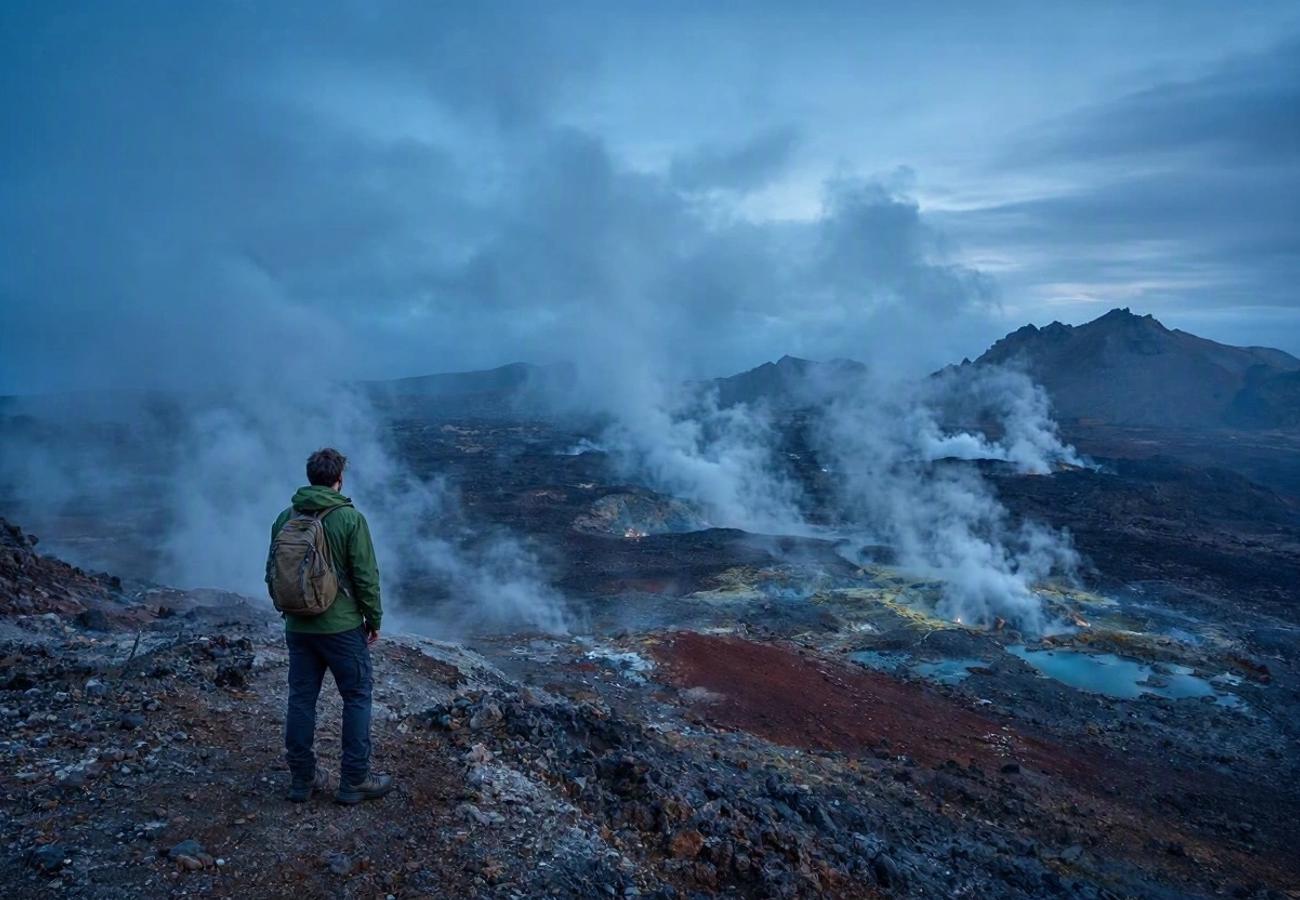
Image generated by AI
Seismic activity across the Pacific Ring of Fire intensified between 13 and 15 October 2026, with New Zealand recording a 5.3 magnitude event alongside significant tremors in Papua New Guinea (6.0) and Fiji (5.9). This cluster of events underscores a recurring pattern where high-magnitude activity in one tectonic region often coincides with tremors across the wider Pacific basin, creating a volatile environment for international itinerary planning.
The Seismic Surge in Numbers
The earthquake near Taumarunui, New Zealand, on 15 October 2026, presents a case study in data variance between monitoring agencies. The United States Geological Survey (USGS) recorded the event at a magnitude of 5.3, locating the epicenter 43 kilometers south-southeast of Otorohanga at a depth of 286 kilometers. Conversely, GeoNet initially reported a magnitude of 5.7—triggering over 5,000 public "felt" reports—before later revising the figure to 5.0.
This discrepancy highlights a critical data point for travelers: initial seismic reports are often volatile. While the 5.3 to 5.7 range suggests moderate power, the extreme depth (between 269 and 286 kilometers) significantly mitigated surface impact. In contrast, the 6.0 magnitude event in Papua New Guinea on 13 October occurred at a shallow depth of approximately 21 kilometers, which typically results in higher surface intensity and greater potential for infrastructure disruption.
Comparative Regional Seismic Activity: October 13–15, 2026
When analyzing the 72-hour window from 13 to 15 October, the data reveals that while New Zealand captured headlines, the highest intensity events occurred in the Melanesian region. The following table compares the magnitudes across the affected tourism hubs:
| Country/Region | Magnitude | Date (UTC) | Depth Context | Impact Level |
|---|---|---|---|---|
| Papua New Guinea | 6.0 | 13 October | Shallow (~21km) | High Potential |
| Fiji Region | 5.9 | 14 October | Deep (~585km) | Low Surface Impact |
| New Zealand | 5.3 | 15 October | Deep (~286km) | Minimal Damage |
| Samoa | 5.1 | 15 October | Variable | Low |
| Chile | 5.1 | 14 October | Variable | Low |
| Tanzania | 4.6 | 14 October | Variable | Low |
| Panama | 4.7 | 14 October | Variable | Low |
| Russia | 4.5 | 14 October | Variable | Low |
| Indonesia | 4.3 | 14 October | Variable | Low |
| Japan | 4.4 | 15 October | Variable | Low |
This distribution confirms that the activity was not a localized crisis but a broad tectonic shift across the International Association of Volcanology and Seismology monitored zones.
What This Means for Travelers
For those currently visiting or planning trips to the North Island of New Zealand—specifically the Taupō and Mount Ruapehu regions—the data suggests that operational status remains stable. However, the psychological impact of 5,000+ felt reports can lead to speculative closures on social media.
Actionable Booking Advice:
- Verify via Official Channels: Do not cancel bookings based on magnitude numbers alone. Check the Department of Conservation (DOC) for specific updates on the Tongariro Alpine Crossing and other national parks.
- Audit Insurance Clauses: Standard travel insurance often excludes "known events." If a seismic zone is under an active warning, new policies may not cover cancellations. Review your "Force Majeure" clauses now.
- Flight & Hotel Flexibility: Since no major airport closures were recorded during this October window, "standard" cancellation fees likely apply. Use flexible booking tiers (e.g., "Fully Refundable") when visiting Ring of Fire destinations.
- Safety Protocol: In coastal areas, follow the "Long or Strong, Get Gone" rule. If shaking lasts over 60 seconds or makes standing impossible, move inland immediately without waiting for official sirens.
Forward Projection: Seismic Risk and Tourism 2027
Based on the current trajectory of seismic clusters in the Pacific, we expect a heightened focus on "Resilient Tourism" infrastructure. The data from October 2026 shows that depth is the primary determinant of tourism disruption, not magnitude. As carriers and hotel groups integrate more real-time IATA safety data, we will likely see a shift toward dynamic itinerary rerouting.
Travelers should anticipate that destinations like Japan, Chile, and New Zealand will increase their investment in early-warning systems. This will likely result in more frequent, albeit shorter, temporary pauses in tourism activities to allow for structural inspections, rather than long-term closures.
FAQ: Pacific Seismic Activity 2026
Will flight prices increase due to these earthquakes? No. Current data shows no widespread airport closures or capacity reductions in New Zealand, Japan, or Chile. Prices remain driven by seasonal demand rather than seismic risk.
Is it safe to visit the Tongariro Alpine Crossing right now? Yes. While the earthquake occurred near Taumarunui, there are no confirmed closures. Always check the Department of Conservation's official track status before departing.
Does a magnitude 5.0+ earthquake entitle me to a refund? Generally, no. Refunds are typically only granted if the service (flight/hotel) is physically unavailable or the government issues a formal "Do Not Travel" warning.
Which regions are currently highest risk? Based on the October 13–15 data, shallow-depth zones in Papua New Guinea showed the highest potential for surface impact compared to the deep-earth tremors in New Zealand and Fiji.
Data-driven preparedness is the only effective hedge against tectonic volatility.
Related Travel Guides
Disclaimer
This article is for informational and educational purposes only. It does not constitute legal, financial, or professional advice. While we strive to provide accurate and up-to-date information, travel policies, regulations, and conditions change rapidly. Always verify information with official sources before making travel decisions. Nomad Lawyer makes no representations about the accuracy, reliability, completeness, or suitability of the information provided. Readers should consult qualified professionals for advice specific to their circumstances. The views expressed in this article are those of the author and do not necessarily reflect the views of Nomad Lawyer.
Raushan Kumar
Founder & Lead Developer
Full-stack developer with 11+ years of experience and a passionate traveller. Raushan built Nomad Lawyer from the ground up with a vision to create the best travel and law experience on the web.
Learn more about our team →