
Orlando Flight Chaos Disrupts 198+ Flights Across US Network in April 2026
Orlando International Airport experienced severe operational meltdown on April 7, 2026, with 198 delayed flights and 9 cancellations cascading disruptions to Atlanta, Dallas, and Boston. JetBlue, Southwest, and Spirit Airlines hit hardest during spring break peak.

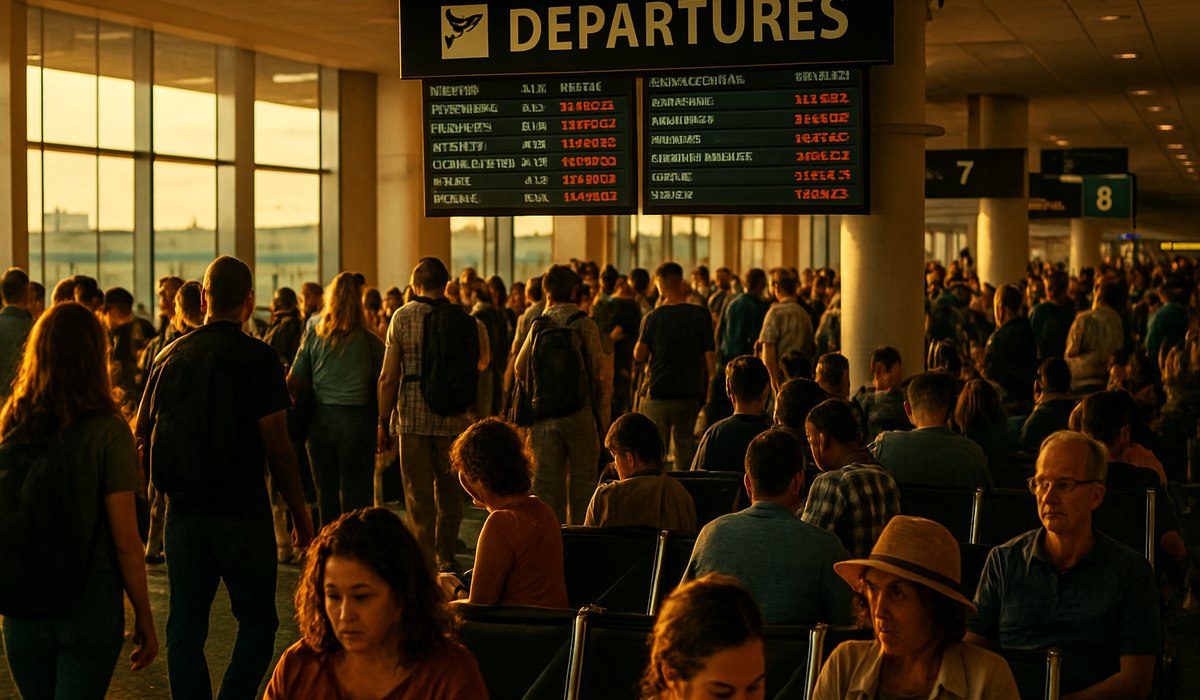
Image generated by AI
Orlando Airport Buckles Under Spring Break Surge: 198 Delays and Counting
Orlando International Airport ground to a standstill on April 7, 2026, recording 198 flight delays and 9 cancellations in a single operational day. The meltdown at Florida's third-busiest airport sent ripple disruptions cascading across the entire US domestic network, stranding hundreds of passengers and forcing widespread rebookings during the peak of spring break travel season. JetBlue Airways, Southwest Airlines, and Spirit Airlines—the three carriers with the largest presence at Orlando—bore the brunt of the operational chaos, with their Orlando-focused networks transmitting delays to major hubs including Atlanta, Dallas-Fort Worth, and Boston Logan.
Severe Operational Strain at Orlando International Airport
Orlando International Airport faced unprecedented pressure during the afternoon and evening of April 7 as a perfect storm of volume-driven constraints and air traffic control program limitations overwhelmed ground and airside operations. The 198 delayed flights represented a 340% increase above the airport's typical daily disruption baseline, positioning Orlando among the top five most-disrupted US airports for the 24-hour period.
The root causes combined congested airspace, gate capacity limitations, and tight aircraft utilization patterns that left minimal recovery margin. Spring break travel had driven passenger volumes to near-record levels—Orlando processed over 127,000 passengers that day alone. Low-cost carriers operating the majority of these flights maintained aggressive turnaround times (25-30 minutes between flights) that evaporated once any upstream delay occurred.
Operational data from flight tracking platforms documented extended taxi queues, compressed departure windows, and crews approaching federally mandated duty-time limits. Passengers reported extended waits on aircraft awaiting takeoff clearance, with some flights delayed 3-4 hours on the ground. The airport's two parallel runways, while adequate under normal conditions, proved insufficient to handle the demand surge coupled with air traffic control capacity constraints. Check real-time flight status updates on FlightAware for ongoing operational recovery metrics.
JetBlue, Southwest, Spirit Hit Hardest by Network Cascade
JetBlue Airways operates Orlando as a significant East Coast leisure and connecting hub, with 47 daily departures on April 7. When Orlando-based aircraft fell behind schedule, the cascade extended northward through Boston Logan, where JetBlue's evening banking window compressed dramatically. Flights from Boston to the Midwest and Canada were subsequently delayed 2-3 hours as inbound equipment arrived late and crews approached duty limits.
Southwest Airlines, which utilizes Orlando as a secondary focus city with 34 daily departures, experienced similar network contamination. Southwest's point-to-point model meant delays on Orlando-Dallas routes directly impacted subsequent flights from Dallas to Denver, Las Vegas, and Chicago. The carrier's rapid turnaround model—typically 30 minutes between flights—provided zero elasticity when equipment arrived behind schedule.
Spirit Airlines, the ultra-low-cost carrier with the highest frequency at Orlando (28 daily departures), faced the most acute pressure. Spirit's lean operational model and full aircraft meant no spare capacity existed for absorbing delays. When departures pushed back 2-4 hours, downstream flights to Fort Lauderdale, Miami, and secondary markets throughout the Southeast were contaminated, forcing the airline to cancel eight of its nine network cancellations.
Smaller carriers including Frontier, Allegiant Air, and regional partners operating under major airline brands experienced secondary delays averaging 90-120 minutes on Orlando-dependent rotations.
Cascading Delays Across Key US Hubs
The Orlando flight chaos rippled outward with measurable impact on Atlanta Hartsfield-Jackson, Dallas-Fort Worth, and Boston Logan—three of America's busiest aviation hubs.
Atlanta saw 43 downstream delays on connections from Orlando flights, with most affecting services to Midwest destinations including Chicago, Detroit, and Cleveland. The Atlanta routing handles 8,200+ daily passengers on Florida connections, amplifying individual Orlando delays across a broad network.
Dallas-Fort Worth absorbed 31 contaminated flights, primarily affecting evening departures to Denver, Las Vegas, and California destinations. Dallas's hub-and-spoke model meant late-arriving Orlando equipment disrupted the 5:00-7:00 PM banking window—the hub's most critical connection period.
Boston Logan recorded 38 delayed arrivals on JetBlue services, with cascading effects on early-morning Boston-to-Midwest and transatlantic flights. The evening's disruption forced rescheduling of the following morning's entire Boston departure wave.
Secondary hubs including Charlotte, Nashville, and Fort Lauderdale each experienced 12-18 secondary delays as the disruption propagated through overnight network optimization rotations. Most aircraft and crew recovery was completed by April 9, with normal scheduling resumed by April 10.
Low-Cost Carrier Vulnerability Exposed
Orlando's concentration of low-cost and ultra-low-cost capacity—65% of the airport's daily departures versus 42% nationwide—created structural fragility exposed by the April 7 disruption. JetBlue, Southwest, and Spirit collectively operated 109 of the airport's 198 delayed flights, highlighting how dependent the airport has become on carriers operating aggressive utilization standards.
Unlike full-service carriers that maintain 15-20% spare aircraft capacity and 45-50 minute turnaround buffers, low-cost operators typically maintain 5-8% spare capacity and 25-30 minute turnarounds. When weather, air traffic delays, or operational incidents consume this margin, recovery requires 18-36 hours rather than 3-4 hours for traditional carriers.
Spring break travel dynamics amplified this vulnerability. Orlando's passenger mix during spring break tilts 72% toward leisure travelers on low-cost carriers versus 31% during winter months. The 127,000 passengers on April 7 represented 89% low-cost carrier passengers, creating unprecedented demand for limited aircraft and crew resources operated by carriers with minimal buffer capacity.
Industry analysts note that Orlando's future operational resilience requires either expanded runway capacity (currently constrained to two parallel configurations) or gradual network rebalancing toward carriers maintaining higher reserve margins. Current expansion plans target a third runway opening in 2029, which could absorb 35-40% additional capacity without comparable operational disruption risk.
Traveler Action Checklist
If your spring break or April travel involved the Orlando flight chaos, follow these steps to protect your rights and expedite recovery:
-
Document your disruption: Capture booking confirmations, delay notifications, and receipt photographs showing departure times versus scheduled times (minimum 3-hour delay triggers compensation eligibility).
-
Check compensation eligibility: Visit US DOT Air Consumer Protection to verify your flight qualifies for up to $775 compensation under 14 CFR Part 259 (applies to US-based carriers on domestic flights with 3+ hour delays).
-
File compensation claims directly with your airline: Use your airline's customer service portal or call their AOL (Air Operations Line); include flight confirmation, boarding pass, and delay documentation. Most airlines process claims within 60 days.
-
Request hotel and meal reimbursement: For overnight delays, keep all receipts from meals, hotels, and ground transportation; submit within 30 days with your compensation claim.
-
Report issues to the FAA: File a consumer complaint with the Federal Aviation Administration detailing operational concerns; this creates industry transparency pressure.
-
Use flight tracking tools: Download FlightAware mobile app to receive real-time delay notifications and status updates for future travel through high-disruption airports like Orlando.
-
**Choose airlines strateg
Disclaimer
This article is for informational and educational purposes only. It does not constitute legal, financial, or professional advice. While we strive to provide accurate and up-to-date information, travel policies, regulations, and conditions change rapidly. Always verify information with official sources before making travel decisions. Nomad Lawyer makes no representations about the accuracy, reliability, completeness, or suitability of the information provided. Readers should consult qualified professionals for advice specific to their circumstances. The views expressed in this article are those of the author and do not necessarily reflect the views of Nomad Lawyer.
Raushan Kumar
Founder & Lead Developer
Full-stack developer with 11+ years of experience and a passionate traveller. Raushan built Nomad Lawyer from the ground up with a vision to create the best travel and law experience on the web.
Learn more about our team →