
Only Three Airlines Operate Passenger Boeing 747-8s as US Military Eyes Fleet for Strategic Airlift Role
Breaking airline news and aviation industry updates for 2026.

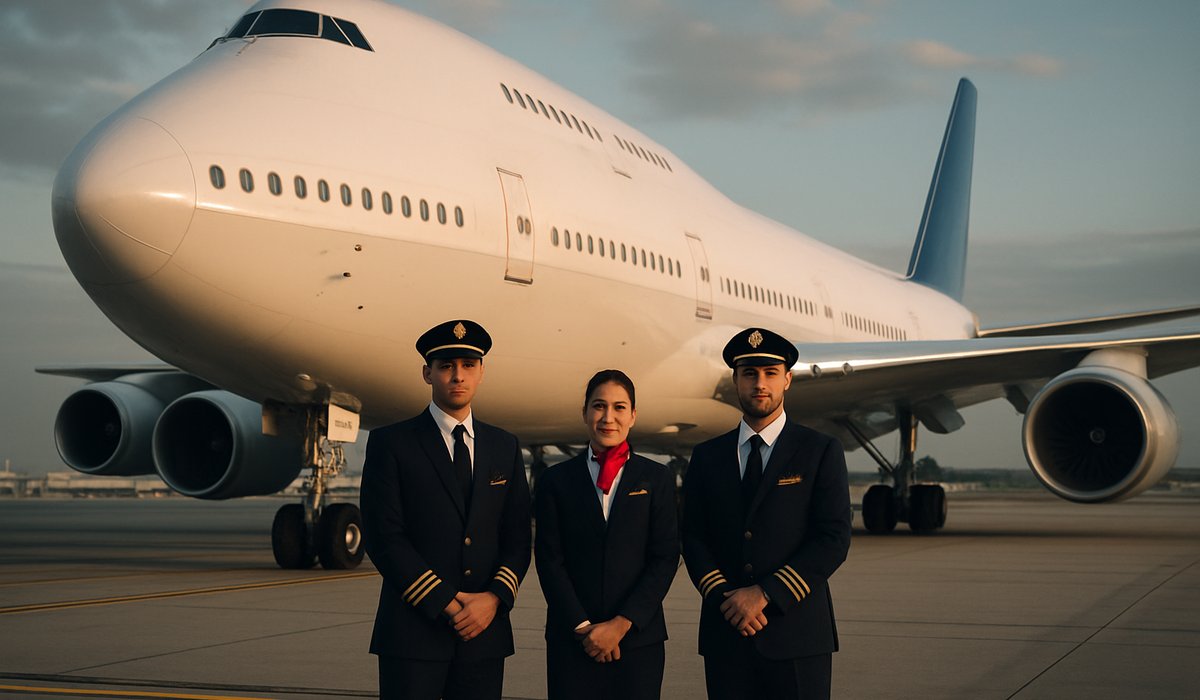
Image generated by AI
Only Three Airlines Operate Passenger Boeing 747-8s as US Military Eyes Fleet for Strategic Airlift Role
The aviation industry's most iconic widebody faces uncertain future as defense officials target remaining commercial aircraft for potential government acquisition
The 747-8's Commercial Struggle
The Boeing 747-8 represents one of the aerospace sector's most expensive modernization efforts that failed to gain widespread commercial traction. Despite a $4 billion investment to overhaul the legendary aircraft's avionics, install cutting-edge powerplants, extend its fuselage, and redesign its aerodynamic profile, Boeing managed to secure just 155 orders across all variants—a stark contrast to earlier 747 generations that dominated international aviation for decades.
The passenger-configured 747-8i proved particularly disappointing, attracting merely 36 commercial orders split among three carriers, alongside a handful of ultra-luxury Boeing Business Jet conversions. The final delivery to a commercial passenger airline occurred in 2017 when Korean Air received their last aircraft, effectively ending the 747's era as a mainstream widebody passenger transport.
Military Interest in Aging Fleet
What makes the current situation remarkable is the emerging interest from United States defense officials seeking to acquire remaining 747-8 passenger aircraft for strategic military applications. With the freighter sector experiencing stronger demand—the last 747-8F rolled off Boeing's assembly line in 2023 bound for cargo operator Atlas Air—the prospect of converting or repurposing commercial passenger variants for government use represents a potential lifeline for the aging fleet.
The military's interest underscores a broader aviation trend: as commercial demand for ultra-large widebodies diminishes amid industry consolidation and fleet modernization cycles, government agencies increasingly view surplus aircraft as cost-effective solutions for long-range airlift requirements.
Industry Context: The Widebody Transition
The 747-8's commercial underperformance reflects fundamental shifts in global aviation economics. Rising jet fuel prices, volatile international travel patterns, and the emergence of more efficient dual-engine widebodies like the Boeing 777 and Airbus A350 have reduced demand for four-engine aircraft. Airlines face mounting pressures from baggage charges restructuring and ancillary revenue models, forcing operators to prioritize fuel-efficient platforms.
Today, the three remaining 747-8 passenger operators—Korean Air, Lufthansa, and Japan Airlines—maintain their fleets primarily on premium long-haul routes where the aircraft's spacious cabin still commands premium fares, offsetting higher operating costs.
The potential military acquisition of these aircraft could represent the unexpected denouement to one of commercial aviation's most storied platforms, transforming former luxury transports into strategic defense assets.
FAQ: Boeing 747-8 Aircraft & Aviation Trends
Q: Why did the Boeing 747-8 passenger variant fail commercially? A: Limited airline orders stemmed from competition from more fuel-efficient widebodies, rising jet fuel prices, and changing market preferences for twin-engine aircraft despite the 747's superior capacity.
Q: Which airlines still operate Boeing 747-8 passenger aircraft? A: Korean Air, Lufthansa, and Japan Airlines remain the only three commercial operators of the 747-8i variant.
Q: When was the last Boeing 747-8 passenger aircraft delivered? A: The final commercial delivery occurred in 2017 to Korean Air; however, 747-8 freighter production continued until 2023.
Q: How much did Boeing invest in developing the 747-8? A: Boeing spent approximately $4 billion modernizing the aircraft's systems, engines, fuselage length, and wing design.
Q: What is the US military's potential interest in 747-8 aircraft? A: Defense officials are evaluating acquisition possibilities for strategic airlift missions, potentially converting commercial variants for government transport requirements.
Related Travel Guides
Flight Delay Compensation Guide 2026
Understanding Airline Route Changes
Airport Security Process Updated (2026)
External Resources
Disclaimer
This article is for informational and educational purposes only. It does not constitute legal, financial, or professional advice. While we strive to provide accurate and up-to-date information, travel policies, regulations, and conditions change rapidly. Always verify information with official sources before making travel decisions. Nomad Lawyer makes no representations about the accuracy, reliability, completeness, or suitability of the information provided. Readers should consult qualified professionals for advice specific to their circumstances. The views expressed in this article are those of the author and do not necessarily reflect the views of Nomad Lawyer.
Preeti Gunjan
Contributor & Community Manager
A passionate traveller and community builder. Preeti helps grow the Nomad Lawyer community, fostering engagement and bringing the reader experience to life.
Learn more about our team →