
Inside the Hidden World of Ultra-Long-Haul Aviation: How Airlines Keep Crews Alert on 18+ Hour Flights
Breaking airline news and aviation industry updates for 2026.

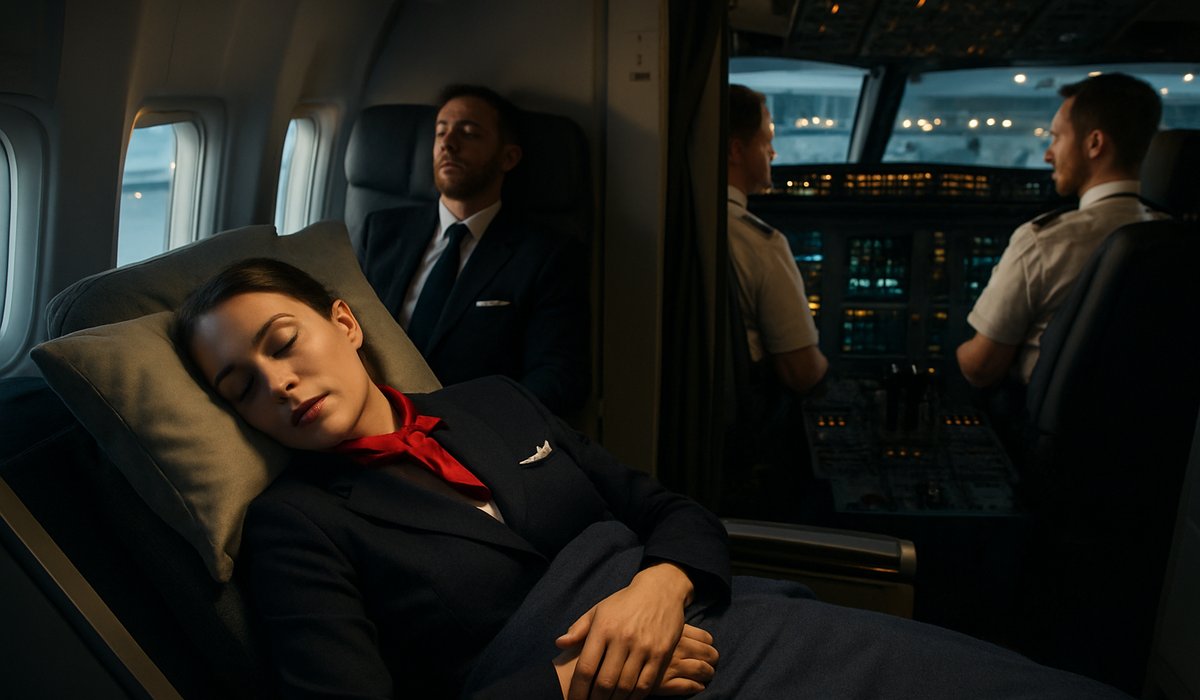
Image generated by AI
Inside the Hidden World of Ultra-Long-Haul Aviation: How Airlines Keep Crews Alert on 18+ Hour Flights
As aircraft push operational boundaries with record-breaking routes, the aviation industry faces mounting pressure to maintain safety standards during extended missions
The Global Challenge of Extreme Flight Durations
Singapore Airlines has established itself at the forefront of ultra-long-haul operations, commanding both the world's longest and second-longest commercial flight routes—a dual dominance that underscores the airline's operational sophistication and market strategy in premium aviation.
The carrier's flagship Singapore-New York JFK service stretches beyond 18 hours, with a complementary Newark routing creating parallel transpacific corridors that fundamentally reshape how the airline approaches crew management and passenger service on extended missions. These routes collectively exceed comparable competitors by more than 400 nautical miles, positioning Singapore Airlines uniquely within the global aviation hierarchy.
Operational Superiority and Market Positioning
Operating both ultra-long-haul routes on a daily schedule represents an extraordinary logistical achievement, with implications that extend far beyond scheduling efficiency. The consistent demand for these services has transformed Singapore Airlines' capacity planning, with premium cabin seats bound for the New York metropolitan area now representing the carrier's highest concentration of business and first-class inventory across all US destinations.
This operational footprint demands unprecedented crew management protocols. Flight attendants and pilots rotating through these extended missions face physiological challenges that conventional aviation training has only recently begun to address comprehensively. The intersection of crew fatigue management, safety regulations, and passenger experience becomes increasingly critical as flight durations approach the 20-hour threshold.
Industry-Wide Implications for Crew Welfare
The expansion of ultra-long-haul services across the industry—with competitors like Qatar Airways (Doha-Auckland) pursuing similar routes—raises fundamental questions about crew rest protocols, sleep cycle disruption, and operational safety margins. Aviation authorities globally have implemented mandatory rest requirements and multi-crew rostering systems, yet the physiological realities of extreme flight duration continue to challenge conventional approaches.
Crew rest compartments, typically positioned above or below main cabins on widebody aircraft, have evolved from basic sleeping quarters into climate-controlled sanctuaries designed to maximize circadian rhythm recovery. Airlines invest substantially in these facilities, recognizing that crew alertness directly correlates with safety outcomes and passenger satisfaction during prolonged missions.
Singapore Airlines' commitment to daily service on its record-breaking routes reflects broader industry trends toward maximizing aircraft utilization while maintaining the highest safety standards—a balancing act that increasingly defines competitive advantage in premium aviation markets.
FAQ: Ultra-Long-Haul Flight Operations and Crew Management
What makes Singapore Airlines' New York routes operationally unique? Singapore Airlines operates the world's longest commercial flight (Singapore-New York JFK) and second-longest route (Singapore-Newark), both exceeding 18 hours and operating daily with complementary schedules.
How do airlines manage crew fatigue on flights exceeding 18 hours? Carriers employ multi-crew rostering, designated rest compartments, regulated sleep periods, and strict duty-time limitations established by international aviation authorities to ensure crew alertness and safety.
Why do premium seat sales concentrate on ultra-long-haul routes? Extended flight durations justify premium pricing and enhanced service offerings, making business and first-class cabins particularly profitable on these routes for carriers like Singapore Airlines.
How does crew rest differ on ultra-long-haul versus standard international flights? Ultra-long-haul operations require dedicated rest compartments, multiple crew rotations, and carefully managed sleep scheduling to counteract severe circadian disruption and fatigue accumulation.
What safety standards govern crew operations on routes exceeding 18 hours? International Civil Aviation Organization (ICAO) regulations, national aviation authorities, and individual airline protocols establish mandatory rest requirements, maximum flight duty times, and crew composition minimums for extended missions.
Related Travel Guides
Flight Delay Compensation Guide 2026
Understanding Airline Route Changes
Airport Security Process Updated (2026)
External Resources
Disclaimer
This article is for informational and educational purposes only. It does not constitute legal, financial, or professional advice. While we strive to provide accurate and up-to-date information, travel policies, regulations, and conditions change rapidly. Always verify information with official sources before making travel decisions. Nomad Lawyer makes no representations about the accuracy, reliability, completeness, or suitability of the information provided. Readers should consult qualified professionals for advice specific to their circumstances. The views expressed in this article are those of the author and do not necessarily reflect the views of Nomad Lawyer.
Preeti Gunjan
Contributor & Community Manager
A passionate traveller and community builder. Preeti helps grow the Nomad Lawyer community, fostering engagement and bringing the reader experience to life.
Learn more about our team →