
Global Airlines Eradicate Terminal Check-In to Shield Premium Passengers from Massive Travel Chaos and Severe Airport Disruptions in London, Dubai, and Singapore: Latest Airline News
In a massive shift to bypass terminal travel chaos, airlines like Emirates, Singapore Airlines, and Lufthansa are completely eliminating airport check-in counters with off-site baggage logistics.

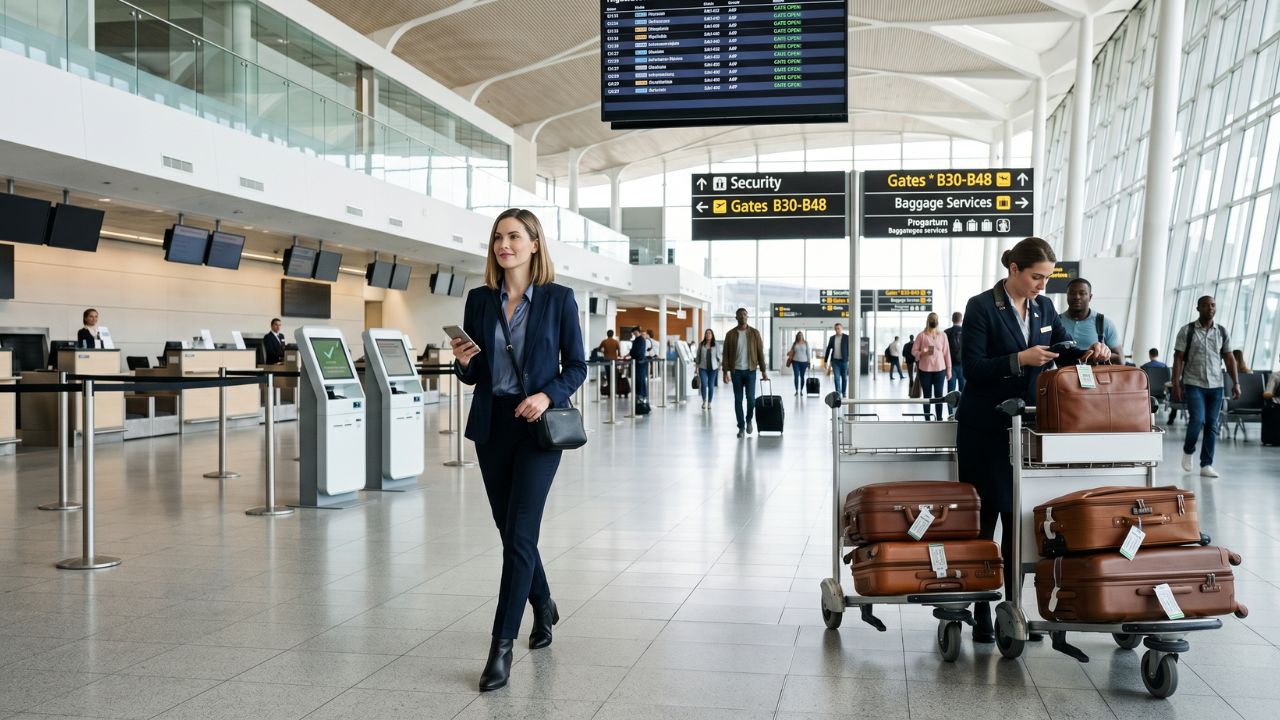
Image generated by AI
In a massive, highly coordinated structural revolution designed to physically extract premium passengers from the severe travel chaos and rolling flight cancellations paralyzing global aviation hubs, the world's most elite airlines are quietly assassinating the traditional airport check-in counter. Confirmed on June 19, 2026, Singapore Airlines has officially joined Emirates, Lufthansa, Virgin Atlantic, SWISS, British Airways, KLM, Austrian Airlines, and Air India in executing a massive decentralization of baggage logistics across Dubai, London, Zurich, Vienna, Singapore, and Amsterdam. By deploying secure logistical networks—such as AirPortr and dnata—to intercept luggage directly from a passenger's home, hotel, or a downtown train station, airlines are allowing travelers to completely bypass the agonizing terminal gridlock. This hands-free, off-site processing model fundamentally insulates travelers from the massive airport disruptions that breed inside the departures hall, driving today's most transformative headline in breaking airline news and essential global aviation updates.
By introducing direct passenger coordination and dynamic scheduling backups, the regional aviation hubs target growing passenger demand across vital commerce sectors. The choice to coordinate flight departures in phases helps to manage gate capacity, supporting the country's broader regional transportation network.
Context: The Collapse of the Departures Hall
For the hundreds of thousands of international commuters and luxury travelers navigating the world's busiest mega-hubs, the physical airport check-in hall has become a highly toxic environment.
Historically, the check-in queue was the unavoidable first step of air travel. However, as passenger volumes have surged post-pandemic, these terminal halls have devolved into epicenters of travel chaos. When a major storm hits or an IT outage triggers rolling flight cancellations, the check-in hall immediately gridlocks, trapping thousands of panicked passengers alongside their heavy luggage. Airlines have recognized that forcing their highest-yielding passengers to stand in a chaotic, hour-long line completely destroys the illusion of luxury travel. The solution is absolute extraction. By moving the check-in process completely off-site, airlines are fracturing the traditional airport bottleneck. A certified agent arrives at your London apartment, verifies your identity, weighs your bags, applies tamper-proof tags, and issues your boarding pass. Your luggage is injected directly into the airport's secure sorting network, meaning you arrive at Heathrow or Dubai International with nothing but your passport. You bypass the congested check-in hall entirely, proceeding directly to priority security and the lounge, completely immunized against the terminal airport disruptions.
To view live flight schedules, verify the active delay status of your specific itinerary, or to track active regional airspace restrictions, travelers must consult official aviation directories. For direct booking access to these premium, hands-free off-site baggage logistics to completely bypass terminal gridlock, travelers should aggressively utilize the official portals of their operating carriers. To explore live flight tracking and monitor the exact severity of the cascading bottlenecks causing the flight cancellations at competitor hubs, passengers can consult the official FlightAware tracking service.
Section-Wise Breakdown of the Decentralized Check-In
London and Dubai: The Vanguard of Home Collection
London and Dubai have aggressively led the eradication of the terminal counter. In London, British Airways utilizes the AirPortr platform to execute secure doorstep and hotel collections across Greater London, routing bags directly to Heathrow or Gatwick. In Dubai, Emirates relies on the immense logistical power of dnata to operate one of the most advanced home check-in systems on the planet, allowing luxury travelers to bypass the sheer volume of the massive Middle Eastern hub.
The European Rail Integration: Lufthansa, SWISS, and Austrian
In Germany, Switzerland, and Austria, off-site check-in is heavily weaponized through urban rail integration. Lufthansa is establishing smart baggage drops across Frankfurt and Munich. SWISS and Austrian Airlines have tightly integrated with the City Airport Train network; passengers simply drop their bags at central Vienna or Zurich train stations and board the express train empty-handed, completing the check-in process miles away from the actual airport runway.
The Asian and Dutch Expansions: Singapore, KLM, and Air India
Singapore Airlines is exporting its legendary premium service by establishing hotel and home collection in key international outstations. In Amsterdam, KLM Royal Dutch Airlines uses home pickup to drastically reduce processing times at the highly congested Schiphol Airport. Meanwhile, Air India has launched metro-based city check-in facilities in New Delhi, allowing international travelers to dump their luggage at urban transit hubs, bypassing the massive vehicle congestion surrounding the terminal.
Technical Roster: Off-Site Aviation Logistics Network Data
To ensure absolute factual accuracy regarding the exact deployment of these decentralization platforms and the specific logistical partners utilized to bypass terminal congestion, the following matrix details the verified corporate integration data:
Global Off-Site Baggage & Logistics Matrix
| Global Hub | Operating Airline | Integrated Logistics Model |
|---|---|---|
| Dubai | Emirates | Home and hotel collection tightly integrated with dnata ground operations |
| London | British Airways & Virgin Atlantic | AirPortr doorstep collection routing directly to Heathrow and Gatwick |
| Frankfurt & Munich | Lufthansa | Smart city points and decentralized hotel collection systems |
| Zurich & Vienna | SWISS & Austrian Airlines | Rail-integrated baggage and City Airport Train downtown drop-offs |
| Singapore | Singapore Airlines | Premium international hotel and home collection network |
| Amsterdam | KLM Royal Dutch Airlines | Pre-transport home check-in directly injected into Schiphol logistics |
| New Delhi | Air India | Metro-linked city terminal check-in to bypass airport highway gridlock |
Passenger Impact: The Eradication of Pre-Flight Anxiety
For the thousands of corporate executives and premium leisure travelers utilizing these networks, off-site baggage collection is not merely a convenience—it is the ultimate defense mechanism against transit exhaustion.
The immediate passenger impact of this hands-free service is total psychological freedom. When an executive traveling from London to Singapore utilizes AirPortr, they eliminate the most physically taxing element of the journey: hauling 60 kilograms of luggage through the London Underground and fighting for space in the Heathrow departures hall. This completely insulates the passenger from the travel chaos associated with mass transit. Furthermore, if the airport suffers from sudden flight cancellations, the passenger does not have to stand in a massive queue with their heavy bags to negotiate a rebooking; their luggage is already secured in the system, allowing them to wait comfortably in a downtown hotel until the airline reschedules their flight. By shifting the baggage handover to a pre-travel stage, passengers reduce their required airport dwell time by up to 90 minutes, allowing them to arrive, clear security, and board in a frictionless, highly controlled sequence.
Industry Analysis: Check-In Counters Are Becoming Obsolete
Aviation industry analysts view the rapid expansion of these home and rail-based check-in systems as definitive proof that the physical airport check-in counter is financially obsolete and highly detrimental to terminal flow.
Analysts note that airports simply cannot build terminals large enough to accommodate the surging global passenger volume. The traditional model—where every passenger arrives simultaneously and requires 10 square feet of floor space to manage their luggage—is mathematically guaranteed to trigger severe airport disruptions. Industry experts warn that airlines are now aggressively partnering with secure logistics firms to push this processing burden out into the city. By the end of the decade, the physical check-in desk will likely be entirely replaced by automated bag drops and off-site collection for premium cabins. This structural shift allows airports to reclaim massive amounts of terminal real estate, replacing highly inefficient check-in queues with lucrative high-end retail and expanded security corridors, permanently altering the economics of airport design.
Actionable Advice for Bypassing Terminal Gridlock
While passengers cannot dismantle the airport check-in hall, you can execute this strategic planning checklist to fully leverage off-site baggage logistics and completely bypass the travel chaos:
- Pre-Book the Collection 48 Hours in Advance: These services require highly trained logistical agents and operate on strict cut-off times. You cannot book an AirPortr or Emirates home collection on the way to the airport. To successfully bypass the terminal gridlock, you must secure your collection slot at least 48 hours prior to your scheduled departure.
- Exploit Downtown Rail Terminals: If you are flying out of Vienna, Zurich, or New Delhi, absolutely refuse to take a taxi to the airport with your luggage. Utilize the integrated City Airport Train or Metro check-in facilities. Dropping your bags downtown allows you to bypass the massive urban traffic congestion that frequently causes passengers to miss their flights.
- Maintain Strict Weight Compliance: Off-site agents are incredibly strict regarding baggage allowances. Because you are not at the airport, you cannot simply pay an overweight fee at a counter or rapidly unpack items to avoid charges. If your bag is overweight during a home collection, the agent will reject it, completely destroying your strategy to avoid the airport disruptions.
- Track the Digital Handover: Ensure you download the specific airline or logistics app (such as the AirPortr tracking portal). The system provides real-time GPS tracking of your luggage from your hotel directly to the aircraft hold. This digital receipt is your ultimate insurance policy, guaranteeing that you can proceed directly to the security gate with total confidence.
FAQ: Off-Site Airport Check-In & Travel Chaos
Can I really skip the airport check-in counter completely?
Yes. Global airlines like Emirates, Singapore Airlines, British Airways, and Lufthansa have introduced secure off-site baggage collection from homes, hotels, and city terminals, allowing you to bypass the check-in hall and proceed directly to security.
How does off-site check-in prevent travel chaos?
The check-in hall is the primary bottleneck where severe airport disruptions begin. By handling your luggage off-site, you completely insulate yourself from these massive terminal queues and the panic associated with rolling flight cancellations.
Where are these hands-free baggage services available?
The services are strictly city-specific but are rapidly expanding across major mega-hubs including Dubai, London (Heathrow/Gatwick), Frankfurt, Munich, Zurich, Vienna, Amsterdam, Singapore, and New Delhi.
The Reality of the Decentralized Terminal
The massive, highly coordinated rollout of off-site baggage logistics by the world's most elite airlines proves definitively that traditional airport processing is no longer viable in an era of surging global travel chaos. By deploying secure networks like AirPortr and dnata to intercept luggage miles away from the runway, legacy carriers have provided premium travelers with a heavily armored, frictionless bypass to the terminal gridlock that paralyzes international mega-hubs. As budget airlines desperately struggle to manage capacity constraints within the physical terminal—frequently abandoning their passengers to brutal baggage queues and excruciating airport disruptions—travelers must accept a critical new reality: avoiding brutal travel anxiety requires actively abandoning the departures hall entirely and exclusively utilizing airlines that process your luggage directly from your hotel lobby.
Key Takeaways
- The Death of the Check-In Desk: Singapore Airlines, Emirates, Lufthansa, and British Airways are aggressively replacing terminal check-in with decentralized home and hotel collection.
- Logistics Partnerships: Airlines are utilizing highly secure logistics platforms, such as AirPortr in London and dnata in Dubai, to ensure tamper-proof transit from the city to the aircraft.
- Rail Network Integration: Hubs in Vienna, Zurich, and New Delhi allow passengers to drop luggage at central rail stations, completely bypassing highway congestion.
- Eradicating Terminal Bottlenecks: Off-site check-in drastically reduces terminal dwell time, allowing passengers to proceed straight to security and bypass the massive queues associated with airport disruptions.
- Passenger Survival: Premium travelers must pre-book these collection services 48 hours in advance and ensure strict weight compliance to successfully execute this total bypass of the chaotic departures hall.
Related Travel Guides
Massive Travel Chaos Paralyzes Chicago O'Hare with 1,425 Disruptions
Delta Air Lines Triggers US Domestic Flight Cancellations
Hands-Free Transit Survival Tactics on Reddit
Zurich, Amsterdam, Singapore, and New Delhi) are manually sourced directly from global airline operational briefings issued on June 19, 2026, and are subject to immediate, unannounced adjustments due to shifting regional security regulations. Travelers are legally advised to constantly verify their exact departure times, explicitly review off-site collection cut-off deadlines for their specific route, and maintain extreme adaptability directly via official airline portals prior to navigating the heavily disrupted international transit network.
Disclaimer
This article is for informational and educational purposes only. It does not constitute legal, financial, or professional advice. While we strive to provide accurate and up-to-date information, travel policies, regulations, and conditions change rapidly. Always verify information with official sources before making travel decisions. Nomad Lawyer makes no representations about the accuracy, reliability, completeness, or suitability of the information provided. Readers should consult qualified professionals for advice specific to their circumstances. The views expressed in this article are those of the author and do not necessarily reflect the views of Nomad Lawyer.
Kunal K Choudhary
Co-Founder & Contributor
A passionate traveller and tech enthusiast. Kunal contributes to the vision and growth of Nomad Lawyer, bringing fresh perspectives and driving the community forward.
Learn more about our team →