North Carolina Fall Travel 2026: Six Blue Ridge Mountain Towns & Foliage Guide

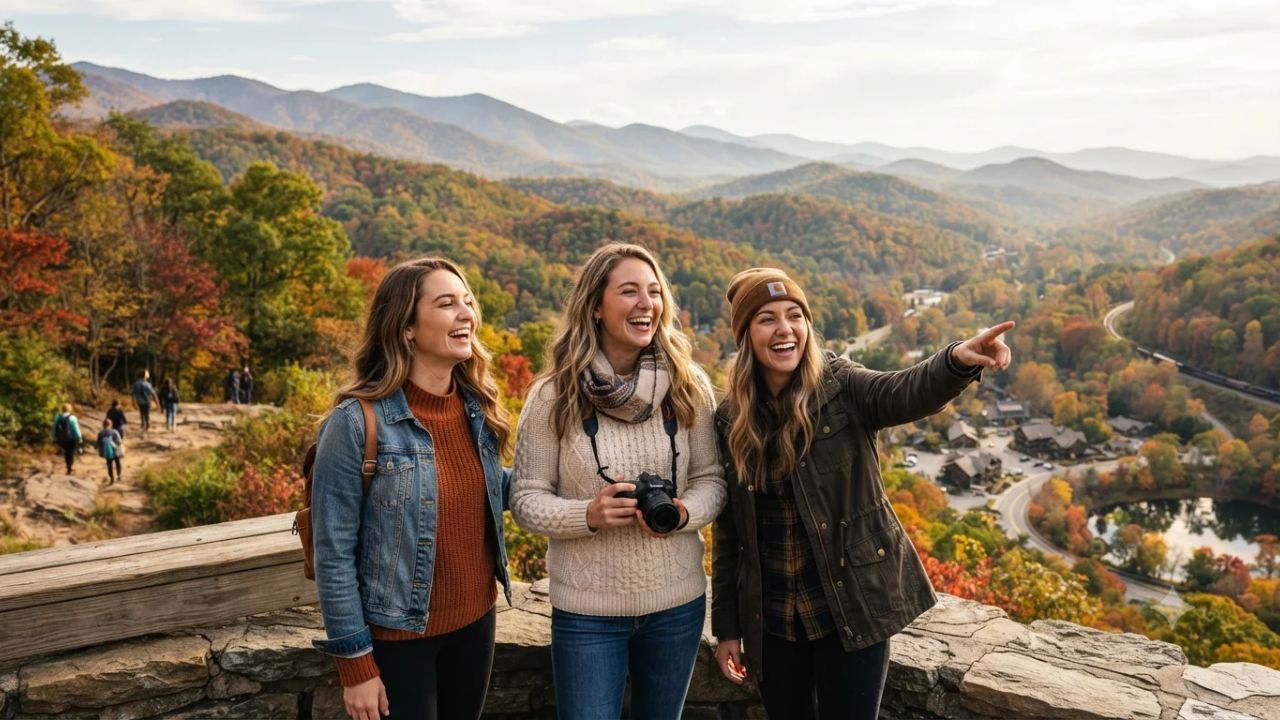
Every October in Banner Elk, thousands gather to watch fuzzy Isabella tiger moth caterpillars race up nylon strings at the Woolly Worm Festival, using the winning caterpillar's thirteen colored body bands to foretell the severity of the coming Appalachian winter. That whimsical high-country tradition is just one highlight of autumn across Western North Carolina's Blue Ridge and Great Smoky Mountains. As hardwood canopies transition across scarlet sourwoods, amber sugar maples, and golden hickory ridges, six mountain communities—Blowing Rock, Boone, Banner Elk, Bryson City, Waynesville, and Little Switzerland—serve as staging grounds for scenic rail journeys, alpine hiking, and heritage apple harvests.
Traversing the high elevations along the Blue Ridge Parkway and the forested ridges surrounding Great Smoky Mountains National Park provides travelers with an layered perspective on Appalachian culture. From vintage steam train excursions through deep river gorges to century-old Swiss-style mountain chalets, each town delivers a distinct local rhythm during the peak autumn foliage window.
| Entity / Route | Metrics | Operational Status |
|---|---|---|
| Mountain Town | Signature Autumn Experience | Ideal Traveler Profile |
| Blowing Rock | Glen Burney Falls & Price Lake | Nature Walkers & Boutique Leisure |
| Boone | Rough Ridge & King Street Brews | High Country Hikers & Academics |
| Banner Elk | Woolly Worm Races & Wildcat Lake | Festival Goers & Families |
| Bryson City | Great Smoky Mountains Steam Rail | Heritage Rail & Gorge Rafters |
| Waynesville | Historic Main Street & Crafts | Appalachian Heritage & Foodies |
| Little Switzerland | Altapass Orchard Harvest & Views | Parkway Motorists & Agritourists |
The High Country Circuit: Blowing Rock, Boone, and Banner Elk
In North Carolina's northern High Country, elevated terrain ensures early foliage transformation starting at 4,000 feet before descending into the valleys. Blowing Rock anchors this corridor with a compact, walkable downtown filled with independent craft studios, stone fireplaces, and local bakeries. Just steps from the village center, the Glen Burney Trail descends through deep hemlock ravines toward rushing cascades on New Years Creek, while the Price Lake Trail at Julian Price Memorial Park offers an easy 2.7-mile loop around a tranquil mountain reservoir mirroring autumn canopy colors.
A short drive north leads to Boone, the bustling home of Appalachian State University. Overlooking the valley from Howard's Knob, travelers gain panoramic vistas of the surrounding amphitheater of peaks. Boone's King Street functions as an energetic cultural thoroughfare packed with independent bookstores, fair-trade roasteries, and craft cider houses. Just off town, the Blue Ridge Parkway leads to Rough Ridge, where elevated boardwalks over fragile alpine ecosystems provide iconic viewpoints of Grandfather Mountain and the engineering marvel of the Linn Cove Viaduct winding around sheer granite cliffs.
Positioned between the ski slopes of Sugar Mountain and Beech Mountain, Banner Elk celebrates the season with its world-famous Woolly Worm Festival. Beyond caterpillar racing and regional fiddle music, visitors can retreat to Wildcat Lake, a protected 13-acre freshwater sanctuary where strict bans on motorized watercraft guarantee quiet morning paddleboarding, canoeing, and fishing encircled by red-gold mountain reflections.
Smoky Mountain Gateways: Bryson City, Waynesville, and Little Switzerland
Further southwest along the southern flanks of the Smokies, Bryson City offers a nostalgic alternative to highway driving. Operating out of the historic downtown depot, the Great Smoky Mountains Railroad runs scenic autumn foliage excursions aboard vintage diesel and steam-powered trains. Passengers ride in restored open-air observation cars following the Tuckasegee River and climbing through the rugged cliffs of the Nantahala Gorge. Back on the ground, Deep Creek provides easy access to three waterfalls (Tom Branch, Indian Creek, and Juney Whank Falls), while outfitters organize late-season whitewater runs and ziplining.
In Haywood County, Waynesville blends mountain scenery with deep artisan craft traditions. Its tree-lined Main Street features historic brick storefronts hosting mountain dulcimer makers, Appalachian pottery cooperatives, and farm-to-fork dining serving regional rainbow trout and smoked pork belly. Sitting conveniently between the Smokies and the Parkway, Waynesville serves as an uncrowded base for exploring high-elevation overlooks along the Balsam Mountains before returning to town for evening craft beer tastings.
Perched along the Parkway escarpment in Mitchell and McDowell counties, Little Switzerland was founded in 1910 to replicate an Alpine resort village. Its timber-framed chalets overlook layered mountain ridges dropping into the Catawba Valley. A centerpiece of the autumn season is The Orchard at Altapass, a non-profit historic apple orchard established along the original Clinchfield Railroad route. Visitors can pick heirloom mountain apples, sample freshly pressed sweet cider, listen to live mountain bluegrass on the packing porch, and hike gentle trails once walked by Revolutionary War Overmountain Men.
Visitor Insider Tips
- Chasing the Elevation Wave: Autumn foliage does not change all at once; color peaks first above 5,000 feet (Rough Ridge, Grandfather Mountain) in early October, moves to mid-elevations (Blowing Rock, Boone, Waynesville) by mid-October, and settles into lower river valleys (Bryson City, Nantahala Gorge) in late October.
- Great Smoky Mountains Railroad Seating Strategy: When reserving foliage train tickets out of Bryson City, book the open-air gondola cars on the right side of the train for outbound river views along the Tuckasegee and unobstructed canopy photography.
- Navigating Blue Ridge Parkway Congestion: Popular overlooks like Rough Ridge (MP 302.8) and Linn Cove Viaduct fill parking areas by 09:00 on October weekends; arrive by 07:15 for sunrise light or visit on Tuesday through Thursday for peaceful trails.
- Sampling Heirloom Apple Varieties: At The Orchard at Altapass, skip standard supermarket varieties and ask orchardists for heritage mountain cultivars like Arkansas Black, Stayman Winesap, or Virginia Beauty, which develop rich sweetness after the first autumn frost.
- Great Smoky Mountains Parking Tag Requirement: If parking your vehicle inside Great Smoky Mountains National Park near Deep Creek or Clingmans Dome, you must purchase and display a valid $5 daily or $15 weekly park parking tag, available online via recreation.gov or at automated kiosks.
Cultural and Environmental Context
Western North Carolina's mountain communities hold deep ties to Cherokee ancestral heritage and traditional Scots-Irish mountain farming ways. The Museum of the Cherokee People and community cultural centers across the Qualla Boundary provide educational immersion into traditional rivercane basketry, Cherokee language preservation, and native plant medicine along sacred mountain watersheds.
Environmental conservation is paramount across the Southern Appalachians, recognized as one of the most biologically diverse temperate forest zones on Earth. Fragile alpine vegetation on rocky outcrops at Rough Ridge and Grandfather Mountain is easily destroyed by off-trail trampling; hikers must strictly remain on marked timber boardwalks. Regional initiatives like the Blue Ridge Parkway Foundation actively repair historic stone masonry and fund trail restoration. Travelers are encouraged to practice Leave No Trace principles, support family-owned agritourism orchards, and purchase authentic crafts carrying Southern Highland Craft Guild certification.
FAQ: Visiting North Carolina Blue Ridge Mountain Towns 2026
What is the best time to see peak fall foliage in Western North Carolina?
Peak color varies by elevation, typically progressing from high elevations (above 4,000 feet) in early October down to lower valley towns through late October.
Do I need tickets in advance for the Great Smoky Mountains Railroad?
Yes. Autumn foliage train excursions out of Bryson City frequently sell out weeks in advance; early online booking is strongly recommended.
How far is Boone from Blowing Rock?
Boone and Blowing Rock are directly adjacent, located approximately eight miles apart along US-321, taking roughly fifteen minutes to drive between downtowns.
Are dogs permitted on hiking trails in these mountain towns?
Dogs on leashes are permitted on Blue Ridge Parkway trails (including Price Lake) and national forest lands, but are restricted on most Great Smoky Mountains trails.
[From the misty heights of the Linn Cove Viaduct to the warm hearths of Appalachian valley towns, autumn in the Blue Ridge is a timeless mountain homecoming.]
Related Travel Guides
- Philippines Upper-Middle Income: Economic Milestone Transforms Tourism Landscape in 2026
- Provence-Alpes-Côte d'Azur Regional Tourism Board Expands Off-Season Rail and Heritage Routes as France Targets 102 Million European Winter Travelers
- Exploring Savannah Georgia the Mini Paris of the South as a 2026 Alternative to High Europe Airfare
This article is for informational purposes. Flight routes, passenger regulations, visa rules, and transit advisories are subject to change by airlines and aviation authorities. Readers are advised to verify schedules and travel documentation with relevant carriers and border agencies before departure.
Related Stories
Colorado’s Nine Affordable Mountain and Plains Towns for Retirement: Scenic Beauty and Budget Guide 2026
King Pine New Hampshire Unveils $4 Ski Lift Tickets: Winter Mountain Guide 2026–2027