
Norse Atlantic Boeing 787-9 Aborts Take-Off at London Gatwick Triggering Major Runway Closure 2026
A Norse Atlantic Airways Boeing 787-9 rejected take-off at London Gatwick, causing a total runway shutdown and widespread diversions for multiple airlines.

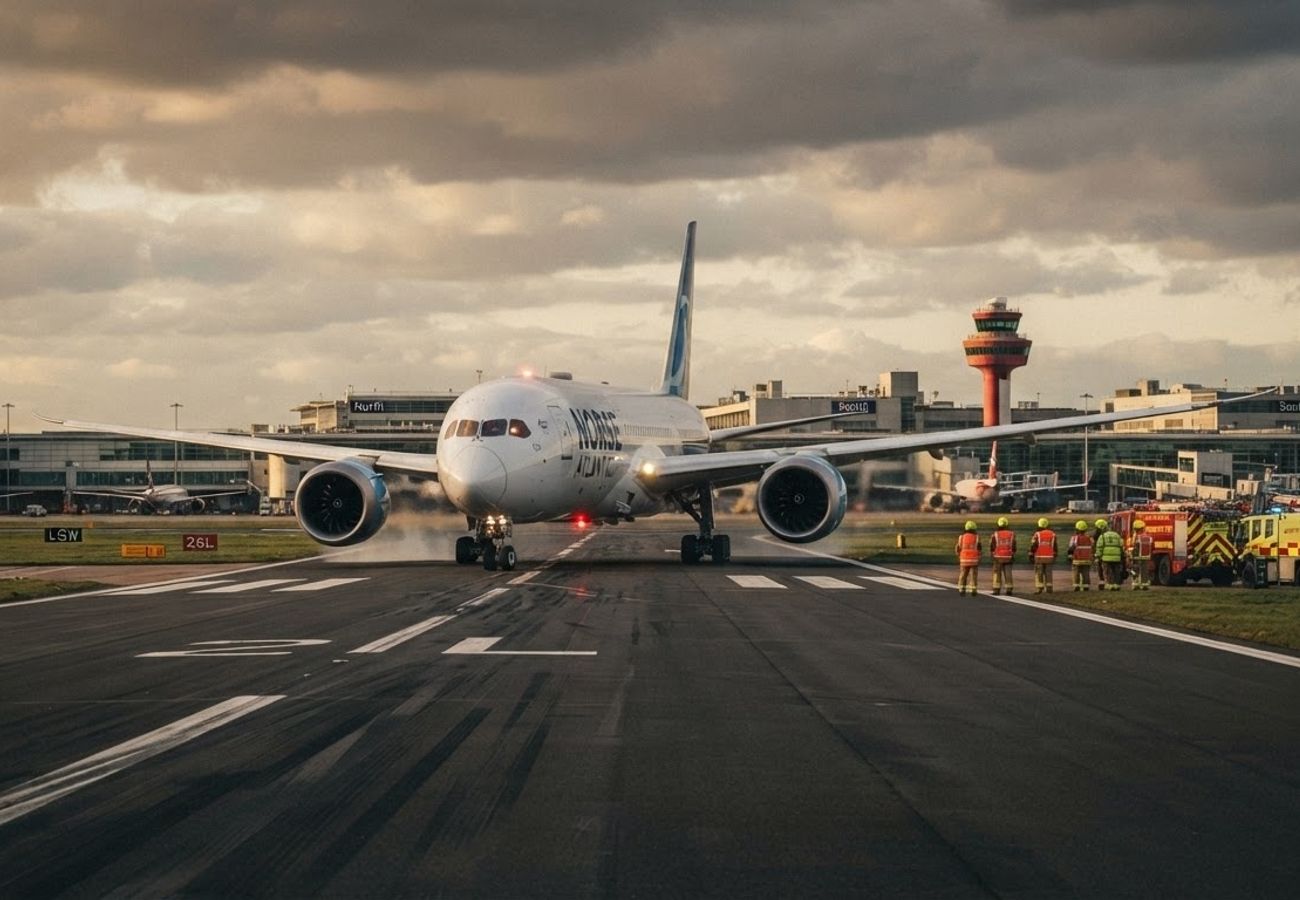
Image generated by AI
A Norse Atlantic Boeing 787-9 rejected take-off at approximately 120 knots on Friday, forcing the total closure of London Gatwick's primary runway. The incident triggered immediate flight diversions and systemic delays across the region due to the airport's reliance on a single active runway.
The Operational Breakdown at Gatwick
On September 5, 2026, Norse Atlantic Airways flight Z0701, a Boeing 787-9 Dreamliner registered as G-CKOF, was preparing for its scheduled departure to New York John F. Kennedy International Airport. During the acceleration phase on runway 26L, the flight crew executed a rejected take-off (RTO) at a speed of roughly 120 knots.
The decision to abort was linked to a technical failure involving the aircraft's nose landing gear. While the crew's swift reaction prevented a more severe accident, the physical presence of a widebody aircraft on the runway brought all operations at one of the UK's busiest hubs to a standstill.
Systemic Impact of Single-Runway Vulnerability
For the traveler, the real impact of this incident was not limited to those on flight Z0701. London Gatwick operates under highly constrained capacity, meaning any obstruction on the main runway creates a rapid domino effect.
As runway 26L was closed for emergency assessment, the following operational disruptions occurred:
- Immediate Diversions: Several incoming easyJet flights were forced to divert to London Luton and London Stansted.
- Holding Patterns: Arriving aircraft were placed in holding patterns, consuming fuel and delaying arrival times.
- Origin Delays: Flights scheduled to depart from other airports toward Gatwick were held at their origin.
The Dreamliner remained on the runway until emergency teams completed their safety assessments. At approximately 14:30 BST, the aircraft was taxied to a remote stand. After a mandatory inspection for debris and runway surface damage, Gatwick confirmed that operations resumed on runway 26L at 14:36 BST.
Cultural & Environmental Value: The Safety First Mandate
In the aviation industry, the "Rejected Take-Off" is a high-stress maneuver that prioritizes passenger safety over operational efficiency. The decision to abort at 120 knots—a speed where the aircraft is close to its rotation point—demonstrates the rigorous safety protocols mandated by regional aviation authorities and Boeing's operational manuals.
From a regional perspective, this event highlights the ongoing debate regarding Gatwick's infrastructure. The reliance on a single main runway means that a localized mechanical issue with one aircraft can paralyze thousands of passengers across multiple global airlines. This vulnerability underscores the need for enhanced contingency planning and more robust communication channels between airport ground-handling teams and passengers.
Visitor Insider Tips for Gatwick Travelers
Navigating Gatwick during a "knock-on" delay requires a different strategy than standard travel. Even after a runway reopens, the backlog can persist for hours.
- The "Post-Reopening" Trap: Do not assume that because the runway is open, your flight is on time. Aircraft are often out of position or crews have timed out. Always verify your specific flight status via the airline app rather than the airport's general board.
- Diversion Logistics: If your flight is diverted to Luton or Stansted, check for official airline-provided shuttles before booking expensive private taxis.
- Off-Peak Strategy: To avoid the highest risk of congestion-related delays, schedule arrivals at Gatwick outside the 6:00 AM to 9:00 AM window, when the runway is at peak utilization.
- Dining Alternatives: During major delays, the main terminal food courts become overwhelmed. Seek out the smaller kiosks in the satellite piers for faster service.
Tourism Outlook
The long-term impact of such incidents is a push toward greater operational resilience. For Norse Atlantic and other long-haul carriers using the Dreamliner, the focus remains on nose-gear reliability and rapid recovery protocols. For Gatwick, the event serves as a case study in the fragility of single-runway operations. As travel volumes increase toward 2027, the pressure on the UK's aviation infrastructure to implement better diversion protocols and passenger communication systems will only grow.
Safety remains the non-negotiable priority in the skies, even when it brings the ground to a halt.
Related Travel Guides
Disclaimer
This article is for informational and educational purposes only. It does not constitute legal, financial, or professional advice. While we strive to provide accurate and up-to-date information, travel policies, regulations, and conditions change rapidly. Always verify information with official sources before making travel decisions. Nomad Lawyer makes no representations about the accuracy, reliability, completeness, or suitability of the information provided. Readers should consult qualified professionals for advice specific to their circumstances. The views expressed in this article are those of the author and do not necessarily reflect the views of Nomad Lawyer.
Kunal K Choudhary
Co-Founder & Contributor
A passionate traveller and tech enthusiast. Kunal contributes to the vision and growth of Nomad Lawyer, bringing fresh perspectives and driving the community forward.
Learn more about our team →