
Norfolk Aviation Gridlock Triggers East Coast Travel Chaos as Delta, Southwest, and JetBlue Suffer 9 Flight Cancellations
Breaking airline news: A sudden operational breakdown at Norfolk International Airport triggers severe travel chaos, forcing 9 flight cancellations and 24 massive delays across major carriers.

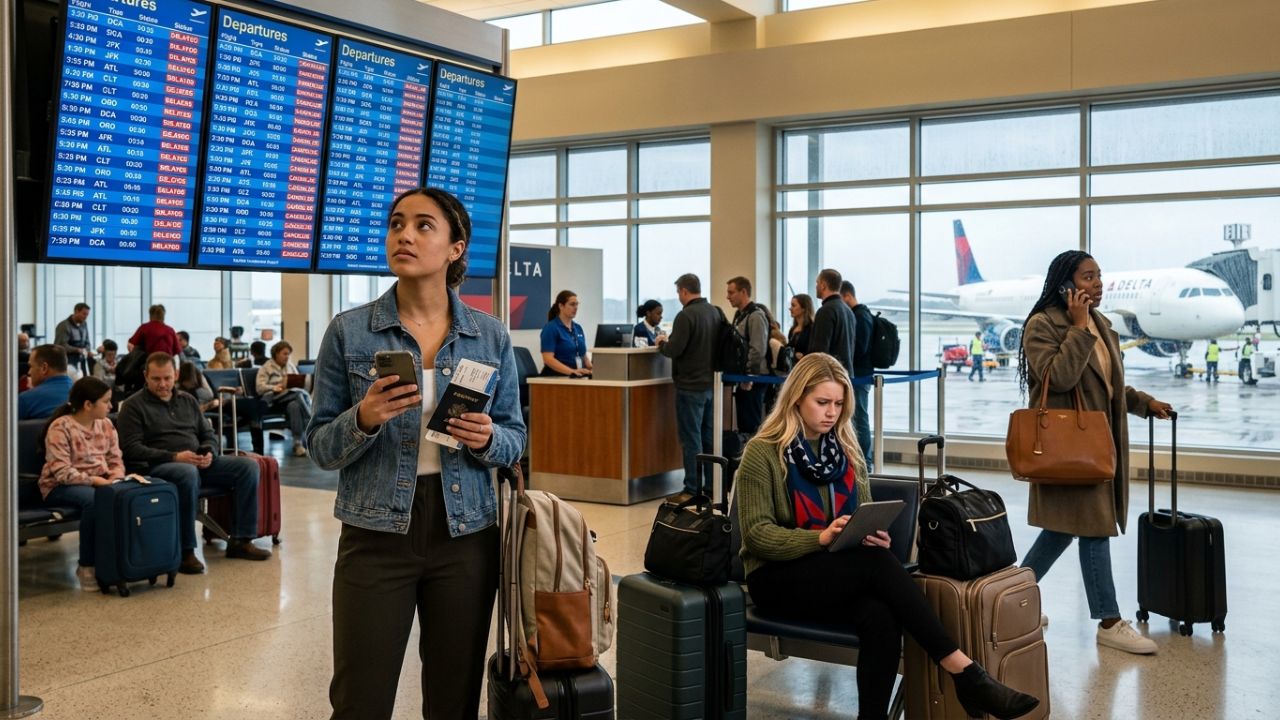
Image representing the severe aviation meltdown currently paralyzing Norfolk International Airport. This localized operational failure has rapidly escalated into massive East Coast travel chaos, triggering 9 absolute flight cancellations and 24 severe airport disruptions across Delta Air Lines, Southwest, JetBlue, and American Airlines, sending catastrophic ripple effects through major hubs in Atlanta, Boston, and New York. (Image Credit: US Aviation Tracking)
Norfolk Aviation Gridlock Triggers East Coast Travel Chaos as Delta, Southwest, and JetBlue Suffer 9 Flight Cancellations
A Massive Collapse Across Regional Feeder Networks Violently Paralyzes Norfolk International Airport, Crippling Flight Connectivity into New York, Atlanta, and Boston
The deep structural fragility of the East Coast aviation corridor has been violently exposed following a catastrophic operational breakdown in Virginia. According to the absolute latest breaking airline news and highly critical aviation updates, travelers were suddenly stranded at Norfolk International Airport as a massive wave of flight cancellations obliterated daily schedules. In a single, devastating operational cycle, 9 absolute cancellations and 24 severe flight delays completely paralyzed the facility. This massive, localized failure instantly acted as a highly destructive operational contagion, generating terrifying levels of travel chaos that rapidly crippled regional and connecting flight traffic up and down the Eastern seaboard. Major carriers specifically including Delta Air Lines, Southwest Airlines, JetBlue Airways, and American Airlines, alongside a vast network of highly vulnerable regional affiliates, were plunged into intense scheduling difficulties.
For aviation analysts and the traveling public, this specific event perfectly illustrates how the collapse of a heavily utilized mid-sized airport instantly shatters broader national itineraries. The severe operational challenges at Norfolk did not remain contained; they quickly mutated into a massive crisis affecting major mega-hubs. Because Norfolk International operates heavily on a hub-and-spoke system feeding massive national carriers, this sudden disruption triggered devastating airport disruptions in Washington DC, New York, Atlanta, Boston, Chicago, and Charlotte. Travel uncertainty instantly became agonizingly severe for passengers holding tight flight connections. As the US Federal Aviation Administration (FAA) aggressively imposes safety-first flow control to manage the crisis, passengers are left to navigate terrifyingly congested rebooking channels while massive airlines battle to recover their fractured networks.
Section-Wise Breakdown: The Anatomy of an East Coast Collapse
The highly detailed operational tracking data provided by federal aviation authorities definitively exposes exactly how this Norfolk-based disruption mutated into an East Coast crisis:
The Norfolk Hub Collapse: 33 Disrupted Flights The massive travel chaos officially documented at Norfolk International Airport reflects a highly significant operational disruption for a mid-sized US facility. While 33 total disrupted flights (24 delays and 9 absolute cancellations) might appear numerically moderate, the impact was distributed incredibly unevenly, effectively shattering the regional hub-and-spoke feed. The absolute primary stress indicators included violent aircraft rotation delays completely destroying inbound and outbound schedules, incredibly poor crew positioning misalignments, and minor weather-related operational slowdowns rolling across the East Coast. Because airlines tightly pack their turnaround schedules at Norfolk to maximize profitability, these minor delays instantly cascaded into a completely unrecoverable, full-scale schedule collapse.
Airline Impact: Regional Feeders Fuel the Crisis The disruption profile explicitly shows that regional subsidiary carriers bore an incredibly heavy operational burden, driving the broader collapse. Endeavor Air recorded the absolute highest disruption share, suffering multiple brutal cancellations and severe delays directly linked to regional network scheduling pressure. Piedmont Airlines also experienced notable delays due to hub-feed dependency challenges, while PSA Airlines faced limited but highly visible operational interruptions.
Among the massive mainline carriers, Delta Air Lines reported both absolute cancellations and delays, though they managed to contain the bleeding better than their regional partners. American Airlines experienced massive, moderate disruptions across select, highly lucrative connecting routes. Furthermore, budget and hybrid carriers could not escape the gridlock; Southwest Airlines recorded multiple delayed departures, and JetBlue Airways alongside Breeze Airways suffered massive delays largely linked to a severe lack of aircraft availability. Republic Airways showed minimal but present disruption indicators.
Economic Impact: Virginia Beach Tourism and Defense Travel While Norfolk is not a primary international gateway, this massive failure exerts immense, destructive influence over broader regional tourism flows across Virginia’s coastal and urban destinations. The disruptions triggered heavily reduced same-day leisure travel flexibility along the incredibly lucrative Virginia Beach corridor, generating a terrifying potential decline in short-stay weekend travel confidence. Furthermore, the delays caused a massive, temporary slowdown in hotel occupancy-linked arrivals. The gridlock also inflicted severe friction upon massive business travel demand, explicitly paralyzing government and defense-linked sectors that form the absolute economic bedrock of the Norfolk region.
Operational Details: The Factual Norfolk Disruption Matrix
To provide exact, factual clarity on the immense operational scale of the Norfolk meltdown, aviation analysts have mapped the specific airline failures. The following factual matrix exactly details the precise breakdown of operational impacts by carrier category:
Factual Norfolk Aviation Disruption Matrix
| Airline Category / Carrier | Factual Operational Disruption Impact |
|---|---|
| Regional Carrier: Endeavor Air | Highest disruption share; multiple cancellations and delays linked to network pressure. |
| Regional Carrier: Piedmont Airlines | Notable delays reflecting severe hub-feed dependency challenges. |
| Regional Carrier: PSA Airlines | Limited but highly visible operational interruptions. |
| Mainline Carrier: Delta Air Lines | Both cancellations and delays, but relatively contained compared to regional partners. |
| Mainline Carrier: American Airlines | Moderate disruptions specifically across select connecting routes. |
| LCC / Hybrid: Southwest Airlines | Multiple delayed departures indicating massive schedule knock-on effects. |
| LCC / Hybrid: JetBlue & Breeze | Delayed operations heavily linked to aircraft availability and sequencing constraints. |
| LCC / Hybrid: Republic Airways | Minimal but officially present disruption indicators. |
Data reflects the confirmed operational disruptions officially recorded during the massive June 16, 2026 aviation meltdown centered at Norfolk International Airport. (Source: FlightAware)
Passenger Impact: Surviving the Hub-and-Spoke Gridlock
For the thousands of passengers trapped in the terminal at Norfolk, the massive wave of flight cancellations triggered intense, agonizing frustration. Key passenger impacts explicitly included massive missed or heavily delayed onward connections at incredibly critical US hubs specifically including Atlanta, Charlotte, and Chicago. Travelers were forced to endure highly extended airport waiting times due to horrific rolling delays, combined with incredibly limited seat availability on alternative flights. Under US Department of Transportation (DOT) consumer protection frameworks, passengers must aggressively demand assistance. However, because compensation eligibility varies strictly based on cause classification (weather vs. operational), travelers with incredibly tight itineraries or same-day business schedules are currently facing the absolute highest financial risk.
Industry Analysis: The Fragility of the Feeder Network
Aviation analysts closely monitoring this massive event emphasize that the Norfolk meltdown proves the terrifying interconnectivity of the US grid. This type of disruption occurs heavily due to the immense, unbearable pressure airline schedules create. It is less of an outright airport infrastructure failure and far more of a cascading, systemic airline issue. When regional carriers—operating as the most highly sensitive nodes in the network—fail to execute tight turnarounds in Norfolk, they instantly starve the massive mainline hubs in New York and Boston of connecting passengers and aircraft, forcing the FAA to aggressively manage the resulting airspace congestion.
Conclusion: A 48-Hour Recovery Window
The terrifying travel chaos that erupted from Norfolk International Airport explicitly confirms that even mid-sized regional hubs can paralyze the East Coast aviation network. As Delta, Southwest, JetBlue, American Airlines, and massive regional affiliates desperately battle to recover from 9 brutal flight cancellations and 24 cascading delays, the flying public is paying the ultimate price. Aviation flow management systems typically require a brutal 24 to 48-hour operational cycle to resolve such immense disruption clusters. Recovery at Norfolk now depends entirely on massive aircraft repositioning efficiency and crew rescheduling stabilization. As airlines frantically attempt to clear the upstream delays across connected hubs, travelers are heavily advised to permanently adopt highly flexible travel plans and relentlessly monitor real-time flight data to survive this massive East Coast gridlock. (Source: FlightAware via Nomad Lawyer)
Key Takeaways
- Massive Localized Gridlock: Norfolk International Airport suffered an intense operational breakdown, recording 24 massive flight delays and 9 absolute cancellations in a single cycle.
- Regional Feeder Collapse: Endeavor Air and Piedmont Airlines suffered incredibly severe disruptions, starving the massive mainline hubs of connecting traffic.
- Major Carrier Strain: Delta, Southwest, JetBlue, and American Airlines all absorbed severe delays as the massive network failure cascaded through their highly synchronized schedules.
- Nationwide Route Destruction: The localized failure instantly triggered massive delays across major mega-hubs including Washington DC, New York, Atlanta, Boston, Charlotte, and Chicago.
- Regional Economic Damage: The absolute flight cancellations severely disrupted defense-sector business travel and massive leisure tourism along the lucrative Virginia Beach corridor.
✈️ Frequently Asked Questions (Factual Aviation Disruption Data)
Exactly how many flights were disrupted at Norfolk International Airport during this cycle? Norfolk International Airport officially recorded an intensely concentrated disruption consisting of 24 severe flight delays and 9 absolute flight cancellations.
Which specific airline categories drove the massive operational collapse? The massive ripple effect was heavily driven by operational failures across regional feeder carriers, specifically heavily impacting Endeavor Air, Piedmont Airlines, and PSA Airlines.
Which specific legacy and budget airlines were directly impacted by the Norfolk gridlock? The operational breakdown heavily disrupted schedules for massive major carriers specifically including Delta Air Lines, American Airlines, Southwest Airlines, JetBlue Airways, and Breeze Airways.
What specific domestic mega-hubs suffered connecting flight disruptions due to this failure? The massive delays actively devastated critical passenger connections heading toward major national hubs specifically including Washington DC, New York, Atlanta, Boston, Charlotte, and Chicago.
What specific regional tourism economies are directly damaged by this airport failure? The disruptions heavily damaged domestic tourism flow and short-stay weekend travel confidence explicitly along the massive Virginia Beach coastal and urban corridor.
Why did regional carriers suffer a vastly higher proportion of schedule instability? Regional aircraft operate incredibly tight turnaround schedules explicitly designed to feed into larger network carriers; any minor delay instantly destroys their highly sensitive rotation limits.
What specific operational stress indicators directly caused these 33 disrupted flights? The massive gridlock was driven by severe aircraft rotation delays, highly aggressive crew positioning misalignments, upstream network congestion, and minor weather-related East Coast slowdowns.
What is the official estimated recovery window for Norfolk International Airport to clear the backlog? Aviation authorities and operational analysts officially expect the network to require between 24 and 48 hours to fully resolve the disruption cluster and effectively stabilize aircraft repositioning.
🌍 Related Travel Guides & Flight Resources
- Navigate Airport Disruptions Like a Pro Master the art of surviving unexpected travel chaos and sudden regional meltdowns.
- Breaking Airline News & Evasion Routes Stay ahead of the delays with our real-time aviation updates and alternative destination intelligence.
- Global Flight Cancellation Defense Grid Essential legal rights and compensation tactics when your flight goes down.
⚖️ Disclaimer
The flight cancellation figures, airline delay metrics, and airport disruption statistics provided in this report are for informational purposes only. The specific aviation variables regarding the massive June 16, 2026 meltdown at Norfolk International Airport—including the 9 total cancellations, the 24 delays, and the specific operational pressures impacting Delta, Southwest, JetBlue, American, and regional affiliates like Endeavor Air—are based on official aviation tracking data provided by FlightAware. NomadLawyer does not guarantee the absolute accuracy or current validity of the specific 24-48 hour operational recovery timelines provided and assumes no liability for unannounced flight cancellations, extreme delays during rebooking procedures, or any financial consequences resulting from the use of this analytical content. Passengers navigating the US domestic aviation network are strongly advised to utilize official airline mobile platforms for real-time routing updates and adhere to official airline staff instructions.
Disclaimer
This article is for informational and educational purposes only. It does not constitute legal, financial, or professional advice. While we strive to provide accurate and up-to-date information, travel policies, regulations, and conditions change rapidly. Always verify information with official sources before making travel decisions. Nomad Lawyer makes no representations about the accuracy, reliability, completeness, or suitability of the information provided. Readers should consult qualified professionals for advice specific to their circumstances. The views expressed in this article are those of the author and do not necessarily reflect the views of Nomad Lawyer.
Kunal K Choudhary
Co-Founder & Contributor
A passionate traveller and tech enthusiast. Kunal contributes to the vision and growth of Nomad Lawyer, bringing fresh perspectives and driving the community forward.
Learn more about our team →