
Nigeria's 284km Kano-Katsina Railway Project Targets December 2026 Launch to Transform Northern Travel
The Nigerian government confirms the Kano-Katsina railway is 80% complete, with a scheduled December 2026 commissioning to enhance northern connectivity.

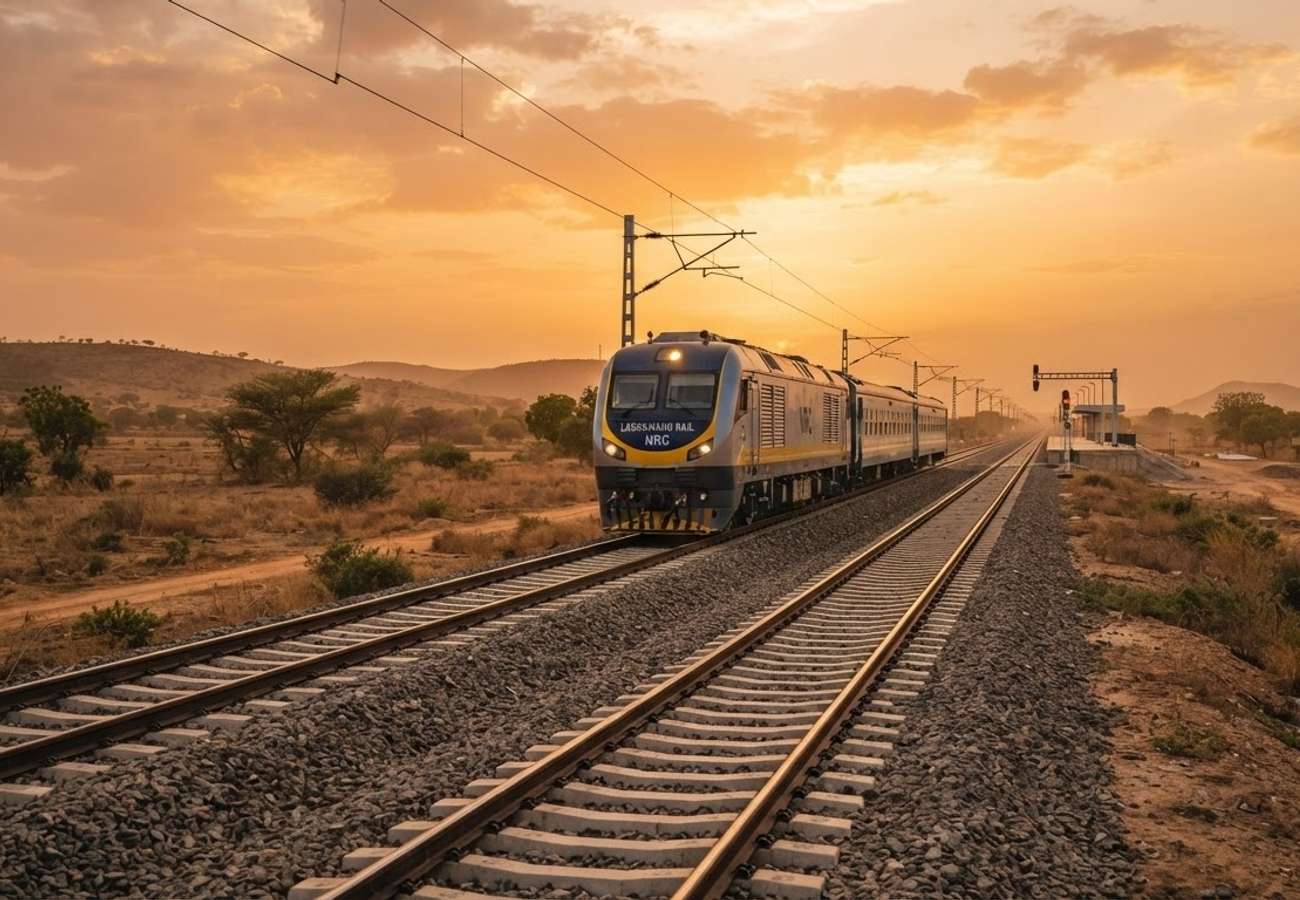
Image generated by AI
Nigeria is preparing to commission a 284-kilometre railway corridor connecting Kano and Katsina by December 2026, with current construction reaching an 80% completion rate. This strategic infrastructure project aims to bypass road congestion and security volatility, providing a modernized transit alternative for millions in the northern region.
The announcement follows a high-level joint inspection involving the Federal Ministry of Transportation, the Federal Ministry of Finance, project contractors, and various lending institutions. This delegation conducted a successful test ride on the completed section between Kazauri and Katsina, verifying that significant portions of the track have already achieved operational readiness. While the project has faced systemic delays, government officials maintain that the remaining work is aligned with the approved delivery schedule.
Infrastructure Progress and the Kazauri-Katsina Test Run
The recent validation trip served as a critical proof-of-concept for the wider corridor. By executing a test run from Kazauri to Katsina, officials were able to move beyond theoretical progress reports to physical verification of the rail infrastructure. This milestone is viewed as a signal to investors and the public that the project is transitioning from the heavy construction phase toward operational preparation.
The test run allowed the inspection team to evaluate the stability of the tracks and the efficiency of the layout. For the government, this success provides the necessary confidence to push for the December 2026 deadline, ensuring that the final 20% of construction—which includes finishing stations and signaling systems—is prioritized.
Overcoming Systemic Construction Obstacles
The path to completion has not been linear. Officials have been transparent regarding several critical bottlenecks that have hindered the pace of development across the 284-kilometre stretch. These challenges are reflective of the broader socio-political and environmental climate in Northern Nigeria.
Security Volatility Persistent insecurity in certain zones along the corridor has complicated the movement of heavy machinery and specialized personnel. Ensuring the safety of the workforce has occasionally necessitated pauses in construction, though security protocols have since been tightened to maintain momentum.
Land and Right-of-Way Disputes Legal and social friction regarding land ownership and the placement of canals has created "dead zones" where contractors were previously unable to operate. These disputes over land rights required diplomatic intervention and negotiations with local traditional leaders to secure access.
Seasonal Weather Interference The region's intense rainy seasons have historically slowed earthworks and track-laying. Heavy precipitation often renders the terrain unstable for heavy equipment, forcing a seasonal rhythm of construction that has extended the overall timeline.
Financial Backing and Government Commitment
A pivotal component of the project's momentum is the financial commitment from the Nigerian state. Muhammadu Kamal, Director of the Office of the Permanent Secretary at the Federal Ministry of Finance, confirmed that the Federal Government has officially released its 15 per cent counterpart funding.
This disbursement is essential for meeting the obligations tied to the loans provided by external lending institutions. By securing the counterpart funding, the government ensures that contractors are paid on time and that the project does not stall due to liquidity issues.
Technical Specifications of the Kano-Katsina Corridor
The following data summarizes the current status and scale of the railway development:
| Project Detail | Specification/Status |
|---|---|
| Total Track Length | 284 Kilometres |
| Current Physical Completion | Approximately 80% |
| Target Commissioning Date | December 2026 |
| Verified Operational Section | Kazauri to Katsina |
| Government Funding Contribution | 15% (Released) |
| Primary Oversight Bodies | Federal Ministry of Transportation & Finance |
Regional Economic and Tourism Implications
The introduction of a reliable rail link between Kano and Katsina is expected to trigger a ripple effect across the northern economy. By reducing the reliance on road networks—which are often plagued by congestion and reliability issues—the railway will facilitate the faster movement of agricultural goods and commercial trade.
From a tourism perspective, the project unlocks the cultural and historical wealth of Northern Nigeria. Cities like Kano and Katsina possess significant heritage sites that remain under-visited due to the rigors of road travel. A modern rail connection allows domestic and international tourists to navigate these hubs with greater safety and predictability, potentially boosting the hospitality sectors in both states.
Why This Matters: The Traveler's Perspective
For the average traveler or business operator in Northern Nigeria, this project represents a fundamental shift in mobility. Currently, travel between these hubs is subject to the unpredictability of road conditions and security checkpoints. The transition to rail offers three distinct advantages:
- Predictability: Fixed schedules eliminate the "guessing game" associated with road travel times.
- Safety: Rail corridors are generally easier to secure than sprawling highway networks, offering a more controlled environment for passengers.
- Cost-Efficiency: Bulk transport of goods via rail typically lowers the end-cost of commodities, which can lead to lower prices for consumers in urban centers.
From a logistical standpoint, this creates a "transportation redundancy." If road networks are blocked or compromised, the rail link ensures that the northern economic artery remains open, preventing the isolation of key cities.
Essential Guidance for Future Passengers
It is important for the public to note that the Kano-Katsina railway is not yet open for public use. While the December 2026 target is firm, passenger services will only commence after a final safety certification and official commissioning.
Travelers should be aware that ticketing platforms, fare structures, and specific departure schedules have not yet been released. Until the official announcement from the Nigerian railway authorities, all travel between Kano and Katsina must continue via existing road or air options.
The completion of this corridor will mark a new era of connectivity for the Nigerian north, turning a challenging journey into a streamlined transit experience.
Related Travel Guides
Disclaimer
This article is for informational and educational purposes only. It does not constitute legal, financial, or professional advice. While we strive to provide accurate and up-to-date information, travel policies, regulations, and conditions change rapidly. Always verify information with official sources before making travel decisions. Nomad Lawyer makes no representations about the accuracy, reliability, completeness, or suitability of the information provided. Readers should consult qualified professionals for advice specific to their circumstances. The views expressed in this article are those of the author and do not necessarily reflect the views of Nomad Lawyer.
Raushan Kumar
Founder & Lead Developer
Full-stack developer with 11+ years of experience and a passionate traveller. Raushan built Nomad Lawyer from the ground up with a vision to create the best travel and law experience on the web.
Learn more about our team →