
Newark Liberty International Airport Shuttle Bus Crash Injures 13 at Terminal B in 2026
A shuttle bus collision at Newark Liberty International Airport (EWR) injured 13 people and disrupted Terminal B access, highlighting critical vulnerabilities in ground transport resilience.
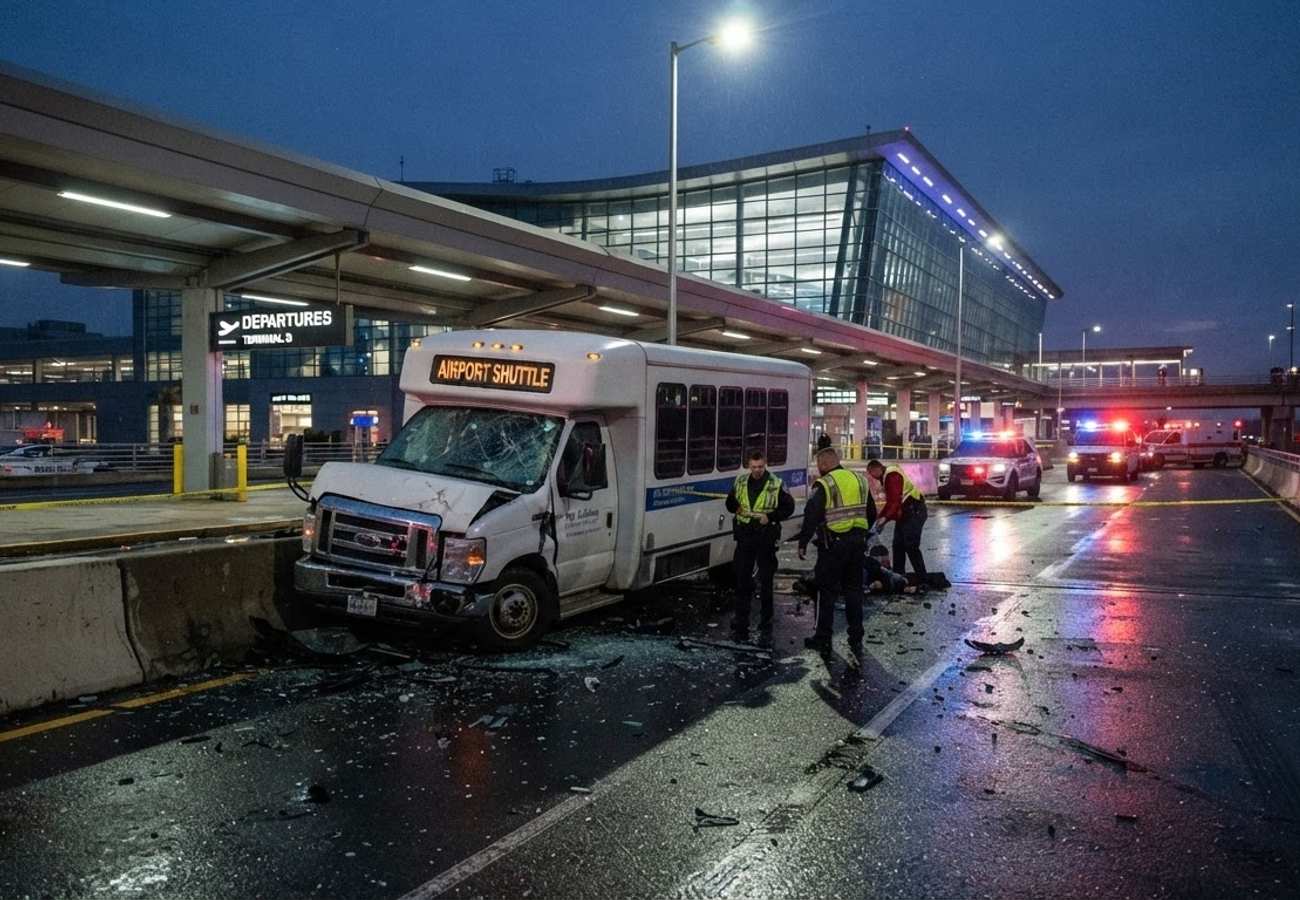
Image generated by AI
A shuttle bus collision at Newark Liberty International Airport (EWR) has left 13 people injured and caused significant early-morning disruptions to Terminal B access. While flight operations remained active, the incident underscores the fragility of ground transportation networks at one of the US's busiest hubs.
Incident Analysis: Terminal B Collision
At approximately 3 a.m. on Monday, August 31, 2026, an airport employee shuttle bus collided with a concrete barrier on the Departures Level 3 roadway of Terminal B. Emergency crews responded immediately to the scene, where images revealed extensive front-end damage to the vehicle and a shattered windscreen.
Thirteen individuals were transported to a nearby hospital. Medical authorities have classified these injuries as non-life-threatening. Following the collision, the driver was issued a citation for careless driving.
While the crash did not trigger an airport-wide shutdown, it necessitated the temporary closure of the affected roadway to allow for debris removal and vehicle recovery.
Newark Airport Crash: Technical Summary
| Detail | Information |
|---|---|
| Airport | Newark Liberty International Airport (EWR) |
| Date | August 31, 2026 |
| Time | Approximately 3 a.m. |
| Location | Terminal B Departures Level 3 |
| Vehicle Type | Airport employee shuttle bus |
| Impact Point | Concrete barrier |
| Casualties | 13 injured (non-life-threatening) |
| Legal Action | Driver cited for careless driving |
| Operational Impact | Temporary roadway closure; no flight suspensions |
Ground Transport Vulnerabilities at EWR
This incident highlights the critical nature of "last-mile" airport logistics. While aircraft may be ready for departure, roadway obstructions can create systemic delays for passengers. Our analysis indicates that ground transport incidents often create a "bottleneck effect," where a localized crash disrupts the flow of thousands of passengers entering a specific terminal.
Newark's scale exacerbates these risks. Port Authority statistics show the airport handled more than 47 million passengers in 2025, including 15.4 million international travelers. When a primary artery like the Terminal B Departures roadway is blocked, the ripple effect impacts ride-hailing services, hotel shuttles, and taxis.
Current Transit Challenges (2026)
Passengers should note that 2026 infrastructure work on the AirTrain system has already altered standard transit patterns. In several instances, shuttle buses are replacing AirTrain segments, increasing the reliance on roadway transport and extending transfer times.
| Transport Option | Primary Use | Critical Consideration |
|---|---|---|
| AirTrain | Terminal/Rail Links | Check for active service advisories |
| Airport Shuttle | Official Connections | Follow official signage only |
| NJ Transit | Regional Rail | Confirm connection status to terminals |
| Ride-hailing | App-based Transit | Use designated pickup zones |
Passenger Rights & Advisory
For passengers affected by ground transport delays or accidents at US airports, the legal framework differs significantly from flight-based disruptions.
Compensation and Liability Unlike flight cancellations under EU261/2004, there is no federal mandate for automatic cash compensation for ground transport delays in the US. However, for the affected passenger, this means:
- Personal Injury Claims: Those injured in the shuttle crash may have grounds for liability claims against the transport operator or the Port Authority, depending on the findings of the "careless driving" investigation.
- Missed Flights: If a ground transport accident caused by airport negligence leads to a missed flight, passengers should document the delay (via photos or official notices) to negotiate rebooking fees or vouchers with their airline.
Our Analysis of Policy Suggests: Passengers should avoid relying on a single transit method during periods of known infrastructure work. We recommend a minimum buffer of three hours for domestic flights and four hours for international departures at EWR to account for ground-level volatility.
Industry Analyst Perspective
From an operational standpoint, the citation of the driver for careless driving is a starting point, not a conclusion. A comprehensive safety audit must determine if the crash was a result of human error, mechanical failure, or poor roadway configuration.
As airports scale to handle nearly 50 million passengers, the integration of employee transport and passenger traffic on the same roadways creates inherent risks. The EWR incident demonstrates that ground transport resilience is just as vital to the passenger experience as air traffic control.
Ground transit is the invisible link in the aviation chain; when it breaks, the entire journey stalls.
Related Travel Guides
Disclaimer
This article is for informational and educational purposes only. It does not constitute legal, financial, or professional advice. While we strive to provide accurate and up-to-date information, travel policies, regulations, and conditions change rapidly. Always verify information with official sources before making travel decisions. Nomad Lawyer makes no representations about the accuracy, reliability, completeness, or suitability of the information provided. Readers should consult qualified professionals for advice specific to their circumstances. The views expressed in this article are those of the author and do not necessarily reflect the views of Nomad Lawyer.