
New Zealand Travel Gets Smoother as Flag Carrier Improves On Time Flights and Faster Rebooking
New Zealand Travel Gets Smoother as Flag Carrier Improves On Time Flights and Faster Rebooking

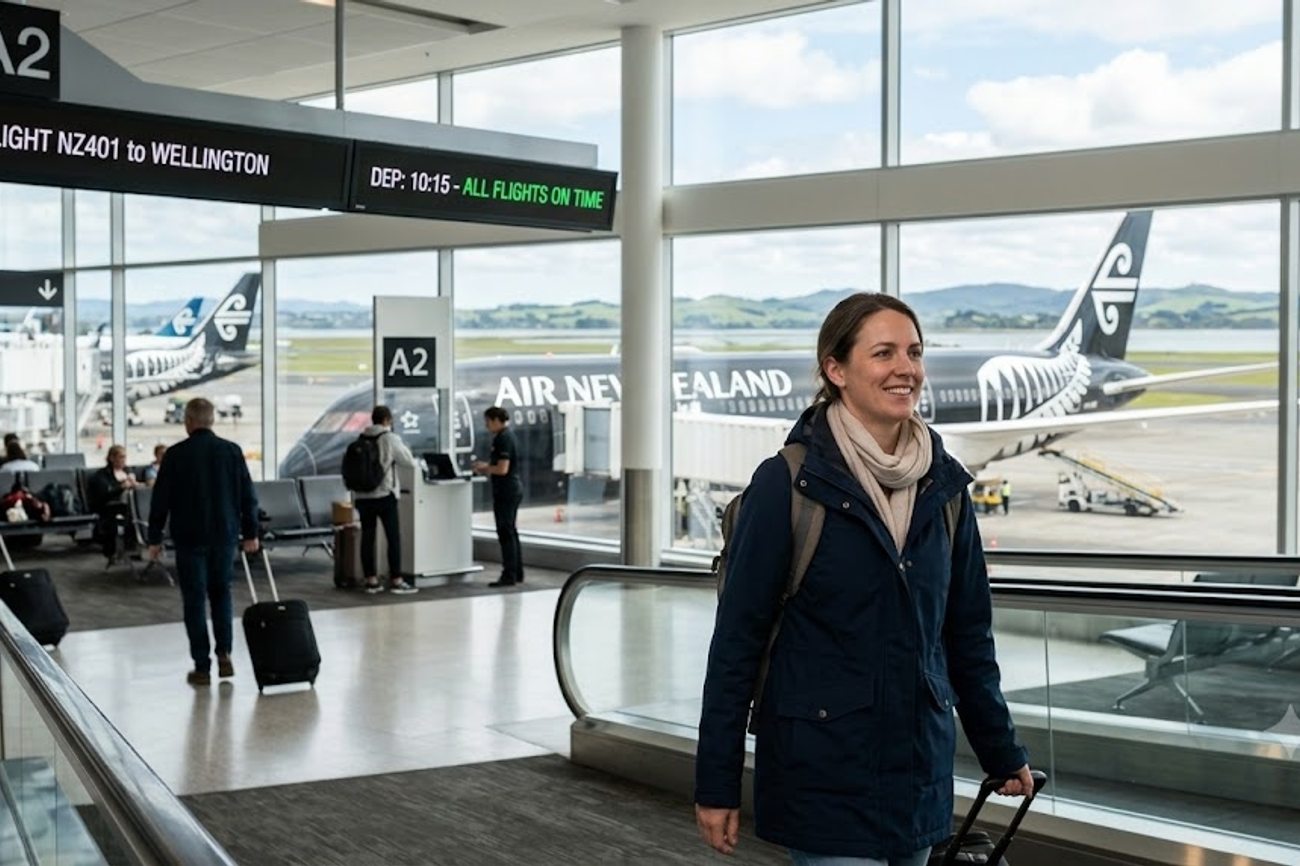
Image generated by AI
[Auckland, July 2026] — Air New Zealand has achieved a significant leap in operational reliability, reporting that 83.1 percent of its flights arrived within 15 minutes of their scheduled time in July 2026. This figure marks a 6.4 percentage point increase over the same period in 2025, signaling a successful stabilization of the carrier's network despite a volatile weather environment.
The performance surge comes as the airline aggressively implements a recovery program aimed at reducing "knock-on" delays and automating passenger support. While the July punctuality rate dipped slightly from June's 86 percent, the year-on-year growth is particularly notable given that weather-related delay minutes spiked by 74 percent during the same timeframe. These gains are evident across the entire Air New Zealand network, with international punctuality rising by over nine percentage points and operations at Auckland Airport—the airline's most complex hub—improving by nearly 10 percentage points.
The Drive for Operational Stability
The primary catalyst for this improved performance is a drastic reduction in reactionary delays. These occur when a disruption to an initial flight creates a domino effect, delaying subsequent services operated by the same aircraft or crew throughout the day. In July 2026, Air New Zealand slashed reactionary delay minutes by 41 percent compared to July 2025.
This operational tightening meant that 1,366 fewer flights were plagued by these cascading delays. By isolating disruptions and preventing them from spreading across the domestic and international grids, the airline has ensured that passengers traveling later in the day are less likely to suffer from issues that occurred in the early morning.
Cancellation rates have also trended downward. Total cancellations dropped by 1.6 percentage points to 2.8 percent, which translates to 246 fewer cancelled flights than in July 2025. Most importantly, cancellations within the airline's direct control fell by 1.2 percentage points to 1.0 percent, representing 184 fewer controllable flight cancellations.
Impacted Routes and Market Segments
The reliability improvements are not isolated to a single region but are distributed across the airline's diverse operational footprint. The following areas have seen the most significant shifts:
- Auckland Hub Operations: As the primary gateway, Auckland saw an improvement of nearly 10 percentage points in punctuality, reducing bottlenecks for both transit and originating passengers.
- International Long-Haul: Punctuality increased by more than nine percentage points compared to July 2025, improving the predictability of trans-Pacific and long-haul routes.
- Domestic Network: A significant reduction in reactionary delays has stabilized short-haul connectivity across New Zealand's regional airports.
- Cargo Operations: The airline maintained high-volume logistics, transporting 14,149 tonnes of cargo in July, including 370 tonnes of frozen seafood and salmon destined for North American markets.
Practical Traveler Advisory and Strategic Insights
For the average passenger booking a flight, these statistics translate into a tangible shift in the travel experience. The most critical update is the rollout of Automated Passenger Rebooking Technology. Originally launched for domestic routes in mid-2025, this system has now expanded to cover international cancellations.
In plain language, the "waiting game" during a flight cancellation has been virtually eliminated. Previously, passengers facing a long-haul cancellation often spent four to six hours in queues or on hold while staff manually arranged alternative flights. Under the new automated system, the majority of passengers are rebooked within 20 minutes.
Travelers now receive replacement flight confirmations almost instantly and, in many cases, can select their preferred alternative options via digital interfaces. This automation allows ground staff to pivot their attention toward passengers with complex multi-city itineraries or those requiring special assistance, rather than spending hours on routine rebookings.
Air New Zealand is implementing strategic operational upgrades to enhance flight punctuality and streamline the rebooking process for disrupted travelers. Passengers can manage their itineraries and access real-time flight status updates directly through the Air New Zealand official portal.
The Future of New Zealand Aviation Logistics
Air New Zealand is shifting its strategy from attempting to prevent all disruptions—which is impossible given the region's weather patterns—to perfecting the "recovery phase." The goal is to ensure that when a flight is inevitably cancelled due to weather, the system resets itself as quickly as possible to prevent the rest of the day's schedule from collapsing.
During July 2026, the airline managed a total of 13,397 flights. The continued integration of digital tools is expected to further shrink the window between a disruption and a resolution. By combining a 41 percent reduction in reactionary delays with the 20-minute rebooking window, the airline is building a buffer against the inherent volatility of South Pacific aviation.
Regulatory oversight from bodies such as the Civil Aviation Authority of New Zealand (CAA) remains central to these operational shifts, ensuring that as automation increases, safety and passenger rights are maintained. Additionally, the airline's ability to maintain cargo flow—specifically high-value perishables—indicates that these reliability gains are benefiting the broader New Zealand economy, not just leisure travelers.
FAQ: Air New Zealand Reliability 2026
How quickly will I be rebooked if my international flight is cancelled? Thanks to the new Automated Passenger Rebooking Technology, most passengers are now rebooked within 20 minutes, a massive improvement over the previous four-to-six-hour manual process.
Are flight delays still happening due to weather? Yes. Weather-related delay minutes actually increased by 74 percent in July 2026. However, the airline has improved its ability to prevent these weather delays from causing "knock-on" effects for other flights.
Which airport has seen the most improvement? Auckland Airport has seen a punctuality increase of nearly 10 percentage points, which is significant given it is the airline's most complex operating environment.
Has the cancellation rate actually dropped? Yes. Total cancellations fell to 2.8 percent in July 2026, and cancellations specifically within the airline's control dropped to 1.0 percent.
Faster recovery and smarter tech are turning New Zealand's skies into a model of operational resilience.
Related Travel Guides
Disclaimer
This article is for informational and educational purposes only. It does not constitute legal, financial, or professional advice. While we strive to provide accurate and up-to-date information, travel policies, regulations, and conditions change rapidly. Always verify information with official sources before making travel decisions. Nomad Lawyer makes no representations about the accuracy, reliability, completeness, or suitability of the information provided. Readers should consult qualified professionals for advice specific to their circumstances. The views expressed in this article are those of the author and do not necessarily reflect the views of Nomad Lawyer.
Preeti Gunjan
Contributor & Community Manager
A passionate traveller and community builder. Preeti helps grow the Nomad Lawyer community, fostering engagement and bringing the reader experience to life.
Learn more about our team →