
New South Wales Leads Australia's Caravan and Camping Tourism Boom
New South Wales has captured over one-third of Australia's caravan and camping market, attracting 5.5 million visitors and generating 18.2 million nights in 2025.
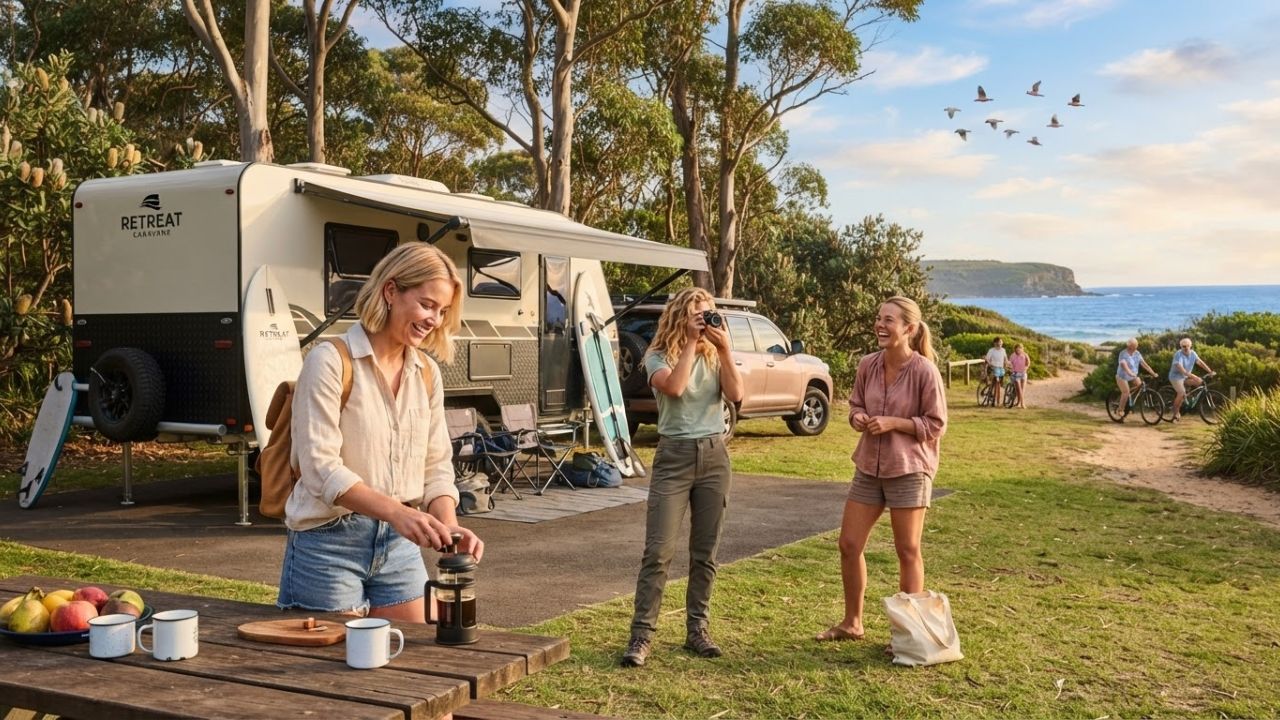
Image generated by AI
New South Wales has captured over one-third of Australia's caravan and camping market, attracting 5.5 million domestic visitors who spent 18.2 million nights across the state. By engaging a new generation of high-earning, full-time employed professionals, the outdoor leisure boom is driving regional tourism toward a projected $91 billion visitor economy by 2035.
NSW Dominates Australia's Growing Caravan Market
The expansion of domestic road travel is reshaping the visitor economy of New South Wales. According to data from Tourism Research Australia (TRA), the state attracted 5.5 million domestic caravan and camping visitors in 2025. This performance represents over one-third of Australia's total domestic caravan and camping market, confirming the state's leading role in one of the country's fastest-growing tourism segments.
The state's success occurred during a record-breaking year for Australian road travel. Nationally, travelers completed 17.3 million overnight caravan and camping trips in 2025, marking a 14 per cent increase compared with the previous year. Spending generated by these travelers reached $12.6 billion, exceeding the pre-pandemic benchmark of $10.2 billion. The Caravan Industry Association of Australia’s 2026 State of the Industry Report revealed that caravan parks generated a record $3.3 billion in revenue during 2025, showing annual growth of 6.3 per cent and adding approximately $207 million compared with the previous year.
Regional Distribution: North Coast and South Coast Leads
Caravan and camping tourism delivers significant benefits beyond major cities, supporting regional communities and encouraging visitors to explore diverse destinations across the state. Domestic caravan and camping travelers spent 18.2 million nights across New South Wales in 2025, with the visitor flow distributed across key coastal and inland regions.
The North Coast remained the most popular destination, accounting for 26 per cent of all visits. Celebrated for its coastal national parks and outdoor recreation, the region continues to attract travelers seeking scenic and relaxed holiday environments. The South Coast ranked as the second most visited region, capturing 17 per cent of caravan and camping trips, while the Murray and Hunter regions each attracted 10 per cent of visitors, and Sydney accounted for 8 per cent of travel demand.
This regional distribution highlights the role of caravan travel in spreading tourism activity. Unlike traditional city-based holidays that concentrate spending in urban hotels, road-trip travelers stay longer in regional towns, explore smaller communities, and purchase goods directly from local operators.
The Demographics of the Modern Road Traveler
The growth of caravan tourism is supported by a significant demographic shift, challenging the traditional perception that camping is a holiday choice only for retirees. In New South Wales, the sector is increasingly drawing young professionals, families, and high-income households seeking independence and outdoor access.
Statistics show that 43 per cent of domestic caravan and camping visitors in New South Wales were employed full-time. The largest visitor group reported annual household incomes between $100,000 and $149,999, indicating that the sector appeals to financially stable travelers who value high-quality services and comfort.
Demand remained strong throughout the year, with the December quarter recording the highest level of interest at 29 per cent, followed by the March quarter at 26 per cent. This seasonal trend matches school holiday breaks and warmer temperatures, prompting holiday parks to expand their offerings.
International Interest in NSW Outdoor Experiences
While domestic travelers remain the core market, international demand for caravan and camping experiences in New South Wales is also growing. International caravan and camping visitation increased by 10.4 per cent in 2025, reaching 86,000 visitors. These overseas travelers generated more than 801,500 nights across the state, representing a 24.3 per cent increase compared with the previous year.
The United Kingdom, Germany, and New Zealand emerged as the leading international source markets. Overseas visitors showed strong interest in regional destinations, particularly the North Coast, Hunter region, and South Coast, seeking to connect with nature, regional communities, and unique coastal areas.
Government Support and the CCIA Awards of Excellence
The continued expansion of caravan and camping tourism aligns with the goals of the NSW Visitor Economy Strategy, which aims to increase annual visitor expenditure across the state to $91 billion by 2035. To support this ambition, the New South Wales Government has partnered with industry associations to promote holiday parks and regional travel.
The fifth annual "Feel More. Live More." marketing campaign generated an estimated $31.2 million in bookings for the state's 400 holiday parks. This campaign demonstrated the resilience of the outdoor travel sector, maintaining strong passenger interest even during periods affected by fuel supply challenges.
The sector's achievements were recognized during the 2026 CCIA NSW Awards of Excellence, which celebrated leading holiday parks across the state. BIG4 Tweed Billabong Holiday Park in Tweed Heads received the NSW Holiday Park of the Year award for properties with fewer than 100 sites, while Discovery Holiday Parks Forster and Tathra Beach Eco Camp jointly received the award for parks with more than 100 sites.
Visitor Guide: Award-Winning Parks, Regional Dining, and Safety Rules
Exploring New South Wales through a caravan or camping holiday offers a chance to experience local hospitality, taste regional specialties, and enjoy outdoor adventures safely. By preparing in advance, travelers can maximize their road-trip experience.
Book stays at award-winning properties to ensure high-quality facilities. Visit BIG4 Tweed Billabong Holiday Park to experience its private saltwater billabong and family waterpark, stay at Discovery Parks Forster along the Wallamba River for boating and fishing, or book a glamping tent at Tathra Beach Eco Camp on the South Coast for bushland trails and mountain biking. Make reservations several months in advance for the peak December and March quarters.
Sample local culinary specialties during your road trip. In the Hunter region, pair a fresh bottle of Hunter Valley Semillon—a crisp white wine famous for its citrus and mineral notes—with fresh Sydney Rock Oysters harvested along the South Coast in Pambula or Merimbula. This classic pairing is a highlight of regional NSW gastronomy.
Practice essential towing safety by verifying your vehicle's weight limits before departure. Ensure heavy gear is secured low and centered over the caravan's axles, and check that your safety chains are crossed and attached with rated shackles. Use extension towing mirrors to monitor the sides of the caravan, and check tire pressures and brake lights before starting. Map your route using the NSW Transport Trip Planner app, and drive conservatively on winding mountain passes like the Great Dividing Range.
Observe sustainable camping guidelines by disposing of waste at designated dump stations and recycling points. Follow "leave no trace" principles, manage campfires responsibly, and use biodegradable soaps. At Tathra Beach Eco Camp, participate in the local junior ranger program to learn about native flora and fauna conservation.
Future Outlook: Rebuilding Sustainable Regional Infrastructure
The future expansion of New South Wales' caravan tourism sector relies on balancing visitor growth with environmental responsibility. As natural areas and regional parks experience higher visitor volumes, municipal councils and park operators are focusing on sustainable infrastructure management.
To protect fragile coastal and inland ecosystems, regional holiday parks are introducing waste recycling programs, eco-friendly cabin upgrades, and solar-power systems. By coordinating infrastructure development with conservation initiatives, the tourism sector aims to preserve the natural assets that draw travelers, ensuring that the state's road-trip tradition remains a viable, low-impact option for future generations.
Related Travel Guides
Disclaimer
This article is for informational and educational purposes only. It does not constitute legal, financial, or professional advice. While we strive to provide accurate and up-to-date information, travel policies, regulations, and conditions change rapidly. Always verify information with official sources before making travel decisions. Nomad Lawyer makes no representations about the accuracy, reliability, completeness, or suitability of the information provided. Readers should consult qualified professionals for advice specific to their circumstances. The views expressed in this article are those of the author and do not necessarily reflect the views of Nomad Lawyer.