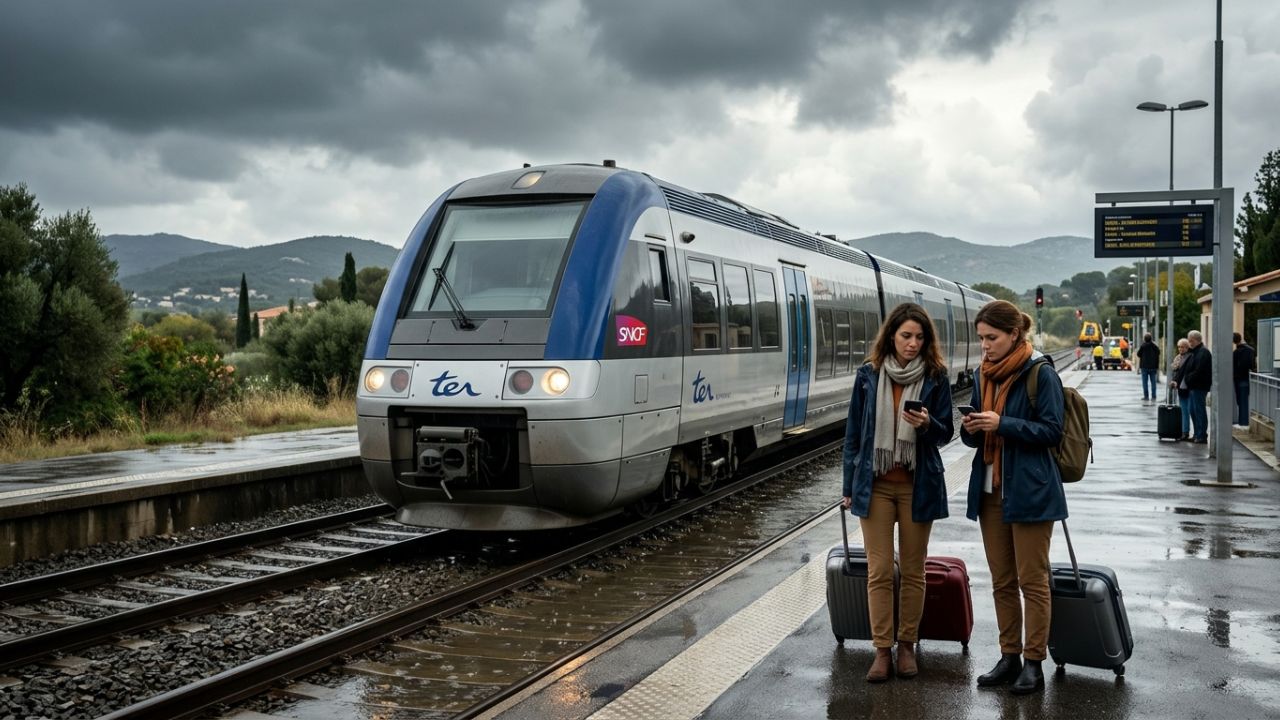
Netherlands Integrates Live Station Lift Alerts into Rail Itineraries as Europe Advances Accessible Travel Tech

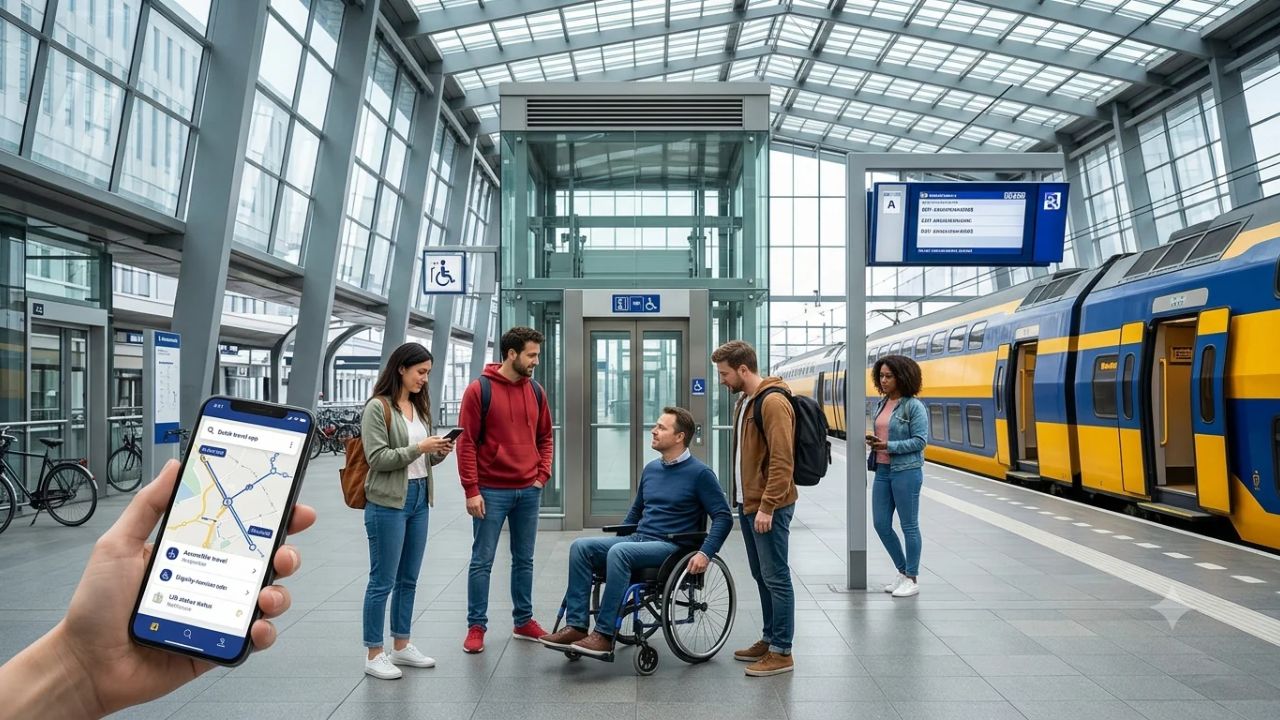
UTRECHT — In a major technical advancement for accessible European public transport, Dutch national rail operator Nederlandse Spoorwegen (NS) has formally integrated live station lift disruption data directly into passenger journey planning and mobile ticketing algorithms. Developed in coordination with national railway infrastructure manager ProRail, the digital system enables passengers using wheelchairs, mobility aids, or heavy luggage to verify platform step-free access across departure stations, intermediate transfers, and destination hubs prior to departure. By transitioning raw sensor telemetry from backend maintenance logs directly into consumer-facing route calculations, the Netherlands addresses one of rail travel's most persistent obstacles: unexpected lift breakdowns that leave mobility-impaired passengers stranded on railway platforms.
The Dutch deployment arrives as railway networks across Northern Europe—including Sweden, Denmark, and Norway—accelerate digital accessibility initiatives under the mandate of the European Accessibility Act. However, an analysis of regional transport technologies reveals significant structural divergence between national systems. While some countries maintain comprehensive databases of accessible tourism destinations or operate verified inspection frameworks for visitor attractions, few have bridged the digital divide between physical infrastructure sensors and live itinerary planning. By embedding real-time mechanical health data directly into daily travel advice, the Dutch model establishes a practical blueprint for end-to-end accessible mobility across Europe.
       DUTCH REAL-TIME ACCESSIBLE RAIL ARCHITECTURE (2025–2026)

  [ INFRASTRUCTURE LAYER: PRORAIL ]
  * Station Lifts Equipped with Automated Fault-Detection Sensors (Jan 2025)
  * Real-Time Telemetry Transmitted via Open Public Transport APIs
                         |
                         v
  [ INTEGRATION LAYER: NS REISPLANNER ]
  * Live Lift Status Embedded into Itinerary Algorithms (Sep 2026)
  * Automated Detection of Out-of-Service Lifts at Origin, Transfer & Terminus
  * Dynamic Rerouting via Accessible Alternative Platforms
                         |
                         v
  [ CONSUMER APPLICATION: PASSENGER JOURNEY ADVICE ]
  * Step-Free Travel Filter & 1-Hour Advance Assistance Booking
  * Remote Sign-Language (NGT) & Text Interpretation at Emergency Pillars
  * Train Door Egress Orientation Indicators & Screen-Reader Optimization
The Dutch Innovation: ProRail Sensor Telemetry and NS Real-Time Routing
The integration of real-time lift alerts into Dutch passenger itineraries represents the culmination of a multi-stage engineering program initiated by rail infrastructure manager ProRail. On January 7, 2025, ProRail commenced the live digital distribution of operational lift data across the national rail network. To accomplish this, engineers installed automated Internet-of-Things (IoT) fault-detection sensors across hundreds of station elevators, continuously monitoring mechanical performance, power continuity, door mechanisms, and safety interlocks. When a mechanical malfunction occurs, sensor telemetry transmits an instantaneous alert through national transport data exchanges.
While publishing raw fault data enabled technical maintenance contractors to dispatch repair technicians more quickly, it left traveling passengers vulnerable. A traveler planning an accessible journey from Utrecht Centraal to Rotterdam Centraal had to consult separate infrastructure maintenance bulletins to verify whether platform lifts were operational at transfer stations like Gouda.
On September 2, 2026, national passenger operator NS eliminated this operational disconnect by embedding live lift telemetry directly into the NS Reisplanner application and web reservation portal. Under the updated digital interface, passengers who activate the "accessible journey" toggle receive customized travel recommendations that evaluate the real-time mechanical status of every elevator along their proposed itinerary. If an elevator servicing an essential platform is out of service, the algorithm flags the disruption in amber or red text, calculates the resulting transfer barrier, and proposes alternative routes via accessible stations or schedules.
       ITINERARY VALIDATION WORKFLOW: NS ACCESSIBLE JOURNEY FILTER

   [ USER ACTIVATES ACCESSIBLE JOURNEY FILTER ]
                         |
                         v
   [ SYSTEM CHECKS SCHEDULED TRAIN ROLLING STOCK ]
   * Verifies Low-Floor Boarding or Conductor Ramp Requirement
                         |
                         v
   [ SYSTEM AUDITS STATION INFRASTRUCTURE SENSORS ]
   * Checks Origin Station Lift Status ---------> [ FAULT DETECTED? ]
   * Checks Transfer Station Lift Status -------> [ YES: Reroute via ]
   * Checks Terminus Station Lift Status -------> [ Alternative Hub  ]
                         |                              |
                         +<-----------------------------+
                         v
   [ UNBROKEN STEP-FREE ITINERARY CONFIRMED ]
   * Assistance Booking Offered (Up to 1 Hour Before Departure)
   * Real-Time Notification Enabled for Route Changes
The September 2026 technical package introduced several complementary digital accessibility features:
- Remote Sign-Language and Text Interpretation: At station information and emergency help pillars, deaf and hard-of-hearing passengers can connect instantly via video link to certified Dutch Sign Language (Nederlandse Gebarentaal, or NGT) interpreters or live text relay operators, eliminating communication barriers during irregular operations.
- Platform Egress Orientation: The NS app displays which side of the train carriage will open upon arrival at every station, allowing passengers with visual impairments, guide dogs, or mobility devices to position themselves safely before the train halts.
- Optimized Screen-Reader Compatibility: Digital itinerary outputs and live service disruption banners have been systematically recoded to comply with WCAG 2.2 Level AA digital accessibility standards, ensuring seamless auditory rendering through mobile screen readers.
- Dynamic Assistance Scheduling: Travelers requiring personal physical boarding assistance can reserve support through the app up to one hour prior to departure, a major operational improvement over international standards that traditionally require 24 hours of advance notice.
Despite these technological advancements, NS explicitly reminds passengers that digital alerts cannot physically repair broken elevators during transit. When an unexpected breakdown occurs while a train is en route, the system directs affected passengers to the NS Travel Assistance hotline, where operators coordinate personalized operational alternatives, such as dispatching accessible replacement taxis to transport travelers to the nearest accessible station.
Comparative European Paradigms: Sweden, Denmark, and Norway
Across Northern Europe, national transport authorities have approached digital accessibility through distinct operational philosophies. A comparative assessment of Sweden, Denmark, and Norway highlights varied strengths in destination mapping, independent auditing, and statutory passenger compensation frameworks.
Sweden: Comprehensive Destination Auditing and the Stockholm Remedy Guarantee
Sweden’s digital accessibility framework emphasizes destination viability alongside transit access. The national tourism organization, Visit Sweden, manages an accessibility database containing verified accessibility profiles for more than 9,100 physical locations nationwide, including hotels, dining establishments, cultural museums, municipal buildings, and outdoor recreational parks. This inventory allows visitors to verify doorway widths, interior thresholds, accessible restroom dimensions, and visual guidance systems before finalizing travel plans.
          SWEDISH DUAL-LAYER ACCESSIBILITY PLANNING MODEL

   [ DESTINATION AUDITING LAYER ]            [ TRANSIT REMEDY LAYER ]
   Visit Sweden National Database            Stockholm SL Regional Transit
   * 9,100+ Verified Public Venues           * Low-Floor Buses & Accessible Metro
   * Detailed Restroom & Door Widths         * Statutory "Accessibility Guarantee"
   * Visual, Hearing & Mobility Audits       * Reimbursed Taxis for Broken Lifts
                 \                                  /
                  \                                /
                   +------------------------------+
                                  |
                                  v
             [ BALANCED ACCESSIBLE CITY BREAK EXPERIENCE ]
In regional transit, Western Sweden’s public transport authority, Västtrafik, displays wheelchair icons within its digital itinerary planner to identify low-floor buses, trams equipped with automated boarding ramps, and regional trains with dedicated wheelchair bays. However, vehicle accessibility does not automatically guarantee step-free platform access at every rural station.
To bridge this operational vulnerability, the Stockholm regional transport authority, Storstockholms Lokaltrafik (SL), enforces a legally binding "Accessibility Guarantee" (Tillgänglighetsgaranti). If an unforeseen infrastructure breakdown—such as a defective metro elevator or escalator—prevents a mobility-impaired passenger from completing their scheduled journey, SL is legally obligated to arrange and finance alternative accessible transport, such as a specialized wheelchair-accessible taxi, up to statutory compensation ceilings. This operational remedy provides a safety net that protects travelers from being stranded by sudden mechanical failures.
Denmark: Independent Multi-User Inspections and Live DSB Outage Feeds
Denmark’s approach is distinguished by the rigorous, independent inspection methodology established by Access Denmark (Mærkeordningen Bæredygtig og Tilgængelig Turisme). Founded in 2003, Access Denmark rejects subjective "accessible" marketing claims, deploying trained accessibility auditors to evaluate visitor facilities across seven specific user categories:
       ACCESS DENMARK: SEVEN-TIER AUDITED ACCESSIBILITY MATRIX

  1. Wheelchair Users & Mobility Device Operators
  2. Blind & Visually Impaired Visitors
  3. Deaf & Hard-of-Hearing Travelers
  4. Persons with Severe Environmental Allergies & Asthma
  5. Individuals with Cognitive & Intellectual Disabilities
  6. Persons with Reading & Information Processing Needs
  7. Senior Citizens with General Reduced Stamina
By publishing granular fact sheets detailing counter heights, acoustic environments, hypoallergenic bedding, and tactile signage, Access Denmark enables travelers to evaluate whether a venue meets their individual functional needs. A notable application of this system occurred in August 2026, when Access Denmark audited the Nordborg Resort on the island of Als, verifying accessibility standards across 442 holiday cottages and publishing technical specifications for ten universally accessible residences.
For rail transit, Danish State Railways (DSB) publishes an official online status dashboard tracking out-of-service elevators and escalators across all national railway stations. Updated continuously, the portal identifies defective equipment by station name, platform track, and projected return-to-service date. Similarly, the Copenhagen Metro provides real-time alerts detailing lift maintenance across its automated transit network. However, unlike the Dutch NS model, Danish rail journey planners have not yet fully merged these lift outage databases into automatic passenger rerouting algorithms, requiring travelers to cross-check fault lists manually against their train schedules.
Norway: Entur Multimodal Routing and Bane NOR Auditory Innovation
Norway operates one of Europe’s most sophisticated national public transport data architectures through Entur, a state-owned digital platform that aggregates real-time schedules, fares, and transit data across all Norwegian rail, ferry, metro, tram, and bus operators into an open multimodal API.
In the greater Oslo and Akershus region, public transit administrator Ruter enriches this open data by publishing detailed physical stop characteristics within its mobile application. Ruter’s digital platform documents elevation gradients, platform edge safety markings, staircase step counts, boarding ramps, and tactile guidance paving. Nevertheless, physical transit constraints persist: while modern Oslo Metro stations feature elevator access, historic stops like Frøen lack step-free infrastructure, and older street trams cannot accommodate heavy electric wheelchairs. Additionally, seasonal water level variations in the Oslofjord can alter the slope of passenger boarding ramps on local island ferries, transforming gentle ramps into steep inclines.
       BANE NOR "NÅ" APP: SENSORY AND AUDITORY ACCESSIBILITY SUITE

   [ BANE NOR INFRASTRUCTURE TELEMETRY ]
                     |
                     v
   [ NÅ MOBILE APPLICATION ENGINE (UPDATED FEB 2025) ]
   * High-Contrast Interface & Dynamic Text Scaling
   * Integrated Text-to-Speech Synthetic Auditory Engine
   * Real-Time Platform Reassignments & Delay Warnings
   * Real-Time Tracking of Accessible Train Wheelchair Bays
                     |
                     v
   [ INDEPENDENT SENSORY NAVIGATION FOR BLIND & LOW-VISION TRAVELERS ]
On national rail lines, infrastructure agency Bane NOR delivers specialized accessibility through its dedicated travel application, NÅ ("Now"), which received a comprehensive architectural update in February 2025. Specifically engineered for blind and low-vision passengers, NÅ features an advanced synthetic voice engine that reads live departure boards, track changes, delay notifications, and train carriage formations aloud. The application highlights which train cars contain designated wheelchair spaces and accessible restrooms.
For physical boarding assistance, Bane NOR provides complimentary station support at designated transport hubs. However, unlike the one-hour booking window offered in the Netherlands, Norwegian rail guidelines generally mandate that assistance requests be submitted at least 24 hours prior to departure, illustrating how digital information systems can outpace physical operational workflows.
Digital Accessibility Systems Across Northern Europe
The following comparative table analyzes the verified technical capabilities, traveler benefits, operational limitations, and administrative authorities across the four transport systems:
| Country & Operator | Primary Digital Capability | Real-Time Transit Benefit | Operational Limitation | Official Governing Body |
|---|---|---|---|---|
| Netherlands (NS & ProRail) | Live lift disruption telemetry embedded directly into journey advice algorithms | Automated itinerary rerouting when station lifts fail; step-free journey filtering | Assistance required if mobile ramps needed; lift repairs take time | Nederlandse Spoorwegen (NS) & ProRail |
| Sweden (Visit Sweden & SL) | 9,100-venue accessible tourism database; statutory regional mobility guarantee | Independent destination auditing; compensated alternative taxi transit in Stockholm | Destination audits separate from rural bus access; no single national rail rerouter | Visit Sweden & Storstockholms Lokaltrafik (SL) |
| Denmark (Access Denmark & DSB) | Seven-category expert facility audits; live web-based lift fault dashboards | Precise site-level architectural measurements; published repair return dates | Voluntary venue registration; lift fault lists not fully automated into DSB itinerary engine | Access Denmark & Danske Statsbaner (DSB) |
| Norway (Entur & Bane NOR) | Open national multimodal routing; NÅ auditory app for visually impaired passengers | Full multimodal transit aggregation; voice-guided platform and carriage alerts | 24-hour advance notice standard for station assistance; fjord ferry ramp tidal steepness | Entur AS & Bane NOR |
The Demographic and Economic Driver: Accessible Tourism in Europe
The modernization of accessible transport technology is propelled by powerful demographic shifts and economic imperatives across the European Union. Public transit operators and tourism authorities increasingly recognize that accessible infrastructure is not a niche concession, but an essential public requirement for a significant portion of the traveling public.
Data published by Eurostat in late 2026 demonstrates the immense volume of European tourism flows. In 2025, tourist accommodation establishments across the European Union recorded a historic 3.1 billion nights spent, representing a 4.1% increase over 2024. During the first six months of 2026, European accommodation nights reached 1.321 billion, marking an additional 1.7% year-on-year expansion.
       EUROSTAT DEMOGRAPHIC & TOURISM DATA CONTEXT (2025–2026)

  [ MACRO INDICATOR ]               [ VERIFIED VALUE ]    [ RELEVANCE TO MOBILITY TECH ]
  * Annual EU Accommodation Nights    3.10 Billion (2025) Continuous travel expansion
  * H1 EU Accommodation Nights        1.32 Billion (2026) +1.7% ongoing growth trajectory
  * EU Citizens with Disability       23.9% of Adults     Over 100 million travelers
  * Demographic Aging Index           Rising steadily     Growing need for step-free travel
Concurrently, Eurostat disability and living conditions surveys indicate that 23.9% of EU residents aged 16 and older—equivalent to more than 100 million individuals—report long-standing activity limitations or recognized physical disabilities. As Europe’s domestic population ages, the proportion of travelers experiencing temporary or permanent mobility impairments, sensory sensitivities, or chronic health conditions continues to climb.
In the tourism economy, travelers with access requirements represent high-value patrons. Empirical market research indicates that mobility-impaired individuals rarely travel alone, typically traveling with family members, friends, or personal caregivers, thereby multiplying hotel, dining, and transit spending. In addition, accessible travelers demonstrate longer average lengths of stay and exhibit remarkable brand loyalty toward airlines, hotel chains, and railway operators that provide reliable, stress-free travel environments. Conversely, a single missing piece of accessibility information—such as an unannounced broken elevator or an unstaffed boarding ramp—can ruin an entire holiday, generating severe reputational and financial costs for travel providers.
The Architectural Challenge: Connecting Isolated Transit Databases
A central takeaway from the four-country comparison is that modern European accessible travel technology remains hindered by data fragmentation. Digital information regarding a traveler's journey is currently owned and managed by disparate, unconnected entities:
          THE FRAGMENTED ACCESSIBLE TRAVEL DATA STACK

  [ ATTRACTION & HOTEL DATA ]       Owned by private venues, tourist boards & audit bodies
                |
  [ VEHICLE ACCESSIBILITY DATA ]    Owned by regional bus, tram, and train operating companies
                |
  [ STATION SENSOR TELEMETRY ]      Owned by national railway infrastructure managers (ProRail)
                |
  [ HUMAN ASSISTANCE ROSTERS ]      Managed by station service contractors and passenger hotlines
When these four data silos operate independently, accessible journeys frequently break down:
- A hotel may boast an audited wheelchair-accessible suite, but the regional bus connecting the airport to the hotel utilizes high-step vehicles.
- A railway operator may schedule a brand-new low-floor train, but the elevator leading to the departure platform is broken.
- An infrastructure manager may publish a lift breakdown notice on a maintenance website, but the consumer journey app fails to alert the passenger before they board.
- A traveler may arrive at an accessible transfer station, only to find that the local station assistance contractor failed to allocate staff to deploy the manual boarding ramp.
The Dutch railway integration succeeds because it bridges two of these critical silos: connecting infrastructure sensor telemetry directly with passenger journey algorithms. The ultimate objective for European travel technology suppliers is the creation of a unified, multimodal routing engine that aggregates real-time data across all four layers. Such an architecture would combine live General Transit Feed Specification Realtime (GTFS-RT) feeds with NeTEx accessibility standards, verifying the physical viability of every connection, vehicle, lift, and staff deployment across international borders.
       UNIFIED END-TO-END ACCESSIBLE MOBILITY ARCHITECTURE

  +--------------------------------------------------------------------------+
  |              UNIFIED EUROPEAN ACCESSIBLE TRANSIT PLATFORM                |
  +--------------------------------------------------------------------------+
          |                               |                           |
          v                               v                           v
   [ REAL-TIME SENSORS ]        [ VEHICLE ATTRIBUTES ]      [ ASSISTANCE SYSTEMS ]
   * Station Lifts & Ramps      * Low-Floor Train Cars      * Automated Staff Dispatch
   * Platform Gate Telemetry    * Dedicated Wheelchair Bays * Guaranteed 1-Hr Booking
   * Door Sensor Monitoring     * Accessible Restrooms      * Cross-Border Compatibility
          |                               |                           |
          +-------------------------------+---------------------------+
                                          |
                                          v
   [ DYNAMIC ITINERARY ENGINE: ZERO-DISRUPTION STEP-FREE ROUTING ]
Regulatory Impetus: The European Accessibility Act and Passenger Rights
The technical modernization of railway systems is reinforced by an evolving European regulatory landscape designed to eliminate social and digital barriers. The primary legal driver is the European Accessibility Act (Directive (EU) 2019/882), which entered formal application across all EU member states in June 2025.
The EAA mandates that all consumer-facing digital services—including airline and railway ticketing websites, mobile travel applications, self-service check-in kiosks, automated ticket vending machines, and digital passenger information displays—must comply with harmonized European accessibility standards. Digital interfaces must offer alternative sensory formats (such as text-to-speech, high-contrast visual displays, and tactile feedback) to ensure that persons with disabilities can research, book, and navigate public transport independently.
In parallel, the European Union’s revised Rail Passenger Rights Regulation (Regulation (EU) 2021/782) has strengthened statutory protections for passengers with disabilities and reduced mobility. While historic regulations permitted railway operators to demand 48 hours of advance notice for boarding assistance, the revised framework established a standard 24-hour advance notification window across the EU. A transitional phase that allowed specific member states to maintain longer notice periods expired on June 30, 2026, codifying the 24-hour rule as a uniform baseline.
Significantly, forward-thinking operators like the Netherlands’ NS have moved far beyond the minimum 24-hour statutory requirement, utilizing automated digital dispatch systems to offer a one-hour booking window. As algorithmic integration matures, transport advocates anticipate that advance booking windows will eventually be replaced entirely by on-demand, turn-up-and-go assistance across all major European railway hubs.
Strategic Advisory: Navigating Accessible Rail Travel Across Northern Europe
For travelers with mobility devices, visual or auditory impairments, or families traveling with heavy prams and luggage, planning accessible journeys across Northern Europe requires proactive verification. The following guidance outlines practical measures to ensure seamless, step-free travel:
                  ACCESSIBLE RAIL JOURNEY DECISION WORKFLOW

 [ STEP 1: ACTIVATE DIGITAL ACCESSIBILITY ROUTING FILTERS ]
 * Enable "Accessible Travel" toggle in the NS Reisplanner or Entur apps
 * Verify that scheduled trains feature low-floor boarding or conductor ramps
 * Review real-time station lift status indicators for origin and destination
                          |
                          v
 [ STEP 2: VERIFY PHYSICAL DIMENSIONS & DEVICE CONSTRAINTS ]
 * Confirm wheelchair / scooter dimensions comply with rail operator limits
 * Standard European limits: Width <= 700mm, Length <= 1200mm, Weight <= 300kg
 * Verify manual turning radius for onboard accessible wheelchair spaces
                          |
                          v
 [ STEP 3: SCHEDULE ASSISTANCE WITHIN OFFICIAL LEAD TIMES ]
 * Netherlands (NS): Book assistance up to 1 hour prior to departure
 * Norway (Bane NOR) & Denmark (DSB): Book assistance at least 24 hours ahead
 * Distinguish between station assistance (ramps) and onboard customer service
                          |
                          v
 [ STEP 4: ESTABLISH OPERATIONAL CONTINGENCY PROTOCOLS ]
 * Recheck live lift disruption feeds 30 minutes before leaving your hotel
 * In Sweden, review Stockholm SL's Accessibility Guarantee for taxi remedies
 * Retain direct phone contacts for national railway assistance control desks
- Activate Accessible Route Filters and Review Sensor Warnings: When planning journeys on the Dutch rail network, always engage the accessibility filter in the official NS Reisplanner app. Do not rely on saved itineraries from previous days, as lift status telemetry is updated in real time. If a lift fault is indicated at an intended interchange station, examine the suggested alternative routes, which may suggest transferring at an adjacent station equipped with operating elevators.
- Confirm Device Dimensions Against Rolling Stock Specifications: European railway operators enforce strict physical dimension and weight thresholds for mobility equipment permitted aboard passenger carriages. Under standard European railway specifications (TSI PRM standards), wheelchairs and electric mobility scooters must generally not exceed 700 millimeters in width, 1,200 millimeters in length, and an aggregate weight of 300 kilograms (including occupant and luggage). Confirm that your equipment satisfies these dimensional constraints before boarding, particularly on older rolling stock.
- Respect Operational Lead Times for Boarding Assistance: Understand that advance booking requirements vary substantially between European countries. While the Netherlands permits digital assistance reservations up to one hour prior to departure, neighboring systems in Denmark and Norway operate under 24-hour advance notification rules for guaranteed station support. If your journey crosses international borders—such as taking an ICE or Eurostar train from Amsterdam into Germany or Belgium—verify assistance bookings across each national operator separately.
- Leverage Auditory and Visual Accessibility Tools: Travelers with sensory impairments should download specialized assistive applications before departure. Blind and low-vision passengers traveling through Norway should install Bane NOR’s NÅ app for audible track assignments, while deaf travelers navigating Dutch stations should utilize the remote NGT sign-language video interpreting pillars located across major NS transport concourses.
- Establish Contingency Plans and Know Your Statutory Rights: Before departing on complex itineraries, save the direct emergency customer care contacts for the relevant rail operators. In metropolitan areas like Stockholm, familiarize yourself with transport authority guarantees that provide subsidized accessible taxis if elevators malfunction. If traveling within the European Union, know that under Regulation (EU) 2021/782, rail operators are legally obligated to assist you in reaching your final destination without extra cost if missed connections occur due to inaccessible infrastructure or failed assistance deployments.
The ongoing digital modernization of Dutch railways demonstrates that real-time infrastructure transparency is the cornerstone of modern accessible travel. By transforming mechanical lift sensors into actionable passenger itinerary advice, the Netherlands points the way toward a more inclusive, connected, and dignified European railway network.
Related Travel Guides
- La Capitale Marks 10 Years at Four Seasons Hotel Amman as Chef Sacha Enjalbert Takes the Helm
- YOTEL Debuts in Thailand at Cloud 11 Bangkok with Hilton Honors Loyalty Integration
- Lisbon and Porto Lead Portugal Cruise Revolution with Shore Power and Regional Dispersion by 2027
- Uniworld Unveils Mekong Mystique Luxury River Ship for 2028 Vietnam and Cambodia Voyages
- Cambodia Cruise Travel Crisis as Florida Operator Suspends Global Voyage and Leaves 203 Stranded
This article is for informational purposes. Flight routes, passenger regulations, visa rules, and transit advisories are subject to change by airlines and aviation authorities. Readers are advised to verify schedules and travel documentation with relevant carriers and border agencies before departure.
Related Stories

Omio Group Strengthens Rail Europe Strategy With New President Jean-Francois Bessiron Following Acquisition

Omio Group Names Jean-Francois Bessiron President of Rail Europe to Drive Global Rail Integration