
Nepal Travel Alert 2026: Himalayan Floods Disrupt Rasuwa District and China Border Routes
Severe Himalayan flooding in northern Nepal has triggered emergency travel alerts, disrupting critical infrastructure in the Rasuwa district and routes to the China border.

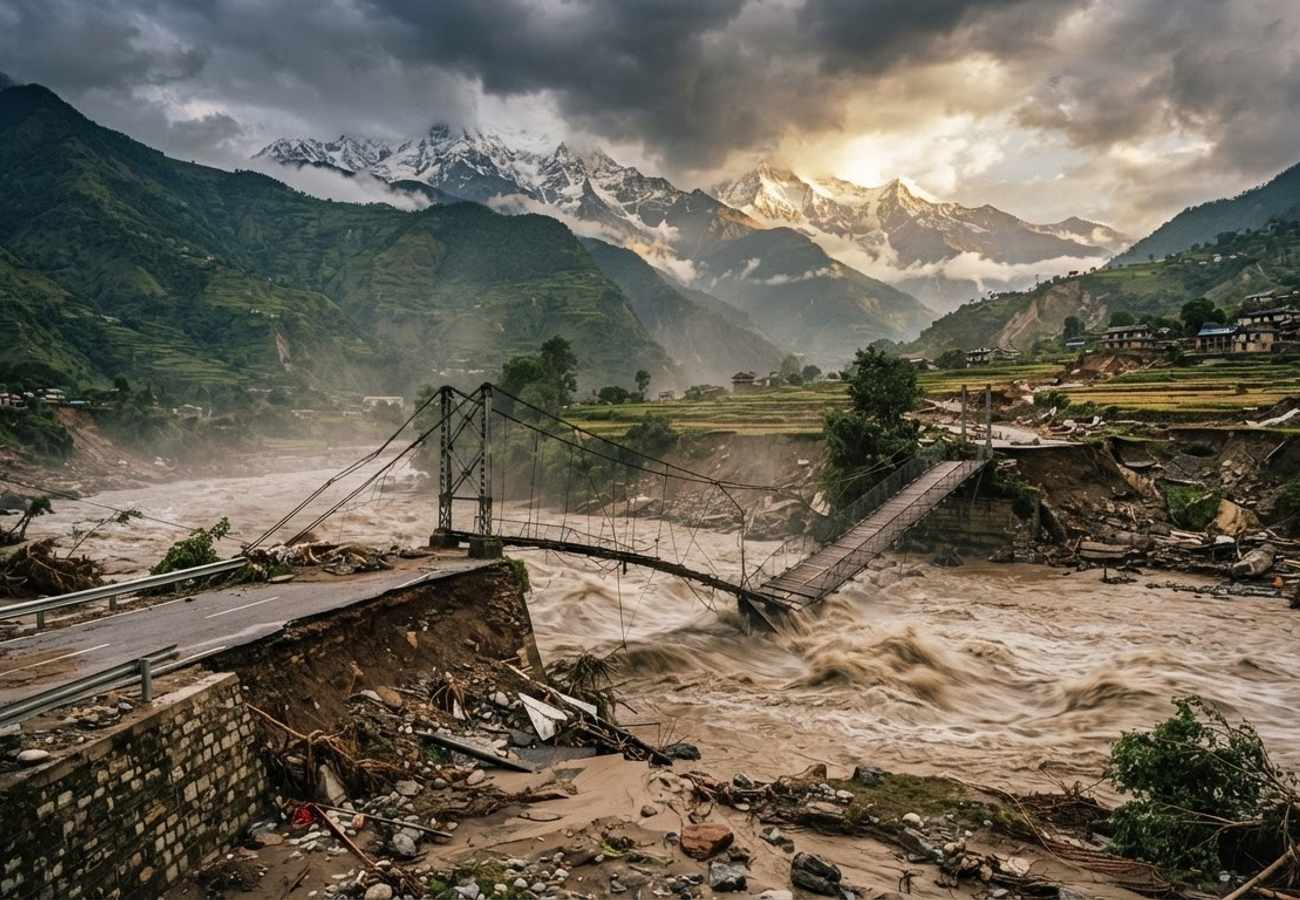
Image generated by AI
Severe flooding in northern Nepal has triggered urgent travel warnings, causing widespread infrastructure failure in the Rasuwa district and disrupting critical corridors connecting Nepal to China.
The UK Foreign, Commonwealth & Development Office (FCDO) has formally updated its travel advice for Nepal, warning that conditions in the northern Himalayan regions remain volatile. Heavy rainfall and subsequent flooding have compromised roads, bridges, and communication networks, creating immediate hazards for adventure tourists, pilgrims, and local residents.
Infrastructure Collapse in Rasuwa and Border Zones
The epicenter of the disruption is concentrated in the Rasuwa district and the Nepal-China border regions. These areas serve as primary arteries for high-altitude trekking and spiritual journeys.
Our analysis of the current situation indicates that the damage is not limited to surface roads; the failure of key bridges and communication systems has isolated several remote mountain communities. For travelers, this manifests as:
- Immediate Route Closures: Major corridors toward Tibet and the Mount Kailash pilgrimage routes are heavily impacted.
- Logistical Failures: Significant delays in transportation and the necessity for abrupt itinerary changes.
- Communication Blackouts: Intermittent or total loss of connectivity in affected northern zones.
Critical Safety Data for Travelers
While the disaster is localized to the north, the volatility of the Himalayan environment means risks can shift rapidly. The following points are essential for current and future visitors:
- High-Risk Zones: Rasuwa district and the immediate Nepal-China border crossing.
- Primary Hazards: Landslides, unstable terrain, and glacier-related flash floods.
- Affected Activities: High-altitude trekking, border-crossing expeditions, and religious pilgrimages to Tibet.
- Stable Zones: Kathmandu Valley, Pokhara, and the primary Annapurna and Everest trekking circuits remain largely operational, though travelers should remain vigilant.
Impact on the Adventure Tourism Sector
Nepal's economy relies heavily on the trekking and guiding industry. The current emergency has forced operators to reassess safety protocols for the remainder of the 2026 season.
From a logistical perspective, this means trekking agencies are now required to implement more flexible booking terms and real-time route monitoring. The FCDO has specifically highlighted the necessity for comprehensive travel insurance. In remote Himalayan regions, where the terrain complicates emergency responses, insurance must explicitly cover:
- High-altitude trekking.
- Emergency helicopter evacuation.
- Medical repatriation from remote zones.
Why This Matters: Industry Implication
For the global travel industry, this event is a textbook example of "climate-driven volatility" in mountain tourism. We are seeing a shift where traditional "peak seasons" are no longer guaranteed safety.
The real impact for the traveler is the end of the "fixed itinerary" era in the Himalayas. For those navigating these routes, the reliance on local guides is no longer just about navigation—it is about survival and real-time risk assessment. This disaster underscores a growing gap between tourism demand and infrastructure resilience. When a single bridge in Rasuwa fails, it doesn't just stop a bus; it severs the economic and safety lifeline for entire trekking corridors.
Forward Outlook
Recovery will depend on the speed of infrastructure restoration and the implementation of better early-warning systems. We expect to see a push toward "smarter" tourism in Nepal, featuring:
- Enhanced Early Warning Systems: Integration of satellite monitoring to predict glacier lake outburst floods (GLOFs).
- Infrastructure Hardening: Rebuilding bridges and roads with higher resilience to extreme weather.
- Diversified Routing: A shift in tourist traffic toward less vulnerable regions to reduce pressure on fragile border zones.
While the global reputation of Nepal as a premier adventure destination remains intact, the 2026 floods mark a transition toward a more cautious, safety-first approach to Himalayan exploration.
Safety in the Himalayas is no longer a luxury—it is a logistical requirement.
Related Travel Guides
Disclaimer
This article is for informational and educational purposes only. It does not constitute legal, financial, or professional advice. While we strive to provide accurate and up-to-date information, travel policies, regulations, and conditions change rapidly. Always verify information with official sources before making travel decisions. Nomad Lawyer makes no representations about the accuracy, reliability, completeness, or suitability of the information provided. Readers should consult qualified professionals for advice specific to their circumstances. The views expressed in this article are those of the author and do not necessarily reflect the views of Nomad Lawyer.
Kunal K Choudhary
Co-Founder & Contributor
A passionate traveller and tech enthusiast. Kunal contributes to the vision and growth of Nomad Lawyer, bringing fresh perspectives and driving the community forward.
Learn more about our team →