
Nepal Reaffirms Tourism Readiness at Asian Tourism Fair 2026: Post-Flood Travel Guide

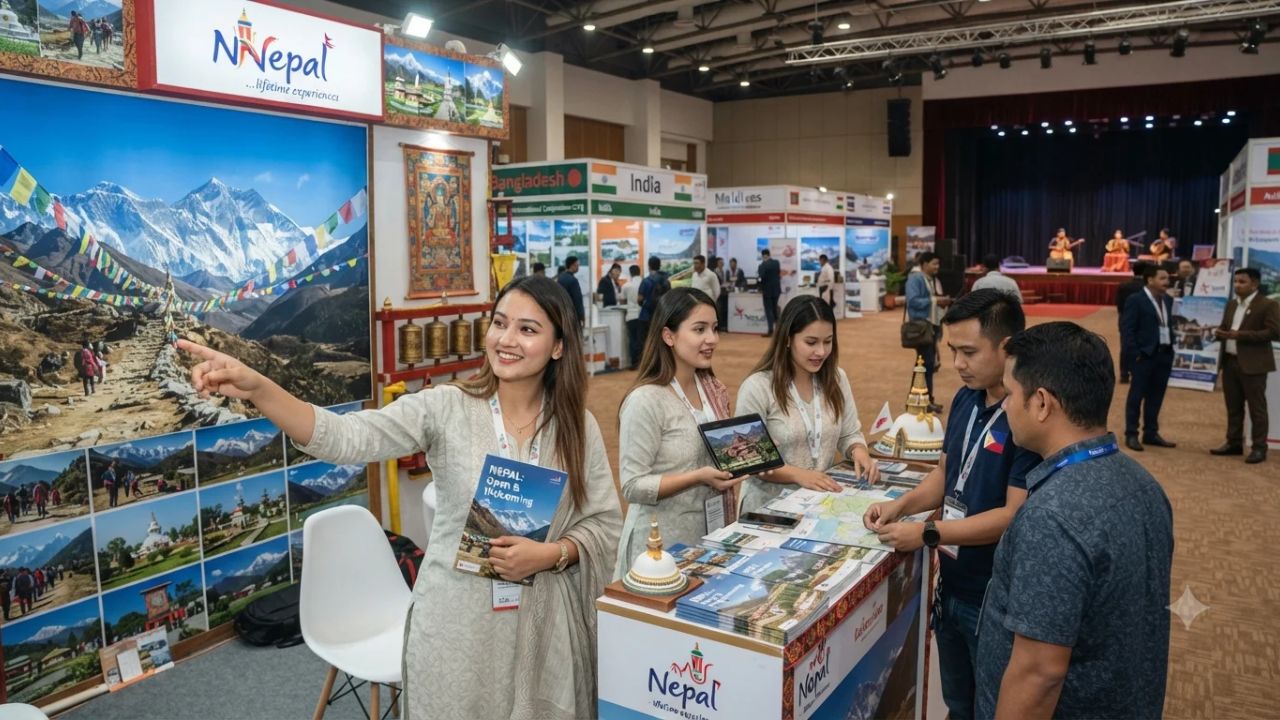
Image generated by AI
Mobilizing over 200 travel organizations across nearly 300 exhibition booths at the 13th Asian Tourism Fair in Dhaka, Nepal and Bangladesh have initiated a coordinated bilateral campaign to reassure international travelers following late-monsoon flash floods. Speaking at the opening ceremony held at the International Convention City Bashundhara (ICCB) for the September 17–19 event, Nepalese Ambassador to Bangladesh Ghanashyam Bhandari affirmed that Nepal remains fully open for international tourism, with primary cultural centers and high-altitude trekking circuits operating with complete operational safety.
Post-Monsoon Himalayan Logistics: Diplomatic Reassurance Ahead of Peak Trekking
The Himalayan nation's economy relies heavily on its autumn travel window spanning late September through November, a seasonal corridor that generates substantial foreign exchange receipts and sustains mountain hospitality employment. Heavy late-monsoon rainfall triggered localized flash floods and riverine washouts along secondary highway arteries in central Nepal, generating concern among prospective travelers about road transit integrity.
To prevent booking cancellations ahead of the peak trekking calendar, Nepalese diplomatic and industry representatives mounted a direct communications outreach during the three-day Dhaka exposition. Endorsed by Bangladesh’s Ministry of Civil Aviation and Tourism and backed by the Bangladesh Tourism Board alongside the Bangladesh Parjatan Corporation (BPC), the event provided an international platform to counter exaggerated safety fears.
Ambassador Bhandari urged international voyagers and regional holidaymakers to proceed with planned itineraries, emphasizing that core tourism infrastructure—including international aviation gateways, heritage temple complexes, and major mountain trekking routes—remains unaffected. The initiative reflects an administrative evolution supported by the Nepal Tourism Board. Rather than allowing post-flood ambiguity to dampen bookings, government agencies and private tour operators are proactively demonstrating that localized weather disruptions have been cleared and managed.
Exhibition Architecture and Regional Bilateral Mobility: ATF 2026 Metrics
The 13th Asian Tourism Fair served as an important testing ground for regional travel collaboration across South and Southeast Asia.
The exhibition brought together industry participants from 10 nations across three expansive exhibition halls at ICCB. Commercial delegations spanning international airlines, boutique trekking agencies, luxury resort chains, and state tourism boards engaged directly with travel trade buyers and everyday consumers. Bangladesh’s Civil Aviation and Tourism Minister, M Rashiduzzaman Millat, addressed the gathering as chief guest, highlighting the strategic importance of expanding regional flight frequencies between Hazrat Shahjalal International Airport in Dhaka and Tribhuvan International Airport in Kathmandu.
A dedicated 10-member delegation of licensed Nepali tour operators and destination management specialists conducted business-to-business exchanges throughout the event. In addition to commercial negotiations, the fair integrated nightly cultural showcases featuring traditional performance troupes from Bangladesh, Nepal, and the Philippines, reinforcing cultural solidarity and promoting multi-country South Asian holiday circuits.
| Event & Operational Metric | 13th Asian Tourism Fair (ATF) Parameter | Operational & Travel Significance |
|---|---|---|
| Event Location & Venue | ICCB (International Convention City Bashundhara), Dhaka | Premier regional convention space hosting major South Asian travel trade |
| Operating Dates | September 17–19, 2026 (Three-day exhibition) | Timed directly ahead of the lucrative October–November autumn trekking peak |
| Commercial Scale | 200+ organizations; 10 nations; ~300 exhibition booths | Comprehensive marketplace connecting outbound travelers with certified operators |
| Nepali Trade Presence | 10-member delegation of verified tour and travel operators | Direct engagement providing verified trail safety and road status updates |
| Key Government Dignitaries | Amb. Ghanashyam Bhandari & Minister M Rashiduzzaman Millat | High-level diplomatic endorsement confirming cross-border travel continuity |
| Cultural Integration | Evening performances representing Bangladesh, Nepal, Philippines | Fosters regional tourism partnerships and multi-destination holiday booking |
Expert Analysis: High-Altitude Route Integrity, Flight Reliability, and Booking Sentiment
The diplomatic push at the Asian Tourism Fair addresses a classic challenge in adventure travel marketing: separating isolated lowland transit damage from high-altitude trail safety.
For travelers booking this route, the direct consequence is that popular high-altitude circuits—such as the Annapurna Circuit, Everest Base Camp, and the Langtang Valley—remain entirely viable and structurally sound. Monsoon flash floods primarily impact river basin highways and low-elevation alluvial plains; the high stone-paved trails, alpine suspension bridges, and traditional teahouse lodges that define Nepal's trekking network sit far above seasonal flood lines. However, overland highway transit between Kathmandu, Pokhara, and Chitwan can encounter periodic maintenance delays where road stabilization works are underway.
The pricing pressure this creates means domestic air travel within Nepal will command premium ticket pricing throughout October and November. Travelers seeking to bypass post-monsoon highway repairs are diverting to domestic flights between Kathmandu and Pokhara, or flying directly into mountain airstrips like Tenzing-Hillary Airport in Lukla and Jomsom Airport. Under operating standards supervised by the Civil Aviation Authority of Nepal (CAAN), mountain aviation slots are tightly constrained by weather windows. The sudden spike in flight demand concentrates bookings, driving domestic ticket classes toward their upper price caps.
In parallel, bilateral tourism between Bangladesh and Nepal demonstrates significant growth potential. For travelers originating in Dhaka, Chittagong, or Sylhet, Kathmandu represents a short, non-stop flight providing immediate access to temperate mountain climates and cultural exploration without the extensive visa complications associated with Western travel. By maintaining verified field communications, Nepali operators at ATF 2026 successfully preserved tourist confidence, ensuring that the autumn holiday season will deliver needed economic support to mountain communities.
Key Takeaways
- Diplomatic Reassurance: Nepalese Ambassador Ghanashyam Bhandari officially confirmed at the 13th Asian Tourism Fair that Nepal remains fully open and safe for tourism following late-monsoon flash floods.
- Scale of ATF 2026: The Dhaka exhibition featured over 200 travel organizations from 10 nations across nearly 300 booths at the International Convention City Bashundhara from September 17–19.
- Active Nepali Delegation: A 10-member delegation of certified Nepali tour operators and agency leaders represented the country, offering real-time updates on trail conditions.
- Trekking Route Integrity: Premier high-altitude trekking routes—including Everest Base Camp and the Annapurna Circuit—remain undamaged and open for autumn travelers.
- Domestic Aviation Demand: Overland highway repairs are driving increased traveler reliance on domestic scheduled flights, creating tighter seat availability on flights to Pokhara and Lukla.
FAQ: Nepal Tourism Post-Flood Reopening 2026
Are trekking routes open in Nepal following the recent flash floods?
Yes. Major trekking circuits, including Everest Base Camp, the Annapurna Circuit, and Langtang Valley, are fully open. Flash flood damage was confined to specific lowland river basins, leaving high-altitude alpine trails, lodges, and suspension bridges intact for the autumn trekking season.
What was announced at the 13th Asian Tourism Fair regarding Nepal?
Nepalese Ambassador Ghanashyam Bhandari announced that Nepal’s tourism infrastructure is fully operational, encouraging international travelers to proceed with holiday bookings. A 10-member Nepali delegation actively provided verified travel updates and promotional packages during the three-day Dhaka fair.
Are roads between Kathmandu and Pokhara passable?
Major highways connecting Kathmandu, Pokhara, and Chitwan are open, though travelers should anticipate intermittent delays due to ongoing slope maintenance and debris clearing. Many travelers opt for short 25-minute domestic flights between Kathmandu and Pokhara to bypass road work.
When is the best time to visit Nepal for autumn trekking?
The optimal autumn trekking window spans from late September through late November. During these months, the monsoon rains clear completely, delivering stable dry weather, mild daytime temperatures, and exceptional mountain visibility across the Himalayas.
[By addressing post-monsoon concerns through transparent trade diplomacy in Dhaka, Nepal ensures its trails, temples, and peaks remain welcoming destinations for global travelers.]
Related Travel Guides
Disclaimer
This article is for informational and educational purposes only. It does not constitute legal, financial, or professional advice. While we strive to provide accurate and up-to-date information, travel policies, regulations, and conditions change rapidly. Always verify information with official sources before making travel decisions. Nomad Lawyer makes no representations about the accuracy, reliability, completeness, or suitability of the information provided. Readers should consult qualified professionals for advice specific to their circumstances. The views expressed in this article are those of the author and do not necessarily reflect the views of Nomad Lawyer.
Raushan Kumar
Founder & Lead Developer
Full-stack developer with 11+ years of experience and a passionate traveller. Raushan built Nomad Lawyer from the ground up with a vision to create the best travel and law experience on the web.
Learn more about our team →