
Kimberley's Gwion Gwion Rock Art Sparks Global Heritage Tourism Boom Across Western Australia in 2026
Ancient Aboriginal rock art in Western Australia's remote Kimberley region is driving unprecedented heritage tourism growth, reshaping how global travelers seek authentic cultural experiences.

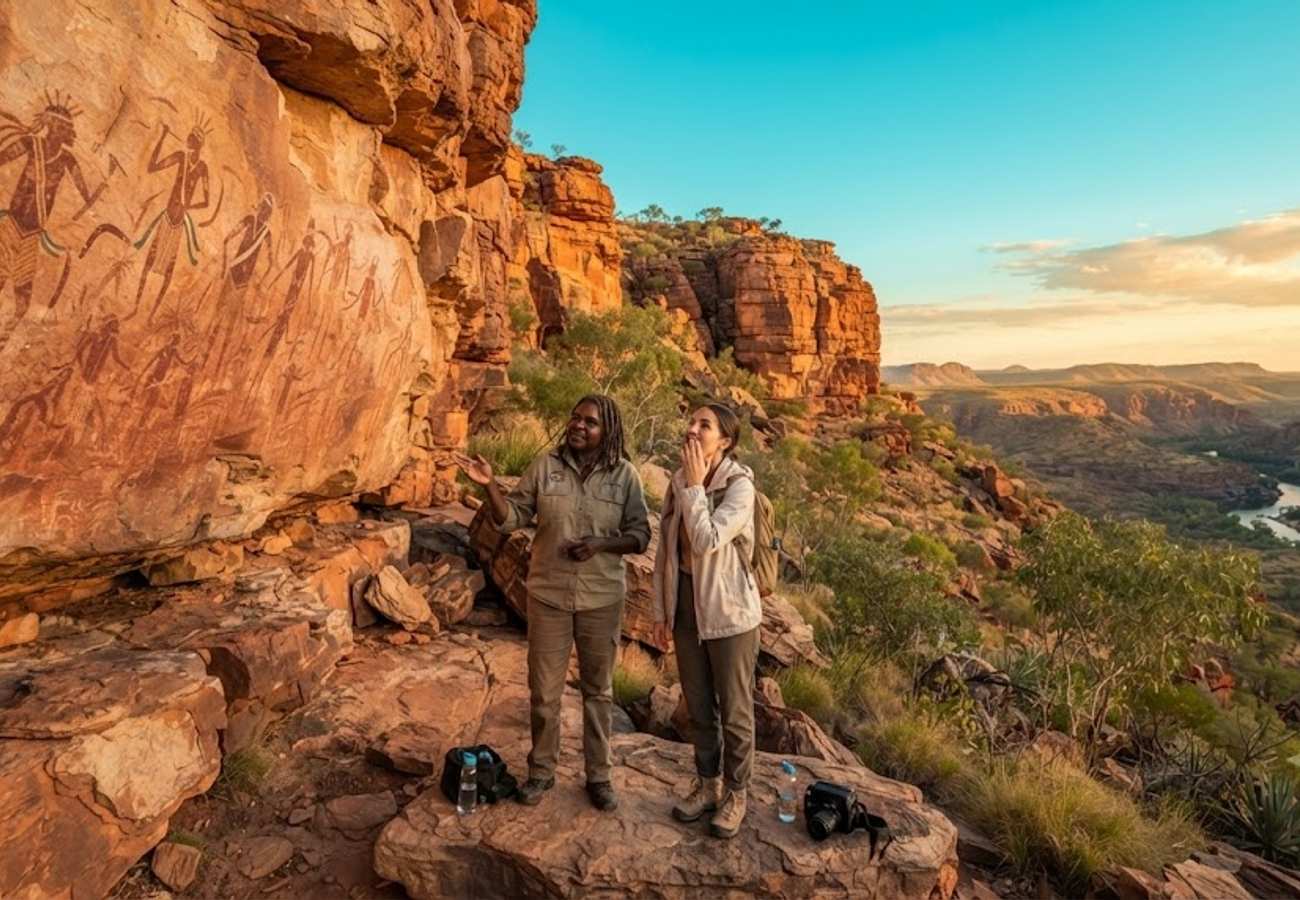
Image generated by AI
The Remote Australian Wilderness Reveals Ancient Secrets That Transform Global Travel
Deep within the rugged landscapes of Western Australia's Kimberley region, something extraordinary is happening. Ancient rock art galleries are drawing international travelers in unprecedented numbers, fundamentally reshaping the global heritage tourism sector.
Researchers have recently confirmed what Aboriginal communities have protected for millennia: the Gwion Gwion rock art represents some of the world's most sophisticated prehistoric human expression. These ancient panels, scattered across thousands of square kilometers of remote terrain, depict human figures with extraordinary anatomical precision, elaborate ceremonial dress, and artistic sophistication that shatters outdated assumptions about prehistoric creativity.
The discovery is sparking what industry analysts are calling a "transformative heritage travel boom." International visitors from North America, Europe, and East Asia are actively abandoning crowded, commercialized historical landmarks in favor of immersive encounters with authentic Aboriginal culture in its ancestral landscape.
Why Travelers Are Abandoning Mainstream Tourism for Remote Cultural Experiences
Reddit: "Forget the Eiffel Tower — real travel means connecting with cultures that shaped humanity itself." — r/travel
The global tourism industry is experiencing a seismic shift in traveler priorities. What once defined luxury—five-star beachfront resorts and Instagram-famous monuments—now ranks second to the pursuit of meaningful, intellectually fulfilling cultural encounters.
This emerging demographic of discerning travelers prioritizes ethical engagement with Indigenous communities over passive consumption. They're willing to undertake challenging physical journeys to remote locations, provided those journeys offer authentic intellectual and spiritual value.
The Kimberley region exemplifies this trend perfectly. Its geographic isolation has preserved both the archaeological record and the cultural continuity of Aboriginal custodians. Visitors undertaking multi-day treks through pristine wilderness report profound shifts in their understanding of human creativity and our shared ancestral heritage.
Hospitality providers are responding strategically. New low-impact eco-lodges are emerging across the region, designed to merge seamlessly with the landscape rather than dominate it. These facilities prioritize extended, thoughtful stays over high-volume tourism, ensuring environmental and cultural sustainability.
The Gwion Gwion Figures: Artistic Sophistication That Challenges Everything We Thought We Knew
What makes Gwion Gwion rock art truly revolutionary isn't just its age—it's the artistic mastery evident in every brushstroke.
The human figures depicted on these sandstone walls display extraordinary anatomical precision: elongated limbs, elegantly contoured bodies, and fluid silhouettes that capture movement frozen in mid-stride or mid-ceremony. The level of detail rivals sophisticated artistic traditions from any global region.
Most striking are the elaborate ceremonial accessories adorning these ancient figures. Intricately detailed tassels hang from elbows, sweeping waist sashes encircle waists, and protective bands wrap upper arms with precision. Towering conical headdresses crown numerous figures, suggesting complex spiritual or political hierarchies within ancient Aboriginal society.
The technical execution is remarkable. Modern textile historians and conservation specialists continuously express astonishment at the consistency of line work, pigment application, and compositional sophistication preserved across millennia. These weren't crude attempts at representation—they were the refined expressions of artists operating at the highest technical level.
Indigenous Communities as Heritage Stewards: Economic Benefits and Cultural Control
This tourism surge is creating a genuinely equitable economic model—one where Indigenous communities maintain complete autonomy over cultural presentation and commercialization.
Traditional custodians are advancing into critical operational roles as community ambassadors, preservation directors, and guides. This structural arrangement guarantees that economic rewards from international exploration flow directly to local families, funding essential civic infrastructure and cultural continuity programs.
Modern tour operators are responding to shifting ethical expectations. Responsible tourism frameworks now mandate complete transparency and cooperative management with traditional landowners. Global travel companies that fail to implement these indigenous protocols face reputational damage among conscious consumers.
This collaborative model is working. Indigenous communities report sustainable revenue streams that support long-term preservation efforts, educational initiatives, and language revitalization programs—benefits that extend far beyond tourism itself.
The Broader Cultural Shift: How Heritage Tourism is Redefining What "Luxury Travel" Means
The transformation extends beyond economics. Global academic institutions and discovery clubs report substantial increases in registration for expeditions centered on documented prehistoric art shelters across Australia.
Travelers from affluent markets increasingly view carbon-conscious, culturally respectful exploration as the ultimate luxury experience. This represents a fundamental inversion of traditional tourism hierarchies: authentic cultural immersion now outranks conventional resort amenities in the minds of high-yield international travelers.
This shift is generating cross-cultural dialogues that foster historical education and social reconciliation on a global scale. When Western travelers witness the sophistication of Gwion Gwion art, they're forced to confront outdated narratives about human development and prehistoric capability.
The Australian tourism sector is actively promoting Indigenous tourism experiences as premium offerings, recognizing that conscious travelers will invest heavily in specialized wilderness expeditions that align with their values.
What This Means for Global Heritage Tourism Markets in 2026 and Beyond
The Kimberley's emergence as a premier heritage destination signals a fundamental industry restructuring. Remote, culturally significant locations with strong Indigenous stewardship are becoming the new destinations of choice for affluent, educated travelers seeking meaning and authenticity.
This trend will accelerate. As climate consciousness grows and travelers increasingly reject generic commercialized tourism, remote cultural heritage sites will command premium prices. The traditional equation—accessibility equals market value—is inverting entirely.
Long-term implications are significant. Remote Indigenous communities worldwide now possess valuable economic assets in their cultural heritage. Tourism success depends entirely on maintaining authenticity, environmental integrity, and community control.
The Kimberley's success demonstrates that responsible heritage tourism can simultaneously benefit Indigenous communities, preserve endangered cultural practices, advance archaeological knowledge, and provide transformative experiences for conscious global travelers. It's not a zero-sum game—it's a model that's redefining what tourism can accomplish when ethics and commerce genuinely align.
The ancient gallery walls of the Kimberley aren't just artifact repositories—they're the final destinations of a profound global reset in how we travel, learn, and honor our shared human heritage.
Related Travel Guides
Disclaimer
This article is for informational and educational purposes only. It does not constitute legal, financial, or professional advice. While we strive to provide accurate and up-to-date information, travel policies, regulations, and conditions change rapidly. Always verify information with official sources before making travel decisions. Nomad Lawyer makes no representations about the accuracy, reliability, completeness, or suitability of the information provided. Readers should consult qualified professionals for advice specific to their circumstances. The views expressed in this article are those of the author and do not necessarily reflect the views of Nomad Lawyer.
Raushan Kumar
Founder & Lead Developer
Full-stack developer with 11+ years of experience and a passionate traveller. Raushan built Nomad Lawyer from the ground up with a vision to create the best travel and law experience on the web.
Learn more about our team →