Nepal's Kakarbhitta Border Welcomes 9,447 Foreign Tourists in Fiscal Year 2082/83 as Eastern Overland Travel Expands

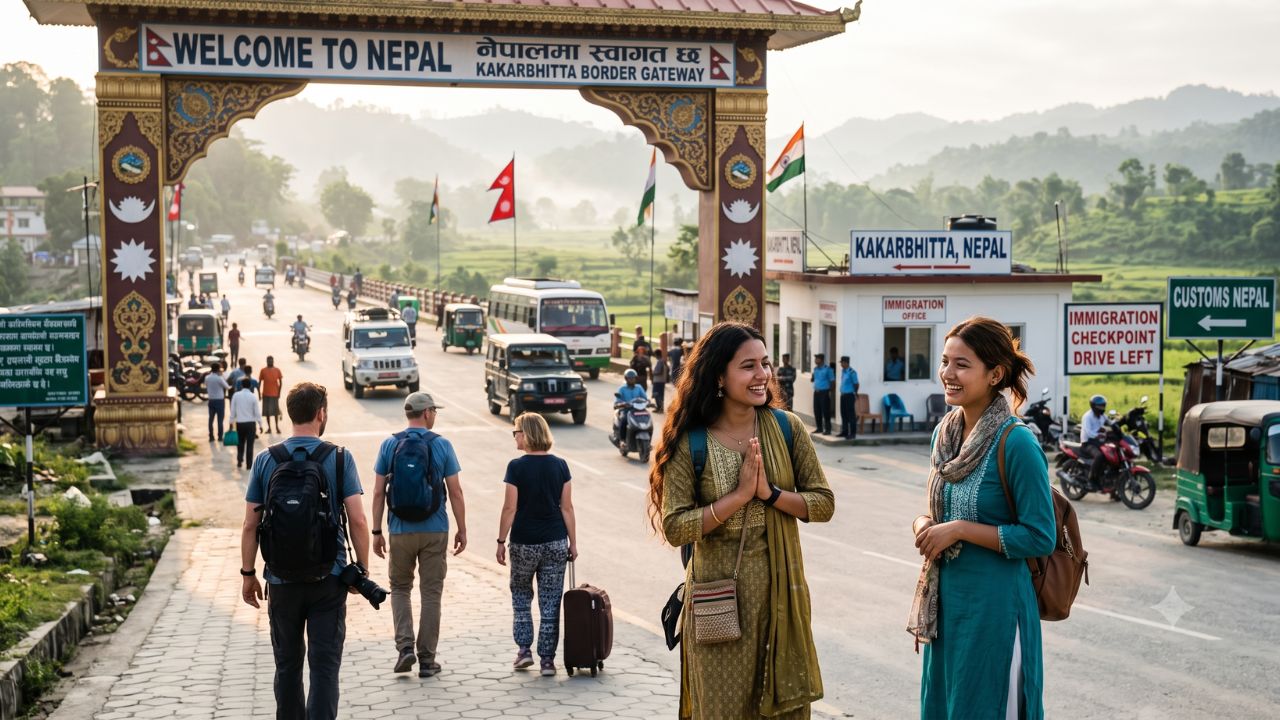
Image generated by AI
Nepal’s eastern Kakarbhitta border checkpoint welcomed 9,447 foreign tourists across 86 nationalities in fiscal year 2082/83, processing an average of 26 international visitors per day.
The Core Transit & Tourism Update
Nepal's strategy to diversify international tourist entry channels beyond Tribhuvan International Airport in Kathmandu is delivering measurable results across its eastern frontier. Official immigration data confirms that the Kakarbhitta border checkpoint in Jhapa district processed 9,447 foreign tourists during fiscal year 2082/83.
According to Acting Chief Indra Kumar Rajbanshi of the Kakarbhitta Immigration Office, international visitors from 86 countries cleared entry protocols at the eastern post. These official figures strictly reflect non-Indian foreign passport holders, as Indian nationals travel freely across the border under long-standing bilateral treaties.
The consistent inflow highlights the growing importance of overland corridors in supporting regional tourism across eastern Nepal. Bhutan emerged as the leading overseas source market, contributing 4,994 visitors—accounting for approximately 53% of all foreign arrivals at the checkpoint. The United States ranked second, sending 2,152 visitors (23% of total arrivals), followed by travelers from across Asia, Europe, and North America.
Border Arrival Statistics & Route Parameters
| Immigration Parameter | Official Measured Metric |
|---|---|
| Primary Checkpoint | Kakarbhitta Border Office, Jhapa District, Nepal |
| Reporting Period | Fiscal Year 2082/83 |
| Total Foreign Arrivals | 9,447 Tourists (Excludes Visa-Exempt Indian Nationals) |
| Daily Average Clearance | 26 Foreign Visitors Per Day |
| Nationalities Represented | 86 Countries |
| Top Source Market #1 | Bhutan: 4,994 Visitors (53% of Total Arrivals) |
| Top Source Market #2 | United States: 2,152 Visitors (23% of Total Arrivals) |
| Peak Arrival Month | Poush (Winter Season): 1,850 Foreign Visitors |
| Lowest Arrival Month | Bhadra (Monsoon Season): 216 Foreign Visitors |
| Key Pilgrimage Corridor | Halesi Mahadev Temple ("Pashupatinath of the East"), Khotang |
| Full Immigration Clearance Launch | August 2024 |
Traveler Logistics & Cross-Border Guide (Information Gain & Experience)
From a ground-level perspective, the best way to navigate this entry point is to coordinate onward road transport beforehand and verify visa eligibility prior to arrival at the border complex.
Overland Connections and Border Transit
- Access via Bagdogra / Siliguri: International travelers entering Nepal via Kakarbhitta typically fly into Bagdogra Airport (IXB) in West Bengal, India, or arrive via New Jalpaiguri Railway Station (NJP) in Siliguri. The road transfer from Siliguri to the Raniganj-Kakarbhitta border span takes approximately 45 to 60 minutes by taxi.
- Full Clearance Infrastructure: Since August 2024, the Kakarbhitta Immigration Office has operated full international immigration clearance services, allowing travelers to secure Nepal Visas on Arrival or process pre-issued tourist visas directly at the overland counter.
- Winter Travel Windows: The busiest border transit months occur during Poush and Magh (December to February). During Poush, foreign arrivals reached a monthly high of 1,850 visitors, driven by Bhutanese holiday travel, family visits in Jhapa, and religious pilgrimages. Monsoon traffic drops significantly, with Bhadra recording a low of 216 international visitors.
Religious Pilgrimage Logistics to Halesi Mahadev
- Pilgrimage Transit Route: A substantial volume of Bhutanese and Asian visitors utilize Kakarbhitta to access Halesi Mahadev in Khotang district—revered as the "Pashupatinath of the East."
- Onward Transportation: From Kakarbhitta, travelers can take direct jeep services or local coaches along the Mid-Hill Highway to Khotang, or transit via Birtamod and Itahari.
Infrastructure Impact Assessment
The expansion of full immigration services at Kakarbhitta since August 2024 has significantly reduced transit friction for overland travelers entering eastern Nepal. By establishing a reliable land-based alternative to Kathmandu, regional authorities are distributing visitor spending directly into eastern accommodation networks, transport cooperatives, and cultural sites.
Immigration officials note that while awareness of Kakarbhitta's full clearance status is growing, expanded international marketing could further boost arrivals. Connecting eastern land ports with eco-tourism circuits, tea estate retreats in Ilam, and sacred sites in Khotang reinforces Nepal's long-term goal of building a multi-modal, decentralized tourism economy.
Internal Connection
Explore related travel and transit features across Nepal and South Asia:
- Baglung District Sacred Pilgrimage Hub: Muktinath Guide for Devotees
- Nepal and India Expand Biometric Travel Verification
- Annapurna Circuit Sees Surge in US and European Trekking Visitors
Related Travel Guides
This article is for informational purposes. Flight routes, passenger regulations, visa rules, and transit advisories are subject to change by airlines and aviation authorities. Readers are advised to verify schedules and travel documentation with relevant carriers and border agencies before departure.
Related Stories

Thailand and Vietnam Lead Asia Tourism Surge in 2026 via Strategic Visa Policy Shifts

International Tourism Arrivals to Hit 1.57 Billion in 2026 Amid Shift Toward Short-Haul Travel