
Transatlantic Travel Chaos Averted as Neos Air Boeing 787 Executes High-Stakes Medical Diversion to Bermuda
Breaking airline news: Neos Air Flight NO630 executed a sudden, high-stakes medical diversion to Bermuda, temporarily sparking airport disruptions before safely continuing to Italy.

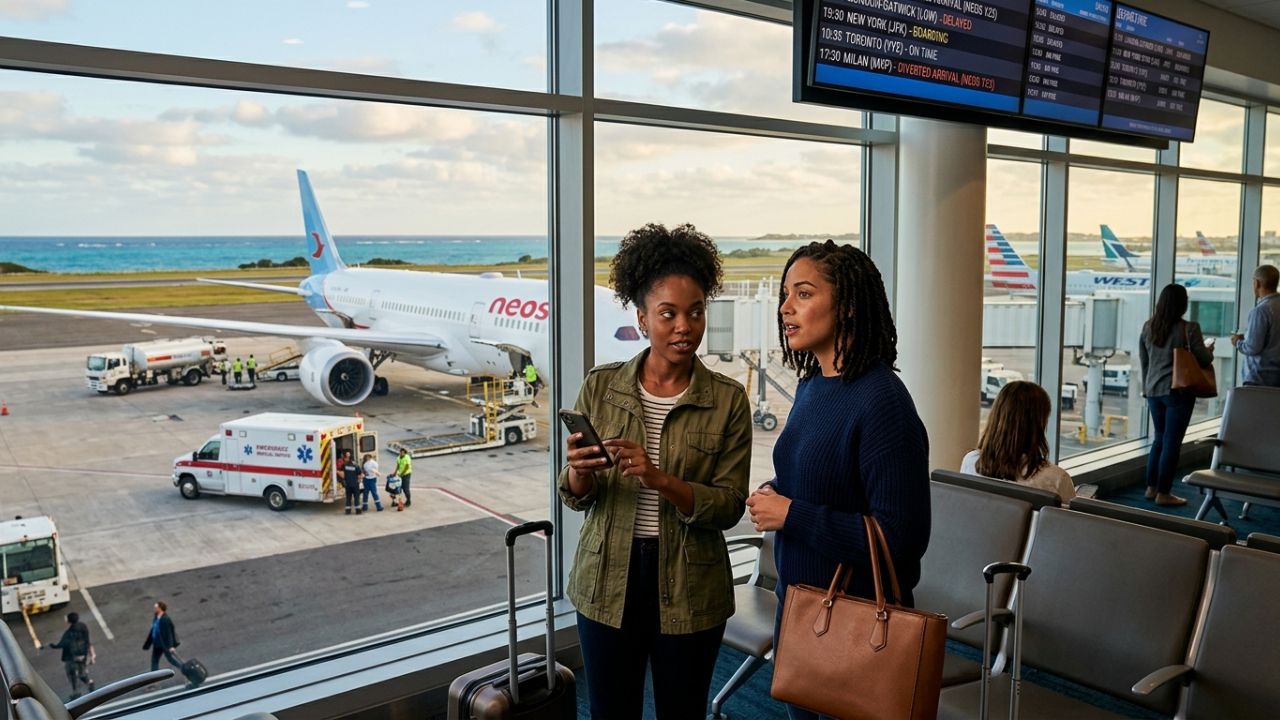
Image representing the intense operational execution of Neos Air Flight NO630, a Boeing 787-9 Dreamliner that successfully executed a critical mid-air medical diversion to Bermuda's L.F. Wade International Airport, temporarily triggering localized airport disruptions before safely continuing its transatlantic route to Italy. (Image Credit: Aviation Tracking Network)
Transatlantic Travel Chaos Averted as Neos Air Boeing 787 Executes High-Stakes Medical Diversion to Bermuda
A Sudden Mid-Air Emergency Over the North Atlantic Forces a Critical Deviation from Jamaica to Italy
The highly complex logistical reality of transatlantic aviation was thrust into the spotlight on June 14, 2026, when a massive wide-body aircraft was forced to execute a sudden, high-stakes emergency maneuver. According to the latest breaking airline news and critical aviation updates, Neos Air Flight NO630 was operating a highly trafficked long-haul route from Montego Bay, Jamaica, to Milan, Italy, when a severe mid-air medical emergency violently disrupted the flight plan. The aircraft, a state-of-the-art Boeing 787-9 Dreamliner, was deeply embedded within the heavily congested North Atlantic corridor when the flight crew declared a medical priority. Acting decisively to prevent a passenger tragedy, the crew immediately aborted their oceanic crossing and executed a rapid emergency diversion to Bermuda’s L.F. Wade International Airport. This sudden deviation immediately triggered localized airport disruptions on the ground in Bermuda, but ultimately served as a textbook execution of international aviation safety protocols.
While global travelers are currently hyper-vigilant regarding weather-induced flight cancellations and systemic airspace breakdowns, this specific incident perfectly highlights how airlines actively manage unpredictable human factors to prevent outright travel chaos. As the United Kingdom, the United States, Canada, and the Caribbean continue to pump massive volumes of commercial traffic through the North Atlantic airspace, emergency medical diversions remain one of the most operationally significant—and legally justified—causes of long-haul delays. By utilizing Bermuda as a critical emergency safety valve, Neos Air successfully stabilized the stricken passenger without permanently destroying the flight's operational integrity, ultimately allowing the massive Dreamliner to refuel and safely continue its transatlantic journey to Milan.
Section-Wise Breakdown: The Anatomy of the Bermuda Diversion
The highly detailed flight tracking data exposes exactly how the Neos Air crew safely navigated a sudden medical crisis in one of the most remote airspace corridors in the world:
The Emergency Diversion in Atlantic Skies Neos Air Flight NO630 was operating a standard, high-capacity leisure route designed to connect the massive tourism market of Jamaica directly to the European mainland. As the Boeing 787-9 Dreamliner pushed out over the open ocean, entering the highly regulated North Atlantic Tracks, the cabin crew identified a passenger suffering from a severe, rapidly deteriorating medical condition. Recognizing that continuing the agonizingly long crossing to Milan would jeopardize the passenger's life, the flight deck immediately initiated emergency diversion protocols. Communicating directly with oceanic air traffic control, the pilot secured priority routing and executed a sharp deviation toward the isolated island of Bermuda. The massive wide-body aircraft landed heavily but safely at L.F. Wade International Airport, where emergency medical technicians were already standing by on the tarmac to extract the passenger.
Bermuda’s Critical Role in North Atlantic Disruptions This intense medical diversion definitively underscores Bermuda’s absolute strategic necessity within the global aviation network. Geographically isolated in the central North Atlantic, L.F. Wade International Airport acts as the ultimate emergency safety net for thousands of flights connecting Europe, North America, and the Caribbean. When unpredictable crises occur—whether they are onboard medical emergencies, terrifying fuel criticalities caused by sudden weather shifts, or urgent technical mechanical inspections—aircraft operating along the US East Coast, Canadian long-haul sectors, and massive UK-to-Caribbean corridors completely depend on Bermuda's runways. While these unscheduled landings generate highly localized airport disruptions, they are the absolute structural foundation that prevents total travel chaos over the open ocean.
The Operational Impact on Neos Air and Global Networks For a long-haul leisure operator like Neos Air, a mid-ocean diversion is incredibly expensive but highly manageable. Because the Boeing 787-9 boasts ultra-long-range capabilities and a massive fuel capacity, the aircraft was able to execute the emergency landing, offload the medical patient, and rapidly refuel without requiring a permanent grounding. This rapid turnaround is critical. Unlike a catastrophic mechanical failure that forces an aircraft into a multi-day maintenance hold, a medical diversion rarely results in absolute flight cancellations. While the passengers onboard Flight NO630 suffered a frustrating, multi-hour schedule delay, the aircraft successfully rejoined its original flight path and completed the transatlantic crossing to Italy, completely preserving the broader integrity of the airline's European network.
Flight Details: The Factual Flight NO630 Disruption Matrix
To provide exact, factual clarity on this highly disruptive emergency maneuver, aviation analysts have mapped the specific operational metrics officially reported during the diversion. The following factual matrix details the precise breakdown of the Neos Air medical emergency:
Factual Neos Air Flight NO630 Operational Snapshot
| Operational Category | Factual Flight Detail |
|---|---|
| Airline Operator | Neos Air |
| Aircraft Type | Boeing 787-9 Dreamliner |
| Scheduled Route | Montego Bay, Jamaica → Milan, Italy |
| Diversion Airport | L.F. Wade International Airport (Bermuda) |
| Cause of Disruption | Mid-air medical emergency |
| Final Operational Outcome | Temporary emergency landing; flight continued to Italy |
| Airspace Impacted | North Atlantic Corridor |
Data reflects the confirmed operational parameters of the Neos Air medical diversion executed on June 14, 2026. (Source: Aviation Flight Tracking)
Passenger Impact: Managing In-Flight Delays
For the passengers onboard Flight NO630, the sudden descent into Bermuda represented an unexpected and frustrating insertion of travel chaos into their vacation itinerary. While the vast majority of passengers completely understand and respect the absolute necessity of a medical diversion, the resulting logistical delay can severely disrupt onward connections upon arriving in Milan. In these specific scenarios, passengers are strongly advised to remain entirely inside the aircraft while medical teams work, and to immediately utilize the airline's inflight Wi-Fi (if available) to begin monitoring their flight status. If the diversion forces an agonizingly long delay that requires an overnight stay, airlines are generally responsible for issuing hotel vouchers or coordinating rebooking protocols, though this varies based on specific international compensation laws governing medical emergencies.
Industry Analysis: The Evolution of Onboard Safety Protocols
Aviation safety experts monitoring the volume of North Atlantic diversions note that while medical emergencies are rare, they remain the most highly justified cause of long-haul flight deviations. To combat the immense financial and logistical strain of these diversions, major international carriers are heavily increasing their reliance on advanced onboard safety protocols. Airlines are continuously upgrading physical medical kits and intensely training cabin crew to stabilize passengers at 35,000 feet. Furthermore, the massive integration of live, satellite-based telemedicine allows flight crews to consult directly with emergency room physicians on the ground. This real-time medical intelligence helps pilots definitively determine whether a highly disruptive emergency landing in Bermuda is absolutely necessary or if the patient can be safely managed until reaching the final destination in Italy.
Conclusion: A Highly Resilient Transatlantic Network
The sudden diversion of Neos Air Flight NO630 serves as a highly visible, definitive reminder that the global aviation system operates with an absolute, uncompromising priority on human life. While the mid-air medical emergency temporarily injected frustrating travel chaos and localized airport disruptions into the North Atlantic corridor on June 14, 2026, the ultimate outcome was a massive operational success. By flawlessly utilizing Bermuda’s critical emergency infrastructure, the Boeing 787-9 Dreamliner successfully transferred a critically ill passenger to a medical facility before safely continuing its journey from Jamaica to Milan. As long-haul travel volumes continue to shatter records, passengers can remain highly confident that airlines possess the extreme logistical agility required to survive and successfully navigate the unpredictable realities of modern international aviation. (Source: Aviation Flight Tracking via Nomad Lawyer)
Key Takeaways
- High-Stakes Medical Diversion: Neos Air Flight NO630 suffered a severe mid-air medical emergency on June 14, 2026, forcing an immediate diversion.
- Massive Wide-Body Aircraft: The flight was operated by a high-capacity Boeing 787-9 Dreamliner carrying passengers from Montego Bay, Jamaica, to Milan, Italy.
- Bermuda's Critical Role: The aircraft executed the emergency landing at L.F. Wade International Airport in Bermuda, highlighting the island's absolute strategic importance in the North Atlantic.
- Successful Continuation: The diversion did not result in an absolute cancellation; after offloading the patient, the aircraft successfully continued its transatlantic crossing to Italy.
- Global Airspace Impact: The incident underscores the complex, interconnected nature of UK, US, Canadian, and Caribbean flight corridors heavily reliant on the North Atlantic tracks.
✈️ Frequently Asked Questions (Factual Aviation Diversion Data)
Why do so many long-haul flights use Bermuda for emergency diversions? Because Bermuda is located centrally within the North Atlantic, it serves as the ultimate, highly convenient emergency landing hub for flights traversing the corridors between Europe, North America, and the Caribbean.
What specific airline and aircraft were involved in this medical diversion? The incident involved Neos Air Flight NO630, operating a Boeing 787-9 Dreamliner.
What was the exact route the aircraft was flying when the emergency occurred? The aircraft was flying a scheduled long-haul route from Montego Bay, Jamaica directly to Milan, Italy.
What was the final outcome of the Neos Air flight after landing in Bermuda? After successfully completing the temporary emergency landing and offloading the medical patient, the aircraft refueled and continued its flight to Italy.
How frequently do flights divert specifically because of medical emergencies? While mid-air medical emergency diversions are statistically rare in the context of total global flight volume, they remain a significant, highly disruptive occurrence in ultra-long-haul travel.
Do these types of flight diversions permanently damage Jamaica and Italy’s tourism markets? No. Flight diversions are classified strictly as safety operational events. They do not negatively impact the long-term tourism demand between the affected regions.
What specific North Atlantic corridors heavily rely on Bermuda's emergency infrastructure? Bermuda serves as a critical safety net for UK-to-Caribbean routes, US East Coast-to-Europe flights, and lengthy Canadian transatlantic operations.
How do airlines mitigate the need for medical diversions before they happen? Airlines actively rely on advanced safety protocols, including highly trained cabin crews, sophisticated onboard medical kits, and live, satellite-based telemedicine to stabilize passengers in-flight.
🌍 Related Travel Guides & Flight Resources
- Navigate Airport Disruptions Like a Pro Master the art of surviving unexpected travel chaos with our expert strategies.
- Breaking Airline News & Evasion Routes Stay ahead of the delays with our real-time aviation updates and route intelligence.
- Global Flight Cancellation Defense Grid Essential legal rights and compensation tactics when your flight goes down.
⚖️ Disclaimer
The flight tracking metrics, medical diversion timelines, and airline operational overviews provided in this report are for informational purposes only. The specific aviation variables regarding the emergency diversion of Neos Air Flight NO630 (Boeing 787-9) to L.F. Wade International Airport in Bermuda—including the exact nature of the passenger's medical emergency, the length of the ground delay, and the specific compensation policies regarding the subsequent arrival delay in Milan, Italy—are subject to strict privacy laws and corporate airline review. All operational data has been officially sourced from aviation flight tracking networks as of June 15, 2026. NomadLawyer does not guarantee the absolute accuracy or current validity of the information provided and assumes no liability for sudden schedule changes, frustrating rolling delays, agonizing missed connections, or any financial consequences resulting from the use of this content. Passengers heavily delayed by medical diversions are strongly advised to utilize their airline’s official mobile applications for emergency rebooking updates and hotel voucher issuance.
Disclaimer
This article is for informational and educational purposes only. It does not constitute legal, financial, or professional advice. While we strive to provide accurate and up-to-date information, travel policies, regulations, and conditions change rapidly. Always verify information with official sources before making travel decisions. Nomad Lawyer makes no representations about the accuracy, reliability, completeness, or suitability of the information provided. Readers should consult qualified professionals for advice specific to their circumstances. The views expressed in this article are those of the author and do not necessarily reflect the views of Nomad Lawyer.
Kunal K Choudhary
Co-Founder & Contributor
A passionate traveller and tech enthusiast. Kunal contributes to the vision and growth of Nomad Lawyer, bringing fresh perspectives and driving the community forward.
Learn more about our team →