
Nearly 900 U.S. Flights Delayed as Storms and Staffing Gaps Disrupt Major Aviation Hubs in 2026
A convergence of severe weather, IT glitches, and staffing shortages led to 896 flight delays and 200 cancellations across major U.S. hubs on September 2, 2026.

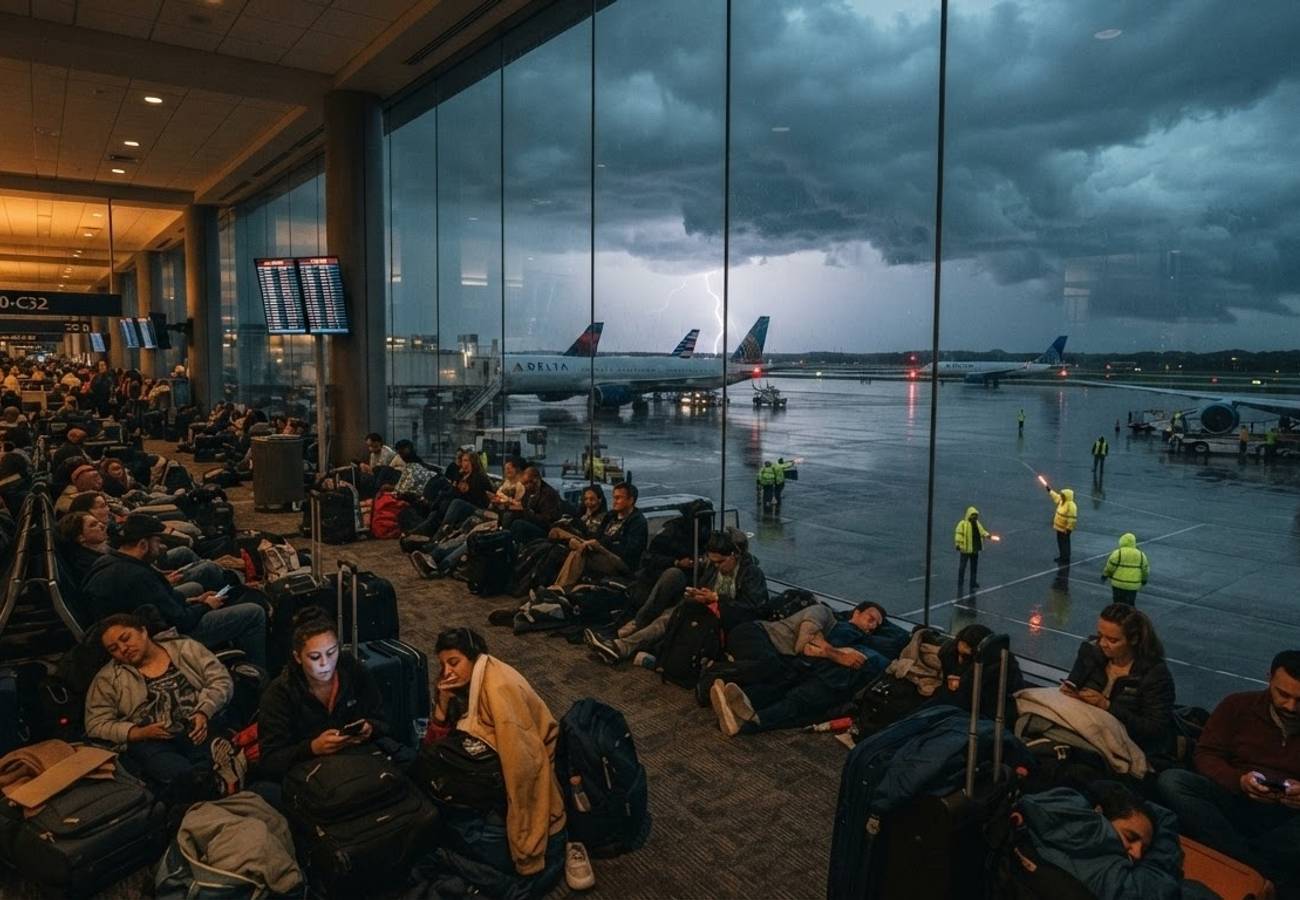
Image generated by AI
A combination of severe weather, critical staffing shortages, and localized technical failures triggered widespread chaos across the U.S. national airspace system on September 2, 2026.
The disruption saw more than 896 flights delayed and approximately 200 cancellations, primarily impacting high-traffic connecting hubs. This systemic failure highlights a fragile recovery period where high load factors and tight scheduling leave virtually no margin for operational error.
Operational Breakdown at Major Hubs
Flight-tracking data indicates that the disruptions were not isolated but concentrated at primary gateways in the Northeast, Midwest, and Texas. Because these airports serve as critical waypoints for both domestic and international itineraries, modest schedule shifts quickly cascaded into network-wide failures.
The most significant impact was felt by passengers flying with the following carriers:
- American Airlines
- United Airlines
- Delta Air Lines
- Southwest Airlines
- JetBlue
As the day progressed, these airlines managed hundreds of delayed departures. The "knock-on effect" meant that travelers in regions completely unaffected by weather or IT issues still faced missed connections and late departures because aircraft and crews were out of position for subsequent legs.
Primary Drivers of the Turbulence
Our analysis of the current operational climate suggests three converging factors caused this collapse:
- Convective Weather: Strong storm systems forced ground stops and reroutes, extending taxi times and triggering rolling delays.
- Staffing Gaps: Shortages in specialized roles—specifically pilots, flight attendants, maintenance crews, and air traffic controllers—prevented the FAA and airlines from absorbing irregular operations.
- IT Vulnerabilities: Localized technology glitches combined with weather stress to paralyze scheduling tools. This follows a trend seen in late July 2026, where a major carrier halted nationwide departures due to an IT failure, resulting in over 1,000 delays and hundreds of cancellations in a single day.
Impact Summary: September 2, 2026
| Metric | Figure |
|---|---|
| Total Flights Delayed | 896+ |
| Total Flights Canceled | ~200 |
| Primary Impact Zones | Northeast, Midwest, Texas |
| Key Contributing Factors | Storms, Staffing, IT Glitches |
Why This Matters: The Logistical Reality
For the modern traveler, this event proves that "low" cancellation numbers (under 1,000) are a misleading metric. The real impact is found in the cascading delay. When a hub airport experiences a ground stop, the aircraft assigned to a flight in a different state three hours later is automatically delayed.
From a logistical perspective, the 2026 flight schedules show increased peak-day flying compared to previous years. While this drives revenue, it creates a "brittle" system. High load factors mean there are fewer empty seats to move stranded passengers, and tight crew rotations mean one storm cell in Texas can strand a passenger in New York.
For those navigating this landscape, the risk is highest for:
- Tight Connections: Any layover under two hours at a major hub is currently high-risk.
- Last-Flight-of-the-Night: These departures have the lowest recovery probability if the aircraft is delayed on an earlier leg.
Passenger Rights and Recovery Strategies
Under U.S. Department of Transportation (DOT) guidance, if a carrier cancels a flight or implements a significant schedule change and the passenger chooses not to travel, the airline is generally expected to provide a full refund for the unused portion of the ticket, rather than a mere travel credit.
Expert Recommendations for Volatile Travel Periods:
- Independent Tracking: Use third-party flight-tracking tools to monitor aircraft movements; these often update before official airline notifications.
- Digital Rebooking: Utilize airline apps for same-day changes immediately upon a delay notice to bypass gate lines.
- Financial Backstops: Use credit cards with integrated trip interruption insurance to cover overnight lodging and meals.
Industry Outlook
The U.S. aviation sector is under intensified regulatory scrutiny. The DOT is currently reviewing rising rates of multi-day disruption events. While carriers are investing in de-icing capacity and upgraded IT infrastructure, the fundamental bottleneck remains human capital.
Until staffing levels for air traffic controllers and maintenance crews stabilize, routine weather events will continue to produce disproportionate systemic failures. Travelers should expect similar volatility throughout the remaining 2026 peak seasons.
The fragility of the U.S. hub-and-spoke model remains the primary vulnerability for the autumn travel season.
Related Travel Guides
Disclaimer
This article is for informational and educational purposes only. It does not constitute legal, financial, or professional advice. While we strive to provide accurate and up-to-date information, travel policies, regulations, and conditions change rapidly. Always verify information with official sources before making travel decisions. Nomad Lawyer makes no representations about the accuracy, reliability, completeness, or suitability of the information provided. Readers should consult qualified professionals for advice specific to their circumstances. The views expressed in this article are those of the author and do not necessarily reflect the views of Nomad Lawyer.
Raushan Kumar
Founder & Lead Developer
Full-stack developer with 11+ years of experience and a passionate traveller. Raushan built Nomad Lawyer from the ground up with a vision to create the best travel and law experience on the web.
Learn more about our team →