
NCAA Warns Flight Disruptions as Wetter Seasons Intensify Tournament Travel
NCAA warns flight disruption risks intensify in 2026 as extreme wet seasons collide with peak tournament travel windows. College teams face cascading delays across major aviation hubs during championship season.

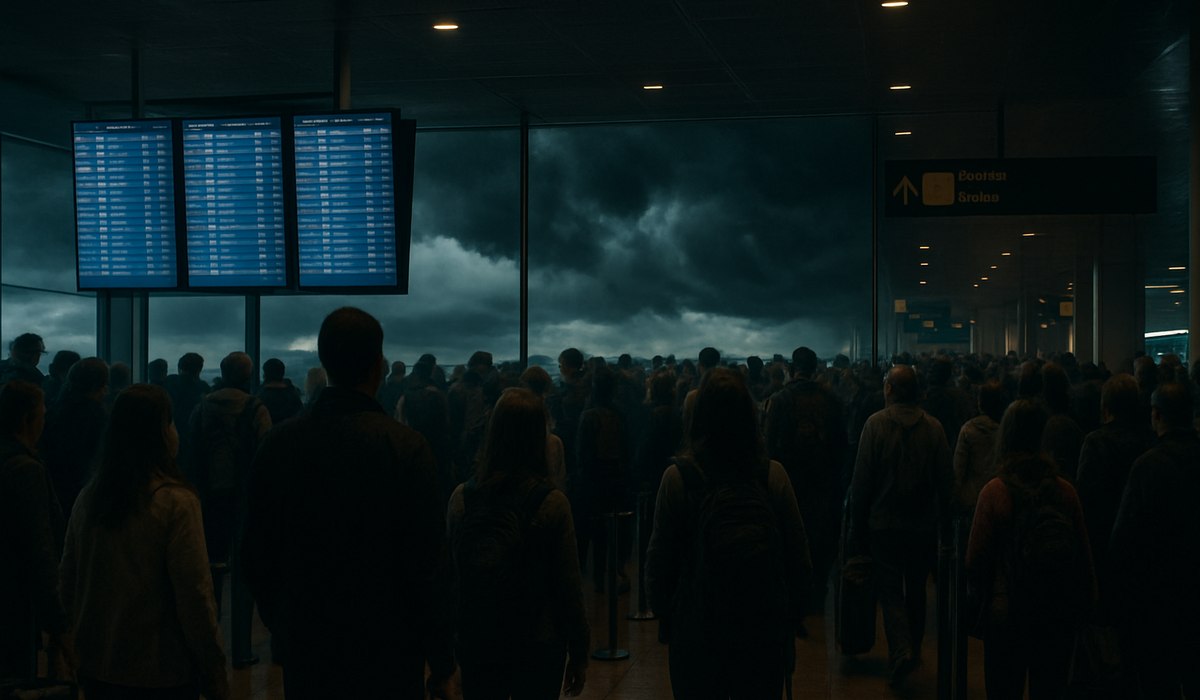
Image generated by AI
NCAA Warns Flight Risks as Intensifying Wet Seasons Collide With Tournament Season
The NCAA is sounding the alarm as unprecedented wet season intensity and volatile storm systems create cascading flight disruptions during peak championship travel periods in 2026. College teams, athletic staff, and fan travel face mounting challenges when extreme weather systems converge with postseason competition schedules. Major aviation hubs serving tournament routes—including Dallas-Fort Worth, Chicago O'Hare, and Atlanta—are becoming critical choke points as spring storms disrupt connecting flights and strand travelers attempting to reach arena destinations.
Storm Systems Converge With Peak Tournament Travel Windows
March 2026 delivered a stark warning when powerful Midwest and Eastern seaboard storm systems triggered thousands of flight delays and cancellations precisely as NCAA men's and women's basketball tournaments reached their peak. Major airlines reported widespread schedule disruptions affecting both charter flights carrying college programs and commercial services transporting fans.
The timing collision exposed systemic fragility in tournament logistics. Crowded airport terminals, extended security queues, and rolling schedule changes forced last-minute rebooking decisions during critical game-day windows. Data compiled by flight tracking services and documented in industry travel reports through early April 2026 reveal repeated delay spikes concentrated at hubs that regularly process college sports charters and tournament connections.
Weather-driven arrival rate reductions at these major airports create bottleneck effects that cascade through carefully orchestrated tournament itineraries. A single severe weather event at Chicago O'Hare can delay connections for teams heading to regional venues across multiple time zones, compressing preparation windows and affecting competitive readiness.
Major Hubs Become Choke Points During Weather Events
Dallas-Fort Worth International, Chicago O'Hare, and Hartsfield-Jackson Atlanta International serve as critical connection points for NCAA tournament travel, processing thousands of college program movements during March and April. These three airports alone handle the majority of postseason chartered and commercial flights carrying teams between regional venues.
When thunderstorms, low-visibility conditions, or heavy precipitation reduce runway acceptance rates, these hubs transform into bottlenecks within hours. Conference realignment spanning four time zones means college programs now depend entirely on connecting through weather-prone major hubs—there are no direct-flight alternatives for most tournament matchups.
The NCAA tournament schedule offers no flexibility for weather delays. Unlike regular-season play, championship games operate on fixed networks, with television contracts, arena availability, and broadcast slots locked months in advance. Teams cannot simply depart one day later if storms disrupt their planned connection windows.
Heavy rain events during March and April 2026 demonstrated this vulnerability, with delays at Atlanta Airport cascading backward through the entire network, affecting departing flights in secondary markets and compressing turnaround times for aircraft serving the next wave of tournament charters.
Conference Realignment Multiplies Flight Risk Exposure
The geographic expansion of major college athletics conferences has fundamentally altered tournament travel patterns and vulnerability profiles. Programs within the Big Ten, Atlantic Coast Conference, and other national leagues now log tens of thousands of air miles during single regular seasons, multiplying flight exposure to weather-related disruptions.
Teams competing across four-time-zone footprints require multi-leg routing that creates cumulative weather risk. A delay at the first connection point affects arrival timing for the entire team, creating cascading impacts on arrival hotel check-ins, practice schedules, and competition preparation.
Conference realignment also means fewer alternative routing options. Unlike 1990s-era regional conferences that could operate within more limited geographical areas, contemporary college sports require connecting through the same major hubs repeatedly throughout the season. Weather disruptions at those hubs therefore affect a larger percentage of the total athletic travel schedule.
Beyond basketball, spring tournament calendars for baseball, softball, soccer, and lacrosse depend on windows that coincide with convective storm season, early tropical system formation, and lingering winter fronts. Multiple sports competing for limited charter flight availability during the same weather-intensive months compresses already-tight scheduling margins.
NCAA Guidance Updates Address Logistical Fragility
In response to mounting travel disruptions and increasingly unstable weather patterns, the NCAA has released updated guidance emphasizing weather resilience and flight contingency planning. The Committee on Competitive Safeguards and Medical Aspects of Sports now explicitly identifies severe weather, heavy precipitation, and aviation disruptions as core risk variables requiring institutional contingency protocols.
February 2025 travel memoranda for Division I championship events underscore how airline operational constraints and weather have narrowed preferred departure windows. The NCAA acknowledges that staffing limitations, supply-demand imbalances, and weather conditions at connecting airports now restrict flight availability, demanding greater flexibility from competing programs.
Current venue and safety documentation updated for the 2024-2025 season frames weather as a primary risk category alongside security and crowd management. Materials recommend that host institutions and local organizers coordinate with transportation partners, monitor forecasts continuously, and maintain robust emergency delay protocols.
The NCAA places direct responsibility on member schools to build backup routing options into tournament travel plans. Recommended strategies include scheduling earlier departures to avoid late-night cascading delays, identifying alternate airports when primary hubs face severe weather forecasts, and booking patterns that create recovery time between connections.
Key Data Table: NCAA Tournament Flight Disruption Factors
| Factor | Impact | 2026 Status | Trend |
|---|---|---|---|
| Wet Season Intensity | Heavy precipitation reduces runway capacity | Intensifying | Worsening |
| Major Hub Dependency | DFW, ORD, ATL handle majority of charters | Concentrated | Critical |
| Conference Footprint | Four time zones require multi-leg routing | Expanded | High Risk |
| Storm Timing | Convective systems peak during tournament months | March-April | Recurring |
| Airline Staffing | Limited crew availability during peak periods | Constrained | Limiting |
| Charter Availability | Competing sports demand same flight windows | Compressed | Acute |
| Flight Delay Cascades | Single hub disruption affects downstream connections | Exponential | Growing |
| Alternative Routes | Limited bypass options for weather-prone hubs | Minimal | Vulnerable |
What This Means for Travelers
College athletes, coaching staff, families, and fans traveling to NCAA tournament events in 2026 should prepare for significant weather-related flight disruption risks. The convergence of intensifying wet seasons and peak tournament schedules creates predictable, recurring disruption windows.
Actionable Traveler Steps:
-
Book flights 5-7 days in advance to secure preferred departure times and avoid last-minute weather-driven rebooking chaos at peak booking windows.
-
Monitor weather forecasts continuously at your departure airport, connecting hubs, and destination cities beginning two weeks before your travel date. Use FlightAware for real-time delay tracking.
-
Identify alternate connection airports for your destination and confirm those airports serve your final destination with reasonable connection times.
-
Pack essential items in carry-on bags including medications, important documents, chargers, and change of clothes in case checked luggage gets separated during rebooking.
-
Maintain flexibility in return travel by avoiding fixed schedules the day after championship games, since tournament extensions or unexpected overtime situations affect return flight availability.
-
Purchase travel insurance that covers weather-related delays and provides hotel rebooking protection if you become stranded at a connection hub.
-
Register with your airline for automated rebooking alerts and confirm contact information is current for real-time delay notifications.
-
Budget additional time for airport arrival, security screening, and connection walks, as peak tournament periods experience unusually long processing times at major hubs.
FAQ: NCAA Tournament Flight Disruption Concerns
Q: How likely is my NCAA tournament flight to face weather-related delays in 2026?
A: Historical data from March-April 2026 shows weather-related delays affecting 15-25% of flights through major NCAA tournament hubs during peak tournament weeks
Disclaimer
This article is for informational and educational purposes only. It does not constitute legal, financial, or professional advice. While we strive to provide accurate and up-to-date information, travel policies, regulations, and conditions change rapidly. Always verify information with official sources before making travel decisions. Nomad Lawyer makes no representations about the accuracy, reliability, completeness, or suitability of the information provided. Readers should consult qualified professionals for advice specific to their circumstances. The views expressed in this article are those of the author and do not necessarily reflect the views of Nomad Lawyer.
Raushan Kumar
Founder & Lead Developer
Full-stack developer with 11+ years of experience and a passionate traveller. Raushan built Nomad Lawyer from the ground up with a vision to create the best travel and law experience on the web.
Learn more about our team →