
April Flight Chaos Sweeps Asia Pacific: Thousands Face Cancellations and Delays
Widespread April flight chaos disrupts Asia Pacific travel as thousands of passengers navigate cancellations and delays. Weather, airspace restrictions, and capacity constraints overwhelm major hubs across the region in 2026.

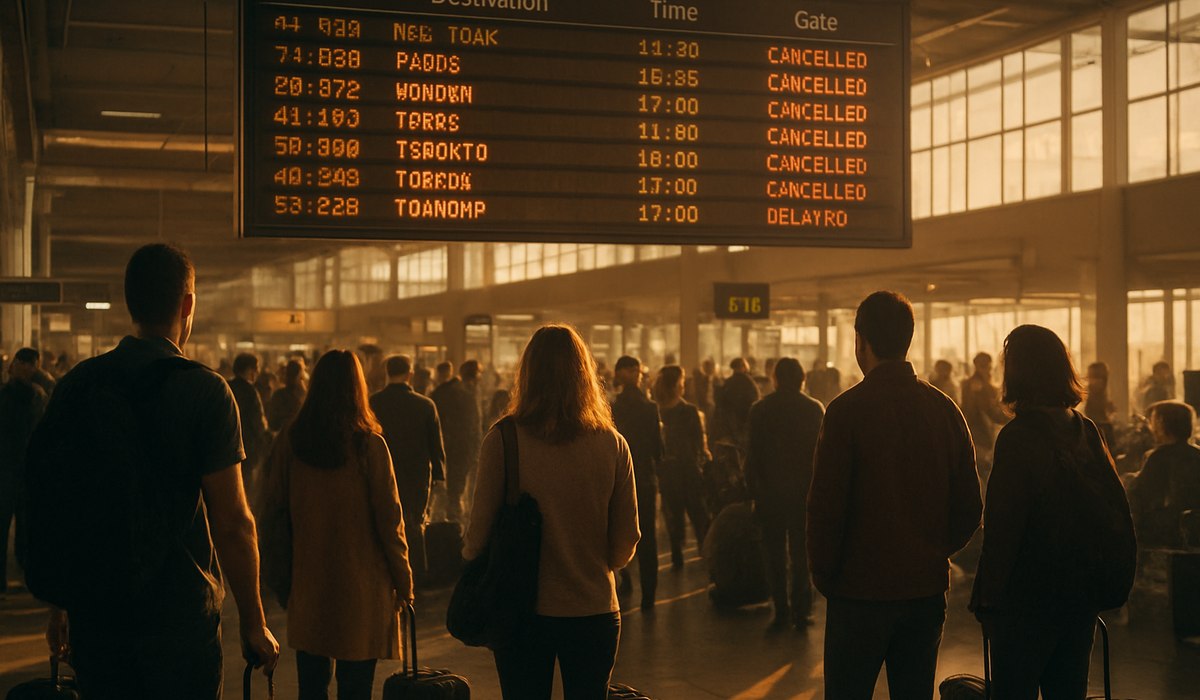
Image generated by AI
April Flight Chaos Grips Asia Pacific Region
Asia Pacific aviation is experiencing severe April flight chaos, with thousands of passengers encountering cascading cancellations and delays across major regional hubs. Between April 1-9, 2026, disruptions have affected Tokyo, Shanghai, Singapore, Hong Kong, Kolkata, and Abu Dhabi, with a single two-day window recording 264 cancellations and 3,829 delays. The crisis stems from a perfect storm of seasonal weather, airspace restrictions linked to geopolitical tensions, and stretched airline capacity—a combination that transforms routine weather delays into network-wide disruption waves lasting days.
Scale of Disruption Across Asia's Major Hubs
Early April 2026 reveals the true scope of April flight chaos impacting Asia-Pacific aviation. Operational data tracking shows that on peak disruption days, Asia's primary airports face hundreds of same-day cancellations alongside thousands of delays. Tokyo Haneda and Narita combined have logged several hundred delays during the worst affected periods, while Shanghai's network hubs contend with similar pressures. Singapore Changi, Hong Kong International, and Incheon in Seoul have all featured prominently in disruption tallies.
Industry tracking through FlightAware shows that on April 8-9 alone, more than 3,000 delays and 150+ cancellations spread across a dozen major Asian airports. The scale of April flight chaos extends beyond single hubs—cascading effects mean that aircraft arriving late from earlier disrupted flights trigger downstream cancellations. When a Tokyo-bound aircraft arrives six hours late, it misses its scheduled departure for Singapore, which then delays passengers to Bangkok, creating ripple effects that persist through the week. This interconnected disruption pattern is now characteristic of how modern airline networks amplify localized shocks into regional crises.
Which Airlines and Routes Are Most Affected
Air China, China Eastern, IndiGo, Batik Air, FlyDubai, and Japan Airlines have all logged significant delays during early April 2026. However, no single airline dominates the April flight chaos headlines—the disruptions are systemic. China Eastern and Lao Airlines together recorded 449 combined delays on routes touching Chinese hubs alone. Japanese and Korean carriers, alongside Southeast Asian low-cost operators, have been equally affected by cascading delays that reflect structural network fragility rather than airline-specific operational failures.
Routes connecting major Northeast and Southeast Asian hubs face the highest disruption risk. Tokyo-Singapore, Shanghai-Hong Kong, Hong Kong-Bangkok, Incheon-Manila, and cross-strait flights between Taiwan and mainland China are experiencing above-average cancellation rates. International routes from India's Kolkata and Mumbai airports to Gulf hubs have seen increased disruptions due to airspace diversions caused by ongoing restrictions over Pakistan and ongoing conflict impacts on West Asian airspace. These longer diversions consume additional fuel and reduce crew availability for subsequent rotations, amplifying capacity strain across the region.
Root Causes: Weather, Airspace and Capacity Constraints
April flight chaos in Asia Pacific stems from three interconnected factors. First, seasonal monsoon-pattern weather systems bring severe thunderstorms and low visibility to major hubs precisely when pre-summer travel demand peaks. Tokyo, Shanghai, and Southeast Asian airports experience afternoon thunderstorms that disrupt precision runway operations, grounding aircraft and forcing ground delays that cascade through departure schedules.
Second, geopolitical airspace restrictions continue reshaping aviation geography. Ongoing Pakistani airspace limitations and West Asian conflicts force Indian and Gulf carriers to adopt longer routing to Europe and North America. These mandatory diversions add 2-3 hours to flight times, burn additional jet fuel, and reduce aircraft availability for Asia-focused service rotations. When major carriers must operate extended routes to maintain European connections, capacity that would serve intra-Asia traffic disappears.
Third, post-pandemic capacity constraints have left Asian airlines with minimal buffer capacity. Airlines reduced fleet sizes through 2023-2024 and have been slow to return aircraft to service. Jet fuel price spikes through early 2026 have pushed airlines to consolidate lightly booked flights and trim frequencies preemptively. When unexpected weather or airspace shocks hit major hubs, airlines cannot quickly substitute aircraft or create new flights. A weather delay at Tokyo Haneda that once produced a four-hour disruption now triggers next-day cancellations because no spare aircraft exist to maintain schedule integrity.
What Passengers Should Know and Do
The April flight chaos affecting Asia Pacific requires immediate passenger awareness and action. First, check your flight status continuously using FlightAware and your airline's official app—disruptions can cascade from early morning delays into evening cancellations. Airlines may not formally announce cancellations until 12-24 hours before scheduled departure.
Second, understand your passenger rights under applicable regulations. Passengers on flights within the EU or operating to EU airports enjoy protections under EU261. US-bound passengers are protected under Department of Transportation rules accessible at US DOT Airconsumer. Asia Pacific regional regulations vary by country—Australia, Singapore, and Hong Kong have established passenger rights frameworks. Check your specific airline's policy on rebooking, meal vouchers, and accommodation for overnight delays.
Third, book flexible tickets if possible during April disruption periods. If you must travel, consider purchasing tickets that permit free rebooking rather than fixed reservations. Airlines facing April flight chaos often waive rebooking fees and upgrade stranded passengers to later flights, but only after longer-lasting cancellation notices. Fourth, arrive at airports three hours before international departures to navigate longer queues triggered by rebooking operations. Final passengers on flights that face disruption often experience the longest waits.
Traveler Action Checklist
-
Monitor flight status daily using airline apps and FlightAware beginning 72 hours before departure; enable push notifications for real-time delay alerts.
-
Screenshot passenger rights summaries from US DOT, EU261 guidelines, or your destination country's aviation regulator; carry this documentation for interactions with airlines.
-
Contact your airline immediately if your flight is cancelled—do not wait for rebooking calls; proactively request specific alternative dates and routes.
-
Document all expenses related to cancellations including meals, accommodation, ground transportation, and alternative bookings; collect receipts for compensation claims.
-
Request written communication from airlines confirming cancellation reasons, rebooking confirmation, and any compensation offered; email confirmations to yourself.
-
Confirm rebooking flights 24 hours prior to departure even after airline confirmation; April flight chaos can affect replacement flights.
-
Check travel insurance coverage for airline disruption and confirm whether your policy covers delays of 12, 18, or 24+ hours before claiming compensation.
-
Connect with fellow affected passengers via airline loyalty programs or travel forums; collective claims sometimes prompt faster airline responses.
Key Disruption Data Summary
| Metric | Data Point |
|---|---|
| Peak Disruption Window | April 8-9, 2026 |
| Cancellations (48-hour peak) | 264 confirmed |
| Delays (48-hour peak) | 3,829 confirmed |
| Most Affected Airlines | Air China, China Eastern, IndiGo, Batik Air |
| Most Affected Hubs | Tokyo Haneda, Shanghai, Singapore, Hong Kong |
| Primary Cause | Weather + Airspace Restrictions + Capacity Constraints |
| Affected Countries | Japan, China, Singapore, Hong Kong, India, Philippines, South Korea |
| China Eastern Delays (single period) | 449 combined with Lao Airlines |
| Expected Recovery Duration | 3-5 days post-disruption |
| Passenger Protections Available | EU261 (EU |
Disclaimer
This article is for informational and educational purposes only. It does not constitute legal, financial, or professional advice. While we strive to provide accurate and up-to-date information, travel policies, regulations, and conditions change rapidly. Always verify information with official sources before making travel decisions. Nomad Lawyer makes no representations about the accuracy, reliability, completeness, or suitability of the information provided. Readers should consult qualified professionals for advice specific to their circumstances. The views expressed in this article are those of the author and do not necessarily reflect the views of Nomad Lawyer.
Kunal K Choudhary
Co-Founder & Contributor
A passionate traveller and tech enthusiast. Kunal contributes to the vision and growth of Nomad Lawyer, bringing fresh perspectives and driving the community forward.
Learn more about our team →