
NCAA warns teams of charter aircraft shortages amid spring storms in 2026
NCAA warns teams to prepare for charter aircraft shortages and severe weather disruptions during March Madness 2026 as spring storm season intensifies. Tournament travel faces unprecedented challenges from volatile weather patterns and strained aviation capacity.

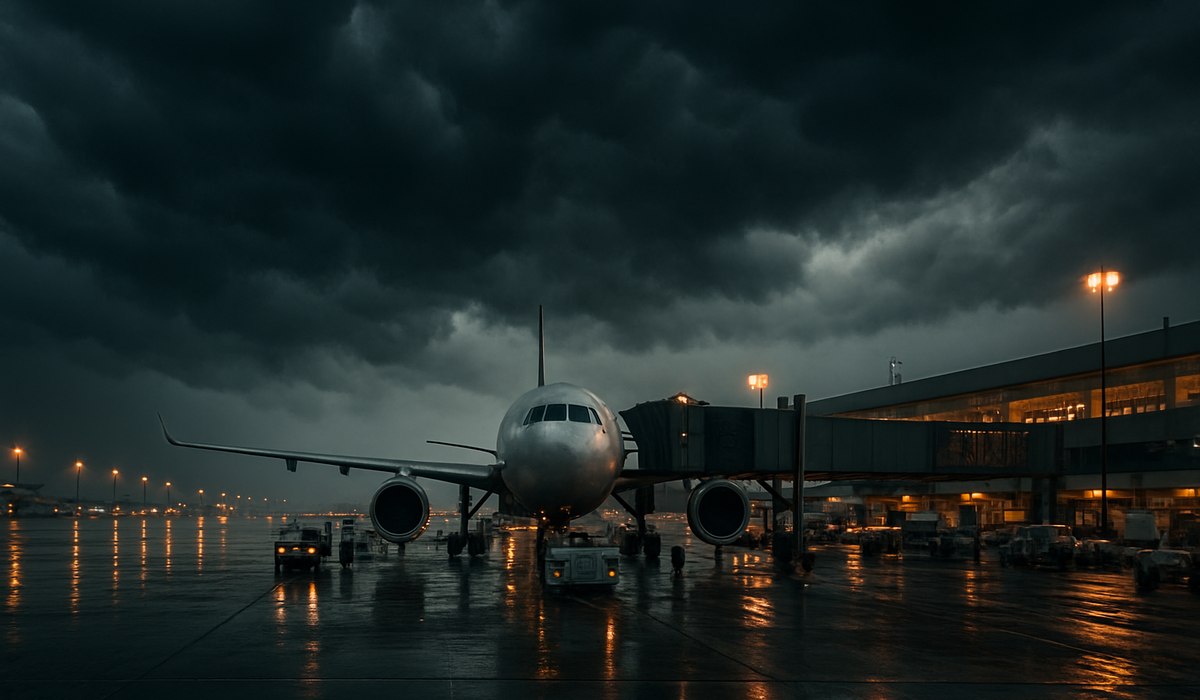
Image generated by AI
NCAA Issues Urgent Travel Warning for Tournament Season
The NCAA is urging member schools to brace for unprecedented flight disruptions as volatile spring weather and strained aircraft availability converge during the 2026 basketball tournament season. The governing body recently issued a travel memo to conferences and schools outlining significant risks of charter aircraft shortages during both men's and women's basketball championships. This warning reflects growing concerns about moving 136 tournament teams, their staffs, and equipment across the nation on tight television-driven schedules when airport capacity and aircraft availability face mounting constraints from forces beyond college sports organizers' control.
The advisory arrives during a season when U.S. air travel infrastructure is already operating under intense pressure. Recent spring weather patterns have triggered thousands of flight cancellations and delays at major transportation hubs, with congestion reported at airports in New York, Chicago, and Atlanta as tournament traffic compounds existing spring break crowds and meteorological challenges.
Charter Aircraft Logjam Expected During March Madness
Tournament team travel relies heavily on charter flights arranged through a limited pool of specialized providers who also serve professional sports teams, corporate clients, and other large groups. When late-winter storms force schedule changes or aircraft repositioning, these same fleets often find themselves overcommitted or geographically displaced. The current landscape presents markedly different challenges compared with previous tournament years, according to NCAA communications.
The constraint deepens because U.S. airlines continue operating with minimal schedule slack. Industry data shows carriers maintain dense schedules with tight aircraft utilization, leaving fewer idle planes and crews available when weather events trigger cascading disruptions across the national airspace system. Government transportation statistics consistently identify late-arriving aircraft and airspace system delays as persistent contributors to overall flight disruptions, demonstrating how initial problems in one region ripple through networks serving tournament destinations.
For college basketball programs, NCAA warns teams that this dynamic creates narrower contingency options. If a chartered flight requires rescheduling or faces diversions, alternatives may involve switching to commercial service, ground transportation to backup airports, or adjusting game-day preparation routines. Each workaround introduces trade-offs: increased ground travel time, reduced athlete rest periods, and compressed preparation windows before tip-off.
Spring Storm Systems Creating Perfect Storm for Delays
Recent storm histories across late winter and early spring demonstrate why tournament travel faces intensifying exposure to weather disruptions. A succession of high-impact systems during the 2025-2026 season brought heavy snow, powerful winds, and severe thunderstorms across the continental United States, repeatedly disrupting aviation operations. Government meteorological summaries document blizzards in the Upper Midwest, ice and snow across the Northeast, and tornado-spawning storm systems sweeping the South and Mid-Atlantic regions.
Travel and aviation analyses reveal that individual major storm systems routinely cancel or delay thousands of flights within twenty-four hours. Research compiled from recent winter and spring weather events indicates that once ground stops and routing changes activate at key regional hubs, airlines typically require one to three additional days to restore normal scheduling, even after conditions improve.
Climate and transportation researchers have documented a broader atmospheric pattern where extreme precipitation events, rapid temperature fluctuations, and convective storm systems are becoming increasingly common across North America. Published meteorological studies and government aviation statistics confirm that weather-related delays constitute a significant percentage of all U.S. flight disruptions. Heavy rainfall, low cloud ceilings, and thunderstorms represent particularly critical drivers of spring and summer slowdowns. For a tournament concentrated over three weeks in March and early April, this trend toward wetter and more volatile seasonal patterns substantially increases the probability that at least one major storm system will intersect critical game windows and travel schedules.
What Schools Must Do to Prepare for Disruptions
Athletic departments and conferences are proactively refining their tournament travel contingency frameworks in response to evolving risk conditions. NCAA warns teams to implement layered backup strategies, including earlier charter departure windows, alternative routing plans, and commercial airline partnerships for rapid rebooking if chartered service becomes unavailable.
Best practices identified by sports travel professionals include coordinating directly with charter operators regarding real-time aircraft positioning, monitoring National Weather Service forecasts during the tournament window, and establishing ground transportation agreements with regional providers for rapid deployment if flights face diversions or cancellations. Schools should also review athlete travel insurance policies and communicate clearly with team rosters about potential schedule modifications.
Athletic directors should designate a primary travel coordinator with direct contact authority to airline operations centers and charter providers. Building redundancy into accommodation arrangements—securing flexible hotel booking terms that allow date modifications—provides additional protection against cascading delays. Conference offices can enhance resilience by sharing weather intelligence and aircraft availability data with member schools, enabling coordinated decision-making across multiple teams facing similar constraints.
Live Flight Tracking and Real-Time Monitoring Resources
Coaches and travel staff can monitor tournament-related flights and weather conditions using real-time aviation tracking platforms. FlightAware provides detailed departure and arrival information, allowing teams to track charter aircraft movements and identify delays before they impact schedules. The FAA maintains current information on ground stops, airport congestion, and airspace restrictions affecting regional hubs hosting tournament games.
Professional travel coordinators should establish active monitoring protocols beginning forty-eight hours before scheduled departures. Weather radar integration through National Weather Service resources enables teams to anticipate storm intersections with planned flight routes. Many charter operators now provide automated text and email alerts when delays exceed thirty minutes, ensuring immediate notification of developing issues.
Passenger Rights and Airline Compensation During Disruptions
NCAA athletes and staff experiencing weather-related flight disruptions retain specific consumer protections under federal regulations. The U.S. Department of Transportation requires airlines to provide accurate delay information, rebooking options on alternative flights, and meal/accommodation provisions when delays extend beyond specified timeframes. U.S. DOT regulations outline detailed passenger rights and establish compensation requirements for carriers causing operational disruptions.
Charter flight passengers should verify that service agreements explicitly address weather-related contingencies and compensation provisions. Many NCAA charter contracts include force majeure clauses limiting liability during severe weather, but schools should confirm dispute resolution procedures and alternative transportation guarantees before committing to bookings.
Recovery and Schedule Restoration Timelines
Historical data from major spring weather events demonstrates that airport and airline recovery typically follows predictable patterns. Initial ground stops during active weather events last four to eight hours. Once systems clear, airlines begin restoring schedules, but residual delays persist for one to three days as aircraft and crews reposition to correct locations and work through backed-up flight queues.
For tournament teams, this timeline creates critical windows for decision-making. If severe weather grounds operations during crucial tournament days, NCAA protocols allow limited schedule flexibility, but game postponements require conference coordination and broadcaster approval. Athletic departments should develop trigger points for alternative transportation decisions—for example, authorizing bus charters if flight delays exceed six hours.
| Factor | Impact Level | Typical Duration | NCAA Response |
|---|---|---|---|
| Spring thunderstorm delays | High | 4-8 hours | Monitor; activate backup plans if >2 hours |
| Regional ground stops | Critical | 6-12 hours | Consider commercial rebooking or bus transport |
| Multi-day weather systems | Severe | 24-72 hours | Coordinate with conference on game delays |
| Charter aircraft unavailability | Critical | Variable | Activate commercial airline partnerships |
| Airport congestion (normal) | Moderate | 2-4 hours | Plan earlier departures to buffer delays |
| Post-storm recovery cascades | High | 24-48 hours after clearing | Maintain flexibility in arrival schedules |
Traveler Action Checklist
-
Review current NCAA travel guidance by contacting your conference office or athletic department travel coordinator for tournament-specific protocols and contingency procedures.
-
Confirm charter aircraft details including specific tail numbers, operator information, and emergency contact protocols with your service provider at least one week before departure.
-
Monitor weather forecasts beginning sev
Disclaimer
This article is for informational and educational purposes only. It does not constitute legal, financial, or professional advice. While we strive to provide accurate and up-to-date information, travel policies, regulations, and conditions change rapidly. Always verify information with official sources before making travel decisions. Nomad Lawyer makes no representations about the accuracy, reliability, completeness, or suitability of the information provided. Readers should consult qualified professionals for advice specific to their circumstances. The views expressed in this article are those of the author and do not necessarily reflect the views of Nomad Lawyer.
Preeti Gunjan
Contributor & Community Manager
A passionate traveller and community builder. Preeti helps grow the Nomad Lawyer community, fostering engagement and bringing the reader experience to life.
Learn more about our team →