
National Geographic Unveils Spectacular $300 Million Museum of Exploration in Washington DC: A Must-Visit Landmark for USA Travel 2026
Step into 138 years of discovery at the new $300 million National Geographic Museum of Exploration in Washington DC, featuring immersive tech and the Photo Ark.

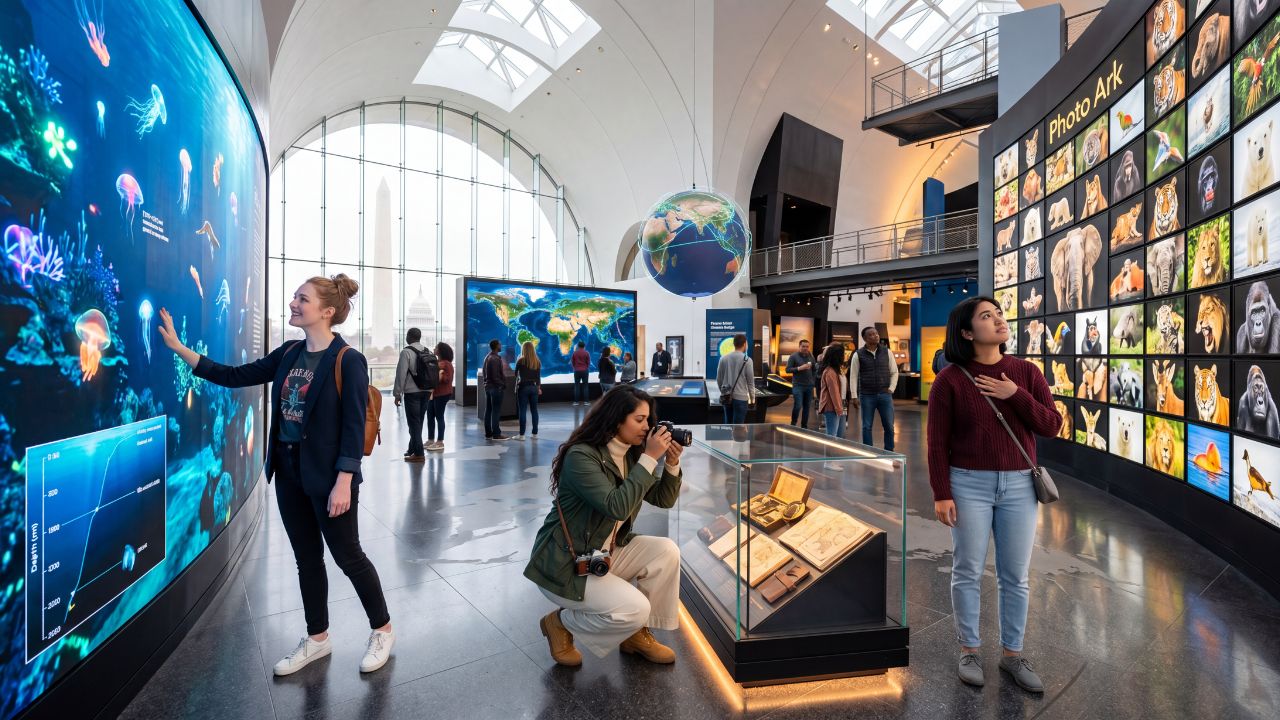
Image generated by AI
Quick Summary
- National Geographic has opened a new $300 million Museum of Exploration in Washington, DC.
- The 100,000-square-foot facility celebrates 138 years of global discovery and conservation.
- Key highlights include the "Photo Ark" gallery and immersive digital environments.
- The museum features a dedicated children's learning space and high-tech projection rooms.
- An evening exterior projection show transforms the building into a giant canvas of wildlife.
National Geographic Unveils Spectacular $300 Million Museum of Exploration in Washington DC: A Must-Visit Landmark for USA Travel 2026
WASHINGTON, DC — In a monumental leap for immersive storytelling and scientific education, National Geographic has officially opened the doors to its breathtaking new Museum of Exploration. With a staggering $300 million investment, this architectural marvel is not merely a repository of artifacts but a living, breathing portal into 138 years of human curiosity. For those mapping out their USA travel 2026 itineraries, this facility is rapidly becoming the most anticipated addition to the nation's capital, promising to redefine the museum experience for a new generation of explorers.
Spanning a massive 100,000 square feet and situated on the site of the former National Geographic Museum, the new institution is designed to bridge the gap between the observer and the observed. By blending cutting-edge technology with the raw power of wildlife photography and scientific discovery, the museum invites visitors to step out of their comfort zones and into the most challenging environments on Earth.
A New Paradigm: From Static Displays to Immersive Adventures
The first thing visitors notice upon arrival is that this is not a traditional museum. The experience begins in the courtyard, where towering animal sculptures set the stage for a journey of discovery. Upon entering the modern lobby, guests are immediately enveloped by giant, high-definition projections of shimmering oceans, calving glaciers, and remote, untouched landscapes.
Every gallery has been meticulously engineered to transform the visitor from a spectator into a participant. Through the use of interactive displays and immersive environments, the museum recreates the visceral feeling of being in the field. Whether it is the humidity of a tropical rainforest or the oppressive silence of the deep ocean, the museum uses sensory technology to make the work of explorers and conservationists tangible and urgent.
The Visual Soul: Photography and the Power of the Image
National Geographic has long been the gold standard for visual storytelling, and the new museum places this legacy at its center. The facility serves as a masterclass in the art of the image, allowing visitors to dive deep into the process of capturing the world's most iconic photographs.
A massive digital archive allows guests to browse decades of legendary magazine covers, while specialized exhibits detail the grueling preparation required for assignments in the world's most remote corners. By showcasing the journey from a single shutter click to a published global story, the museum highlights the intersection of art, patience, and scientific rigor.
The Emotional Core: The Photo Ark
The undisputed crown jewel of the museum is the "Photo Ark" gallery. This ambitious project by Joel Sartore aims to document every animal species living under human care, and the museum brings this vision to life on a grand scale. Visitors are surrounded by thousands of striking, intimate portraits of animals, creating an emotional resonance that transcends traditional exhibition. Looking directly into the eyes of endangered species serves as a powerful reminder of the fragility of biodiversity and the critical necessity of global conservation efforts. With over 18,000 animals already documented, the Photo Ark is a living, growing archive of the planet's biological wealth.
Walking with Giants: The Explorer's Gallery
The upper levels of the museum are dedicated to the humans who have pushed the boundaries of known geography. Through interactive maps and authentic expedition gear, the galleries tell the stories of groundbreaking research and daring exploration.
Featured Expeditions Include:
- The Peaks of the World: Scientific missions to the summit of Mount Everest.
- The Heart of Africa: Long-term conservation and wildlife studies across the continent.
- The Abyss: Deep-ocean exploration utilizing specialized, high-pressure diving equipment.
- The Green Lung: Research expeditions mapping the intricate biodiversity of the Amazon Basin.
In a highlight for history buffs, visitors can stand beside a replica of Sylvia Earle’s legendary JIM diving suit, a piece of equipment that symbolizes one of the most significant achievements in the history of ocean exploration.
The Tech Revolution: Transforming Education into Experience
The Washington DC museum is a showcase for how immersive technology can democratize complex science. Moving away from static placards, the museum utilizes projection rooms and digital theaters to recreate ecosystems in real-time.
For families, the dedicated children's learning spaces are a game-changer. Instead of traditional classroom-style displays, science and geography are taught through hands-on experiences and interactive games. This approach ensures that complex topics—such as climate change or tectonic shifts—are approachable and engaging for the youngest minds, fostering a lifelong curiosity about the natural world.
The Grand Finale: The Sunset Transformation
The experience does not end when the galleries close. As night falls, the museum building itself transforms into a piece of performance art. Using advanced architectural projection mapping, the exterior walls become a giant canvas.
Whales glide across the facade, schools of iridescent fish swim through the courtyard, and penguins wander across the architecture. This nocturnal spectacle reinforces the museum's core mission: to remind us that the natural world is always around us, even in the heart of a concrete jungle. It provides a memorable, cinematic ending to a day of discovery.
Industry Analysis: The Shift Toward "Experience Architecture"
The launch of the National Geographic Museum of Exploration reflects a broader trend in the global tourism industry: the move toward "Experience Architecture." Modern travelers, especially those planning USA travel 2026, are no longer satisfied with passive consumption. They seek immersive, emotionally charged environments that offer a sense of agency and participation.
By investing $300 million into a facility that prioritizes immersion over curation, National Geographic is setting a new benchmark for cultural institutions. This model—combining education, entertainment, and high-tech storytelling—is likely to be replicated across other major museums globally as they compete for the attention of a digitally native audience.
Conclusion: A Beacon of Discovery in the Capital
The National Geographic Museum of Exploration is more than just a new attraction in Washington, DC; it is a beacon of human curiosity. By blending 138 years of legacy with the technology of tomorrow, it offers a profound reflection on our relationship with the planet.
For anyone building a travel itinerary for 2026, this museum is an essential stop. It provides a rare opportunity to experience the world's greatest stories not as a reader, but as an explorer. In an era of digital saturation, the museum's commitment to authentic discovery and conservation makes it one of the most meaningful destinations in the United States.
Key Takeaways
- Massive Investment: A $300 million facility spanning 100,000 square feet.
- Legacy of Discovery: Celebrates 138 years of National Geographic's exploration and science.
- Signature Experience: The "Photo Ark" gallery features thousands of wildlife portraits.
- Tech-Driven: Uses immersive projections and interactive zones to teach conservation.
- Nocturnal Spectacle: The building's exterior transforms into a wildlife canvas after dark.
- Family Friendly: Dedicated hands-on learning spaces for children.
Frequently Asked Questions
Where is the new National Geographic Museum located? It is located in Washington, DC, on the site of the former National Geographic Museum.
What is the "Photo Ark" and why is it special? The Photo Ark is a project by Joel Sartore to photograph every animal species in human care. The museum's gallery creates an emotional, immersive experience with thousands of these portraits.
Is the museum suitable for children? Yes, the museum features dedicated children's learning spaces where science and geography are taught through hands-on, interactive experiences.
What happens at the museum after sunset? The exterior of the building becomes a giant projection screen, displaying animated wildlife like whales and penguins in a stunning visual show.
How much does the museum cost to build? The facility represents a $300 million investment in the future of exploration and conservation storytelling.
Disclaimer
This article is for informational and educational purposes only. It does not constitute legal, financial, or professional advice. While we strive to provide accurate and up-to-date information, travel policies, regulations, and conditions change rapidly. Always verify information with official sources before making travel decisions. Nomad Lawyer makes no representations about the accuracy, reliability, completeness, or suitability of the information provided. Readers should consult qualified professionals for advice specific to their circumstances. The views expressed in this article are those of the author and do not necessarily reflect the views of Nomad Lawyer.
Kunal K Choudhary
Co-Founder & Contributor
A passionate traveller and tech enthusiast. Kunal contributes to the vision and growth of Nomad Lawyer, bringing fresh perspectives and driving the community forward.
Learn more about our team →