
Beyond the Statue of Liberty: 5 Surprising American Destinations Older Than the USA That Every Traveler Must Visit in 2026
Discover five extraordinary US destinations that predate the nation's founding, from the ancient footprints of White Sands to the adobe walls of Taos Pueblo.

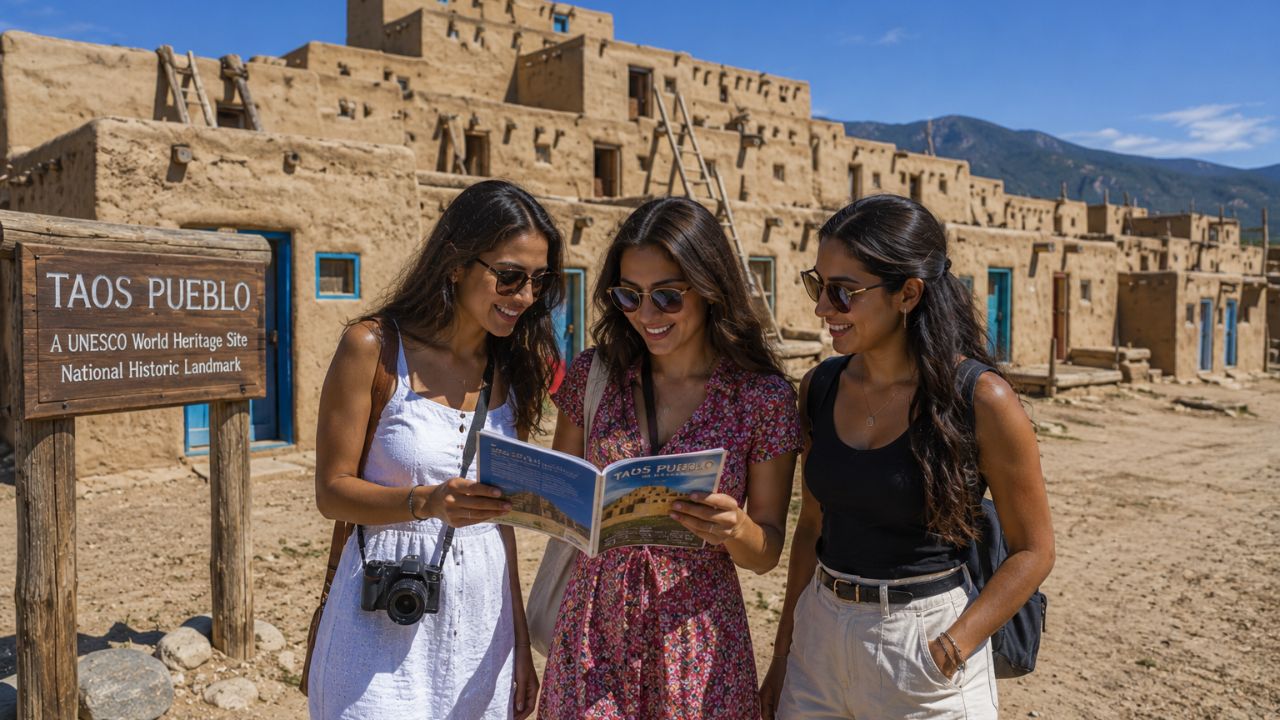
Image generated by AI
**> Quick Summary
- Several US destinations predate the founding of the United States, offering a glimpse into pre-colonial and ancient history.
- White Sands National Park holds evidence of human life dating back over 20,000 years.
- Taos Pueblo is a living community with nearly 1,000 years of continuous occupation.
- Jamestown and Castillo de San Marcos represent the earliest European colonial footprints.
- Cahokia Mounds reveals a sophisticated urban civilization that flourished centuries before European contact.**
Beyond the Statue of Liberty: 5 Surprising American Destinations Older Than the USA That Every Traveler Must Visit in 2026
NEW YORK — For the millions of global travelers planning to travel to America in 2026, the itinerary usually begins and ends with the "greatest hits": the neon lights of Times Square, the grandeur of the Grand Canyon, or the iconic silhouette of the Statue of Liberty. However, a growing movement of "deep travel" is urging visitors to look beyond the 1776 horizon. There exists a hidden map of the United States—a collection of sites that are not just old, but are actually older than the nation itself.
These destinations preserve the echoes of Indigenous civilizations, the first tentative steps of European explorers, and the remnants of ancient human migration. By visiting these sites, travelers can peel back the layers of the American narrative, discovering a history that spans millennia rather than centuries. For those seeking a more profound connection to the land, these five destinations offer a journey into the very roots of North American existence.
The Ancient Frontier: Unearthing Prehistoric Mysteries
The most staggering examples of America's antiquity are found not in archives, but in the earth. These sites challenge our understanding of when and how humans first arrived on the continent.
White Sands National Park, New Mexico: The 20,000-Year-Old Secret
While most visitors come to White Sands for its surreal, gypsum-white dunes, the park's true treasure lies beneath the surface. Researchers have uncovered fossilized human footprints preserved in ancient gypsum that date back more than 20,000 years. This discovery has fundamentally rewritten the timeline of human migration to North America, making White Sands one of the most significant American historical sites in existence. It is a place where natural beauty meets groundbreaking scientific revelation.
Cahokia Mounds, Illinois: The Lost Metropolis
Long before the rise of modern American cities, the Mississippi River valley was home to one of the largest urban centers north of present-day Mexico. Between AD 900 and 1300, Cahokia was a thriving hub of trade, celebration, and sophisticated social organization. The site's crowning achievement, Monks Mound, remains the largest prehistoric earthen structure in North America. Cahokia stands as a powerful testament to the advanced Indigenous societies that flourished centuries before any European set foot on the continent.
The Living Legacy: Indigenous Resilience and Continuity
Unlike ruins that serve as silent monuments, some of America's oldest sites are vibrant, living communities that have defied the passage of time.
Taos Pueblo, New Mexico: A Millennium of Adobe
Taos Pueblo is not merely a historical attraction; it is a living testament to resilience. For nearly 1,000 years, the community has inhabited the same multi-story adobe buildings, maintaining a way of life that has persisted through the rise and fall of empires. Recognized as both a National Historic Landmark and a UNESCO World Heritage Site, Taos Pueblo is one of the oldest continuously inhabited places in the United States, offering visitors a rare glimpse into the enduring strength of Indigenous craftsmanship and culture.
The Colonial Footprint: Europe's First American Outposts
Before the thirteen colonies formed a union, individual European powers established precarious footholds on the coastlines, creating the first permanent settlements of the colonial era.
Jamestown, Virginia: The Hard-Won Beginning
Founded in 1607, Jamestown represents the first permanent English settlement in North America. The history of Jamestown is a gritty saga of survival, marked by disease, famine, and complex, often violent, relations with the Powhatan peoples. Today, ongoing archaeological excavations continue to reveal the intimate details of daily life in the 17th century, allowing visitors to step into the earliest, most fragile chapter of the English-speaking American experience.
Castillo de San Marcos, Florida: The Spanish Sentinel
While the English were settling in Virginia, the Spanish were fortifying the south. Built between 1672 and 1695 in St. Augustine, the Castillo de San Marcos is the oldest surviving masonry fort in the continental United States. Its massive walls, constructed from coquina (a rare limestone composed of shell fragments), allowed it to withstand numerous assaults. It remains a premier example of Spanish military engineering and a reminder of the diverse colonial influences that shaped the region.
Comparative Analysis of America's Ancient Sites
To help travelers plan their 2026 itineraries, the following table summarizes the historical significance and primary appeal of these extraordinary destinations.
| Destination | Primary Significance | Estimated Age/Era | Key Appeal |
|---|---|---|---|
| White Sands NP | Earliest human evidence | 20,000+ years ago | Fossilized footprints & dunes |
| Cahokia Mounds | Pre-Columbian urbanism | AD 900 - 1300 | Monks Mound & ancient city |
| Taos Pueblo | Continuous habitation | ~1,000 years | Living adobe community |
| Jamestown | First permanent English colony | Founded 1607 | Colonial survival & archaeology |
| Castillo de San Marcos | Oldest masonry fort | 1672 - 1695 | Spanish military architecture |
Why These Destinations Redefine the American Travel Experience
For the modern traveler, visiting these sites is an exercise in perspective. Most "historic" tourism in the US focuses on the Revolutionary War or the Civil War, but these locations push the timeline back by centuries and millennia.
The Value of the "Deep History" Trip:
- Cultural Depth: Moving beyond the "tourist circuit" allows for a deeper appreciation of Indigenous heritage and the complex layers of colonial history.
- Educational Impact: These sites provide a tangible connection to human migration and the evolution of urban societies.
- Sustainable Tourism: Many of these sites are less crowded than the "Big Three" (NYC, LA, Vegas), offering a more contemplative and less commercialized experience.
If you are planning to travel to America in 2026, integrating these destinations into your itinerary transforms a simple vacation into a journey of discovery. It allows you to experience a side of the country that is often overlooked but is fundamentally essential to understanding the American identity.
Conclusion: Embracing the Full Timeline of North America
The true story of America is not written in a single document signed in 1776, but in the gypsum sands of New Mexico, the adobe walls of Taos, and the coquina stones of St. Augustine. By exploring these destinations, travelers can move beyond the superficial landmarks and engage with the profound, ancient history of the continent.
As we look toward 2026, the trend in tourism is shifting toward authenticity and depth. The "hidden" history of the United States—its Indigenous roots and early colonial struggles—offers a far more rewarding experience than any curated attraction. Embracing this full timeline is the only way to truly see America.
Key Takeaways
- Ancient Roots: Destinations like White Sands and Cahokia prove that sophisticated human societies existed in North America long before the USA was founded.
- Living History: Taos Pueblo offers a rare example of continuous habitation spanning nearly a millennium.
- Colonial Foundations: Jamestown and Castillo de San Marcos mark the earliest European attempts to settle the continent.
- Beyond the Hype: These sites provide a more intimate and historically rich experience than typical high-traffic landmarks.
- 2026 Travel Goal: Prioritize "deep history" sites to gain a comprehensive understanding of the American narrative.
Frequently Asked Questions
Are these sites actually older than the United States? Yes. While the USA was founded in 1776, sites like Taos Pueblo (1,000 years old) and White Sands (20,000+ years old) predate the nation by centuries or millennia.
Is it easy to visit Taos Pueblo in 2026? Yes, but visitors should be aware that it is a living community. It is important to respect local customs and check for current visiting hours and guidelines.
What makes White Sands different from other national parks? Beyond its beauty, it contains some of the oldest confirmed human footprints in North America, making it a global archaeological treasure.
Which of these sites is best for families? All five are educational, but Jamestown and Castillo de San Marcos are particularly engaging for those interested in colonial history and military architecture.
Do I need special permits to visit Cahokia Mounds? Generally, no, but it is always recommended to check the official state historic site guidelines for the most current visitor information.
Disclaimer
This article is for informational and educational purposes only. It does not constitute legal, financial, or professional advice. While we strive to provide accurate and up-to-date information, travel policies, regulations, and conditions change rapidly. Always verify information with official sources before making travel decisions. Nomad Lawyer makes no representations about the accuracy, reliability, completeness, or suitability of the information provided. Readers should consult qualified professionals for advice specific to their circumstances. The views expressed in this article are those of the author and do not necessarily reflect the views of Nomad Lawyer.
Kunal K Choudhary
Co-Founder & Contributor
A passionate traveller and tech enthusiast. Kunal contributes to the vision and growth of Nomad Lawyer, bringing fresh perspectives and driving the community forward.
Learn more about our team →