
NASA NISAR Satellite Reveals Hummingbird-Shaped Ice Formation at Nunatak Zaterjavshijsja in Antarctica 2026
NASA's NISAR satellite has uncovered a stunning hummingbird-shaped formation at Nunatak Zaterjavshijsja in East Antarctica, providing critical data on glacier movement and sea-level rise.

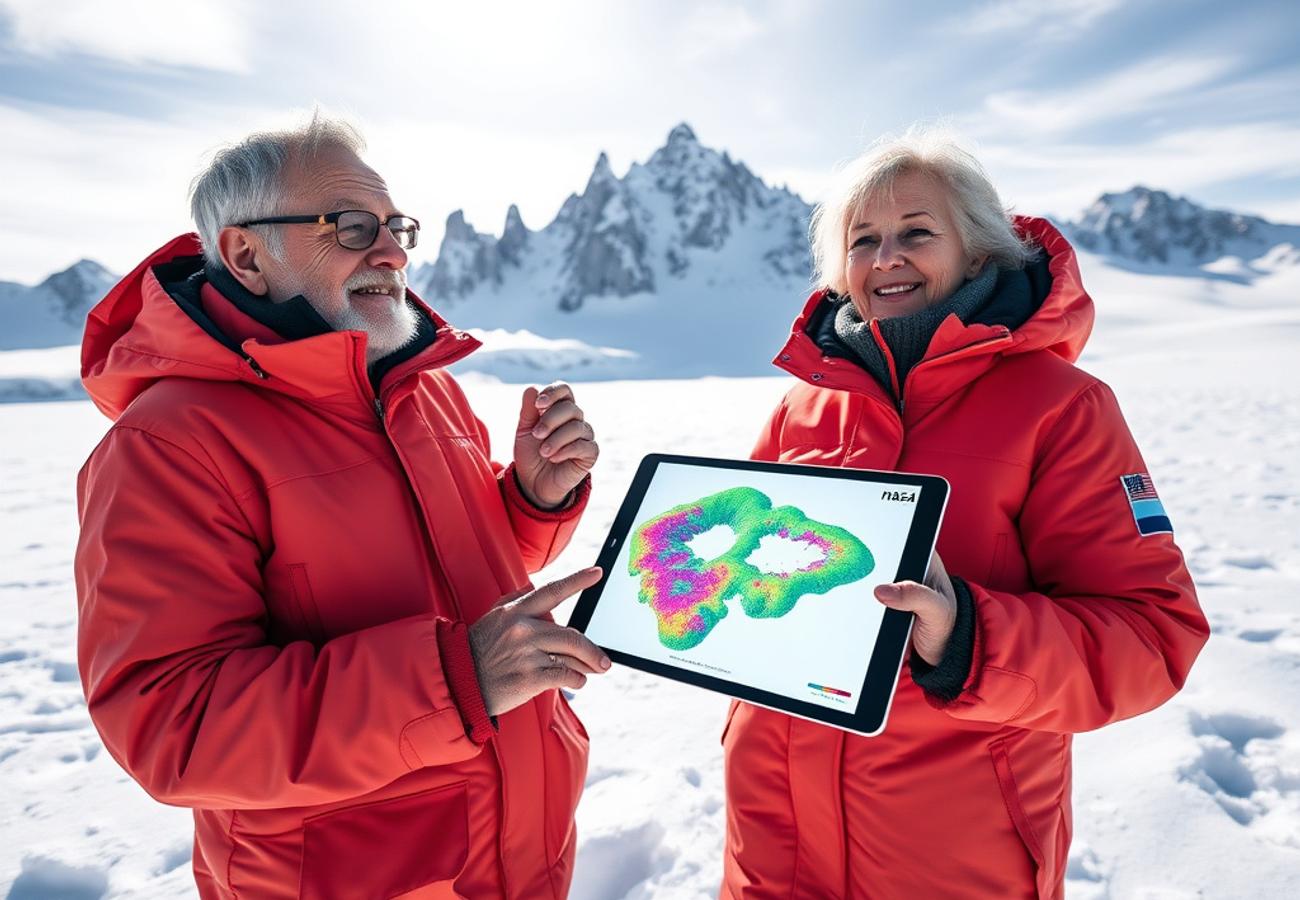
Image generated by AI
The coldest place on Earth just revealed a hidden masterpiece: a hummingbird-shaped formation buried beneath the ice of East Antarctica, captured by NASA’s most advanced radar technology.
The Local Trend Revealed: Seeing Through the Whiteout
For decades, Antarctica has remained one of the most difficult regions to map due to extreme lighting constraints and permanent cloud cover. However, a shift in orbital technology is changing how we perceive the frozen continent. The recent discovery of a "hummingbird" formation at Nunatak Zaterjavshijsja in the Prince Charles Mountains marks a milestone in planetary observation.
This is not a traditional photograph but a false-color synthetic aperture radar (SAR) map captured in August 2025. Using the L-band Synthetic Aperture Radar (L-SAR) from the NISAR (NASA-ISRO Synthetic Aperture Radar) satellite, scientists have stripped away the deceptive "all-white" blanket of snow to reveal the structural skeleton of the land.
The image utilizes a specific color palette to translate radar signals:
- Magenta: Indicates smooth ground.
- Green: Highlights rough, cracked surfaces and deep crevasses.
- White: Represents areas where signals scatter back strongly, indicating significant surface and volume scattering.
Cultural & Environmental Value: Beyond the Aesthetic
For the visitor and the global citizen, the real impact of the "hummingbird" is not its shape, but what it reveals about the fragility of our climate. The formation shows that the topography of Nunatak Zaterjavshijsja disrupts the flow of ice streams moving northeast toward the ocean. As the glacier hits this rocky obstruction, the resulting pressure creates the vibrant green fractures seen in the imagery.
By utilizing the NISAR satellite—a joint venture between NASA and the Indian Space Research Organisation (ISRO)—glaciologists can now track these movements with centimeter-scale precision. This allows for more accurate predictions regarding global sea-level rise, turning a visual curiosity into a vital tool for environmental survival.
The mission, which launched from India's Satish Dhawan Space Centre on July 30, 2025, represents a global effort to monitor ecosystems and track disasters in real-time, providing data every 12 days regardless of winter darkness.
Technical Marvels of the NISAR Mission
The ability to "see" a hummingbird in the ice is made possible by three specific engineering breakthroughs:
| Innovation | Function | Impact on Antarctic Mapping |
|---|---|---|
| Dual-Frequency Radar | Active L-band and S-band microwave signals | Eliminates the need for sunlight; works in total darkness |
| 12-Meter Reflector | Largest deployable wire-mesh antenna launched by NASA | Provides unprecedented resolution of remote terrains |
| 12-Day Repeat Orbit | Fine-tuned polar trajectory | Tracks subtle glacier shifts every 12 days |
Visitor Insider Tips: Engaging with the Frozen Frontier
While Nunatak Zaterjavshijsja is far too remote for standard tourism, those drawn to the "Extreme South" should keep these insider perspectives in mind:
- The Window of Access: For those visiting the Antarctic Peninsula, the peak window is November to February. However, for those interested in the "deep field" science of East Antarctica, the only way to experience this is through specialized research support programs.
- Digital Exploration: You don't need to fly to the South Pole to see this data. All L-band data is distributed via the Alaska Satellite Facility Distributed Active Archive Center in Fairbanks, allowing armchair explorers to download raw SAR files.
- Cultural Etiquette: When visiting research hubs like McMurdo or Esperanza, remember that you are entering a working scientific community. Respect "quiet zones" and strictly adhere to the Antarctic Treaty's waste management protocols to protect the pristine environment.
- Eco-Focus: Support operators that are members of the International Association of Antarctica Tour Operators (IAATO) to ensure your visit minimizes the carbon footprint on the ice.
Tourism Outlook: The Rise of "Science Tourism"
The discovery of the hummingbird formation signals a growing trend in "Science Tourism," where travelers are no longer satisfied with just seeing penguins and icebergs. There is a rising demand for itineraries that connect visitors with active research stations and the technology used to monitor climate change. As NASA and ISRO continue to release data, the fascination with the "hidden" Antarctica will likely drive more interest in high-latitude expeditions and educational travel.
A reminder that the most beautiful things on Earth are often the ones we cannot see with the naked eye.
Related Travel Guides
Disclaimer
This article is for informational and educational purposes only. It does not constitute legal, financial, or professional advice. While we strive to provide accurate and up-to-date information, travel policies, regulations, and conditions change rapidly. Always verify information with official sources before making travel decisions. Nomad Lawyer makes no representations about the accuracy, reliability, completeness, or suitability of the information provided. Readers should consult qualified professionals for advice specific to their circumstances. The views expressed in this article are those of the author and do not necessarily reflect the views of Nomad Lawyer.
Raushan Kumar
Founder & Lead Developer
Full-stack developer with 11+ years of experience and a passionate traveller. Raushan built Nomad Lawyer from the ground up with a vision to create the best travel and law experience on the web.
Learn more about our team →