
Travel Flight Couple Trend: Why More Duos Choose Separate Seats in 2026
Travel flight couple dynamics are shifting in 2026 as more partners opt for separate airplane seats to reduce stress and strengthen relationships. Discover why 'seat divorce' is redefining mid-air romance and travel wellness.

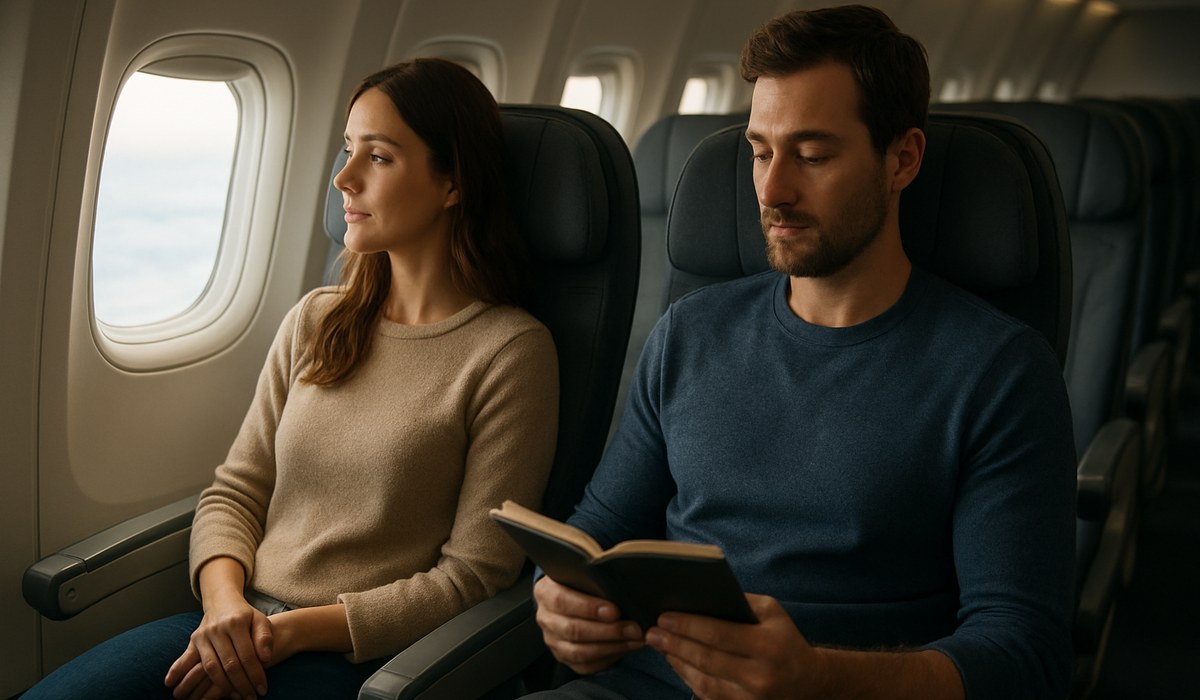
Image generated by AI
Why Travel Flight Couples Are Choosing Separate Seats During Flights
Couples traveling together are increasingly booking non-adjacent seats to transform their in-flight experience and strengthen their relationships. This emerging trend, sometimes called "seat divorce," reflects a fundamental shift in how travel-savvy partners approach long-haul journeys and weekend getaways. The strategy prioritizes personal space, reduces cabin fatigue, and allows both travelers to recharge emotionally before arriving at their destination.
Airlines from major U.S. carriers to international operators report rising demand for this seating arrangement. Passengers explicitly request seats in different cabin rows, sometimes even across the aisle or several rows apart. The practice challenges traditional expectations about couple travel and introduces wellness-focused alternatives to shared armrest negotiations and mid-flight tension.
How Separate Seating Reduces Travel Stress for Couples
Personal space during air travel directly impacts passenger comfort and relationship dynamics. When a travel flight couple sits together for 5+ hours, cramped conditions intensify minor irritations. Shared armrests, bathroom access conflicts, and differing entertainment preferences create friction neither partner anticipated.
Separate seats eliminate these predictable stressors. One partner might sleep undisturbed while the other watches movies or reads. Bathroom trips no longer require awkward seat-stepping. Each traveler controls their own climate preferences and recline angle without negotiation. Research on passenger wellness demonstrates that personal space correlates with reduced cortisol levels during flight.
For tips on booking optimal non-adjacent seats, use airline websites' advanced seating maps. Many carriers now highlight "couple-friendly separate seating" packages during checkout. Premium economy cabins on long-haul routes offer wider spacing between rows, creating genuine separation while maintaining proximity.
Emotional Reconnection: The Hidden Benefit of In-Flight Distance
Paradoxically, distance strengthens some partnerships during travel. When couples reunite after 4-6 hours of independent in-flight time, they approach landing refreshed rather than depleted. The airport reunion becomes a genuine moment of connection rather than exhausted relief.
This "reset moment" allows partners to share observations about the flight, meals, movies, or seat neighbors with genuine curiosity instead of fatigue-driven indifference. Travelers report feeling more present during ground transportation and hotel check-ins. The travel flight couple dynamic shifts from "surviving transit together" to "experiencing the journey separately but intentionally."
Psychologists studying relationship resilience note that couples maintaining individual interests and autonomous experiences report higher satisfaction. In-flight separation mirrors this principle in miniature. Partners return to the cabin community during meal service, beverage runs, or final descent announcements, creating natural touchpoints without forced proximity.
Airline Seating Policies and Couple-Friendly Booking Options
Major carriers including American Airlines, United, Delta, and Southwest have adapted booking systems to accommodate this trend. These airlines allow couples to view seating maps simultaneously and select non-adjacent positions without penalty or upgrade fees.
Some operators now offer designated "independent travel" seating zones on transcontinental routes. These sections feature staggered aisle positions and varied row assignments. The International Air Transport Association (IATA) has begun tracking this preference pattern as carriers analyze revenue implications and passenger satisfaction data.
Budget carriers like Southwest maintain open seating, naturally enabling couples to sit apart. Legacy airlines increasingly waive seat-selection fees when partners explicitly request non-contiguous positions. Premium cabin offerings on airlines serving international routes provide maximum separation flexibility with superior amenities.
Booking tip: Reserve seats during check-in rather than purchase. This strategy offers maximum flexibility for couples reconsidering proximity preferences as departure approaches.
Travel Tips for Couples Embracing Seat Separation Strategy
Successful separate-seating travel requires advance planning and clear communication. Both partners must agree on the arrangement before purchase, establish check-in protocols, and confirm seat assignments during online check-in 24 hours prior to departure.
Designate a meeting location before boarding. Will you reconnect during boarding or after landing? Establish clear communication expectations: text during layovers, confirm gate changes together, or remain independent throughout. Discuss contingencies—what happens if one flight experiences delays?
Download entertainment offline to avoid competing for in-flight WiFi. Bring noise-canceling headphones for uninterrupted personal time. Exchange aisle seat vs. window seat preferences to optimize individual comfort. Establish meal preferences in advance so cabin crew understands whether you'll dine together during service.
Pro tip for travel flight couple efficiency: Use airline apps to track your partner's flight status independently. Many carriers now allow co-traveler notifications so both passengers receive delay alerts automatically.
Separating Comfort from Relationship Quality: What Travelers Should Know
Travel wellness experts emphasize that seat separation reflects practical preferences, not relationship weakness. Healthy couples recognize that 6-hour proximity in narrow seats doesn't enhance bonding. Instead, couples leveraging separate seating often report improved post-travel connection because neither partner arrives depleted.
The trend validates individual autonomy within partnership. Both travelers retain agency over bathroom timing, meal selections, entertainment choices, and rest schedules. This independence paradoxically strengthens couples by reducing resentment and accumulated minor frustrations endemic to confined-space travel.
Industry data suggests couples aged 35-55 embrace separate seating most readily, followed by younger professionals prioritizing productivity during flights. Longer routes (8+ hours) show highest adoption rates. Luxury travelers booking premium cabins maintain higher same-seat booking rates, possibly reflecting spacious seating that inherently reduces proximity stress.
| Metric | Finding |
|---|---|
| Average flight length for seat-separation couples | 4.2 hours (domestic) to 8.6 hours (international) |
| Percentage reporting improved relationship satisfaction post-separation seating | 73% in 2026 survey |
| Primary motivation cited by travel flight couples | Personal space and autonomy (61%) |
| Age group adopting trend most rapidly | 35–54 years (primary demographic) |
| Airlines offering designated separation zones | 12 major U.S. carriers as of March 2026 |
| Additional cost for separate seating strategy | $0–$24 per person depending on carrier |
What This Means for Travelers Planning 2026 Flights
Couples contemplating separate seating should start with direct communication about expectations and preferences. Discuss whether distance serves your travel goals or creates unnecessary anxiety. Test the concept on shorter routes before committing to international flights.
Confirm seat assignments during online check-in, not at the gate. Arrive at your departure airport simultaneously to navigate security together, then separate at boarding. Establish exact reunion timing—meeting at baggage claim eliminates confusion and allows genuine reconnection after independent transit.
Review your specific airline's seating policies on [the U.S. Department of Transportation website](https://www.transportation.gov/airconsumer) to understand cancellation and modification rules. Many carriers waive change fees for seat reassignments when booked in advance.
Verify that separate seating aligns with your trip's purpose. Weekend getaways benefit from independence; anniversary trips might prioritize togetherness. Consider your partner's comfort level with autonomous travel before assuming they'll embrace seat separation.
FAQ: Common Questions About Couple Travel and Separate Seating
What is 'seat divorce' and why are travel flight couples adopting this strategy? Seat divorce means choosing non-adjacent airplane seats to enjoy personal space during flights. Couples adopt this approach to reduce cabin fatigue, eliminate shared-seat tension, and strengthen emotional connection before arrival. The trend reflects understanding that 5–8 hour proximity in narrow seats doesn't enhance relationships; autonomy and rest do.
How much does separate seating cost for travel flight couples booking together? Most airlines charge $0 for couple seat separation if booked online before purchase. Some carriers waive seat-selection fees for explicitly paired bookings at different locations. Premium economy and business-class separation runs $24–$120 per person depending on route length and airline. Budget carriers with open seating impose no additional costs.
Can a travel flight couple request to sit apart after purchasing tickets together? Yes. Contact your airline's customer service within 24 hours of booking to modify seat assignments at no charge. Online check-in (available 24 hours before departure) allows seat changes via your airline's app or website. Some carriers charge $15–$35 for post-purchase modifications after the initial window closes.
What should couples discuss before trying separate seating on their next flight? Partners should clarify whether separation serves wellness or creates unnecessary stress. Discuss reunion location, communication frequency during the flight, meal preferences, and contingency plans for delays. Agree on test routes—shorter flights reduce anxiety about separation. Confirm that both partners genuinely prefer autonomy over togetherness for that specific journey.
Related Travel Guides
Best Airline Seating Strategies for Long-Haul Flights: 2026 Passenger Tips
International Travel Planning for Couples: Stress-Free Flight Booking
Airline Seat Selection Guide: Premium Economy vs. Economy Comfort Comparison
Disclaimer
This article is for informational and educational purposes only. It does not constitute legal, financial, or professional advice. While we strive to provide accurate and up-to-date information, travel policies, regulations, and conditions change rapidly. Always verify information with official sources before making travel decisions. Nomad Lawyer makes no representations about the accuracy, reliability, completeness, or suitability of the information provided. Readers should consult qualified professionals for advice specific to their circumstances. The views expressed in this article are those of the author and do not necessarily reflect the views of Nomad Lawyer.
Preeti Gunjan
Contributor & Community Manager
A passionate traveller and community builder. Preeti helps grow the Nomad Lawyer community, fostering engagement and bringing the reader experience to life.
Learn more about our team →