
F-22 Raptor Fighter Jet: Why Only US Air Force Operates This Elite Stealth Aircraft
The F-22 Raptor fighter jet remains exclusively operated by the US Air Force in 2026 due to strict 1998 export restrictions. Learn why this stealth aircraft differs from the internationally-distributed F-35 Lightning II.

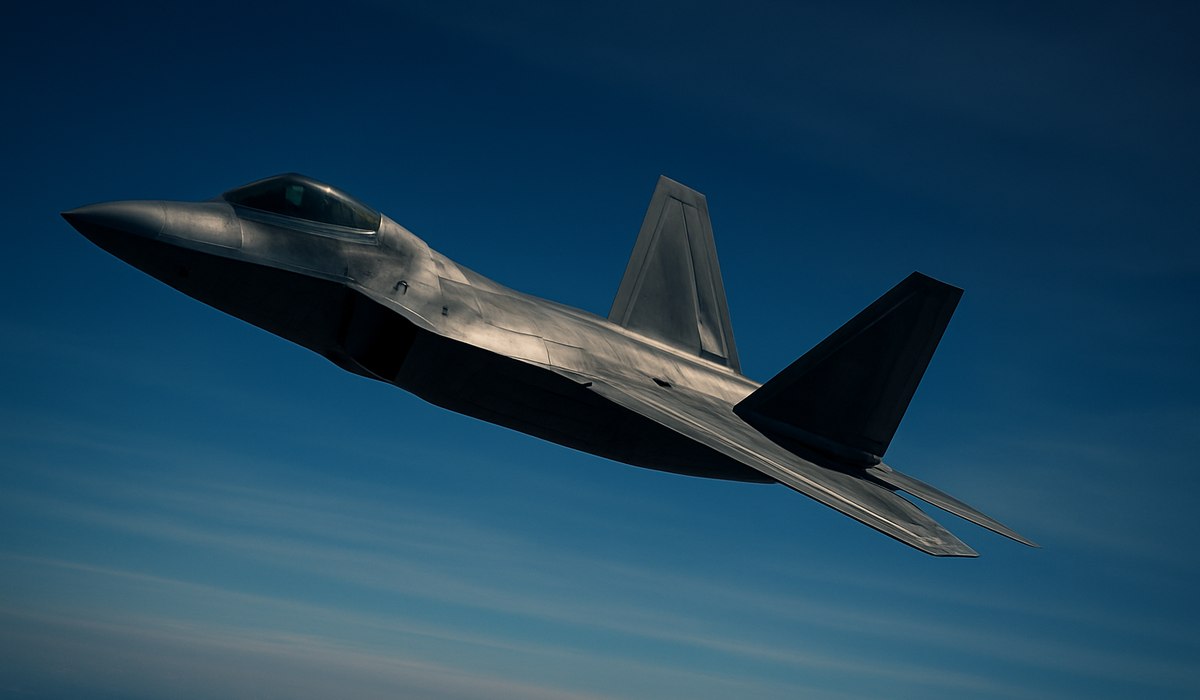
Image generated by AI
The F-22 Raptor Fighter Jet Remains Exclusively American
The F-22 Raptor fighter jet stands as the world's most advanced stealth aircraft—and the US Air Force is its only operator globally. Since 1998, strict federal export restrictions have prevented this fifth-generation combat platform from reaching allied nations. Unlike its successor, the Lockheed Martin F-35 Lightning II, the F-22 Raptor was engineered as an uncompromising air superiority weapon designed for absolute dominance, not international collaboration.
The F-22 Raptor: A Silver Bullet for Air Dominance
The F-22 Raptor fighter jet entered service with the US Air Force in 2005 as the world's first operational fifth-generation fighter. Its design philosophy prioritizes stealth, supercruise capability, and advanced sensor fusion over export versatility. With a unit cost exceeding $150 million per aircraft, the Raptor represents cutting-edge aerospace engineering featuring active electronically scanned array radar, two-dimensional thrust vectoring, and supermaneuverability.
This technological sophistication directly correlates with its restricted export status. The aircraft's sensor systems, manufacturing processes, and combat algorithms contain classified technologies deemed too sensitive for international distribution. The US Department of Defense treats the F-22 Raptor as a cornerstone of American air superiority doctrine, justifying its exclusive operational status within the US Air Force fleet.
Why Export Restrictions Exist
In 1998, Representative David Obey introduced a pivotal amendment to the Department of Defense Appropriations Act that fundamentally blocked international sales of the F-22 Raptor fighter jet. This legislative action reflected Cold War-era concerns about advanced military technology proliferation and strategic advantage preservation. The amendment remains active today, creating an absolute prohibition on foreign military sales.
Export restrictions stem from legitimate national security considerations. The F-22 Raptor's integrated avionics systems, stealth materials composition, and combat tactics represent asymmetric advantages that policymakers determined were too valuable to risk. Even close NATO allies like Canada, Australia, and the United Kingdom—despite possessing F-35 variants—have never received F-22s. The US government views this restriction as essential to maintaining air force supremacy and geopolitical leverage in contested regions.
F-22 vs F-35: Design Philosophy Differences
The F-22 Raptor fighter jet and F-35 Lightning II represent fundamentally different procurement philosophies. The F-35 was explicitly designed as a multinational platform, incorporating allied input during development and offering multiple variants for different operational requirements and air forces worldwide.
The F-22 Raptor, conversely, was conceived exclusively for US Air Force requirements with no international partnership framework. Its development prioritized air-to-air superiority over ground strike versatility, reflecting earlier threat assessments that emphasized peer-state air combat. The F-35 accommodates 19+ allied nations including Japan, South Korea, Poland, and Australia. Meanwhile, the F-22 Raptor fleet of approximately 185 operational aircraft serves solely under US command and control.
This architectural divergence explains why aviation analysts often describe the Raptor as "America's stealth monopoly" while the F-35 represents "the fighter jet commons."
Global Impact of US Export Policy
The exclusive US Air Force operation of the F-22 Raptor fighter jet shapes international military procurement decisions and alliance structures. Allied nations seeking fifth-generation capability must choose the F-35, creating standardization pressures across NATO and Pacific alliances. This policy indirectly strengthens F-35 ecosystem dominance while preserving American asymmetric advantages.
Export restrictions also influence defense contractor strategies. Lockheed Martin structured the F-35 program to accommodate international participation precisely because the F-22 Raptor export ban demonstrated market limitations for restricted platforms. Turkey's F-35 program suspension in 2019 occurred partly because F-22 restrictions were never an option, eliminating leverage in that relationship.
The F-22 Raptor exemplifies how defense technology export controls reshape geopolitical alignments, procurement timelines, and alliance relationships for decades. Understanding this dynamic requires consulting authoritative sources like the US Department of Defense and Congressional Research Service.
Key Data Table: F-22 Raptor vs F-35 Lightning II
| Specification | F-22 Raptor | F-35 Lightning II |
|---|---|---|
| Operational Status | Active since 2005 | Active since 2015 |
| Primary Operators | US Air Force only | 19+ nations |
| Export Restrictions | Complete ban (1998 amendment) | Limited restrictions |
| Unit Cost | ~$150 million | ~$130 million |
| Total Fleet Size (US) | ~185 aircraft | 500+ aircraft (growing) |
| Design Philosophy | Exclusive air superiority | Multinational interoperability |
| Variants Available | None | A, B, C (for different services) |
What This Means for Travelers
While the F-22 Raptor fighter jet rarely appears in civilian travel contexts, aviation enthusiasts and military history researchers should understand air show accessibility and defense facility tours:
-
Air Show Access: The US Air Force frequently demonstrates the F-22 Raptor at major air shows like Nellis AFB airshows, though photography restrictions apply.
-
Defense Museum Visits: The National Museum of the US Air Force in Dayton, Ohio displays F-22 historical materials and development documentation available to public visitors.
-
Flight Training Observation: Aviation museums occasionally feature declassified F-22 training videos accessible through official military channels.
-
Aerospace Industry Tours: Companies like Lockheed Martin in Marietta, Georgia offer public tour schedules covering F-22 manufacturing legacies, though current production areas remain restricted.
-
International Aviation Conferences: Defense aviation symposiums in Washington DC often feature discussions on the F-22 Raptor export policy and its strategic implications.
Frequently Asked Questions
Why can't countries like Canada or the UK buy F-22 Raptors? The 1998 Congressional amendment prohibits F-22 exports entirely. Unlike the F-35, which accommodates allied nations through structured partnerships, the F-22 Raptor fighter jet was never designed for international sales. The US government treats this technology as strategically irreplaceable for American air dominance.
Is the F-22 Raptor better than the F-35 Lightning II? "Better" depends on mission parameters. The F-22 Raptor excels at air-to-air superiority and operates in unrestricted airspace. The F-35 emphasizes ground strike versatility, allied interoperability, and sensor network integration. Different tools serve different operational doctrines.
Could export restrictions on the F-22 ever change? Congressional amendment reversal would require legislative action. Current geopolitical conditions and strategic advantage maintenance make reversal unlikely. The F-22 Raptor remains positioned as an irreplaceable American asset rather than an exportable commodity.
How many F-22 Raptors does the US Air Force operate? Approximately 185 F-22s are operationally deployed across multiple bases including Nellis, Langley, and Elmendorf-Richardson. This represents the complete authorized fleet under current congressional appropriations.
Related Travel Guides
- Germany Flight Chaos: 842 Cancellations and 124 Delays Strike Frankfurt, Munich, Hamburg, Düsseldorf and Major Airports as Lufthansa, Cityline Face Massive Disruptions—Complete Travel Alert Update April 2026
- London Pass Unlocks 100+ Attractions – Save 49% Now
- American Airlines Unveils First-Ever Sports Livery Celebrating FIFA World Cup 26
Disclaimer
This article is for informational and educational purposes only. It does not constitute legal, financial, or professional advice. While we strive to provide accurate and up-to-date information, travel policies, regulations, and conditions change rapidly. Always verify information with official sources before making travel decisions. Nomad Lawyer makes no representations about the accuracy, reliability, completeness, or suitability of the information provided. Readers should consult qualified professionals for advice specific to their circumstances. The views expressed in this article are those of the author and do not necessarily reflect the views of Nomad Lawyer.
Kunal K Choudhary
Co-Founder & Contributor
A passionate traveller and tech enthusiast. Kunal contributes to the vision and growth of Nomad Lawyer, bringing fresh perspectives and driving the community forward.
Learn more about our team →