Navigating the High Himalayas: What the Kaligandaki River Disruptions Mean for Mustang Travelers in 2026

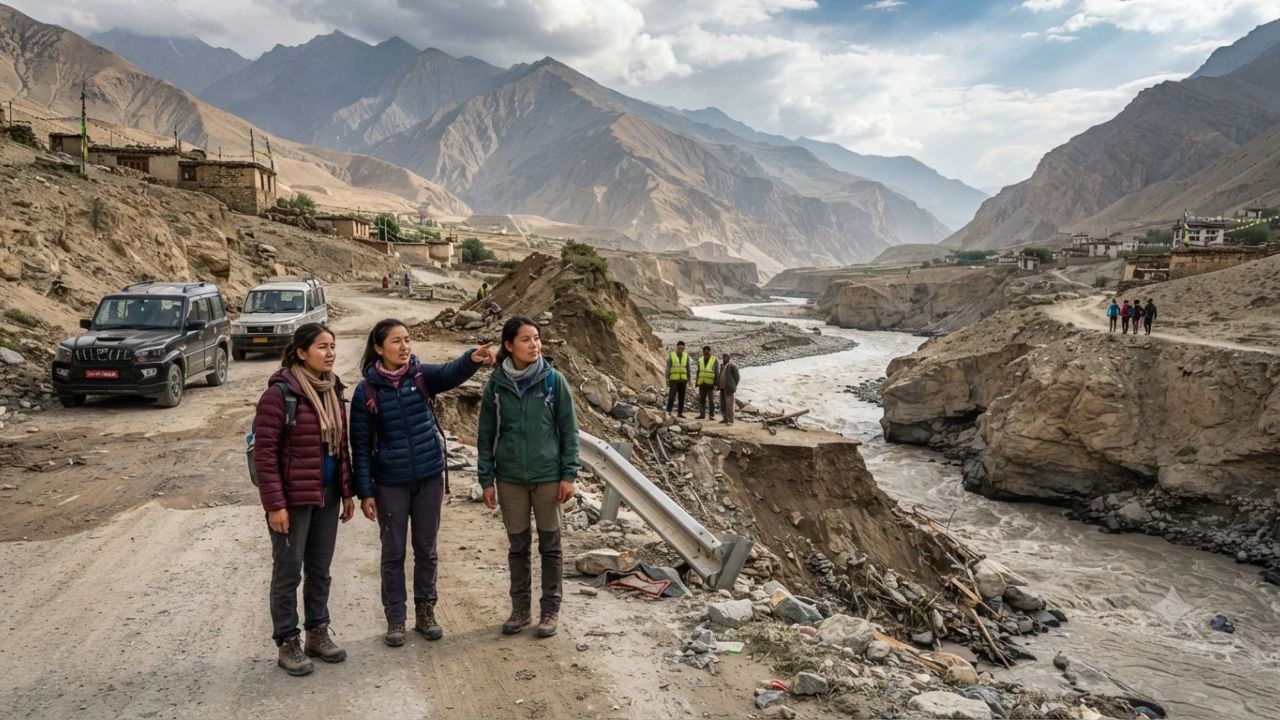
Even as monsoon flash floods along the Bhotekoshi-Trishuli river basin caused a 47.78 per cent plunge in total monthly arrivals across Mustang, long-haul international explorers defied the transit disruptions, increasing their numbers from 193 to 348 visitors. While domestic and regional pilgrimage traffic dropped significantly following severe road erosion along the Kaligandaki Corridor on August 26, the arid high-altitude kingdom north of the Annapurna massif continues to draw dedicated trekkers seeking ancient Tibetan Buddhist cave monasteries, wind-sculpted sandstone gorges, and the sacred pilgrimage shrine of Muktinath.
The official arrival statistics for the month of Bhadrapada (August 17 to September 16) illuminate how physical infrastructure impacts Himalayan mountain access. Mustang recorded 31,989 total visitors during this period, representing a steep decline of 29,274 travelers compared with the same month last year. Yet, beneath the headline drop lies a resilient destination where year-to-date arrivals have already crossed 93,252 visitors, proving the enduring magnetic pull of the trans-Himalayan rain shadow.
The Flood Disruption: Analyzing Mustang's Monthly Transit Drop
The geography of the Kali Gandaki River canyon—the deepest river gorge on earth—makes overland connectivity vulnerable to seasonal monsoon surges. When heavy flooding struck the Bhotekoshi-Trishuli river systems in late August, subsequent riverbank erosion and landslides damaged strategic vehicular choke points along the Kaligandaki Corridor, the sole overland highway linking Pokhara to Jomsom and Kagbeni.
The impact was felt primarily among overland road travelers from Nepal and neighboring SAARC countries who travel in chartered jeeps and buses to visit sacred pilgrimage sites.
| Travel Period & Origin | Sauna (Jul–Aug) Arrivals | Bhadrapada (Aug–Sep) Arrivals | Percentage Shift |
|---|---|---|---|
| Domestic Nepali Travelers | 30,655 | 16,503 | -46.16% |
| SAARC Regional Pilgrims | 31,575 | 15,138 | -52.05% |
| Non-SAARC Global Trekkers | 193 | 348 | +80.31% (+155 visitors) |
| Total Monthly Arrivals | 61,263 | 31,989 | -47.78% |
| Year-to-Date Total (2026) | — | 93,252 (47,158 domestic, 46,713 SAARC, 441 international) | High cumulative baseline |
While SAARC arrivals fell by 52.05 per cent due to overland transit delays, long-haul global travelers heading into restricted Upper Mustang and Soms secured flights into Jomsom Airport or adjusted trekking itineraries, highlighting the differing risk tolerances of adventure hikers versus family pilgrims.
What Sets the Kingdom of Mustang Apart
Mustang occupies a unique geographic and cultural enclave. Because it sits north of the main Himalayan spine behind Dhaulagiri and Annapurna, the district lies inside a high-altitude desert rain shadow, receiving less than 300 millimeters of annual precipitation while southern Nepal endures heavy monsoon downpours.
Culturally, the region is divided between Lower Mustang and Upper Mustang (the historic Kingdom of Lo). In Lower Mustang, the temple complex at Muktinath (Chumig Gyatsa) sits at 3,710 meters above sea level, venerated equally by Hindus for its eternal flame burning on water and Buddhists who believe Guru Rinpoche meditated here on his journey to Tibet.
Further north past Kagbeni, Upper Mustang preserves one of the purest surviving enclaves of classical Tibetan culture on earth. Ancient walled capitals like Lo Manthang feature 15th-century mudbrick palaces, Gompas adorned with exquisite Buddhist frescoes, and cliffside sky caves carved thousands of years ago into sheer sandstone bluffs.
Travelers can verify current trekking permits and restricted area regulations through the Department of Immigration Nepal.
Visitor Insider Tips: Timing, Altitude, and Mountain Transit Hacks
Navigating Mustang safely during weather transitions requires adopting local mountain wisdom and flexible itinerary buffers:
- Fly the Morning Mountain Gap to Jomsom: When the Kaligandaki Corridor road faces maintenance, book early morning flights from Pokhara to Jomsom Airport. Twin-Otter aircraft operate strictly between 6:30 AM and 10:30 AM before fierce thermal canyon winds sweep up the valley, grounding air traffic.
- Acclimatize Gradually in Kagbeni: Do not rush directly from Pokhara (820m) to Muktinath (3,710m) in a single day. Spend your first night in the medieval stone village of Kagbeni (2,800m) to allow your body to adapt to the thin atmosphere while sipping salted butter tea (suja).
- Feast on Local Buckwheat and Thakali Platters: Mustang's indigenous Thakali people are renowned across Nepal for culinary mastery. In Marpha and Jomsom, order authentic Thakali dal bhat featuring local black lentils, fragrant Jimbu herb tempering, mountain goat curry, and bitter buckwheat flatbreads (dhindo).
- Sample Sweet Marpha Apple Brandy: Marpha village is the apple capital of the Himalayas. Visit local stone-walled distilleries to taste crisp apple cider, sun-dried apple slices, and smooth traditional apple brandy aged in oak barrels.
- Consult the Conservation Checkpoints: Always register your ACAP entry permit at regional checkpoints and consult local lodge owners about trail conditions before crossing high mountain passes. Official trekking advisories are maintained by the Nepal Tourism Board.
Cultural and Environmental Context: Preserving Fragile High-Desert Heritage
The environmental fragility of the Kali Gandaki basin underscores the delicate balance between mountain infrastructure and ecological preservation. Constructing wide gravel highways across steep shale slopes accelerates slope instability during heavy rain events, impacting both road travelers and local farming communities.
In response, local conservation groups and the Annapurna Conservation Area Project (ACAP) are advocating for bio-engineering techniques—such as planting native Seabuckthorn along eroded riverbanks—to stabilize road cuts and protect downstream agricultural terraces.
Furthermore, tourism spending plays an indispensable role in mountain livelihoods. The 93,252 visitors welcomed this year directly support family-run tea houses, horse packers, mountain guides, and apple orchards across Jomsom, Marpha, and Lo Manthang. By supporting locally managed homestays and respecting sacred Buddhist chortens, travelers help high-altitude communities maintain their traditional heritage in the face of environmental change.
FAQ: Visiting Mustang in 2026
When is the best season to trek in Mustang?
Because Mustang lies in a rain shadow, it can be trekked during summer (June to August), though the prime trekking months with crystal-clear mountain views are autumn (September to November) and spring (March to May).
What permits are required to visit Upper Mustang?
Travelers visiting Upper Mustang north of Kagbeni require a Restricted Area Permit ($500 for the first 10 days per person), an ACAP permit, and must travel with a licensed Nepali guide.
How do travelers reach Mustang if the Kaligandaki Corridor road is closed?
Daily scheduled flights operate between Pokhara and Jomsom Airport, providing a scenic 20-minute flight that bypasses lower river gorges entirely.
Is Muktinath temple open year-round?
Yes, Muktinath remains open throughout the year, though winter brings heavy snowfall and sub-zero temperatures, making autumn and spring the most comfortable pilgrimage seasons.
[High above the roaring river gorge, the wind-carved stone monasteries of Mustang remind every traveler that true Himalayan magic belongs to those who embrace the journey.]
Related Travel Guides
- Delta Air Lines Network Pivot: 17 International Routes Axed as LAX Gains 5 New Strategic Connections in 2026-2027
- Spain Aligns With Italy and More as 7 Dream European Train Travel Destinations Invite Travellers
- Maldives’ Velaa Private Island Signals a Powerful New Era of Luxury Wellness Travel Ahead of 2027
This article is for informational purposes. Flight routes, passenger regulations, visa rules, and transit advisories are subject to change by airlines and aviation authorities. Readers are advised to verify schedules and travel documentation with relevant carriers and border agencies before departure.
Related Stories
Nepal's Pokhara Seeks Tourism Breakthrough: Overcoming Highway Bottlenecks, Airport Debt, and Operating Cost Pressures
Ayodhya Deepotsav 2026 Logistics Guide: Attending the 30 Lakh Lamp Festival in India