
Munich's Uber Robotaxis: How Self-Driving Tech Transforms Tourism
Uber launches Level-4 autonomous robotaxis in Munich, revolutionizing how tourists navigate the city. Germany's regulatory framework supports the pilot, promising seamless sightseeing and sustainable urban travel.

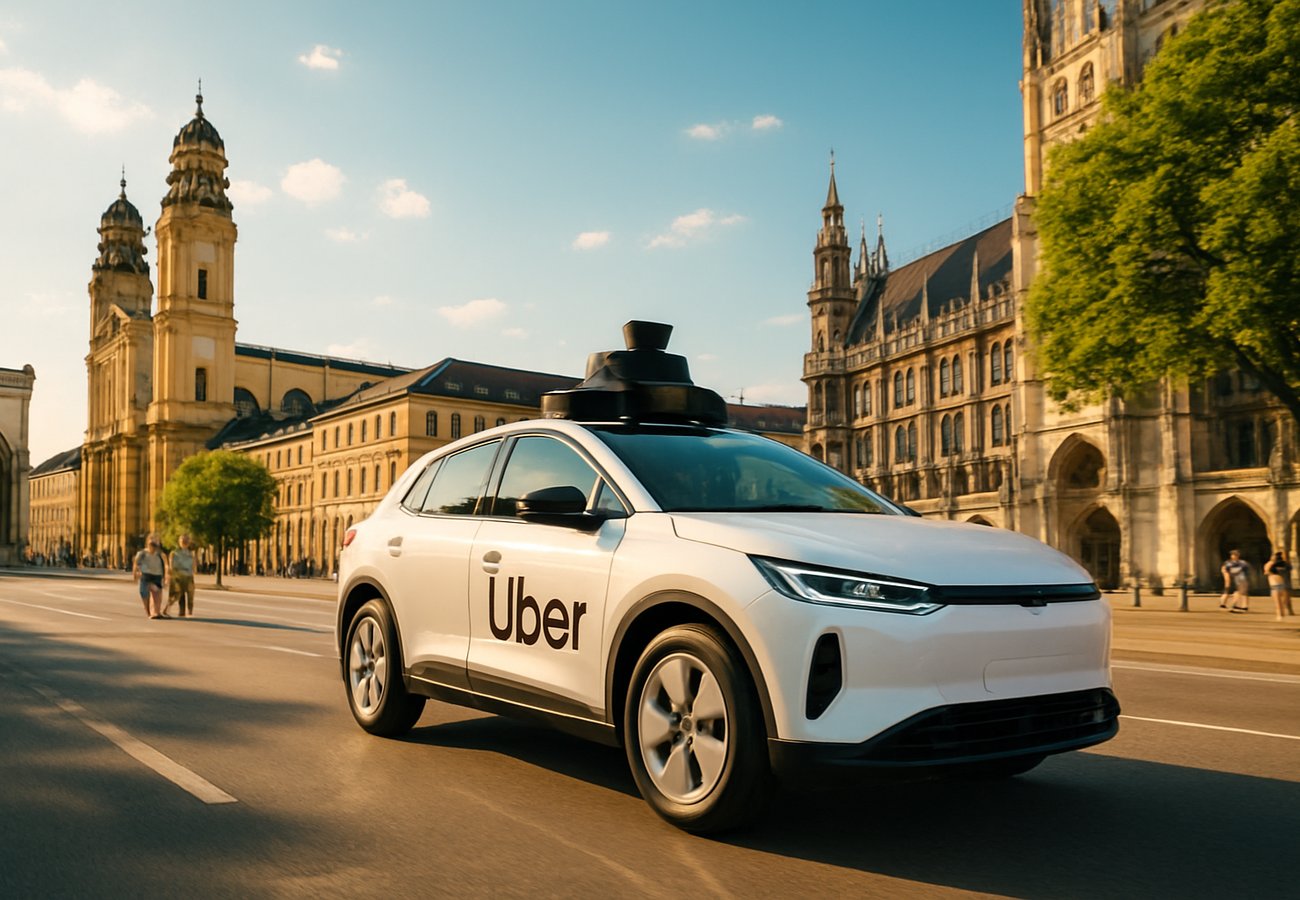
Image generated by AI
Munich is about to rewrite the rulebook on urban tourism. Uber is rolling out autonomous robotaxis on the city's public streets, and this isn't just another tech demo—it's a fundamental shift in how visitors will experience one of Europe's most iconic destinations.
Picture this: You land at Munich Airport, grab your phone, and within minutes, a sleek autonomous vehicle glides up to collect you. No driver small talk. No navigation confusion. Just a direct line to Marienplatz, the English Garden, or the BMW Museum. This is the reality Munich is building right now.
The Technology Powering Munich's Robotaxi Revolution
The backbone of Munich's pilot programme rests on a partnership between Uber, Autobrains (an AI-focused autonomous systems company), and Nvidia, which provides the technical framework for advanced self-driving operations.
The vehicles operate under Level-4 autonomy—the second-highest tier of self-driving capability. This means they can navigate predefined urban areas without a human driver present. No safety driver. No steering wheel ready to intervene. The system handles it all.
Reddit: "Finally, a city that's actually letting autonomous vehicles operate properly. Munich gets it." — r/technology
This integration of ride-hailing expertise with cutting-edge AI technology positions Munich as a genuine innovation leader. Autobrains handles the autonomous navigation intelligence, while Nvidia's computing platform ensures the vehicles process environmental data in real-time—detecting pedestrians, reading traffic signals, and anticipating urban hazards faster than any human driver could.
Germany's Legal Framework: The Secret Sauce
What makes Munich different from dozens of other robotaxi pilots worldwide? Germany's regulatory environment. The country has established clear, comprehensive guidelines for autonomous vehicle testing and deployment.
These regulations provide the scaffolding that allows companies like Uber to operate Level-4 vehicles in real urban conditions while maintaining rigorous safety oversight. For tourists, this translates into confidence. You're not participating in a sketchy beta test—you're using a vehicle that's been vetted against some of Europe's strictest transportation safety standards.
Germany's approach aligns with the broader European Union's regulatory push toward autonomous mobility, creating a legal corridor that other cities will likely follow.
Why This Matters for Tourism
Autonomous robotaxis don't just move people from point A to point B—they fundamentally alter the tourist experience.
Consider the friction points that plague international travelers: navigating unfamiliar public transit systems, deciphering local language on signs, negotiating with taxi drivers, or trusting rental car navigation through narrow medieval streets. Robotaxis eliminate these pain points entirely.
A visitor to Munich can now spend less mental energy on transportation logistics and more time actually experiencing the city. The robotaxi handles route optimization automatically, provides direct transportation without transfers, and operates 24/7 without the variability of human drivers.
The pilot programme is OEM-agnostic, meaning autonomous systems can operate across multiple vehicle brands. This flexibility ensures the service can scale and integrate seamlessly into Munich's existing ecosystem of trams, buses, and rental bikes—not replace it.
The Sustainability Angle
Munich isn't pursuing autonomous vehicles purely for convenience. The city has explicit sustainable tourism goals.
Traditional taxis and personal rental vehicles generate significant emissions. Robotaxis, typically electric or hybrid-electric, reduce the carbon footprint of urban sightseeing. When thousands of tourists shift from conventional taxis to autonomous EVs, the cumulative environmental impact becomes substantial.
This positions Munich as a destination that takes green travel seriously—a growing priority for environmentally conscious international travelers, particularly younger demographics planning European vacations.
Local Business Implications
Hotels, tour operators, and hospitality businesses are watching this development closely. Autonomous robotaxis create new opportunities for premium service offerings.
Imagine a luxury hotel offering robotaxi vouchers to guests for guaranteed seamless airport transfers and excursion access. Tour operators could integrate robotaxi pickup services into cultural packages. Restaurants could become more accessible to tourists who previously avoided them due to perceived location difficulty.
The technology becomes a competitive advantage for establishments positioned to leverage it effectively.
Safety: The Non-Negotiable Foundation
Germany's regulatory framework doesn't just enable innovation—it enforces rigorous safety validation. Level-4 vehicles undergo extensive real-world testing in controlled environments before carrying passengers in mixed traffic.
The pilot programme will initially operate within designated areas, gradually expanding as authorities validate performance metrics. This isn't impatience disguised as innovation. It's methodical risk management.
For tourists unfamiliar with the tech, knowing that German authorities personally validated these vehicles provides psychological assurance that matters.
Munich's Competitive Positioning
Cities compete for tourists. Venice has history. Barcelona has beaches. London has cultural institutions. Munich is leveraging technological sophistication as a differentiation strategy.
The city markets itself as simultaneously historic and forward-thinking. Oktoberfest coexists with autonomous vehicles. Medieval Marienplatz operates alongside Level-4 AI systems. This duality appeals to travelers seeking both authentic cultural immersion and modern experiences.
Uber's robotaxi programme reinforces Munich's positioning as Germany's innovation capital while maintaining the cultural authenticity that drew tourists there originally.
What Happens Next
The robotaxi programme unfolds in phases. Initial deployment targets high-traffic tourist zones and major transportation hubs. Performance data informs expansion decisions. Tourist feedback shapes service refinement.
The programme promises to fundamentally reshape how visitors navigate Munich. Less time stressed about getting somewhere. More time experiencing the city itself. That's the real innovation—not the technology, but the reclaimed human experience it enables.
Munich's streets are about to become a showcase for the future of smart tourism. Welcome to the next generation of urban travel.
Related Travel Guides
Boeing Higher MTOW 787-9 and 787-10 Dreamliners Cleared by FAA in April 2026
Disclaimer
This article is for informational and educational purposes only. It does not constitute legal, financial, or professional advice. While we strive to provide accurate and up-to-date information, travel policies, regulations, and conditions change rapidly. Always verify information with official sources before making travel decisions. Nomad Lawyer makes no representations about the accuracy, reliability, completeness, or suitability of the information provided. Readers should consult qualified professionals for advice specific to their circumstances. The views expressed in this article are those of the author and do not necessarily reflect the views of Nomad Lawyer.
Raushan Kumar
Founder & Lead Developer
Full-stack developer with 11+ years of experience and a passionate traveller. Raushan built Nomad Lawyer from the ground up with a vision to create the best travel and law experience on the web.
Learn more about our team →