
Mumbai Suburban Rail Upgrade Speeds Up with 238 Vande Metro Trains
Indian Railways is accelerating production of 238 Vande Metro suburban trains across three factories to upgrade Mumbai's commuter network by 2030.

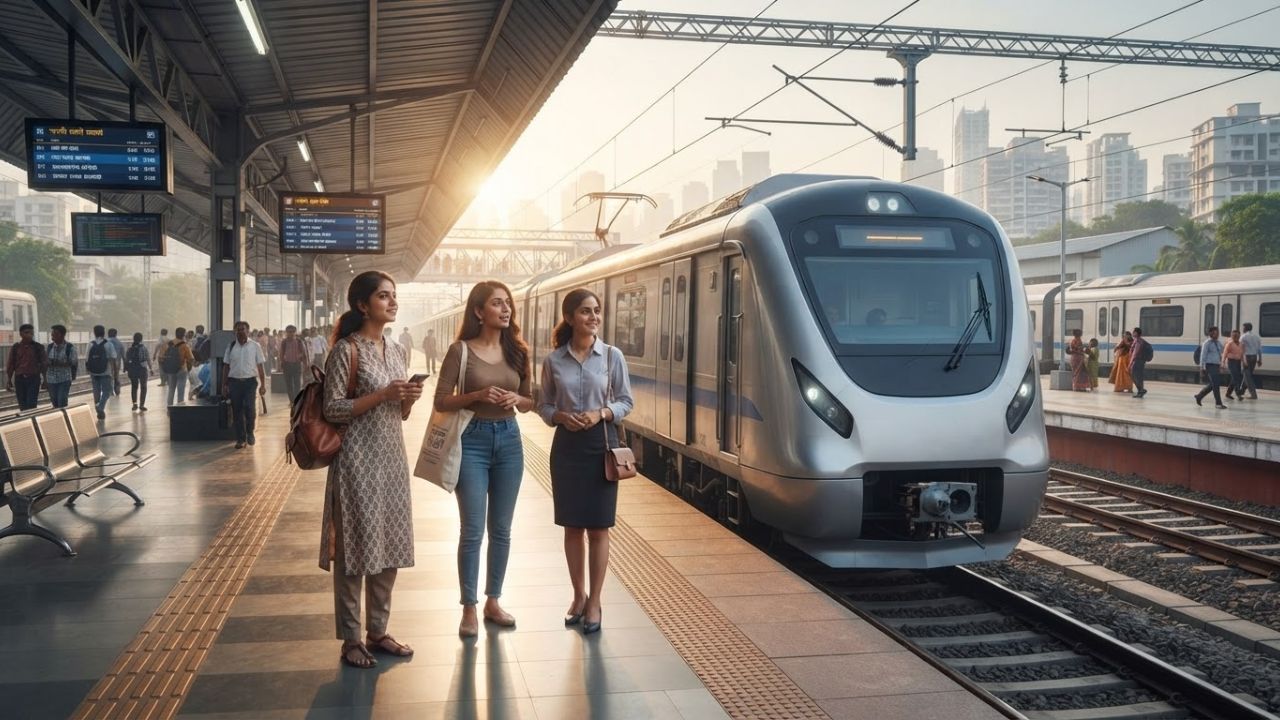
Image generated by AI
Indian Railways has accelerated the manufacturing phase for 238 modern Vande Metro train sets, marking a major upgrade for Mumbai's suburban rail network. Shifting from the previous external procurement model, the government has decided to produce the new air-conditioned suburban fleet directly through three established state-owned manufacturing facilities. This revised in-house production strategy aims to speed up delivery, strengthen domestic rail technology, and improve daily travel comfort for the network's million-plus commuters.
In-House Manufacturing Shift and Production Strategy
The decision to manufacture the Vande Metro suburban fleet domestically follows a review of the earlier procurement process, which was initiated in 2025. After extending the tender timeline several times to examine the project's financial and technical structures, transport authorities opted to utilize India's own experienced coach factories. The production responsibilities will be shared among three major centers: the Integral Coach Factory (ICF) in Chennai, the Rail Coach Factory (RCF) in Kapurthala, and the Modern Coach Factory (MCF) in Rae Bareli.
Each of these three manufacturing facilities brings a wealth of engineering expertise to the project. ICF Chennai is one of the world's largest coach builders, responsible for pioneering the original Vande Bharat trainsets and leading the design and prototype phase of the Vande Metro. RCF Kapurthala has a long history of producing Linke Hofmann Busch (LHB) high-speed passenger coaches, while MCF Rae Bareli represents a modern, state-of-the-art facility equipped with automated assembly systems. By sharing the production of the 238 trainsets, Indian Railways aims to maintain strict control over design quality and delivery schedules, allowing the three factories to share raw material sourcing, engineering drawings, and manufacturing tools.
The transition from a global tender process to direct in-house manufacturing also reflects economic considerations. The initial tender, launched in 2025, sought international suppliers to provide 2,856 air-conditioned suburban coaches alongside long-term maintenance support. However, negotiations and tender evaluations faced delays, leading authorities to conclude that utilizing existing domestic capacity would be more efficient. Direct production allows Indian Railways to optimize cost structures, bypass complex international procurement contracts, and support the national vision for domestic industrial development.
Technical Configuration and Commuter Upgrades
The primary objective of the Vande Metro program is to deploy 2,856 air-conditioned coaches to modernize Mumbai's suburban transport network. The proposed trains will be configured in different formations, including 12-car, 15-car, and 18-car trainsets. This flexibility allows transit operators to adjust capacity based on passenger demand. For example, 18-car formations can be deployed on high-density corridors like CSMT to Kalyan or Churchgate to Virar, helping to relieve overcrowding during rush hours.
Commuters can expect significant upgrades in passenger facilities and coach interiors. The Vande Metro trains will feature:
- Fully Air-Conditioned Coaches: Providing a comfortable environment and helping to protect passengers from extreme heat and monsoon humidity.
- Automatic Sliding Doors: Improving safety by preventing passengers from boarding or alighting from moving trains, a major cause of suburban rail accidents.
- Upgraded Suspension Systems: Reducing vibrations and track noise, ensuring a smoother ride even at higher operational speeds.
- Digital Information Systems: Installing passenger information screens that display real-time route maps, upcoming station alerts, and safety guidelines.
Before these trains enter regular service, the first prototype is scheduled for development and testing in 2027. This prototype will undergo evaluations on test tracks to assess braking performance, acceleration, safety standards, and structural integrity. The success of this testing phase will determine the rollout speed of the remaining 238 trainsets, with full deployment targeted for completion by 2030.
Sustainable Public Transit and Commuter Capacity
For the visitor, the real impact of the Vande Metro upgrade is the integration of eco-friendly technologies into high-capacity public transit. The suburban railway serves as the vital lifeline of Mumbai, moving millions of people daily. Shifting travelers from private vehicles and ride-hailing services to electric trains is key to reducing road congestion and lowering the city's overall carbon footprint.
The new Vande Metro trains incorporate several sustainable engineering features:
- Energy-Efficient AC Systems: Utilizing smart climate-control systems that adjust cooling based on passenger load, reducing energy consumption during off-peak hours.
- Regenerative Braking Systems: Converting kinetic energy generated during braking back into electrical power, which is returned to the overhead lines to power other trains on the network.
- Aerodynamic Coach Design: Reducing wind resistance at higher speeds, which improves acceleration and lowers the overall traction energy required per journey.
These upgrades are supported by the Ministry of Railways and the Mumbai Railway Vikas Corporation (MRVC) under their long-term urban transport expansion plans. By upgrading suburban travel with faster, cleaner, and more comfortable trains, transport planners aim to encourage sustainable commuting habits and support Mumbai's green mobility targets.
Visitor Insider Tips: Navigating Mumbai’s Rail Network
For tourists and business travelers looking to navigate Mumbai's extensive suburban railway network, local destination specialists recommend the following practical guidelines:
- Avoid Super-Peak Hours: The network experiences extreme congestion from 8:00 AM to 11:30 AM and 5:30 PM to 8:30 PM. Plan your leisure journeys during the mid-day window of 12:00 PM to 4:00 PM to travel comfortably.
- Purchase AC Class Tickets: If traveling on routes where air-conditioned local trains are already running, ensure you purchase a specific first-class or AC-class ticket. Standard class tickets are not valid for AC coach travel and can result in fines.
- Use the UTS Ticketing App Wisely: Download the UTS (Unreserved Ticketing System) mobile app to purchase paperless tickets. Note that the app uses GPS geofencing, meaning you must book your ticket at least 30 meters away from the station tracks and not inside the train or on the platforms.
- Know Your Gateways: Use Chhatrapati Shivaji Maharaj Terminus (CSMT), a UNESCO World Heritage site, to access South Mumbai heritage districts, the Gateway of India, and Colaba. Use Churchgate station for Marine Drive and Nariman Point.
- Admire Historic Rail Architecture: Take time to explore CSMT administrative building, which is a masterpiece of Victorian Gothic Revival architecture, featuring grand arches, stone carvings, and stained-glass windows.
- Observe Platform Safety Rules: Stand well behind the yellow safety line on platforms. Never attempt to board or alight from a moving train, and always use foot overbridges to cross tracks safely.
Outlook: The Future of Suburban Commuting
The rollout of the Vande Metro suburban program marks a major step forward for urban transport in India. By focusing on domestic manufacturing, Indian Railways maintains greater control over design standards, component sourcing, and delivery timelines, reducing reliance on international supply chains. This capability-building model supports the national vision for railway modernization and sets a template for transit upgrades in other metropolitan centers.
The long-term impact on Mumbai will include improved operational efficiency, reduced transit times, and a safer, more comfortable environment for daily commuters. The integration of modern rolling stock with upgraded maintenance depots and digital signaling systems will ensure the network remains capable of supporting the city's future population and economic growth. By balancing technological modernization with sustainable practices, regional authorities aim to show how a high-density urban transit network can evolve to meet the environmental and social challenges of the future.
Related Travel Guides
Australia, Malaysia, and Singapore Drive Indonesia Tourism Growth
Indian Regional Cuisine Drives Global Culinary Tourism Revolution
Disclaimer
This article is for informational and educational purposes only. It does not constitute legal, financial, or professional advice. While we strive to provide accurate and up-to-date information, travel policies, regulations, and conditions change rapidly. Always verify information with official sources before making travel decisions. Nomad Lawyer makes no representations about the accuracy, reliability, completeness, or suitability of the information provided. Readers should consult qualified professionals for advice specific to their circumstances. The views expressed in this article are those of the author and do not necessarily reflect the views of Nomad Lawyer.
Kunal K Choudhary
Co-Founder & Contributor
A passionate traveller and tech enthusiast. Kunal contributes to the vision and growth of Nomad Lawyer, bringing fresh perspectives and driving the community forward.
Learn more about our team →