
Mumbai Local Trains Hit by Central Railway Delays Following Diva Level Crossing Disruption
Repeated openings of Diva level crossing (LC-29) disrupt Central Railway, delaying 30 suburban local trains and over 20 long-distance express services.

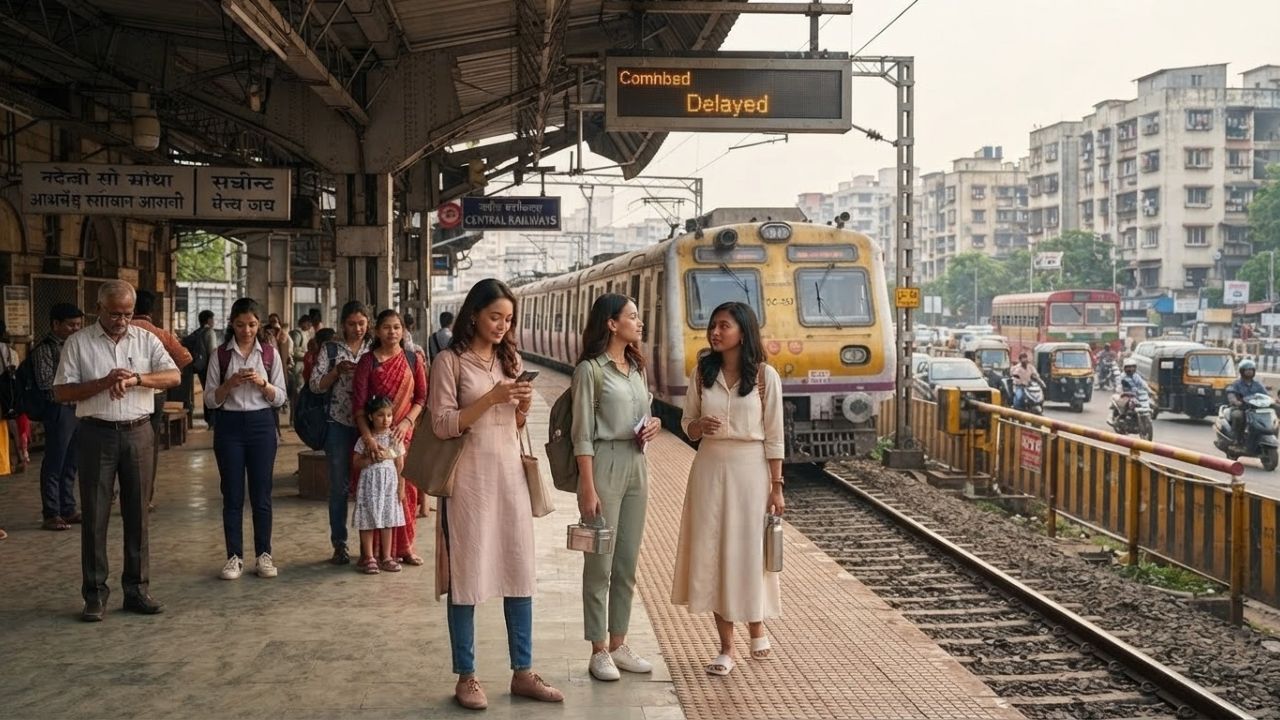
Image generated by AI
Central Railway operations in Mumbai suffered widespread delays during peak commuting hours after repeated gate openings at the Diva level crossing (LC-29) disrupted around 30 suburban local services and more than 20 long-distance express trains.
MUMBAI, India — Thousands of daily commuters across Mumbai’s suburban rail network faced severe travel disruption after the Diva level crossing (LC-29) was opened multiple times during peak traffic hours to accommodate heavy road transport. According to Central Railway statements, the repeated gate openings delayed approximately 30 of the 90 scheduled suburban services on the Central Line while holding up over 20 long-distance express trains operating along the main, fifth, and sixth railway corridors.
The disruption caused cascading delays across key suburban transit nodes, including Thane, Diva, Kalyan, Ghatkopar, and Chhatrapati Shivaji Maharaj Terminus (CSMT), leaving crowded station platforms and stranded commuters across the metropolitan region.
Timeline of Diva Level Crossing (LC-29) Openings and Corridor Interruption
The operational bottleneck occurred along the busy Thane–Kalyan section of the Central Railway main line, where the Diva level crossing intersects heavy road vehicle traffic. To alleviate severe road congestion, traffic authorities opened the railway gate multiple times during the morning and midday commuting hours.
Official railway logs confirm the following opening timeline:
- 10:35 AM: Initial gate opening for road traffic clearance, causing minor signal holds.
- 11:10 AM: Second gate opening, creating initial train queuing along the main line.
- 12:11 PM – 12:21 PM: Extended 10-minute gate opening, resulting in major signal blockages across the main line, 5th line, and 6th line.
Because Central Railway operates suburban trains at tight three-minute headways, even a brief ten-minute interruption at a critical junction like Diva creates a widespread chain reaction, detaining following services and disrupting scheduled turnaround times at terminal stations.
Summary of Central Railway Diva Disruption Parameters
The table below details the core operational parameters, affected train codes, long-distance express services, and impacted suburban corridors resulting from the Diva level crossing disruption:
| Operational Parameter | Official Railway Metric / Detail | Commuter & Transit Impact |
|---|---|---|
| Disruption Point | Diva Level Crossing (LC-29) | Main line, 5th & 6th railway corridors blocked |
| Primary Gate Opening Window | 12:11 PM to 12:21 PM (10 minutes) | Earlier openings logged at 10:35 AM & 11:10 AM |
| Suburban Local Trains Disrupted | ~30 out of 90 scheduled Central Line services | Heavy delays & platform overcrowding |
| Long-Distance Expresses Delayed | Over 20 intercity express trains | Held up on 5th and 6th lines |
| Delayed Down Local Services | PK11, TAN3, K43, S21, A21 | Down main line & Thane down route delayed |
| Delayed Up Local Corridors | Ambernath, Titwala, Badlapur & Kalyan to CSMT | Inbound morning commute to South Mumbai hit |
| Delayed Long-Distance Expresses | Netravati, Hyderabad–Mumbai, Thiruvananthapuram | Held up on 5th & 6th lines approaching city |
| Impacted Railway Hubs | Diva, Thane, Kalyan, Ghatkopar, CSMT | Platform overcrowding & extended passenger waits |
Affected Suburban Local Services: PK11, TAN3, K43, S21, and A21
The interruption affected both Down (outbound from CSMT) and Up (inbound to CSMT) suburban services across Central Railway's main line network.
On the Down suburban line, multiple local services heading toward destinations beyond Diva were detained at preceding signals. Specific affected services included trains PK11, TAN3, and K43, while Down Thane routes experienced severe bunching affecting services S21 and A21.
On the Up line toward South Mumbai, local trains originating from Ambernath, Titwala, Badlapur, and Kalyan faced significant delays. A morning local service traveling from Ghatkopar to CSMT was severely held up, causing platform overcrowding at intermediate stations as commuters waited for delayed trains to arrive.
Impact on Long-Distance Express Trains: Netravati, Hyderabad, and Thiruvananthapuram Services
In addition to suburban commuter trains, over 20 long-distance intercity express services were caught in the operational gridlock along the 5th and 6th lines, which are designated for fast express movement:
- Netravati Express: Delayed while traversing the 5th line corridor near Diva.
- Hyderabad–Mumbai Express: Held up at preceding signals on the 6th line approaching Thane.
- Thiruvananthapuram North–Mumbai Express: Detained on the 6th line, missing scheduled arrival windows at CSMT and Dadar.
Because long-distance trains share track infrastructure near major junctions, holding express trains on the 5th and 6th lines restricted operational flexibility for local fast services, further exacerbating suburban delays.
Structural Infrastructure Challenges: Grade Separation and Overpass Needs
The Diva disruption highlights the ongoing operational challenges facing Mumbai's suburban rail network, which carries over 7.5 million passengers daily. Where high-frequency rail corridors intersect busy municipal roads, level crossings present persistent safety and operational vulnerabilities.
To eliminate level crossing bottlenecks, Mumbai Railway Vikas Corporation (MRVC) and Central Railway have prioritized grade-separation infrastructure projects, including Road Overbridges (ROBs) and Road Underbridges (RUBs). However, dense urban encroachments and land acquisition hurdles around Diva have delayed complete grade separation at LC-29.
Transport experts emphasize that replacing level crossings with dedicated Road Overbridges is essential to prevent road traffic from disrupting one of the world's densest suburban rail operations.
Why This Matters for Mumbai Suburban Commuters and Long-Distance Passengers
For daily Mumbai commuters, the Diva incident demonstrates how a single ten-minute level crossing opening can disrupt 30 suburban local services and ripple across a three-hour operational window. Due to dense passenger packing during peak hours, delayed trains result in dangerous platform overcrowding at major interchange hubs like Thane, Kalyan, and Ghatkopar.
For long-distance passengers arriving from South or Central India, delays on the 5th and 6th lines mean missed connecting suburban trains, delayed hotel check-ins, and disrupted business schedules across the Mumbai Metropolitan Region.
Until complete grade separation is achieved at key crossings like LC-29, commuters must account for potential signal delays when traveling through the Thane–Kalyan corridor during peak road traffic hours.
Commuter Navigation Guide: Managing Central Railway Network Delays
Commuters navigating Central Railway disruptions should utilize the following practical transit strategies:
- Monitor Digital Railway Feeds: Check live train running status via the UTS mobile app, Central Railway official social media channels, or station display boards before arriving at platforms.
- Consider Alternate Transit Corridors: During severe Central Line disruptions, switch to the Harbour Line via Kurla or use metro lines connecting Ghatkopar to Western Railway hubs.
- Avoid Boarding Overcrowded Trains: Wait for subsequent clearance trains rather than attempting to board heavily overcrowded delayed local services during peak hours.
- Allow Buffer Connection Time: Long-distance passengers connecting to flights at Chhatrapati Shivaji Maharaj International Airport (BOM) or outstation trains at CSMT/Dadar should build a 45-minute buffer into travel plans.
FAQ
What caused the local train delays on Central Railway near Diva?
The delays were caused by repeated gate openings at the Diva level crossing (LC-29) during peak traffic hours to clear heavy road vehicle congestion, which blocked main, 5th, and 6th railway lines.
How many trains were delayed during the Diva level crossing disruption?
Central Railway confirmed that around 30 out of 90 scheduled suburban local services and over 20 long-distance express trains experienced delays.
Which specific suburban and long-distance trains were affected?
Affected suburban local services included Down trains PK11, TAN3, K43, S21, and A21, alongside Up locals from Ambernath, Titwala, Badlapur, and Kalyan. Delayed long-distance trains included the Netravati Express, Hyderabad–Mumbai Express, and Thiruvananthapuram North–Mumbai Express.
What long-term infrastructure solutions are being planned for the Diva level crossing?
Railway authorities and urban transport agencies are working to replace the Diva level crossing (LC-29) with a grade-separated Road Overbridge (ROB) to completely eliminate conflicts between road traffic and train operations.
Related Travel Guides
Disclaimer
This article is for informational and educational purposes only. It does not constitute legal, financial, or professional advice. While we strive to provide accurate and up-to-date information, travel policies, regulations, and conditions change rapidly. Always verify information with official sources before making travel decisions. Nomad Lawyer makes no representations about the accuracy, reliability, completeness, or suitability of the information provided. Readers should consult qualified professionals for advice specific to their circumstances. The views expressed in this article are those of the author and do not necessarily reflect the views of Nomad Lawyer.
Raushan Kumar
Founder & Lead Developer
Full-stack developer with 11+ years of experience and a passionate traveller. Raushan built Nomad Lawyer from the ground up with a vision to create the best travel and law experience on the web.
Learn more about our team →