
Aviation Updates: Massive Drone Strike Triggers Terrifying Emergency Shutdown Across Four Moscow Airports, Sparking Severe Global Travel Chaos
As a massive drone wave violently penetrates Russian airspace, authorities execute a total emergency grounding at Sheremetyevo, Vnukovo, Domodedovo, and Zhukovsky airports to shield civilian flights from catastrophic airspace crossfire.
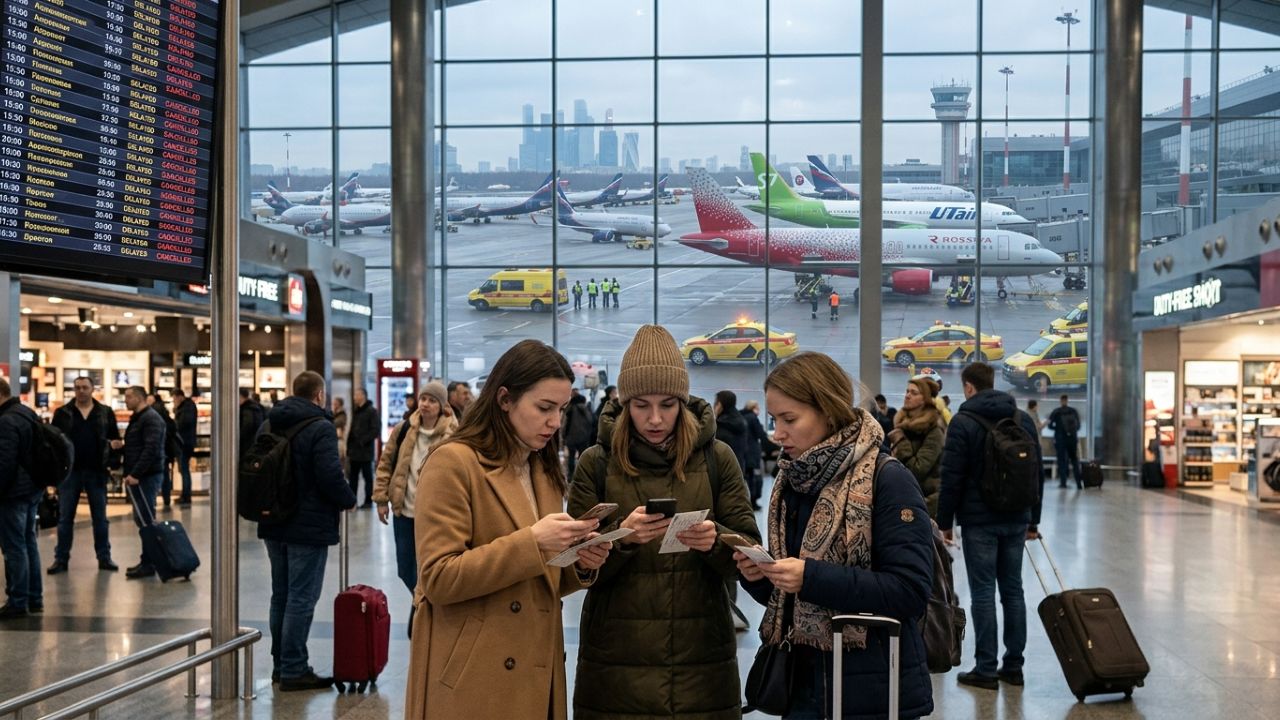
Image generated by AI
Aviation Updates: Massive Drone Strike Triggers Terrifying Emergency Shutdown Across Four Moscow Airports, Sparking Severe Global Travel Chaos
As a massive, highly coordinated wave of unmanned aerial vehicles violently breached controlled airspace, Russian authorities aggressively executed a total, unprecedented emergency shutdown across Moscow's four primary aviation gateways, desperately scrambling to shield thousands of civilian passengers from a terrifying, catastrophic mid-air crossfire.
While incredibly exhausted global passengers desperately navigate an incredibly brutal summer defined by rolling flight cancellations and severe, localized airport disruptions, a massive, highly terrifying security crisis has actively shattered the absolute highest levels of Eastern European commercial aviation. According to the absolute latest breaking airline news, Moscow’s entire civil aviation network was violently forced into an immediate, total emergency lockdown. Desperate to ensure that severe, localized airspace combat did not completely destroy civilian aircraft, authorities triggered a massive, highly synchronized halt of all operations at Sheremetyevo Airport, Vnukovo Airport, Domodedovo Airport, and Zhukovsky Airport. As automated air defense systems violently engaged incoming threats—successfully shooting down 59 drones—this extreme precautionary grounding triggered massive, cascading travel chaos across domestic and international route networks.
This highly critical operational fortress explicitly positions modern civil aviation in active conflict zones not as a routine mobility sector, but as a heavily militarized, highly fragile capacity zone. By aggressively enforcing this strict, multi-hub grounding protocol, authorities directly combated the terrifying reality of operating civilian jets through active interception corridors. Because heavily targeted mega-hubs frequently suffer from severe proximity to strategic infrastructure leading to massive, unannounced airport disruptions, this total shutdown served as an absolute defense mechanism. It completely bypassed the terrifying logistical nightmares of attempting to thread commercial airliners through an active defense barrage, forcing major carriers into a brutal, high-stakes battle of emergency diversions and indefinite holding patterns to guarantee absolute passenger survival.
Aviation Updates: Insulating the Civilian Corridor
This massive, highly structural shift in emergency airspace management perfectly illustrates the intense, incredibly fragile nature of modern intercontinental routing through contested regions.
According to highly detailed, official aviation updates, this strategic capacity lock was explicitly designed to massively enhance immediate airspace safety while aggressively accepting the terrifying operational anxiety inflicted upon grounded passengers. The massive wave of unmanned aerial vehicles penetrated the wider Moscow airspace region on multiple approach vectors, forcing automated interception protocols to trigger instantly. Because commercial flight paths are completely vulnerable to rolling travel chaos stemming from shrapnel and active tracking radar, funneling passenger flows into immediate ground holds or airborne diversion patterns explicitly guaranteed a unified, highly reliable survival model. This massive regulatory optimization prevented a total civilian catastrophe, ensuring that the interception of 59 drones did not result in a single civilian aviation casualty.
Section-Wise Breakdown: Navigating the Locked Hubs
The sudden, massive evolution of these critical transit controls actively impacted several incredibly distinct, highly sensitive operational dynamics across the Russian capital's primary transit network.
The Sheremetyevo and Domodedovo Lockdowns
At the absolute core of this massive operational pivot was the strategic closure of Moscow's heaviest international transit points. Sheremetyevo and Domodedovo airports faced an immediate, brutal suspension of all take-off sequences and landing clearances. Aircraft already on final approach were violently waved off, executing emergency diversion protocols to alternative regional airports far outside the immediate capital control zone. By aggressively clearing these specific flight corridors, air traffic control actively protected international passengers from the severe travel chaos of navigating through an active, live-fire defense matrix. Ground operations, including fueling and baggage loading, were immediately paused to ensure ramp worker safety.
The Vnukovo and Zhukovsky Defense Perimeters
The ultimate execution of this highly strategic emergency deployment heavily targeted the smaller, yet highly strategic hubs of Vnukovo and Zhukovsky. These airports were instantly integrated into the synchronized grounding protocol. As radar monitoring tracked the inbound drone swarm, these facilities functioned as fully locked operational fortresses. Outbound flights faced massive, staggered delays, trapping passengers in terminals while the sky was actively cleared. This coordinated closure of all four major gateways completely bypassed the severe logistical nightmares typically associated with piecemeal, uncoordinated airport disruptions, ensuring a total, unified defense posture across the entire Moscow transit ecosystem.
The Odesa Ballistic Spillover
While Moscow's airspace was locked down against drones, the reciprocal nature of the broader conflict simultaneously generated terrifying realities further south. Concurrent ballistic missile activity violently impacted southern Ukraine, specifically striking an agricultural facility in the Odesa district. This parallel strike resulted in severe fire outbreaks, impacting vehicles and fuel storage infrastructure, and generating localized casualties. This secondary crisis explicitly highlights the total, multi-front volatility of the region, where both drone swarms and ballistic impacts continue to completely redefine civil air traffic routing decisions.
Flight Details and Verified Disruption Bypass Matrix
To fully understand the exact structural parameters of this massive regulatory lock and how authorities successfully navigated complex airspace combat, the following matrix explicitly details the operational mandates and interception data.
Confirmed Moscow Emergency Disruption Matrix
| Emergency / Operational Metric | Massive Security & Strategic Details | Regional Congestion Impact & Control |
|---|---|---|
| Primary Incident Trigger | Massive, coordinated unmanned aerial vehicle (drone) swarm. | Forced an immediate, total halt of civilian airspace movements. |
| Confirmed Interceptions | 59 drones successfully shot down by air defenses. | Eradicated the massive threat to civilian infrastructure. |
| Total Airport Lockdowns | Sheremetyevo, Vnukovo, Domodedovo, and Zhukovsky shut down. | Triggered massive, cascading travel chaos across Russia. |
| Airborne Diversion Protocols | Inbound flights waved off to alternative regional holding zones. | Prevented commercial jets from flying into live-fire zones. |
| Ground Operations Halt | Boarding, fueling, and baggage handling strictly paused. | Shielded ground crews from potential debris and shrapnel. |
| Concurrent Odesa Strike | Ballistic missiles hit an agricultural facility in Ukraine. | Proves the absolute, extreme volatility of the entire Eastern airspace. |
Data explicitly reflects the massive, highly structural operational shift designed to flawlessly execute civilian passenger stabilization, directly forcing airlines to completely surrender their schedules to military airspace control.
Passenger Impact: The Psychological Toll of the Airspace Lock
For the highly demanding passengers actively engaged in this massive Eastern European mobility crisis, traditional, highly anticipated transit is frequently viewed as completely terrifying and incredibly unpredictable.
The successful enforcement of the four-airport emergency shutdown significantly degraded travel convenience for thousands of incredibly exhausted families, cargo logistics teams, and international transit passengers. Instead of relying absolutely solely on a highly predictable flight schedule—where efficient transfers drive the economy—travelers were suddenly trapped in a heavily militarized capacity-managed environment. By actively utilizing this massive airspace lock, authorities successfully bypassed the terrifying, anxiety-inducing reality of a mid-air civilian catastrophe, but the cost was massive. Cascading airport disruptions destroyed connecting itineraries, cargo networks were completely paralyzed, and terminal congestion reached critical levels as thousands of passengers waited indefinitely for the military to declare the skies secure.
Industry Analysis: The Economics of Militarized Routing
Aviation structural analysts strictly point out that this massive, multi-hub operational shutdown perfectly illustrates the extreme, highly vital importance of heavily optimized, rapid-response air traffic control.
Aviation data explicitly indicates that massive legacy carriers operating in contested regions are absolutely desperate to secure rapid diversion protocols to actively combat the terrifying reality of sudden airspace combat. Industry observers strongly view this four-airport shutdown as the absolute ultimate catalyst for broader airspace awareness. When approach corridors are tightly constrained by active drone interceptions, relying on a highly coordinated, unified grounding system completely prevents the isolated targeting of commercial jets. By aggressively establishing this operational foundation, authorities absolutely ensure that they maintain a highly secure grip on the civilian safety matrix, completely insulating operations from the unpredictable, violent realities that violently plague unrestricted combat zones.
Conclusion: A Highly Volatile Transit Future
The massively evolving infrastructure dynamics directly defining Moscow's integration into an active air defense network violently reflect a much broader, highly critical structural transformation currently dominating how civil aviation is physically managed in 2026.
Rather than violently forcing massive international traffic through a deeply contested, highly dangerous, unmanaged network, Russian civil aviation is incredibly increasingly functioning as a highly reactive, strategically restricted, heavily defended ecosystem. As military authorities aggressively utilize immediate airspace closures to permanently alter daily flight paths, travelers actively navigating the incredibly busy region must absolutely remain highly vigilant. To actively survive potential travel chaos during sudden security events, passengers must aggressively monitor all breaking aviation updates, actively expect rolling flight cancellations, and perfectly understand that escaping modern airport disruptions fundamentally requires accepting that civilian flight schedules will always instantly yield to the terrifying realities of modern aerial combat.
Key Takeaways
- Total System Shutdown: Sheremetyevo, Vnukovo, Domodedovo, and Zhukovsky airports execute an immediate, simultaneous emergency closure.
- Massive Drone Interception: Air defense systems successfully track and shoot down 59 unmanned aerial vehicles approaching Moscow.
- Civilian Shielding: The shutdown prevents commercial flights from entering active live-fire zones, prioritizing survival over schedule.
- Widespread Disruptions: The grounding triggers massive, cascading travel chaos, forcing emergency flight diversions and indefinite delays.
- Odesa Ballistic Strike: Concurrent ballistic missile activity strikes an agricultural facility in Odesa, Ukraine, highlighting regional airspace volatility.
- Passenger Survival Strategy: Travelers are strictly advised to aggressively anticipate sudden, unannounced airport disruptions and maintain flexible routing when operating near highly contested Eastern European flight corridors.
Related Travel Guides
Massive UAE Visa Bombshell: Strict New 30-Day Escape Window Announced
Travel Chaos Cripples Spain as Iberia and Ryanair Suffer 1,079 Delays
Global Flight Cancellation and Compensation Guide 2026
Disclaimer: This article is strictly for informational purposes only. Massive military airspace actions, highly localized terminal grounding protocols, and complex flight diversion strategies change rapidly based on active security threats and government oversight. Always carefully verify your specific itinerary and aggressively monitor real-time flight statuses directly with your airline before attempting to fly into highly contested regional airspace.