
Manchester Airport Operational Collapse: Over 50 Flights Delayed and Cancellations Hit UK Hub 2026
Operational instability at Manchester Airport led to more than 50 flight delays and cancellations on August 28, 2026, highlighting systemic punctuality issues at one of the UK's busiest aviation hubs.

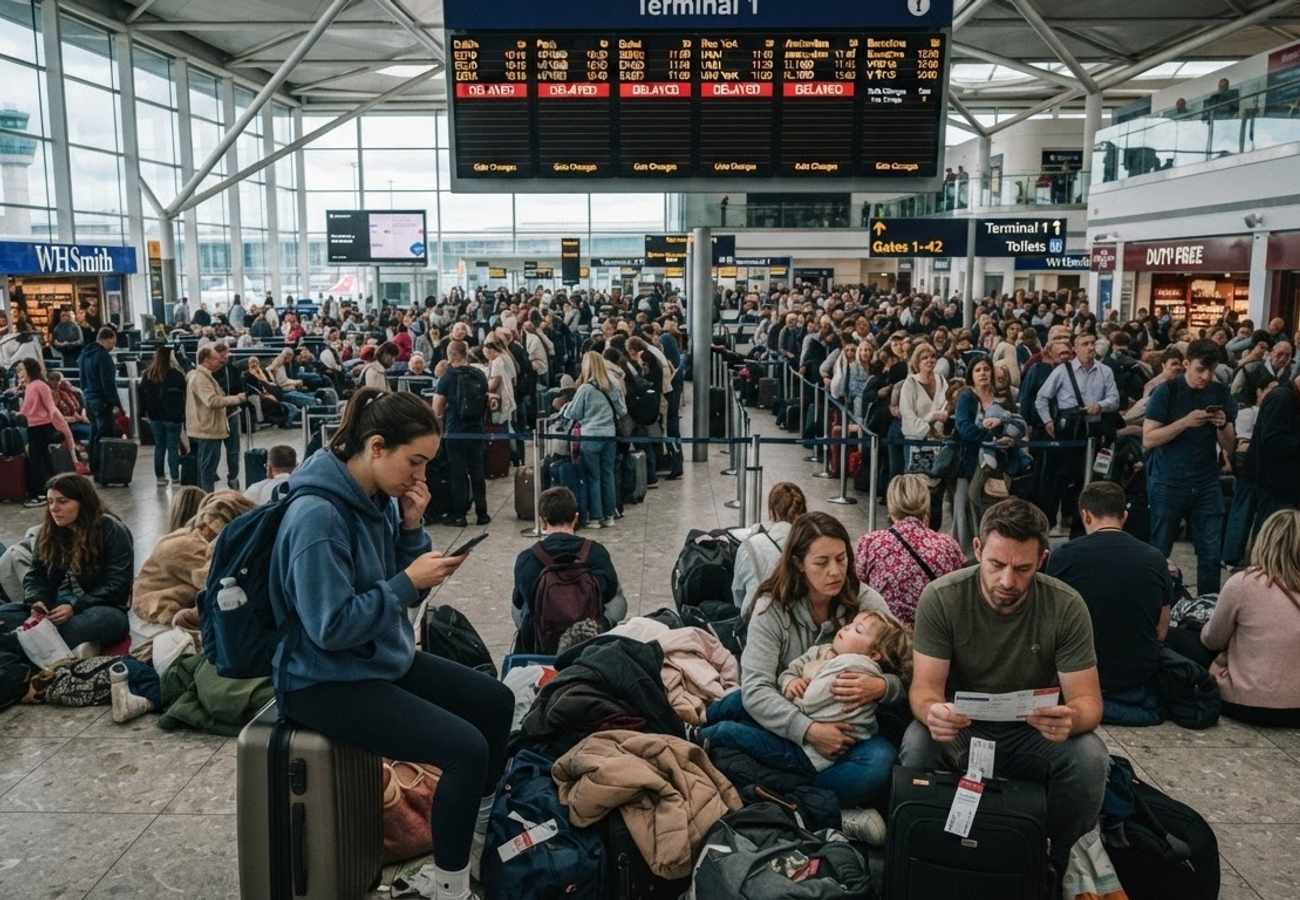
Image generated by AI
Systemic operational failures at Manchester Airport resulted in more than 50 flight delays and at least one cancellation on August 28, 2026, disrupting routes across Europe and long-haul destinations.
Flight tracking data confirms that disruption intensified during the morning peak and cascaded into early afternoon schedules. The delays, which ranged from 30 minutes to over two hours, impacted UK domestic routes, popular European destinations, and several long-haul services.
While the volume of outright cancellations remained low, the cumulative effect of dozens of delayed arrivals and departures created significant congestion within terminal departure areas and strained ground handling infrastructure.
Operational Breakdown: Key Facts
- Total Disruptions: More than 50 flights delayed.
- Cancellations: At least one flight cancelled outright.
- Delay Duration: Typical wait times ranged from 30 minutes to 2+ hours.
- Affected Routes: UK domestic, European, and long-haul sectors.
- Historical Context: Approximately one in three flights from Manchester have experienced delays over the past year.
- Annual Volume: Manchester Airport handled more than 32 million passengers in the last year.
Root Causes and Airspace Congestion
While no single cause was officially cited, flight-tracking visualizations revealed multiple aircraft entering holding patterns near the airport. This suggests a combination of congested airspace and temporary runway capacity constraints.
Market trends suggest these disruptions are often triggered by a synergy of three factors:
- Weather Volatility: Unsettled weather patterns across the UK and northwest Europe.
- ATC Capacity: Staffing and flow-rate limitations at air traffic control centers.
- Network Sensitivity: A high dependency on tight aircraft rotations, where a single delay causes a "knock-on" effect for subsequent flights.
Passenger Impact and Legal Rights
The disruption led to overcrowding at check-in and security checkpoints, with increased pressure on terminal catering and seating. Passengers on short-haul European hops were most affected as initial delays compounded throughout the operating day.
From a regulatory perspective, passengers departing UK airports may be eligible for assistance—including refreshments and hotel accommodation—or financial compensation. Eligibility depends on whether the airline can prove the disruption was caused by "extraordinary circumstances" outside their control.
Performance Metrics: Manchester Airport
| Metric | Data Point |
|---|---|
| Annual Passenger Volume | 32 Million+ |
| Historical Delay Rate | ~33% (One in three flights) |
| Current Disruption Event | 50+ Delays / 1+ Cancellation |
| Primary Route Impacts | Domestic, European, Long-haul |
Why This Matters: Industry Analysis
For travelers and aviation analysts, this event is not an isolated incident but a symptom of a fragile recovery window. Our analysis of the route map suggests that Manchester’s role as a primary base for low-cost and leisure carriers makes it uniquely vulnerable. Unlike legacy hubs with more "buffer" time in their schedules, leisure-heavy rotations operate on razor-thin margins.
When one aircraft falls out of position, it doesn't just affect one flight; it disrupts the entire daily rotation of that hull. For the modern traveler, this means that a "minor" 30-minute delay in the morning frequently evolves into a three-hour delay by the evening. The fact that one-third of all flights from this hub are delayed indicates a systemic failure to align capacity with actual operational capability.
Forward Outlook
Expect continued volatility at regional UK hubs through the remainder of 2026. As leisure travel demand remains high, the pressure on air traffic control and ground handling will likely persist. Travelers should anticipate that "on-time" departures at Manchester are the exception rather than the rule during peak windows.
The industry is moving toward a model where flexibility is mandatory. Passengers are advised to avoid tight connections (under 3 hours) at Manchester and to utilize airline apps for real-time tracking rather than relying on static terminal boards.
Operational fragility remains the primary risk for UK regional aviation in 2026.
Related Travel Guides
Disclaimer
This article is for informational and educational purposes only. It does not constitute legal, financial, or professional advice. While we strive to provide accurate and up-to-date information, travel policies, regulations, and conditions change rapidly. Always verify information with official sources before making travel decisions. Nomad Lawyer makes no representations about the accuracy, reliability, completeness, or suitability of the information provided. Readers should consult qualified professionals for advice specific to their circumstances. The views expressed in this article are those of the author and do not necessarily reflect the views of Nomad Lawyer.
Preeti Gunjan
Contributor & Community Manager
A passionate traveller and community builder. Preeti helps grow the Nomad Lawyer community, fostering engagement and bringing the reader experience to life.
Learn more about our team →