Minnesota’s MSP Airport Wins Best Mega Airport Award Again as Passenger Experience Sets New Benchmark

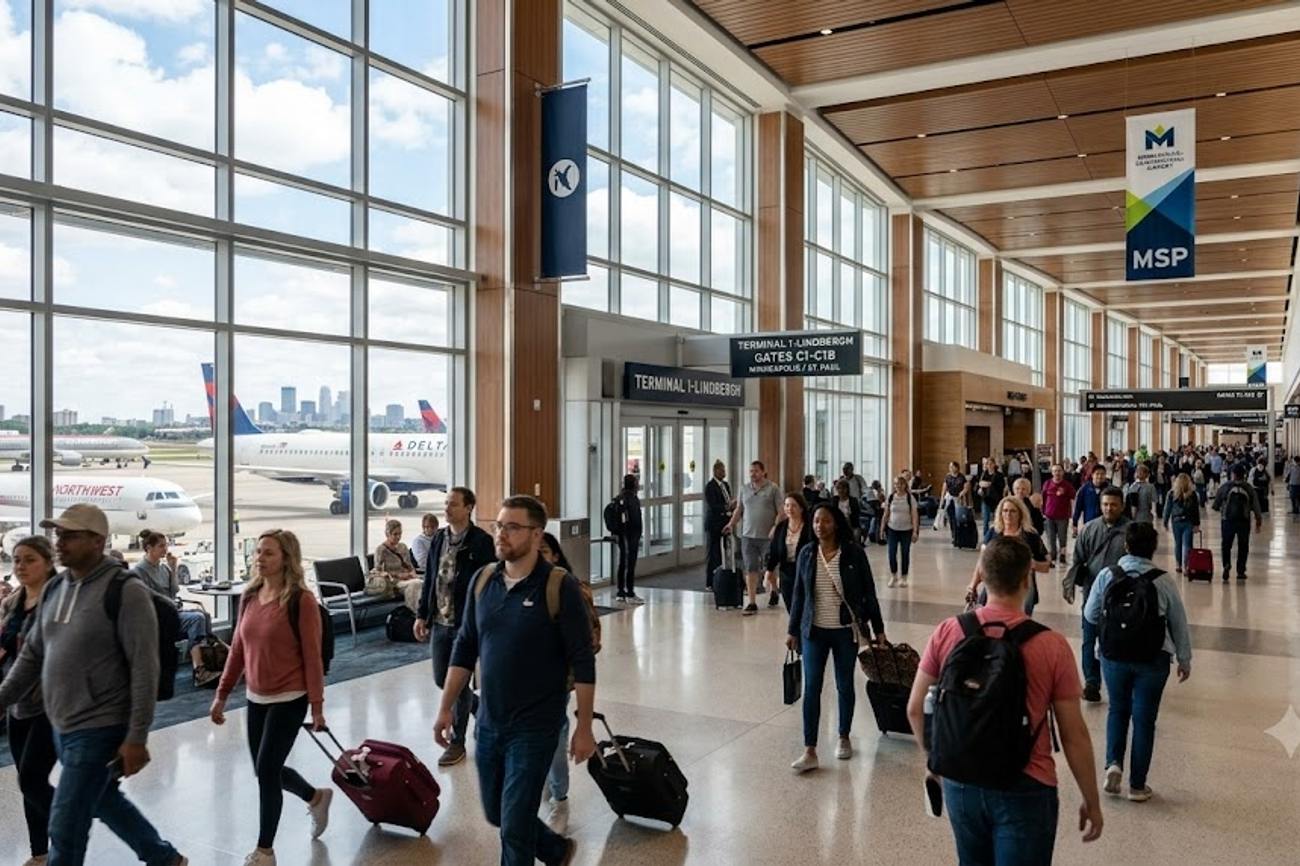
Image generated by AI
33 million annual passengers serves as the critical threshold defining a "mega airport," and it is within this high-pressure category that Minneapolis–Saint Paul International Airport (MSP) has emerged as the top-ranked facility for passenger satisfaction in North America. This ranking, derived from the latest J.D. Power North America Airport Satisfaction Study, signals a shift in how the industry measures success, moving away from pure throughput metrics toward a holistic evaluation of the traveler's psychological and physical experience.
The Mechanics of Mega Airport Management
Operating a facility that handles upwards of 33 million travelers annually creates a paradoxical challenge: as volume increases, the perceived quality of service typically declines due to congestion, security bottlenecks, and facility wear. MSP’s ascent to the top of the J.D. Power rankings suggests a successful decoupling of scale and friction. Unlike smaller regional hubs, mega airports must manage complex terminal movements and high-density baggage operations while simultaneously providing a "premium" feel that prevents passenger burnout.
The airport serves as the primary gateway for the Upper Midwest, acting as a vital economic engine for Minnesota. Its operational structure—comprising two primary passenger terminals—is designed to facilitate a seamless transition between domestic regional flights and long-haul international departures. This duality requires a sophisticated approach to wayfinding and passenger flow, as the airport must cater to both the seasoned business traveler and the first-time international visitor who may be unfamiliar with U.S. customs and terminal layouts.
Infrastructure as a Driver of Satisfaction
The correlation between capital expenditure and passenger sentiment is evident in MSP’s recent trajectory. The Metropolitan Airports Commission (MAC), the public entity governing the facility, has shifted its strategy toward "customer-first" infrastructure. This is not merely about aesthetic upgrades but involves a systemic overhaul of the passenger journey.
The J.D. Power study evaluates several key performance indicators that directly impact the traveler's wallet and stress levels:
- Terminal Fluidity: The ease with which a passenger moves from the curb to the gate.
- Ancillary Services: The quality and diversity of food, beverage, and retail options.
- Staff Interaction: The efficiency and professionalism of ground personnel.
- Digital Integration: The availability of technology services that reduce wait times and provide real-time updates.
| Satisfaction Driver | Impact on Passenger Experience | Strategic Goal |
|---|---|---|
| Facility Cleanliness | Psychological comfort and perceived safety | High-frequency maintenance cycles |
| Wayfinding/Signage | Reduction in travel anxiety and missed flights | Intuitive, multilingual navigation |
| Retail/Dining Diversity | Transformation of "wait time" into "leisure time" | Diversified vendor ecosystem |
| Operational Efficiency | Reduced time spent in security and boarding | Technology-led throughput |
Expert Analysis: The "Experience Economy" in Aviation
For the modern traveler, the airport is no longer a mere transit point; it has become a destination in its own right. The success of MSP highlights a broader regulatory and business shift toward the "Experience Economy." When an airport optimizes for satisfaction, it is not doing so solely for altruism. High satisfaction scores correlate directly with increased "dwell time"—the period passengers spend in the terminal before their flight. Increased dwell time leads to higher capture rates for retail and dining, which in turn generates non-aeronautical revenue that funds further infrastructure improvements.
For travelers booking routes through the Twin Cities, the direct consequence of this investment is a reduction in "transit friction." When an airport prioritizes navigation and facility cleanliness, the cognitive load on the traveler is lowered. This is particularly vital for those connecting through MSP to international destinations via carriers like Delta Air Lines, where tight connection windows can turn a luxury trip into a logistical nightmare.
The pricing pressure created by this model is subtle. As airports invest more in premium facilities, the cost of operating those spaces is often passed down to vendors, which can lead to higher prices for airport concessions. However, the trade-off is a more reliable, less stressful environment. The MAC's ability to balance these upgrades without pausing daily operations demonstrates a sophisticated approach to "live-environment" construction, ensuring that the 33 million+ annual passengers do not experience the chaos typically associated with major renovations.
Minneapolis-Saint Paul International Airport continues to lead in passenger satisfaction through strategic investments in terminal efficiency and accessibility. Travelers can find comprehensive guides on parking, security wait times, and transit options via the MSP Airport official website.
Key Takeaways
- Industry Leadership: MSP is now the highest-ranked mega airport (33M+ passengers) in North America for passenger satisfaction per J.D. Power.
- Strategic Governance: The Metropolitan Airports Commission (MAC) has successfully integrated long-term infrastructure planning with immediate passenger-facing improvements.
- Holistic Metrics: Success was measured across multiple categories, including staff service, terminal facilities, and the efficiency of arrival/departure journeys.
- Economic Impact: As a primary hub for the Upper Midwest, MSP’s efficiency directly supports regional trade, business travel, and tourism.
- Operational Balance: The airport has proven that high-volume throughput does not have to come at the expense of passenger comfort.
FAQ: MSP Airport Experience 2024
What makes MSP a "mega airport"? An airport is classified as a mega airport when it handles more than 33 million passengers annually. This designation implies a higher level of operational complexity regarding security, baggage, and terminal management.
How does the J.D. Power study determine satisfaction? The study analyzes passenger feedback across several categories, including ease of navigation, the quality of food and retail, staff helpfulness, and the overall efficiency of the terminal facilities.
Who is responsible for the improvements at MSP? The Metropolitan Airports Commission (MAC), a public agency, oversees the planning, funding, and execution of all infrastructure and operational upgrades at Minneapolis–Saint Paul International Airport.
Will these improvements affect flight prices? Generally, airport infrastructure improvements are funded through grants and non-aeronautical revenue (like parking and retail) rather than direct ticket price increases, though they may influence vendor pricing within the terminal.
When the friction of travel disappears, the journey finally begins.
Related Travel Guides
- Albania Overtakes Montenegro And More As August Flight Growth Surges 22pc Across Europe Tourism Markets
- TSA Checkpoint Modernization Meets FAA Air Traffic Overhaul: How Security Tech and Fee Inflation Define US Aviation
- Transavia France Expands Paris-Orly to Toulouse: 9 Daily Flights and Full Airbus A320neo Fleet by December 2026
This article is for informational purposes. Flight routes, passenger regulations, visa rules, and transit advisories are subject to change by airlines and aviation authorities. Readers are advised to verify schedules and travel documentation with relevant carriers and border agencies before departure.
Related Stories
Qatar Expands Travel Horizons as Japan Airlines Codeshare Opens Hawaii Connections

Brazil and Four More Countries Witness LATAM Travel Boom Across New International Routes