
Milwaukee Aviation Gridlock Sparks Travel Chaos as Delta, United, and Southwest Suffer 5 Flight Cancellations
Breaking airline news: A sudden operational collapse at Milwaukee Mitchell International Airport triggers severe travel chaos, stranding passengers with 5 flight cancellations and 23 massive delays.

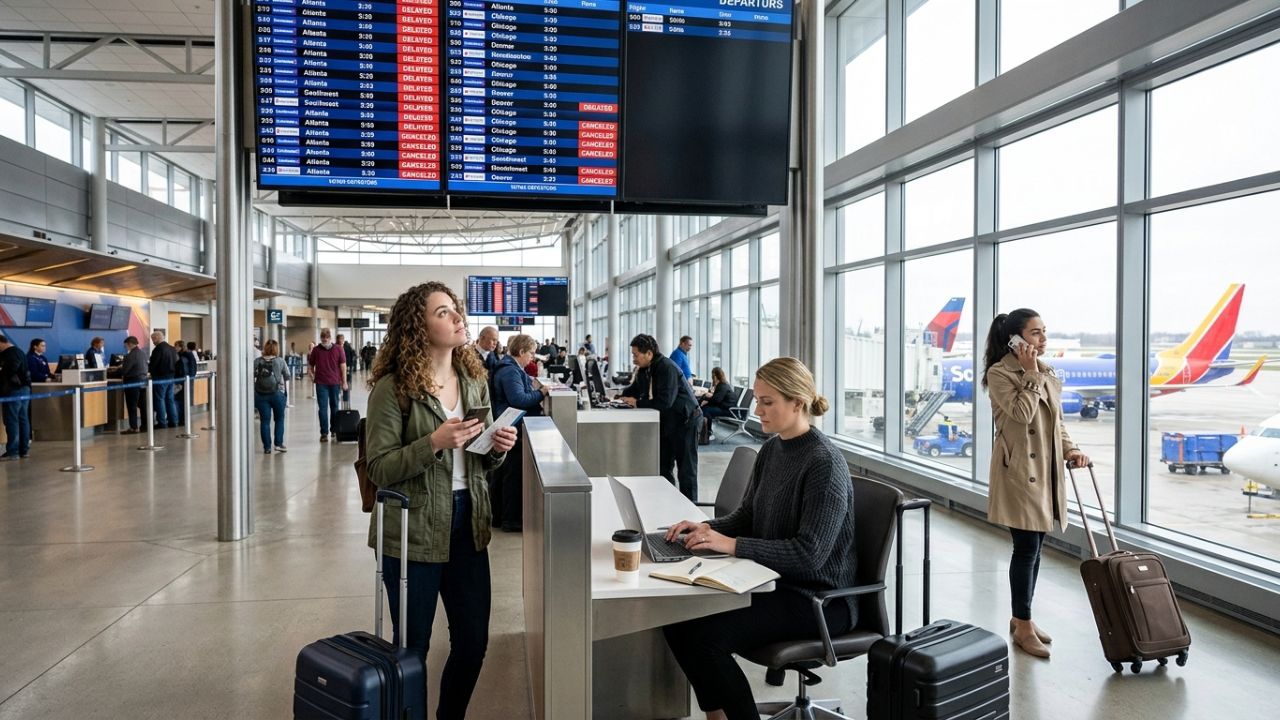
Image representing the severe aviation meltdown currently paralyzing Milwaukee Mitchell International Airport. As highly volatile national airspace congestion and strict aircraft rotation limits violently collide, the airport has officially suffered 5 flight cancellations and 23 severe delays, engineering intense travel chaos and massive airport disruptions across major carriers including American Airlines, Delta, United, Southwest, and Spirit. (Image Credit: US Aviation Tracking)
Milwaukee Aviation Gridlock Sparks Travel Chaos as Delta, United, and Southwest Suffer 5 Flight Cancellations
Severe Airspace Congestion and Brutal Aircraft Rotation Failures Paralyze Wisconsin’s Primary Gateway, Crippling Connectivity to Atlanta, Chicago, and Dallas
The massive structural vulnerability of the U.S. aviation network has been brutally exposed following a highly disruptive operational breakdown in Wisconsin. According to the absolute latest breaking airline news and strategic aviation updates, what should have been a routine travel day violently transformed into an agonizing ordeal for thousands of passengers stranded at Milwaukee Mitchell International Airport (MKE). Severe travel chaos officially erupted when the major transportation hub recorded an intense 23 severe flight delays alongside 5 absolute flight cancellations. This sudden, localized failure instantly decimated daily schedules across both major legacy and budget carriers, explicitly engulfing American Airlines, Delta Air Lines, Southwest, United, and Spirit Airlines. Families attempting to reach critical reunions, business professionals racing against deadlines, and international tourists are currently trapped in the terminal, desperately monitoring departure boards as the crisis deepens.
For aviation analysts and the traveling public, this specific event flawlessly illustrates how intense, localized friction at a highly critical regional gateway instantly paralyzes interconnected airline networks. The severe operational challenges at Milwaukee did not remain contained; they quickly and violently rippled outward. Because the U.S. aviation system operates as an incredibly sensitive, tightly wound network, this failure in Wisconsin instantly triggered devastating airport disruptions across critical domestic routes connecting to massive mega-hubs specifically including Atlanta, Chicago, Denver, Dallas, Orlando, and numerous international connections. While the FAA desperately implements aggressive operational guidance to manage the heavily saturated airspace, this massive incident explicitly highlights the terrifying reality of modern aviation: intense disruptions at a primary regional facility will inevitably destroy connecting passenger itineraries far beyond the original disruption zone.
Section-Wise Breakdown: The Anatomy of the Milwaukee Gridlock
The highly detailed operational data from federal aviation tracking systems definitively exposes exactly how these massive disruptions crippled the Milwaukee hub:
The Milwaukee Epicenter: 28 Disrupted Flights The massive travel chaos specifically documented at Milwaukee Mitchell International Airport represents a terrifying snapshot of broader systemic failure. While the officially reported 23 delayed flights and 5 cancellations might initially appear numerically manageable for a national network, the physical impact on the terminal and connected travelers is incredibly severe. Industry experts point out that modern commercial aviation operates on unbroken momentum. Aircraft, pilots, flight attendants, and mandatory maintenance crews operate on incredibly tight, federally regulated margins. Because major airlines operate highly synchronized schedules here to feed their massive national hubs, this sudden disruption created cascading operational challenges throughout the entire day. The failure instantly obliterated the outbound flight rotation, stranding passengers whose inbound aircraft from other cities were delayed or completely scrubbed.
Systemic Triggers: FAA Ground Delays and Weather The absolute primary drivers of this massive breakdown are brutal upstream delays and incredibly strict operational regulations required to maintain safety. According to the FAA’s National Airspace System Status platform, the disruptions represent a significant operational challenge because a delayed aircraft arriving from another city instantly delays its next scheduled departure from Milwaukee. Furthermore, severe weather conditions—specifically including thunderstorms, heavy rain, snow, strong winds, and low visibility impacting connecting airports—can violently create delays even if conditions at MKE remain perfectly stable. When this congestion occurs, the FAA frequently institutes strict Ground Delay Programs and air traffic management initiatives that explicitly throttle the national airspace, severely limiting arrivals and departures.
The Regional Economic Ripple Effect The true danger of the Milwaukee meltdown is the massive regional network ripple effect. Milwaukee Mitchell serves millions of passengers annually and stands as the absolute primary transportation hub for southeastern Wisconsin and neighboring regions. Therefore, the airport disruptions documented today severely damage regional mobility and economic flow. Business travelers miss highly critical meetings, airlines incur massive additional operational costs related to crew management and passenger accommodations, and the broader hospitality sector suffers unexpected volatility.
Operational Details: The Factual Milwaukee Disruption Matrix
To provide exact, factual clarity on the immense operational scale of the Milwaukee gridlock, aviation analysts have mapped the specific disruption metrics and impacted carriers. The following factual matrix exactly details the precise breakdown of the crisis:
Factual Milwaukee Aviation Disruption Matrix
| Operational Metric / Driver | Factual Disruption Detail |
|---|---|
| Total Disrupted Flights (MKE) | 23 severe flight delays and 5 absolute flight cancellations |
| Heavily Impacted Airlines | American Airlines, Delta Air Lines, Southwest, United, Spirit |
| Severely Disrupted Routes | Atlanta, Chicago, Denver, Dallas, Orlando, and international connections |
| Primary Weather Drivers | Thunderstorms, heavy rain, strong winds, low visibility at connecting hubs |
| Systemic Aviation Drivers | FAA Ground Delay Programs, severe aircraft rotation limits, strict crew scheduling limitations |
| Passenger Recovery Actions | Utilizing airline mobile apps, arriving early, aggressively securing rebooking options |
Data reflects the confirmed flight cancellations, severe delay metrics, and specific airline operational pressures officially recorded during the June 16, 2026 Milwaukee aviation gridlock. (Source: FAA Operational Data)
Passenger Impact: Surviving the Terminal
For the hundreds of travelers physically trapped at Milwaukee Mitchell International Airport, survival requires immediate, highly aggressive tactical recovery. The 5 absolute flight cancellations intensified extreme pressure on rebooking desks, forcing passengers into agonizing physical queues. Travel experts fiercely recommend that passengers immediately check flight status utilizing official airline mobile apps before ever leaving for the airport, as airlines provide the absolute fastest real-time notifications for delays and gate changes. Inside the terminal, passengers must arrive with total flexibility, keeping essential items explicitly accessible in carry-on luggage. Most importantly, travelers must explicitly maintain communication with airlines directly the instant a cancellation occurs to aggressively secure highly limited rebooking options.
Industry Analysis: The Infrastructure Battle
Aviation experts closely monitoring this massive event emphasize that these 28 disrupted flights expose the incredibly severe, ongoing challenges facing the national aviation network. According to the FAA, the broader aviation industry is actively struggling to successfully manage massively growing passenger demand alongside severe operational constraints. Beyond weather, airlines face terrifying strict federal regulations regarding pilot and crew duty-time limitations; extended delays frequently force airlines to "time out" crews, guaranteeing outright cancellations. While aviation authorities invest heavily in advanced air traffic management and enhanced weather forecasting technologies, the intense interconnectivity of the U.S. grid mathematically guarantees that localized failures will continue to cause massive national pain.
Conclusion: A Highly Volatile Recovery Window
The terrifying travel chaos that erupted from Milwaukee Mitchell International Airport explicitly confirms that even highly critical regional gateways remain incredibly vulnerable to network-wide disruptions. As American, Delta, United, Southwest, and Spirit desperately battle to recover from 5 brutal flight cancellations and 23 cascading delays, passengers are paying the ultimate price in lost time. Although the airport remained officially open and passenger services continued throughout the crisis, the physical reality is that the aviation system fundamentally prioritizes absolute safety over speed. As flight schedules violently fluctuate, travelers utilizing Wisconsin's primary gateway must permanently adopt highly flexible travel plans and rely fiercely on real-time FAA and airline data to survive the next inevitable breakdown. (Source: FAA Operational Data via Nomad Lawyer)
Key Takeaways
- Massive Localized Gridlock: Milwaukee Mitchell International Airport officially suffered an intense operational breakdown, recording 23 severe flight delays and 5 absolute cancellations.
- Major Carrier Collapse: The disruption heavily devastated daily schedules across American Airlines, Delta Air Lines, Southwest, United, and Spirit.
- Widespread Route Destruction: The massive delays actively crippled connecting passenger itineraries on highly critical routes linking to Atlanta, Chicago, Denver, Dallas, and Orlando.
- Systemic Disruption Triggers: The chaos was heavily driven by a toxic combination of massive FAA Ground Delay Programs, severe aircraft rotation limits, and strict crew duty constraints.
- Passenger Survival Tactics: Stranded travelers are fiercely advised to utilize airline apps, arrive two hours early for scheduled departures, and immediately demand rebooking options following a cancellation.
✈️ Frequently Asked Questions (Factual Aviation Disruption Data)
Exactly how many flights were disrupted at Milwaukee Mitchell International Airport? Milwaukee Mitchell International Airport officially recorded an intensely concentrated disruption consisting of 23 severe flight delays and 5 absolute flight cancellations.
Which specific airlines were the most heavily impacted by this massive gridlock? The operational breakdown heavily disrupted schedules for massive legacy and budget carriers, specifically including American Airlines, Delta Air Lines, Southwest, United, and Spirit.
What specific domestic mega-hubs suffered connecting flight disruptions due to this failure? The massive delays actively devastated critical passenger connections heading toward major national hubs specifically including Atlanta, Chicago, Denver, Dallas, and Orlando.
How does the FAA attempt to manage the airspace during these severe congestion events? The FAA aggressively regulates aircraft movements to maintain absolute safe separation, frequently instituting strict Ground Delay Programs and traffic management initiatives that actively slow arrivals and departures.
Why are disruptions at Milwaukee International heavily influenced by other cities? Because commercial aviation is highly interconnected, severe weather (thunderstorms, heavy rain, snow) at major connecting hubs instantly delays outbound flights from MKE due to aircraft rotation failures.
What specific crew scheduling challenges do airlines face during these severe delays? Airlines must desperately navigate strict federal regulations regarding pilot and crew duty-time limitations; extended rolling delays often force crews to legally "time out," triggering immediate flight cancellations.
What are the absolute best tools for passengers to use during this specific travel chaos? Passengers are fiercely advised to utilize official airline mobile apps for the fastest real-time notifications regarding delays, gate changes, and cancellations, allowing them to bypass physical terminal queues.
What specific advice does the Milwaukee airport provide to travelers during peak periods? Airport officials fiercely recommend that travelers verify flight status before leaving, arrive at least two hours early, and maintain direct communication with their airline for immediate rebooking following a cancellation.
🌍 Related Travel Guides & Flight Resources
- Navigate Airport Disruptions Like a Pro Master the art of surviving unexpected travel chaos and sudden regional meltdowns.
- Breaking Airline News & Evasion Routes Stay ahead of the delays with our real-time aviation updates and alternative destination intelligence.
- Global Flight Cancellation Defense Grid Essential legal rights and compensation tactics when your flight goes down.
⚖️ Disclaimer
The flight delay metrics, cancellation figures, and airport disruption statistics provided in this report are for informational purposes only. The specific aviation variables regarding the severe gridlock at Milwaukee Mitchell International Airport (MKE)—including the 23 delays, the 5 cancellations, and the specific operational pressures impacting American, Delta, United, Southwest, and Spirit—are based on official FAA operational tracking data active as of June 16, 2026. NomadLawyer does not guarantee the absolute accuracy or current validity of the specific operational recovery timelines provided and assumes no liability for unannounced flight cancellations, extreme delays during rebooking procedures, or any financial consequences resulting from the use of this analytical content. Passengers navigating the US domestic aviation network are strongly advised to utilize official airline mobile platforms for real-time routing updates and aggressively verify rebooking policies directly with their carrier.
Disclaimer
This article is for informational and educational purposes only. It does not constitute legal, financial, or professional advice. While we strive to provide accurate and up-to-date information, travel policies, regulations, and conditions change rapidly. Always verify information with official sources before making travel decisions. Nomad Lawyer makes no representations about the accuracy, reliability, completeness, or suitability of the information provided. Readers should consult qualified professionals for advice specific to their circumstances. The views expressed in this article are those of the author and do not necessarily reflect the views of Nomad Lawyer.
Kunal K Choudhary
Co-Founder & Contributor
A passionate traveller and tech enthusiast. Kunal contributes to the vision and growth of Nomad Lawyer, bringing fresh perspectives and driving the community forward.
Learn more about our team →