
Middle East Travel Crisis: 14 Countries Now Under Missile Alerts and Airspace Warnings in 2026
Israel, Iran, and 12 other Middle Eastern nations face escalating missile threats, airspace closures, and aviation warnings. Airlines reroute flights, hotels see cancellations, and travelers face unprecedented uncertainty across the region's critical travel corridors.

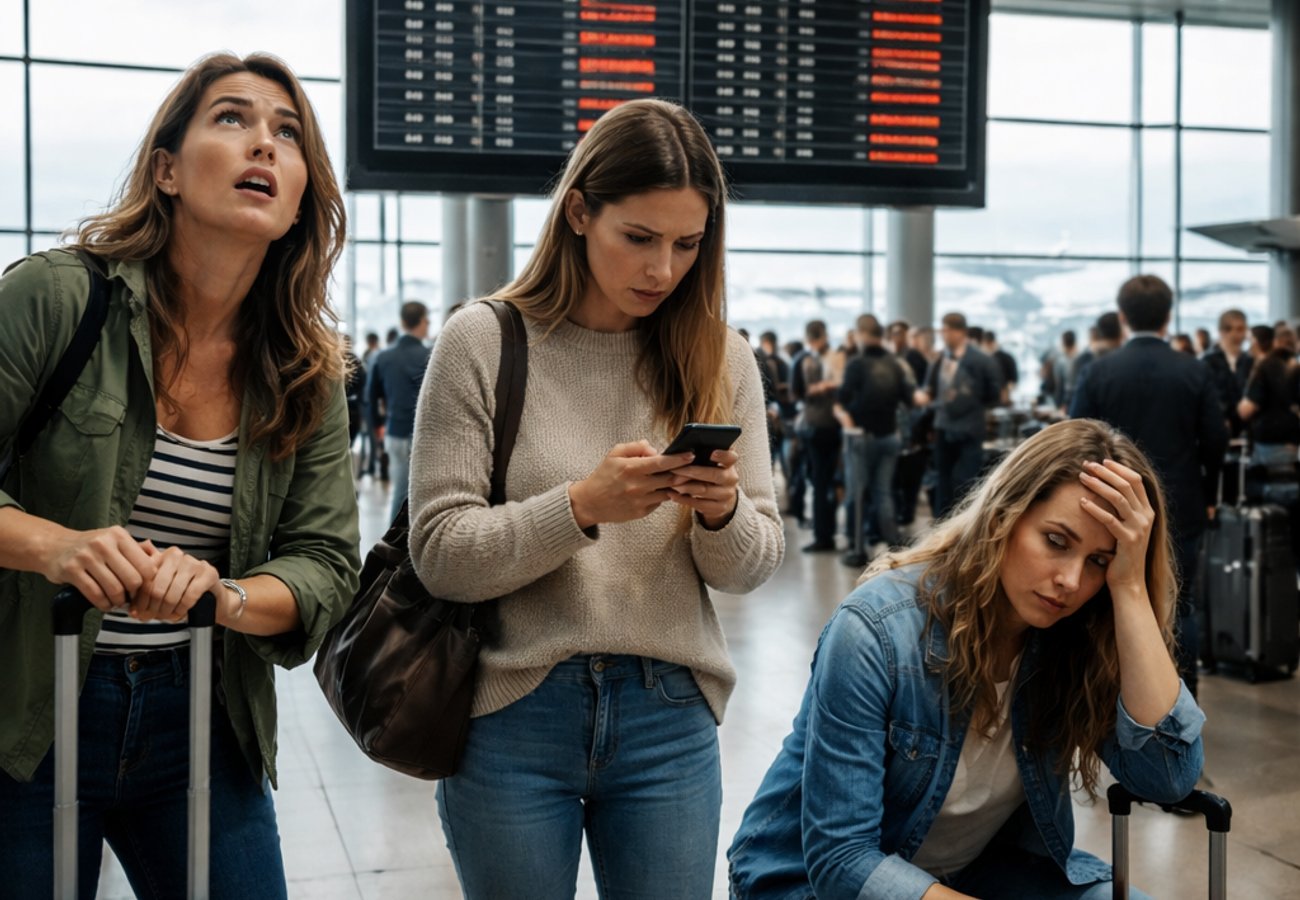
Image generated by AI
The Middle East is on fire—and this time, the flames are reshaping global travel in real time.
As of June 2026, a cascading regional crisis has placed 14 countries under active missile threat assessments, airspace warnings, and aviation restrictions. Israel now joins Iran, Lebanon, Iraq, Yemen, Syria, Bahrain, Jordan, Kuwait, Oman, Qatar, UAE, Saudi Arabia, and Egypt in a growing web of travel disruption that is no longer just a military concern. It is a global travel emergency.
Airlines are pulling flights. Hotels are watching bookings evaporate. Travel insurers are scrambling to clarify coverage. And travelers—from pilgrims to business executives to families visiting relatives—are facing an unprecedented choice: cancel, delay, or proceed into genuine uncertainty.
This is not hype. This is operational reality.
The 14-Country Domino Effect
What makes this crisis different from past regional tensions is its scale and simultaneity. A single conflict between two nations might spike fares and redirect a few flights. But when 14 countries across the Middle East face synchronized airspace alerts, the entire global aviation network feels the tremor.
Reddit: "I had a flight to Dubai booked for July. My airline just rerouted me through Europe instead of the direct Gulf path. My 7-hour flight is now 13 hours and $400 more expensive. Nothing official happened yet—just precaution." — r/travel
Iran sits at the epicenter. The European Union Aviation Safety Agency (EASA) has issued a formal directive advising all operators not to operate in Iranian airspace at any altitude. The US State Department maintains a Level 4 "Do Not Travel" advisory for Iran, citing terrorism risk, arbitrary detention, and the absence of a US embassy for emergency support.
But Iran is not alone. Lebanon, Iraq, Yemen, and Syria all carry EASA no-operation recommendations. Israel has EASA-affected airspace status. And crucially, Bahrain, Jordan, Kuwait, Oman, Qatar, UAE, and Saudi Arabia—nations that are technically "open"—now operate under caution-level aviation exposure due to proximity to conflict zones, drone and missile risks, and the potential for route disruption.
Egypt remains part of the broader travel-risk picture because of Sinai security concerns and border sensitivity in a region where confidence is already fragile.
Why This Matters Beyond the News Cycle
For travelers, the math is brutal. You don't need your destination to be under attack. You just need the route to it to feel unsafe. A family planning a pilgrimage to Jerusalem faces not just destination risk—they face the risk that their airline cancels the flight, reroutes it through Africa or Southern Europe, or simply raises the fare to compensate for longer fuel consumption and operational uncertainty.
For budget airlines and charter operators, the margin for profit shrinks instantly. A route that normally costs $80 per seat in fuel now costs $140. A three-hour flight becomes five hours. Crew rules change. Insurance premiums spike.
For hotels and tour operators, the damage is slower but relentless. Cancellations compound. Refund requests pile up. Group bookings—weddings, conferences, pilgrimages, corporate retreats—evaporate into "wait and see" limbo.
The Middle East is not a marginal aviation zone. It is one of the world's most critical travel crossroads. Europe-to-Asia flights, Africa-to-Asia connections, Gulf business travel, religious tourism (millions of pilgrims annually), and critical cargo movement all depend on reliable passage across this region. When confidence drops, the ripple spreads from Singapore to London within days.
The Airspace Reality: Who Can Still Fly Where
Here is what the data actually shows:
| Country | EASA Status | US Advisory | Primary Travel Barrier | Hospitality Impact |
|---|---|---|---|---|
| Iran | No-operation directive | Level 4 (Do Not Travel) | Air defense alert, detention risk | Severe leisure barrier; major rerouting |
| Lebanon | No-operation recommendation | Level 4 (Do Not Travel) | Drone, missile, border access | Hotel cancellations, diaspora uncertainty |
| Iraq | No-operation recommendation | Level 4 (Do Not Travel) | Armed conflict, militia risk | Weak inbound demand, no business confidence |
| Yemen | Airspace warning | Level 4 (Do Not Travel) | Red Sea corridor, maritime risk | No viable leisure market |
| Syria | Airspace warning | Level 4 (Do Not Travel) | Armed conflict, airspace closure | Tourism extremely restricted |
| Israel | Affected airspace | Level 3 (Reconsider) | Missile, drone, civil unrest | Tour changes, cautious bookings |
| Bahrain | Caution-level | Level 3 (Reconsider) | Drone, missile disruption | Stopover travel hesitant |
| Jordan | Caution-level | Level 3 (Reconsider) | Border risk, flight disruption | Heritage tourism slowing |
| Kuwait | Caution-level | Level 3 (Reconsider) | Armed conflict threat | Business travel sensitive |
| Oman | Caution-level | Level 3 (Reconsider) | Yemen border proximity | Luxury tourism perception risk |
| Qatar | Caution-level | Level 3 (Reconsider) | Flight disruption potential | Hub connectivity affected |
| UAE | Caution-level | Level 3 (Reconsider) | Armed conflict, route pressure | Major hub faces cost exposure |
| Saudi Arabia | Caution-level | Level 3 (Reconsider) | Drone, missile, Yemen border | Religious and business travel monitored |
| Egypt | Regional advisory | Level 2 (Exercise Caution) | Sinai security, border sensitivity | Red Sea and Cairo tourism sensitive |
The distinction matters enormously. "Do Not Travel" (Level 4) is a wall. "Reconsider Travel" (Level 3) is a gate that remains open but heavily monitored. The difference between them determines whether your insurance is valid, whether your airline honors your booking, and whether you can even board.
Israel: The New Frontline
Israel has become the focal point of this crisis because its status sits in the gray zone between "affected" and "closed." Unlike Iran or Lebanon, Israel's airspace is not formally off-limits. But EASA officially lists Israeli airspace as affected, and the US State Department maintains a Level 3 advisory warning that the security environment can change rapidly.
For travelers, this ambiguity is the worst position to be in.
A Jerusalem pilgrimage tour is not the same as a northern border itinerary. A Tel Aviv business trip is different from a West Bank heritage route. A family visit to Gaza has been under a formal "Do Not Travel" directive. But operators must judge each route carefully because the regional security picture can shift in hours, not days.
Tour operators report that even established itineraries—Dead Sea resorts, Galilee circuits, archaeological sites in the central region—are facing booking hesitation. Families are not necessarily canceling because they believe Tel Aviv is unsafe. They are canceling because the overall regional perception is deteriorating, because travel insurance costs are spiking, and because airline schedules are in flux.
For airlines operating into Tel Aviv's Ben Gurion Airport (one of the world's busiest international hubs), the challenge is immediate and technical. Route planning, crew assignments, aircraft rotation, and fuel surcharges all depend on real-time risk assessment. Even flights that depart normally may face unexpected reroutes or extended holding patterns if airspace access changes mid-flight.
Iran: The Deepest Flashpoint
Iran represents the deepest aviation flashpoint because EASA's guidance is categorical: do not operate in Iranian airspace at any altitude.
This is not a suggestion. This is an operational boundary.
Iran's geography is critical to understand. The Tehran Flight Information Region (FIR) sits at the intersection of major air corridors connecting Europe, the Gulf, South Asia, and East Asia. When this airspace closes, airlines must choose longer routes: routing north through Turkey and Central Asia, routing south through the Arabian Sea, or routing west through North Africa. Each option burns more fuel, costs more money, and takes more time.
A flight from London to Delhi normally crosses Iran's airspace. With that route blocked, airlines add 1,500 to 2,000 nautical miles to the journey. That translates to an additional 4-6 hours of flight time and $25,000 to $40,000 in extra fuel costs per aircraft per flight. Across a network, that compounds into millions of dollars per airline per week.
The Iranian risk extends beyond missiles. The US has no embassy in Iran, and official guidance explicitly warns that emergency support for US citizens is limited. For the travel market, this makes leisure tourism virtually impossible and complicates even essential travel.
Tour operators have already reported that Iran bookings—never a massive market due to historic restrictions—have dropped to near zero.
The Domino Effect: Why This Spreads Fast
Here is the mechanism that makes this crisis different from past Middle East tensions:
1. Fuel costs cascade. Longer routes mean more fuel. Airlines pass that cost to passengers.
2. Insurance premiums spike. Travel insurers immediately adjust pricing for affected regions. Many policies now exclude or severely limit coverage for Level 4 countries.
3. Crew rules change. Pilots and flight attendants may refuse to operate into certain airspace. Union agreements and airline insurance policies both support this. This reduces available crews and forces schedule cuts.
4. Aircraft availability shrinks. If one aircraft is stuck in a potentially-affected airport due to a schedule change, that aircraft cannot be deployed elsewhere. Ripple effects spread across entire networks.
5. Confidence collapses across the region. Even countries like UAE, Bahrain, and Qatar—which remain open and relatively stable—see booking drops because travelers view the entire region as risky. Business conferences get postponed. Family holidays get rescheduled. Religious pilgrimages get delayed.
What Travelers Need to Know Right Now
Check your airline's actual routing. Do not assume your booked flight path is the one you will actually fly. Many airlines have already quietly rerouted flights around Iranian and Lebanese airspace. Your confirmation may say "direct" but your actual departure routing may add hours.
Verify travel insurance coverage. Most standard policies exclude Level 4 countries and may have limited or no coverage for Level 3 countries under active crisis conditions. Call your insurer directly and ask for written confirmation of what is and is not covered.
Monitor EASA and FAA advisories in real time. These are the operational authorities that actually restrict flight operations. Government State Department advisories are the policy layer, but EASA and FAA enforce the flight restrictions. Both agencies update their guidance on their official websites regularly.
For Middle East travel booked before this crisis, contact your airline or tour operator immediately. Do not wait for them to contact you. Airlines are facing massive seat repositioning and schedule changes, and proactive travelers who engage early are more likely to get favorable rebooking options.
For new bookings, consider routing alternatives. A flight from London to Mumbai that avoids the Middle East entirely—routing through Africa or Southern Europe—will cost more in ticket price but may be cheaper overall when fuel surcharges, insurance premiums, and the risk of operational disruption are factored in.
The Hotel and Hospitality Collapse
Hotels across the region are not reporting massive cancellations yet—but they are reporting massive booking hesitations.
A five-star Dubai hotel reports that conference bookings for August and September are down 40% compared to June projections. A Jerusalem hotel says wedding bookings are being postponed indefinitely. Cairo's Red Sea resorts report that tour groups are switching to Caribbean and Southeast Asia alternatives.
The business is not dead. But it is in suspension.
This matters because hospitality is a labor-intensive, low-margin business. A 30% decline in bookings does not mean a 30% cut to costs. It means layoffs, canceled supplier contracts, and reduced reinvestment. When confidence returns—if it returns—recovery will be slow.
When Will This End?
That is the question no one can answer with certainty.
Regional conflicts operate on their own timelines. Diplomatic solutions are possible but not guaranteed. Military escalation is always a risk. Economic pressure, international negotiations, and domestic political calculations all play a role.
What we know is this: the travel industry does not wait for conflicts to fully resolve. Confidence matters as much as safety. As long as airspace is officially restricted, as long as missile and drone threats remain credible, and as long as the US and EU maintain Level 3 or Level 4 advisories, travelers will hesitate, airlines will reroute, and the Middle East's role as a global travel crossroads will remain constrained.
For nomadic professionals, business travelers, families with overseas connections, and anyone with a Middle East trip planned: this is your moment to reassess, rebook, and prepare for uncertainty.
The world's busiest travel corridor just became its most unpredictable.
Related Travel Guides
Disclaimer
This article is for informational and educational purposes only. It does not constitute legal, financial, or professional advice. While we strive to provide accurate and up-to-date information, travel policies, regulations, and conditions change rapidly. Always verify information with official sources before making travel decisions. Nomad Lawyer makes no representations about the accuracy, reliability, completeness, or suitability of the information provided. Readers should consult qualified professionals for advice specific to their circumstances. The views expressed in this article are those of the author and do not necessarily reflect the views of Nomad Lawyer.
Preeti Gunjan
Contributor & Community Manager
A passionate traveller and community builder. Preeti helps grow the Nomad Lawyer community, fostering engagement and bringing the reader experience to life.
Learn more about our team →