
Breaking Airline News: Unprecedented Flight Cancellations Sweep the Middle East as Global Airlines Execute Massive Restructuring, Sparking Travel Chaos
Breaking airline news: Amidst a terrifying era of severe geopolitical instability, dozens of global airlines have aggressively executed massive flight suspensions across the Middle East, plunging international transit into extreme travel chaos.

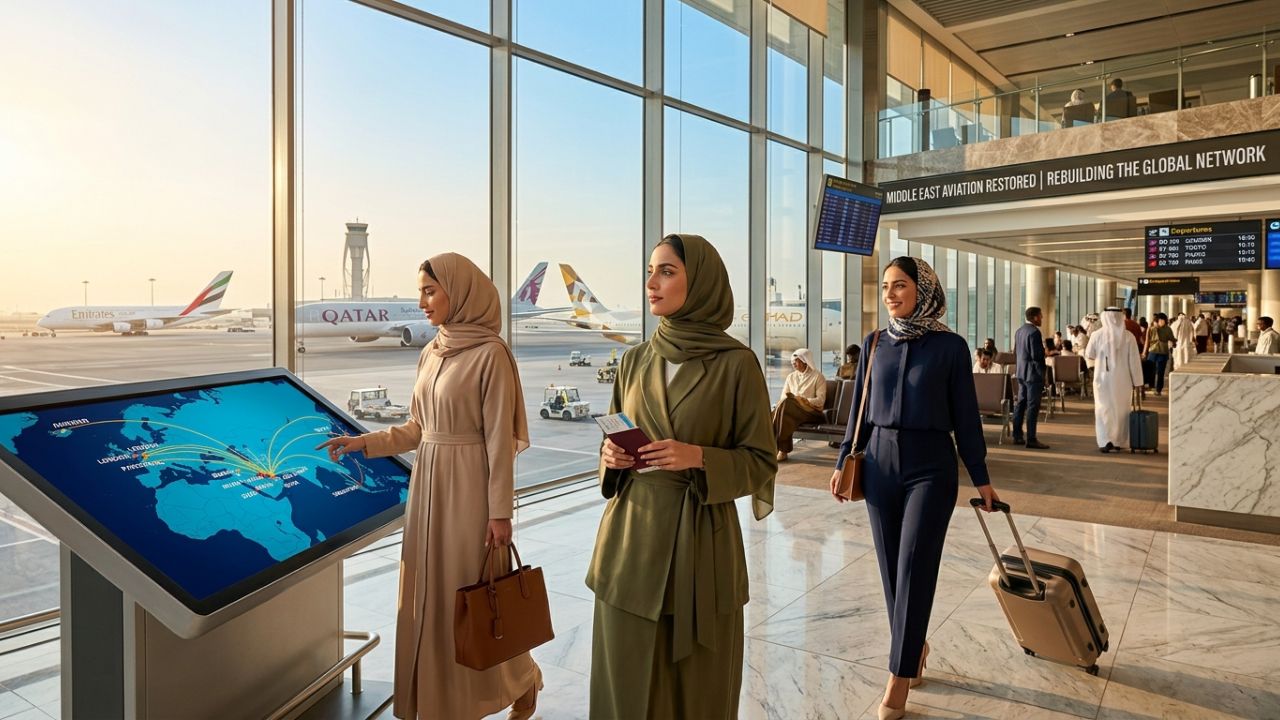
Image representing the intense strategic battle as global aviation authorities desperately deploy massive route suspensions and airspace avoidance protocols to combat severe geopolitical volatility, paralyzing Middle Eastern hubs.
Breaking Airline News: Unprecedented Flight Cancellations Sweep the Middle East as Global Airlines Execute Massive Restructuring, Sparking Travel Chaos
As paralyzing systemic geopolitical instability, terrifying airspace restrictions, and severe operational volatility violently threaten to completely choke the global transit grid, an unprecedented wave of massive flight cancellations has shattered the Middle Eastern aviation network. In a desperate bid to physically and psychologically rescue fleets and passengers from the terrifying threat of extreme travel chaos triggered by post-war regional volatility involving Iran, dozens of international carriers have aggressively launched massive tactical lockdowns. Officially executing a violent pivot toward total risk mitigation, airlines spanning from Delta Air Lines to the massive Lufthansa Group are actively extending suspensions, implementing prolonged diversions, and entirely abandoning highly lucrative Middle Eastern routes. By completely severing direct connections to massive hubs like Dubai, Tel Aviv, Riyadh, and Beirut, carriers are ensuring that furious corporate travelers and connecting tourists are now directly exposed to the agonizing misery historically defining major airport disruptions. This operational apocalypse is forcing aircraft into exhausting, elongated trajectories, proving that navigating the modern airspace has transformed into a terrifyingly complex logistical nightmare.
In a harrowing display of modern aviation vulnerability, the sheer logistical nightmare of attempting to safely cross contested airspace has historically forced airlines into terrifying transit scenarios. For decades, the Middle East served as the ultimate, hyper-efficient global crossroads linking Europe to Asia. However, the recent systemic shocks have completely destroyed that operational model. While a few localized operators are cautiously attempting to rebuild shattered schedules, external mega-carriers are aggressively fighting back against this structural paralysis by executing a total airspace avoidance strategy. When dozens of legacy carriers completely boycott regional airspace—expressly avoiding the skies over Iraq, Iran, Syria, and Israel—the ensuing damage is catastrophic: passengers violently miss their intercontinental connections, forcing airlines into a terrifying scramble to rebook furious travelers. This massive injection of operational uncertainty guarantees skyrocketing fuel consumption and completely destroyed itineraries, fundamentally rewriting the rulebook of international flight.
Expanded Overview: The Massive Scale of the Transit Contagion
The terrifying crisis of overwhelming passenger stress currently gripping complex global itineraries brutally exposes the severe limitations of relying on volatile regional hubs. Recognizing that aggressively forcing travelers to endure hours of sudden terminal waiting leads directly to severe psychological friction, aviation authorities are attempting to forcefully decompress the tension through absolute transparency regarding these long-term cancellations. The sheer scale of this operational withdrawal is immense. Major transit corridors that once funneled millions of passengers into Dubai and Doha have been violently severed, forcing global carriers to radically redirect their massive widebody fleets toward safer, alternate routes in Europe and Southeast Asia just to keep their networks from completely collapsing.
Section-Wise Breakdown: The Operational Realignment
Breaking the European Network Link
To survive the terrifying surge in global volatility, European carriers are violently severing their Middle Eastern pipelines. Aegean Airlines has officially scrubbed flights from Thessaloniki to Tel Aviv until June 26, while suspending Dubai until August 31, and Erbil/Baghdad until July 2. Latvia-based airBaltic deferred Tel Aviv to June 28 and completely cancelled Dubai through October 24. The massive Air France-KLM conglomerate is enforcing strict lockdowns: Air France paused Tel Aviv (until June 21) and Beirut/Dubai (June 24). KLM has violently suspended Saudi destinations Riyadh and Dammam until July 26, and Dubai until August 2. Furthermore, Air Europa terminated Tel Aviv services until June 28.
Deploying the Transatlantic and Asian Shields
Looking globally, massive legacy networks are executing identical survival strategies. Delta Air Lines has locked in severe cancellations for its Atlanta-Tel Aviv route through December 18. While a tentative JFK-Tel Aviv restart is targeted for September 6, the highly anticipated Boston-Tel Aviv launch has been indefinitely deferred. Air Canada has completely cancelled all scheduled flights to Tel Aviv and Dubai until October 24. In the Asia-Pacific, Cathay Pacific suspended Dubai and Riyadh until August 31. Japan Airlines aggressively cut Tokyo-Doha until July 31, with return flights paused until August 1. Finnair halted Doha until October 2, enforcing strict protocols to avoid Iraqi, Iranian, Syrian, and Israeli airspace.
The Massive Lufthansa Group Lockdown
The massive network of the Lufthansa Group remains heavily crippled by these airport disruptions. While Lufthansa and ITA Airways project a July 1 resumption for Tel Aviv, SWISS has postponed to August, and Brussels Airlines has extended a total suspension until October 24. Furthermore, Lufthansa, SWISS, and ITA Airways are suspending Dubai until September 13. A broader, violent withdrawal by Lufthansa, SWISS, Austrian Airlines, and Brussels Airlines has suspended Abu Dhabi, Amman, Beirut, Dammam, Riyadh, Erbil, Muscat, and Tehran until October 24. Budget arm Eurowings scrubbed Tel Aviv (July 9), Beirut (June 12), and Erbil (June 22), with Dubai, Abu Dhabi, and Amman out until October 24.
Executing the Strategic Capacity Shift
Facing the destruction of their Middle East networks, several airlines are executing brilliant tactical shifts. Qantas is aggressively redirecting capacity away from the volatile region, boosting flights to Rome and increasing Paris frequencies from three to five weekly flights, while intensifying the Perth-Singapore corridor to ten weekly flights (mid-April to late July). Singapore Airlines has prolonged its Dubai suspension to August 2, forcefully compensating by adding massive flights on the Singapore-London Gatwick and Singapore-Melbourne lines (late March through October 24). Meanwhile, British Airways (IAG) has pushed Doha to August 1, Riyadh to August 8, and paused Dubai, Tel Aviv, Bahrain, and Amman until October 25 (planning single daily flights upon return, completely eliminating Jeddah).
Global Flight Suspension & Route Restructuring Matrix
To fully comprehend the massive logistical and strategic fallout of this terrifying operational failure, corporate travel managers and affected tourists must review the exact disruption metrics defining the crisis. The following matrix provides a granular, officially verified breakdown of the massive route suspensions driving this global travel chaos.
| Operating Carrier | Affected Route Destination | Current Suspension / Modification Status |
|---|---|---|
| Aegean Airlines | Tel Aviv / Dubai / Erbil, Baghdad | Cancelled to Jun 26 / Aug 31 / Jul 2 |
| airBaltic | Tel Aviv / Dubai | Deferred to Jun 28 / Cancelled through Oct 24 |
| Air Canada | Tel Aviv / Dubai | Cancelled until Oct 24 |
| Air Europa | Tel Aviv | Terminated until Jun 28 |
| Air France | Tel Aviv / Beirut, Dubai | Suspended until Jun 21 / Paused until Jun 24 |
| KLM | Riyadh, Dammam / Dubai | Suspended until Jul 26 / Grounded until Aug 2 |
| Cathay Pacific | Dubai, Riyadh | Suspended until Aug 31 |
| Delta Air Lines | Tel Aviv (from ATL / JFK / BOS) | Suspended Dec 18 / Target Sep 6 / Deferred Indefinitely |
| Finnair | Doha / Dubai | Halted to Oct 2 / Winter Oct Resumption |
| British Airways (IAG) | Doha / Riyadh / DXB, TLV, BAH, AMM | Aug 1 / Aug 8 / Paused until Oct 25 (Jeddah Eliminated) |
| Japan Airlines | Tokyo-Doha / Doha-Tokyo | Suspended until Jul 31 / Paused until Aug 1 |
| LOT Polish Airlines | Riyadh / Beirut / Dubai | Out to Jun 30 / Jun 27 / Restart in October |
| Lufthansa / ITA | Tel Aviv | Projected Resume July 1 |
| SWISS | Tel Aviv | Postponed until August |
| Brussels Airlines | Regional Operations | Total Suspension until Oct 24 |
| Lufthansa Group | Abu Dhabi, Amman, Beirut, Tehran + | Broad regional withdrawal suspended until Oct 24 |
| Eurowings | Tel Aviv / Beirut / Erbil | Cancelled to Jul 9 / Jun 12 / Jun 22 |
| Malaysia Airlines | Doha | Reintroducing restricted services Jul 2 |
| Norwegian Air | Tel Aviv, Beirut | Indefinite Postponement |
| Qantas | Rome, Paris / Perth-Singapore | Expanding Frequencies (Mid-April to late July) |
| Royal Air Maroc | Doha | Officially cancelled until Jun 30 |
| Singapore Airlines | Dubai / LON Gatwick, Melbourne | Suspended until Aug 2 / Adding Flights (Mar-Oct 24) |
| SunExpress | Dubai / Bahrain, Beirut, Erbil | Cancelled to Jun 30 / Suspended until Jul 14 |
| Wizz Air | Dubai, Abu Dhabi, Amman | Suspended until mid-September |
Passenger Impact: Surviving the Terminal Stranding
For the millions of global tourists and corporate commuters attempting to navigate the rapidly collapsing intercontinental transit corridors, this massive operational failure represents a terrifying descent into travel misery. The brutal reality of enduring a sudden cancellation notification on a highly lucrative routing through Dubai or Doha inflicts intense psychological stress and completely destroys meticulously planned itineraries.
Survival Guide for Stranded Travelers
Travelers desperately preparing to navigate this highly unstable network must immediately execute the following survival protocols if their flight is scrubbed:
- Leverage Bypass Routing: Passengers must aggressively seek out carriers like Qantas or Singapore Airlines that have executed strategic capacity shifts; routing entirely around the Middle East via direct European or Asian nodes is the only way to shield yourself from the grueling process of airport disruptions.
- Acknowledge Long-Term Lockdowns: Corporate travelers must recognize that suspensions extending into October 2026 are highly rigid; do not attempt to book speculative itineraries on carriers currently enforcing a total regional withdrawal.
- Demand Policy Transparency: Passengers violently impacted by these massive network restructurings must relentlessly audit airline compensation policies and actively secure comprehensive travel insurance to survive the financial fallout of canceled holidays.
Industry Analysis: The Economics of Tactical Paralysis
From a strategic aviation perspective, the travel turmoil currently forcing these massive cancellations highlights the terrifying vulnerability of global infrastructure when exposed to severe geopolitical conflict. Industry analysts confirm that enforcing rigorous airspace avoidance strategies—violently redirecting fleets around Iraq, Iran, Syria, and Israel—creates massive economic friction. While these elongated trajectories heavily increase operational costs and fuel consumption, airlines recognize that the safety of the airframe supersedes scheduling efficiency. This collective industry shift toward total risk avoidance proves that maintaining global safety requires completely insulating the network from unresolved threats.
Conclusion: A Strategic Retreat to Ensure Aviation Survival
As the extremely critical travel season accelerates, the massive disruption triggered across the Middle East represents a terrifying warning to passengers attempting to transit through traditional global crossroads. The aggressive, synchronized cancellations prove that navigating the modern airspace requires terrifyingly swift and highly optimized booking strategies, entirely shielding itineraries from regions trapped in systemic volatility. Corporate travel buyers, logistics managers, and everyday passengers attempting to navigate this highly unstable era of airport disruptions must embrace extreme vigilance. By acting aggressively to demand policy clarity, utilizing alternate routing, and maintaining comprehensive travel insurance, travelers can successfully survive these intense operational surges and attempt to avoid the paralyzing threat of airline-induced travel chaos.
Key Takeaways
- Massive Tactical Threat: Global airlines have aggressively executed unprecedented flight cancellations and route suspensions across the Middle East following severe geopolitical volatility.
- Crushing the Legacy Corridors: Massive legacy carriers like Delta Air Lines, Air Canada, and the Lufthansa Group have locked down routes to Dubai, Tel Aviv, and Beirut, with many suspensions lasting until October 24 or later.
- Strategic Aircraft Avoidance: Airlines are strictly enforcing airspace avoidance over Iraq, Iran, Syria, and Israel, resulting in exhausting, elongated flight paths that drastically increase fuel consumption.
- Massive Capacity Shifts: Carriers like Qantas and Singapore Airlines are brilliantly neutralizing the regional loss by heavily injecting capacity into European and Southeast Asian routes to keep their networks profitable.
- Traveler Advisory: Passengers impacted by sudden operational delays must aggressively leverage digital rebooking tools to bypass the Middle East entirely, as the global aviation industry pivots toward total risk avoidance.
Related Travel Guides
Disclaimer
This article is for informational and educational purposes only. It does not constitute legal, financial, or professional advice. While we strive to provide accurate and up-to-date information, travel policies, regulations, and conditions change rapidly. Always verify information with official sources before making travel decisions. Nomad Lawyer makes no representations about the accuracy, reliability, completeness, or suitability of the information provided. Readers should consult qualified professionals for advice specific to their circumstances. The views expressed in this article are those of the author and do not necessarily reflect the views of Nomad Lawyer.
Kunal K Choudhary
Co-Founder & Contributor
A passionate traveller and tech enthusiast. Kunal contributes to the vision and growth of Nomad Lawyer, bringing fresh perspectives and driving the community forward.
Learn more about our team →