
Middle East Flight Chaos: 64 Cancellations and 852 Delays Disrupt Regional Hubs
Over 852 delays and 64 cancellations hit Middle East travel networks, impacting Istanbul, Tel Aviv, and Dubai airports. Check your flight status now.

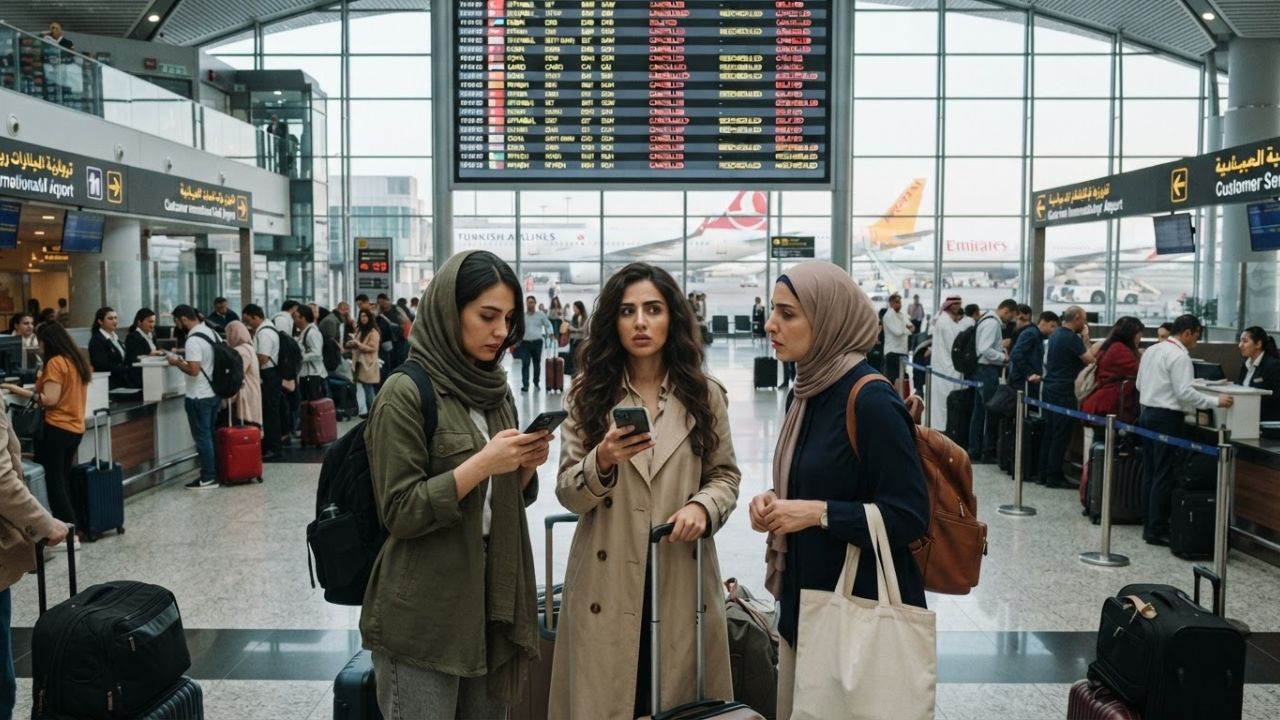
Image generated by AI
Air travel across the Middle East came to a sudden halt on August 25, 2026, as 64 cancellations and 852 delays stranded thousands of passengers at Istanbul and 12 other regional airports. Cascading schedule changes disrupted transportation hubs across the region, causing flight crews to reach their duty limits and planes to fail to depart on schedule.
The widespread operational instability stems from a combination of severe bottlenecks in air corridor capacity, ongoing geopolitical safety detours around restricted airspaces, and heavy end-of-summer passenger surges. These factors have forced airlines to divert flights over narrow safety zones, which increases flight duration and operational complexity. Passengers have faced last-minute schedule changes at major transfer points.
Airport operators and regional air traffic controllers are working around the clock to manage the backlog and rebook stranded passengers. According to official International Air Transport Association (IATA) guidelines, managing these delayed rotations requires carriers to maintain higher fuel reserves for alternative routes. This operational adjustment has led to secondary delays across the entire region.
Regional Airport Performance and Disruption Metrics
The impact of this disruption is heavily concentrated around major international transfer hubs and specific regional entry points. The following data, recorded by the editorial desk on August 25, 2026, at 2:07 pm ET USA (10:08 pm GST) using FlightAware live cancellation registry figures, details the airport performance:
| Airport Name | City & Country | Delays | Cancellations |
|---|---|---|---|
| Ben Gurion Int’l | Tel Aviv, Israel | 203 | 1 |
| Cairo Int’l | Cairo, Egypt | 143 | 2 |
| Dubai Int’l | Dubai, UAE | 137 | 8 |
| Hamad Int’l | Doha, Qatar | 89 | 3 |
| Istanbul Sabiha Gökçen Int’l | Istanbul, Turkey | 73 | 4 |
| King Abdulaziz Int’l | Jeddah, Saudi Arabia | 72 | 9 |
| King Khalid Int’l | Riyadh, Saudi Arabia | 65 | 11 |
| Sharjah Int’l | Sharjah, UAE | 57 | 8 |
| Abha Regional | Abha, Saudi Arabia | 11 | 7 |
| Gizan Regional | Jizan, Saudi Arabia | 0 | 5 |
| Najran Domestic | Najran, Saudi Arabia | 0 | 4 |
| Erbil Int’l | Erbil, Iraq | 2 | 2 |
Major transit gateways like Tel Aviv, Cairo, and Dubai have borne the brunt of the delays. Ben Gurion International led with 203 delayed flights, while Cairo International (143 delays) and Dubai International (137 delays) suffered schedule slippage due to flight rerouting.
Saudi Arabia’s regional network showed the highest vulnerability to cancellations. While Riyadh (11 cancellations) and Jeddah (9 cancellations) kept most flights moving, regional locations such as Gizan (5 cancellations, 0 delays), Najran (4 cancellations, 0 delays), and Abha (7 cancellations, 11 delays) saw services cut entirely rather than deferred.
Carrier Performance and Operational Failure Rates
Regional carriers experienced widely varying reliability rates depending on their primary routes and reliance on congested airways:
- El Al (Israel): Recorded the highest delay percentage among evaluated carriers at 32% (59 delayed flights, 1 cancellation / 0%), driven by strict security screening windows and constrained Mediterranean arrival slots.
- Egypt Air (Egypt): Suffered delays on 25% of its scheduled operations (73 delayed flights) with minimal cancellations (2 flights / 0%), as aircraft were kept on the ground awaiting long-haul detour clearances.
- Air Arabia (UAE): The low-cost Gulf operator saw a delay rate of 16% (42 delays, 8 cancellations / 3%), reflecting heavy slot controls across the Arabian Peninsula.
- FlyDubai (UAE): Recorded a 15% delay rate (49 delays, 1 cancellation / 0%), showing steady schedule pressure.
- Saudia (Saudi Arabia): Maintained a low delay rate of 7% (43 delayed flights), but posted the highest single-airline cancellation total with 16 cancelled flights (2%), primarily due to grounded domestic connections in southern Saudi Arabia.
Sustainable Travel Alternatives and Direct Local Support
To mitigate the environmental impact of rerouted flights—which burn significantly more fuel due to longer flight paths—travelers are encouraged to adopt eco-conscious travel habits. When rebooking flights, passengers can choose carriers that participate in verified carbon-offset programs or purchase direct routes rather than multi-stop flights.
Stranded passengers can also support local economies by purchasing traditional crafts directly from regional airport retail initiatives. For example, buying local goods at Cairo Airport supports artisans affiliated with the Egyptian Ministry of Tourism and Antiquities. Similarly, seeking out local dining options rather than international fast-food chains directly aids regional airport employees.
Visitor Insider Tips and Regional Etiquette
For travelers stranded at Middle Eastern terminals, specific strategies can make the wait easier and prevent additional friction:
- Rethink Airport Dining: At Sabiha Gökçen in Istanbul, skip the main terminal food courts. Instead, seek out local cafes serving fresh Simit (sesame-crusted bread) and Turkish Tea for an authentic and more affordable snack.
- Use Rail Transit During Delays: If stranded at Istanbul Sabiha Gökçen, do not take highway taxis to the city center, as traffic congestion during flight disruptions is severe. Use the M4 metro line for a fast, reliable, and cheap connection to Kadıköy.
- Rest Comfortably in Dubai: Stranded travelers at Dubai International can book short stays in the sleep 'n fly pods located in Terminal 3, or rest near the Zen Gardens to escape the noisy boarding areas.
- Observe Cultural Etiquette: When negotiating rebooking options with airline staff in Middle Eastern hubs, maintain a calm, soft-spoken approach. In regional culture, loud or confrontational behavior is considered disrespectful and is counterproductive. A polite, patient approach is highly valued and often results in quicker assistance.
- Plan Around Peak Heat: The end-of-summer period is historically volatile for regional transit. To avoid extreme heat and scheduling bottlenecks, plan your regional visits for the off-peak window of late October or early November, as recommended by the Turkish Ministry of Culture and Tourism.
FAQ: Middle East Flight Disruptions 2026
Which airport has the most delays in the Middle East right now? Ben Gurion International Airport in Tel Aviv has the highest number of delays, recording 203 delayed flights on August 25, 2026.
Which airline has cancelled the most flights? Saudia (Saudi Arabian Airlines) has the highest cancellation total among all tracked carriers, with 16 cancelled flights.
What rights do I have if my Middle East flight is cancelled? If your flight is cancelled, airlines are generally required to rebook you on the next available flight at no extra charge or provide a full refund. Vouchers for food and hotel accommodations are often provided for overnight delays.
How can I avoid regional airport traffic during flight delays in Istanbul? Use public rail networks such as the M4 metro line at Sabiha Gökçen or the M11 metro line at Istanbul Airport to bypass taxi queues and road traffic.
Related Travel Guides
Disclaimer
This article is for informational and educational purposes only. It does not constitute legal, financial, or professional advice. While we strive to provide accurate and up-to-date information, travel policies, regulations, and conditions change rapidly. Always verify information with official sources before making travel decisions. Nomad Lawyer makes no representations about the accuracy, reliability, completeness, or suitability of the information provided. Readers should consult qualified professionals for advice specific to their circumstances. The views expressed in this article are those of the author and do not necessarily reflect the views of Nomad Lawyer.
Preeti Gunjan
Contributor & Community Manager
A passionate traveller and community builder. Preeti helps grow the Nomad Lawyer community, fostering engagement and bringing the reader experience to life.
Learn more about our team →