
Middle East Flight Disruptions: 138 Cancellations and 1,312 Delays Hit Riyadh, Dubai, Kuwait as Regional Tensions Escalate in August 2026
Middle East aviation faces 138 cancellations and 1,312 delays across UAE, Saudi Arabia, Qatar, Egypt, Kuwait, and Bahrain as security tensions rise and airlines adopt sharply different disruption strategies.

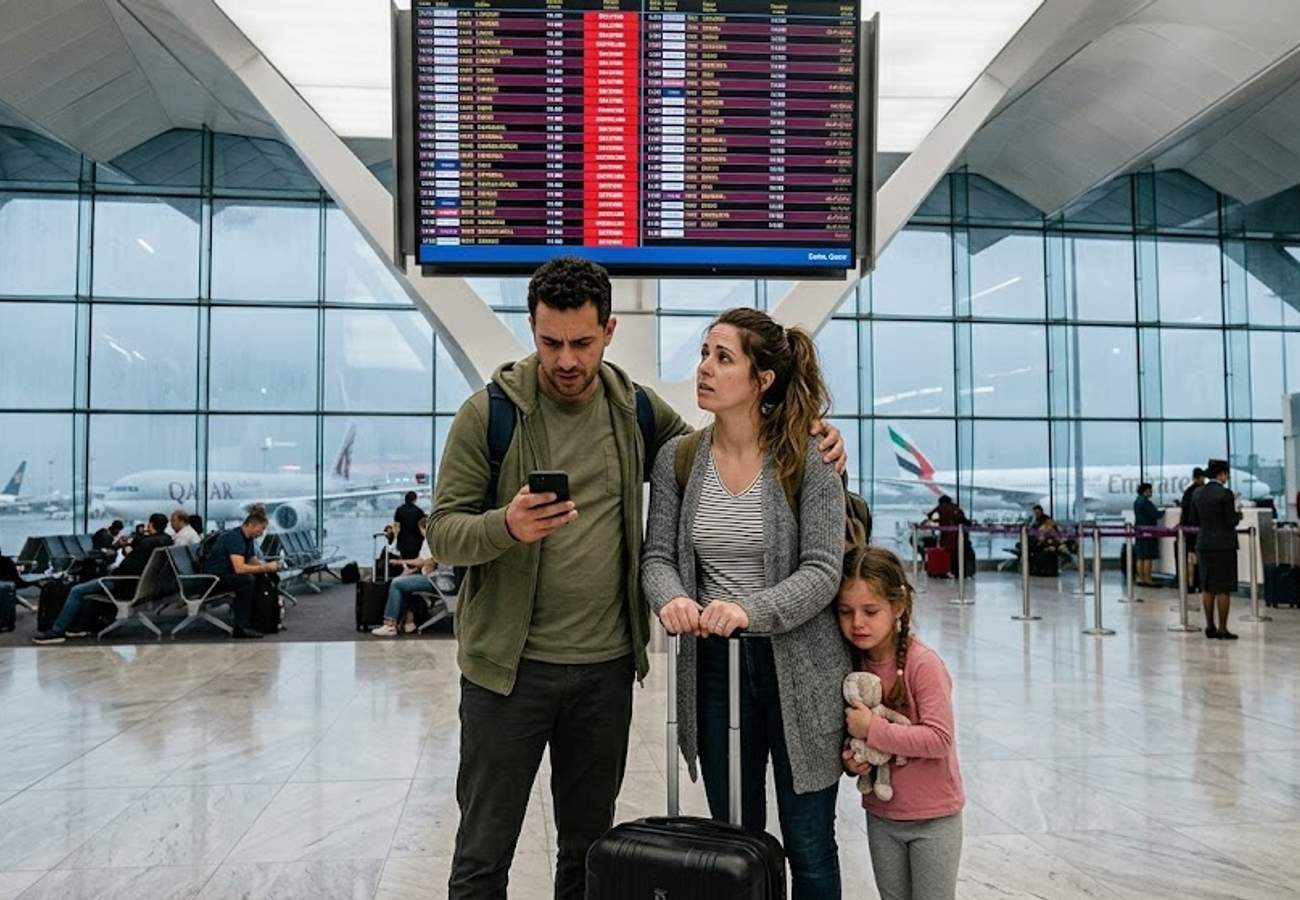
Image generated by AI
[Dubai, August 1, 2026] — A single day of disruption across the Middle East has left 138 flights cancelled and 1,312 delayed, hitting six nations and exposing a sharp divide in how Gulf airlines manage crisis-level congestion. Dubai Airport absorbed 509 delays — the highest in the region — while Riyadh's King Khalid Airport recorded 36 cancellations, the most of any single airport. Saudia alone accounted for roughly 78% of all regional cancellations, pulling 108 flights from its schedule across five Saudi cities.
The disruptions unfolded against a backdrop of escalating military tensions involving Saudi Arabia, Iran, Kuwait, and the United States, adding a layer of security uncertainty to already strained airport operations across one of the world's busiest aviation corridors.
Geopolitical Tensions Reshape Middle East Aviation Operations
Long-standing friction between Saudi Arabia and Iran, sustained through years of proxy conflicts across Yemen, Iraq, Syria, and Lebanon, continues to define the operating environment for carriers across the Middle East. Those tensions intensified following recent military exchanges involving Saudi Arabia, the United States, and Iran-backed armed groups.
Yemen's Iran-backed Houthi movement has persisted in targeting Saudi infrastructure, including facilities linked to aviation and energy operations. Following weeks of heavy airstrikes against Iran, the United States paused new strikes on Thursday. Iran responded by targeting a key American air base in Kuwait. Kuwaiti authorities confirmed that drones were intercepted, with only falling debris causing minor damage and no reported casualties.
Although major airports across the region remained open and commercial flights continued operating, airlines are now navigating a significantly more uncertain security environment. That translates into heightened operational planning, continuous risk assessments, and precautionary routing decisions where necessary. The latest escalation has driven surges in online searches for "Kuwait Iran" and "US bombs Iran," reflecting growing public concern about regional stability.
Dubai Airport Absorbs 509 Delays as Congestion Peaks
Dubai International Airport recorded 509 delays — the highest figure across the entire region. Despite relatively few cancellations, the airport processed enormous traffic volumes. FlyDubai logged 225 delays through Dubai, while Emirates contributed another 187. Rather than scaling back schedules, carriers at Dubai largely continued operating through mounting congestion, generating rolling delays across both departures and arrivals.
The pattern at Dubai reflects a deliberate operational philosophy: keep aircraft moving, even if departure times slip throughout the day. For passengers, that meant flights continued departing but often hours behind schedule, with turnaround times stretching as congestion compounded.
Riyadh Leads Cancellation-Heavy Strategy With 36 Scrubbed Flights
King Khalid Airport in Riyadh recorded 121 delays and 36 cancellations, making it Saudi Arabia's largest disruption point. Saudia accounted for the vast majority of cancellations, while Flynas and flyadeal also faced operational pressure. The data illustrates Saudi Arabia's cancellation-heavy approach, where airlines appeared to protect later schedules by removing selected flights entirely rather than allowing delays to cascade through the network.
Saudi Arabia accounted for approximately 80% of all cancellations across the region. The concentration of cancellations at Riyadh signals a risk-management strategy aimed at preventing prolonged disruption from spreading across domestic and international connections.
Jeddah, Abha, Najran, and Gizan Face Coordinated Cancellations
King Abdulaziz Airport in Jeddah experienced 71 delays alongside 21 cancellations, again led overwhelmingly by Saudia. Flyadeal, FlyDubai, Emirates, and Etihad Airways also reported delays at Jeddah, reflecting pressure across both domestic and international operations.
Beyond Saudi Arabia's two largest airports, Abha, Najran, and Gizan collectively added another 54 cancellations. That distribution reinforces how disruption extended well beyond the kingdom's primary hubs, reaching regional airports that serve domestic and limited international routes.
Doha's Hamad Airport Maintains Operations Under Delay Pressure
Hamad Airport in Doha recorded 178 delays and only six cancellations, demonstrating that Qatar largely maintained scheduled operations despite significant congestion. Qatar Airways alone accumulated 140 delays, indicating the carrier continued operating through a demanding day rather than resorting to widespread cancellations.
The imbalance between delays and cancellations at Doha mirrors the approach seen at Dubai and Sharjah: prioritize keeping flights moving, even as departure times shift throughout the day.
Saudia Bears the Heaviest Disruption Burden With 108 Cancellations
No airline experienced greater disruption than Saudia, which recorded 108 cancellations across its network — approximately 78% of all cancellations in the Middle East. Most were concentrated at Riyadh, Jeddah, Abha, Najran, and Gizan, indicating a deliberate reduction in scheduled operations at multiple Saudi airports rather than allowing prolonged delays to spread.
| Airport | Delays | Cancellations | Most Affected Airlines |
|---|---|---|---|
| Dubai (DXB) | 509 | Low | FlyDubai (225), Emirates (187) |
| Riyadh (RUH) | 121 | 36 | Saudia, Flynas, flyadeal |
| Jeddah (JED) | 71 | 21 | Saudia, Flyadeal, FlyDubai, Emirates, Etihad |
| Doha (DOH) | 178 | 6 | Qatar Airways (140) |
| Sharjah (SHJ) | — | 11 | Air Arabia (169 delays) |
| Abha, Najran, Gizan | — | 54 (combined) | Saudia |
FlyDubai, Emirates, and Air Arabia Grapple With Sustained Delays
FlyDubai recorded the highest number of delays in the region with 247, driven overwhelmingly by operations through Dubai. The airline continued flying most of its schedule despite severe congestion, illustrating the intense pressure facing one of the Gulf's busiest low-cost networks.
Emirates accumulated 191 delays, remaining one of the most affected long-haul carriers. Much of the disruption centred on Dubai, where high traffic volumes and closely timed international connections contributed to longer turnaround times and rolling schedule adjustments.
Air Arabia logged 169 delays while also recording 11 cancellations, primarily through Sharjah. The airline's figures reflect the difficulty of maintaining frequent regional services during periods of heavy airport congestion while still limiting cancellations compared with several Saudi operators.
Qatar Airways experienced 148 delays centred on Hamad Airport but only limited cancellations, reinforcing the pattern of delay absorption over schedule reduction seen across UAE and Qatari hubs.
What Impacted Passengers Should Expect
Travellers flying through Dubai, Doha, and Sharjah should anticipate longer departure queues, slower aircraft turnaround times, and the possibility of rolling schedule adjustments as airlines work through accumulated delays. Flights may continue departing, but later than originally planned as congestion gradually eases throughout the day.
Passengers travelling through Riyadh, Jeddah, and other Saudi airports face a different reality. With cancellations concentrated across the country, airlines may continue refining schedules and consolidating operations where necessary. Connecting passengers should pay particular attention to onward itineraries, as operational adjustments at one Saudi airport could affect services elsewhere in the domestic network.
Why This Matters: Two Strategies, One Crisis
The data reveals two distinctly different operational philosophies responding to the same regional pressures. UAE and Qatari hubs chose to absorb delays — Dubai's 509 delays and Doha's 178 delays demonstrate a commitment to keeping flights moving, even at the cost of schedule reliability. Saudi operators, by contrast, opted for proactive cancellation, with Saudia pulling 108 flights to prevent cascading disruption across its network.
For the traveler, this means anyone booked through Dubai or Doha should prepare for extended waits but a high likelihood of eventually reaching their destination. Those routed through Saudi airports face a greater chance of outright cancellation, requiring rebooking and potentially significant schedule changes to connecting flights.
From a logistical standpoint, the Saudi strategy may actually reduce total passenger-hours lost: a cancelled flight forces immediate rebooking, while a six-hour delay strands passengers in terminals with mounting costs. But for travelers with tight connections or time-sensitive commitments, neither approach is ideal.
The broader concern is what happens if regional tensions escalate further. Today's disruptions were manageable — airports stayed open, and no carrier suspended operations entirely. A more severe security incident could shift the calculus from delay management and selective cancellation to widespread airspace closures, rerouting, and multi-day schedule recovery.
Gulf aviation remained operational today, but the divide between delay-heavy and cancellation-heavy strategies reveals how fragile regional air travel becomes when geopolitics meets congestion.
Related Travel Guides
Disclaimer
This article is for informational and educational purposes only. It does not constitute legal, financial, or professional advice. While we strive to provide accurate and up-to-date information, travel policies, regulations, and conditions change rapidly. Always verify information with official sources before making travel decisions. Nomad Lawyer makes no representations about the accuracy, reliability, completeness, or suitability of the information provided. Readers should consult qualified professionals for advice specific to their circumstances. The views expressed in this article are those of the author and do not necessarily reflect the views of Nomad Lawyer.
Preeti Gunjan
Contributor & Community Manager
A passionate traveller and community builder. Preeti helps grow the Nomad Lawyer community, fostering engagement and bringing the reader experience to life.
Learn more about our team →